Sheathbills are shorebirds that live on islands and coastlines around Antarctica and the southern tip of South America. There are only two species in this family: the Snowy Sheathbill (Chionis albus) and the Black-faced Sheathbill (Chionis minor).
Sheathbills are mostly white birds with sturdy bodies, short legs, and short, broad wings. They get their name from a horny sheath that covers the base of their thick, cone-shaped bills.
Unlike most other birds that live around Antarctica, sheathbills have non-webbed feet, so they spend most of their time walking on land rather than swimming.
These birds are active scavengers. They walk along beaches, rocky shores, and penguin colonies searching for food.
Although they can fly well, they usually prefer to walk and typically take flight when disturbed, traveling between feeding areas or during migration.
Sheathbills eat a wide variety of foods, including carrion (dead animals), insects, marine invertebrates, seaweed, penguin eggs, and scraps left behind by seals and seabirds.
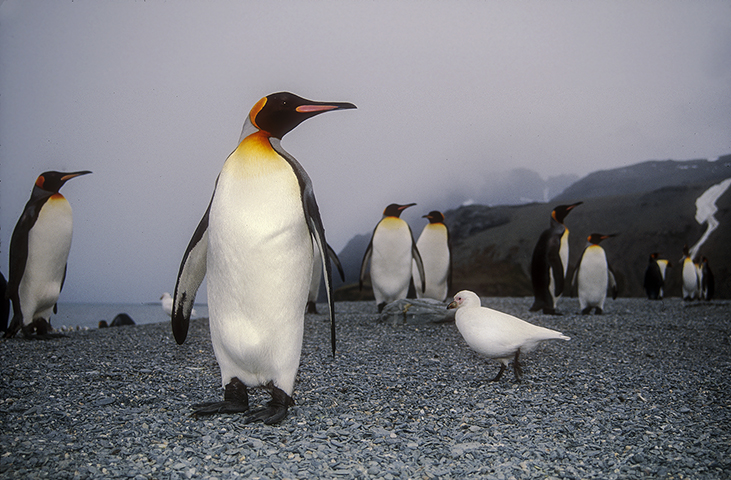
Their breeding season overlaps with that of many penguin species. Sheathbills often nest near penguin colonies, where they take advantage of the abundant food supply. They may steal unattended eggs or chicks when the opportunity arises, although they are primarily scavengers rather than specialized predators.
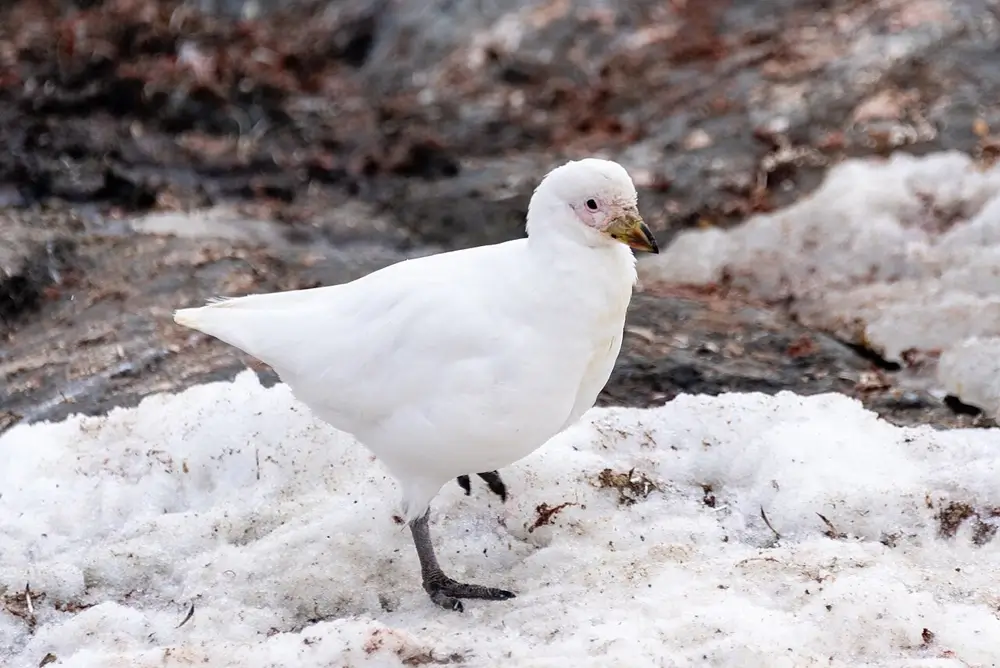
Snowy Sheathbill (Chionis albus)
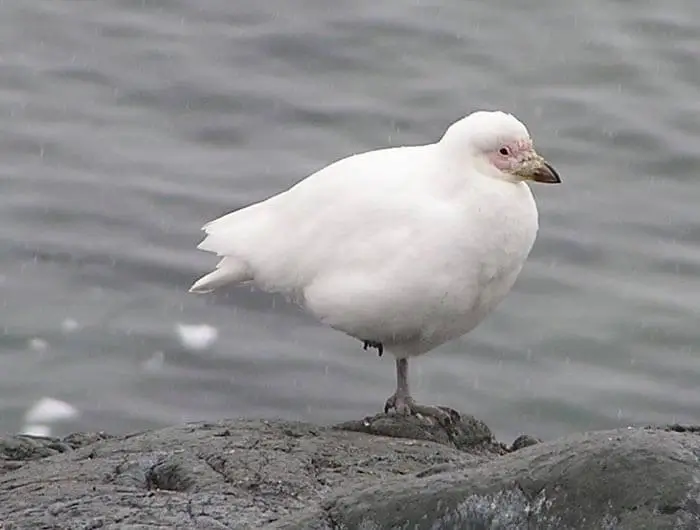
The Snowy Sheathbill is found in Antarctica, South Georgia and the South Sandwich Islands, Argentina, Chile, and the Falkland Islands. IUCN Redlist Status: Least Concern
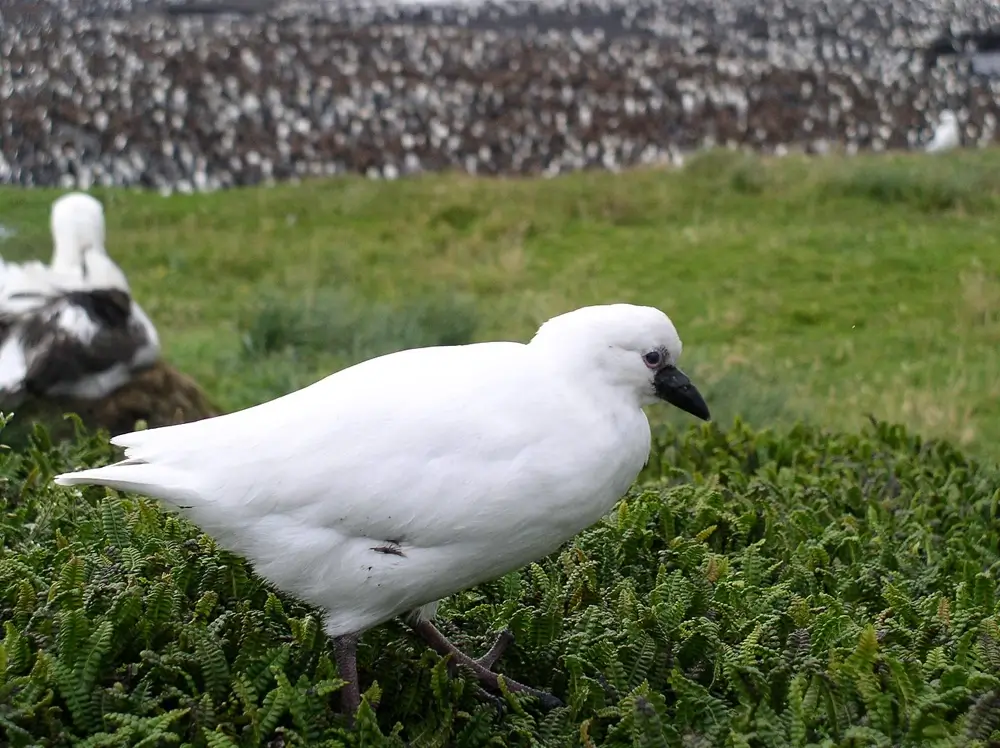
Black-faced Sheathbill (Chionis minor)
The Black-faced Sheathbill is found in the French Southern Territories, Heard Island and the McDonald Islands, and South Africa. IUCN Redlist Status: Least Concern
Snowy Sheathbill (Chionis albus)
A Snowy Sheathbill hanging with some King Penguins. Sheathbills often nest near penguin colonies, where they take advantage of the abundant food supply.