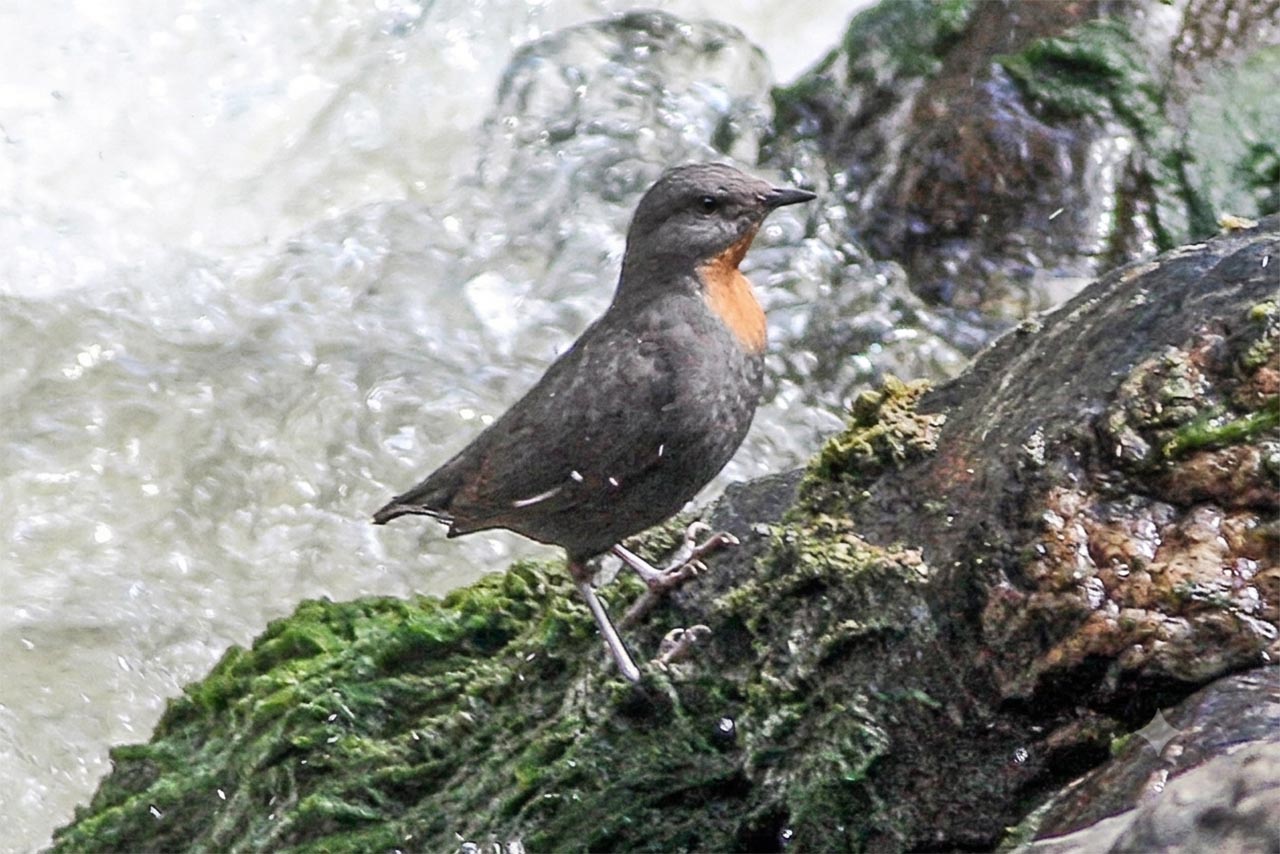
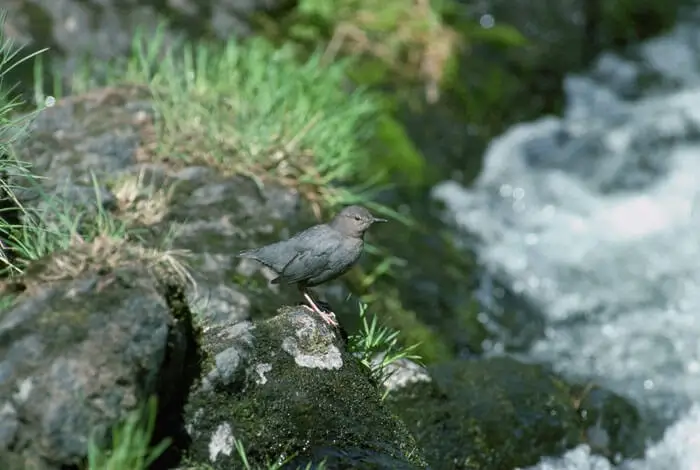
The Cinclidae family includes five species of birds called dippers. They are found in North and South America, Europe, and Asia, where they live along fast-flowing rivers, streams, and mountain lakes.
Dippers have plump bodies and are 5.5–8.0 inches (14.0–20.3 cm) long. They have straight, pointed bills, short, rounded wings, and short, square or rounded tails. Their feathers are usually brown, gray, or black, and some species have white patches on the throat, chest, or head. Males and females look alike.
Dippers have dense, waterproof feathers that help keep them warm in cold water. They can dive and swim underwater for up to 10–15 seconds, using their wings to “fly” through the water. They often walk along the stream bottom while searching for food. Their diet includes aquatic insects and their larvae, crustaceans, small fish, fish eggs, and other small aquatic animals.
The American Dipper (Cinclus mexicanus) is the only dipper found in North America. It lives along fast-moving streams from Alaska south through the Rocky Mountains and other western mountain ranges to Panama. It is about 8.0 inches (20.3 cm) long and has slate-gray feathers, a short, stubby tail, and a distinctive habit of bobbing up and down on rocks beside streams.
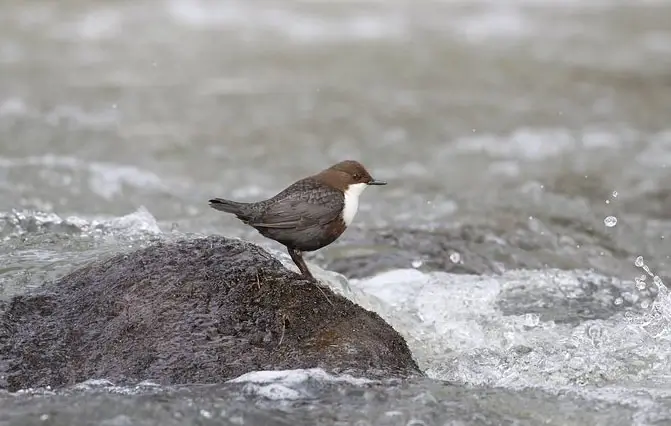
White-throated Dipper (Cinclus cinclus)
The White-throated Dipper is found in Europe, North Africa, the Middle East, and Asia east to Siberia, the Himalayas, and western China.. IUCN Redlist Status: Least Concern
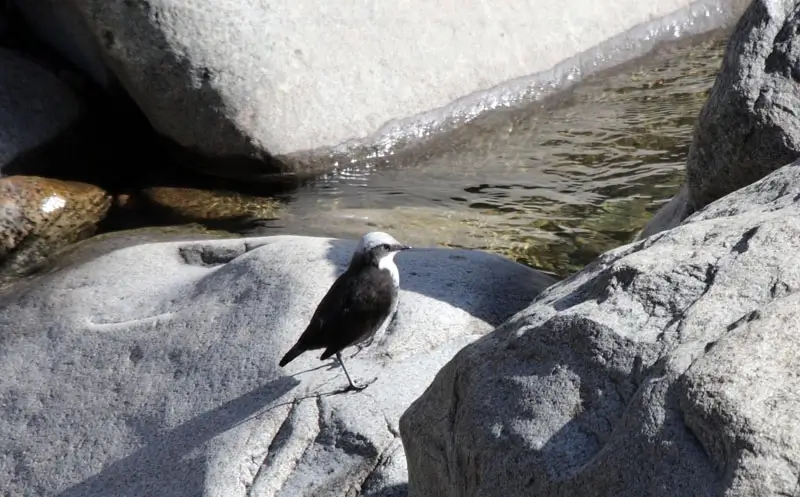
White-capped Dipper (Cinclus leucocephalus)
The White-capped Dipper is found in Bolivia, Colombia, Ecuador, Peru, and Venezuela. IUCN Redlist Status: Least Concern
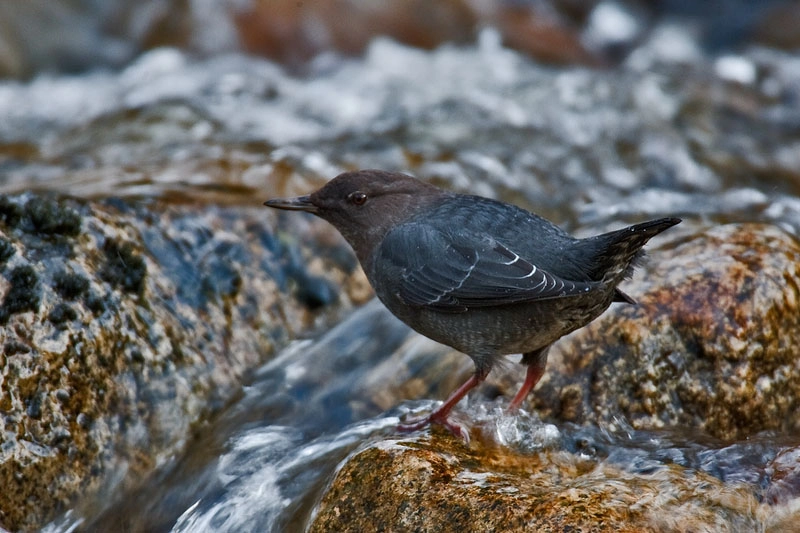
American Dipper (Cinclus mexicanus)
The American Dipper is the only dipper species found in North America. It is found from Northern Alaska south through the mountains of the west. IUCN Redlist Status: Least Concern
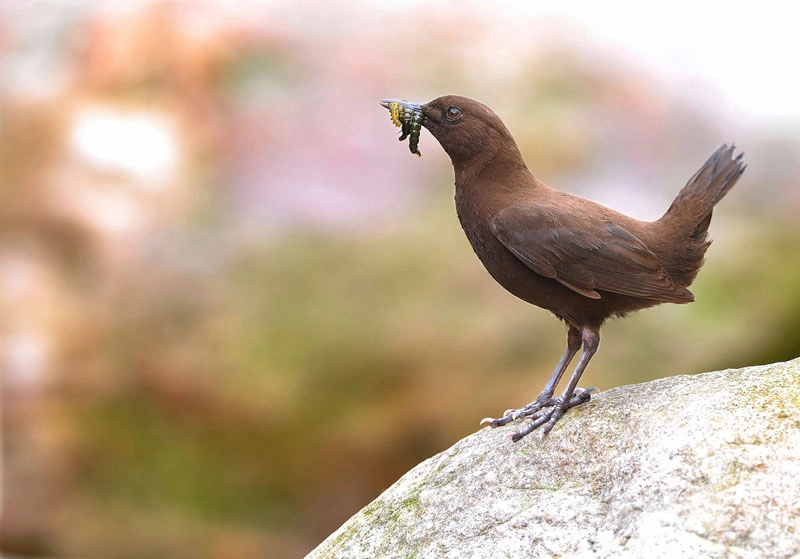
Brown Dipper (Cinclus pallasii)
The Brown Dipper is found in Afghanistan, Bangladesh, Bhutan, China, India, Japan, Kazakhstan, North and South Korea, Kyrgyzstan, Laos, Myanmar, Nepal, Pakistan, Russia, Taiwan, Tajikistan, Thailand, Turkmenistan, Uzbekistan, and Vietnam. IUCN Redlist Status: Least Concern
Rufous-throated Dipper (Cinclus schulzii)
The Rufous-throated Dipper is found in Argentina and Bolivia. IUCN Redlist Status: Vulnerable