

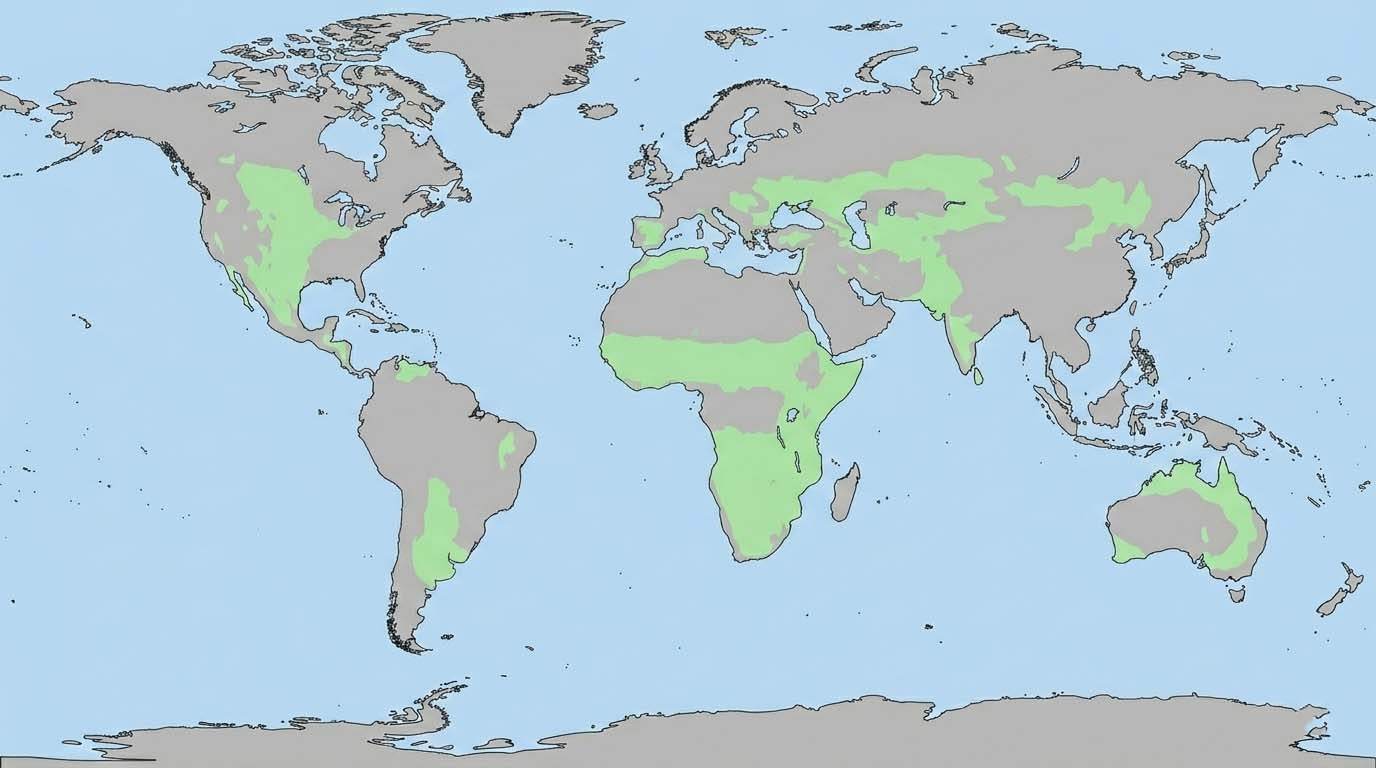
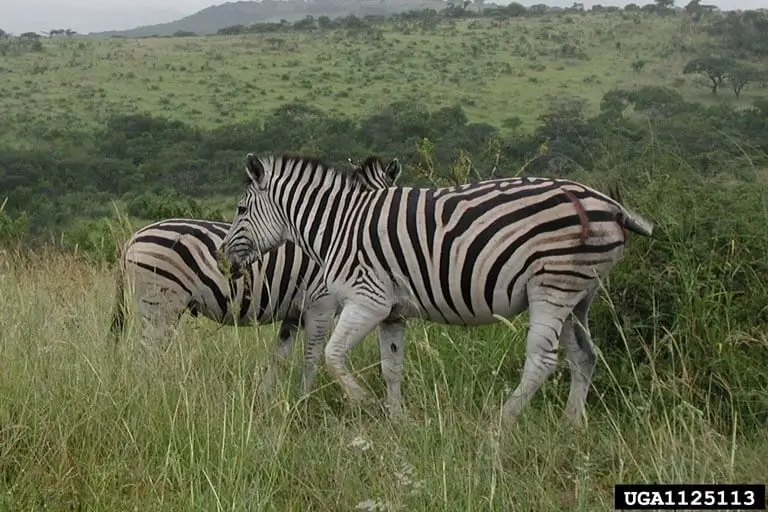
The African grasslands are called savannas or veldts and are home to animals like zebras, lions, and ostriches.
Tropical grasslands are found near the equator, which means they stay warm all year. Instead of four seasons, these regions usually have two: a wet season with heavy rainfall and a dry season with very little water. During the wet season, grasses grow quickly and can become quite tall. In the dry season, many plants turn brown, and water becomes harder to find.
Because rainfall is not constant, trees are scattered rather than growing close together in thick forests. This creates wide, open landscapes that support a variety of wildlife.
In Africa, tropical grasslands are called savannas or veldts. These habitats are home to many well-known animals. Herds of zebra graze on grasses, while predators like lions hunt for prey.
Large birds such as ostriches also live on these open plains, along with many other species that are adapted to the changing seasons.
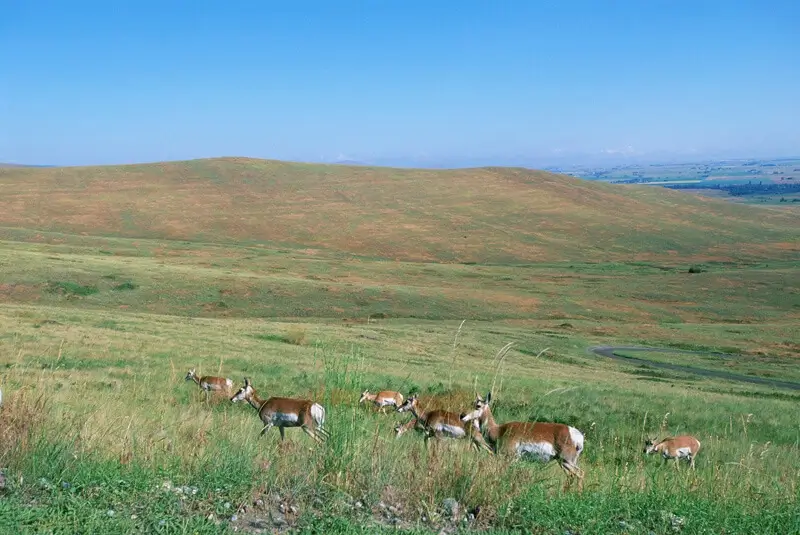
In North America temperate grasslands are called prairies.
Temperate grasslands are hot in the summer and cold in the winter. Temperate grasslands have different names in different parts of the world.
Steppes stretch across Europe and Asia, including Ukraine, Russia, and Mongolia. These grasslands are dry and often windy.
Pampas grasslands are located mainly in Argentina and Uruguay. They have rich soil that is great for farming.
The veld is found in South Africa. The veld is mostly temperate grassland, but some is tropical.
Downs are located in Australia and are used for grazing livestock. Common animals include kangaroos, sheep, cattle, and emus.
In North America, temperate grasslands are called prairies.
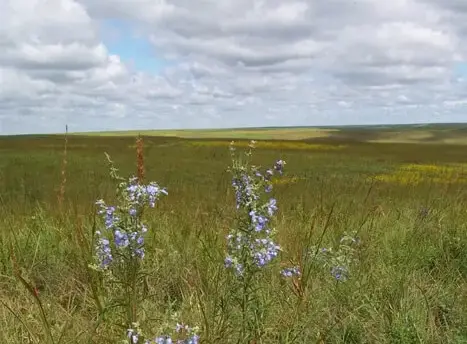
The soil in prairies is excellent for growing crops and many of the grasslands in North America have been turned into farms and ranches
The soil in prairies is excellent for growing crops, and many of the grasslands in North America have been turned into farms and ranches. The combination of high summer temperatures, strong winds, and little rain makes prairies vulnerable to fire. Fire keeps trees from growing on the prairie, but grasses and other prairie plants can survive fire and even thrive. There are three types of prairies: tall grass, short grass, and mixed grass.
TALL GRASS PRAIRIES
Tall grass prairies get the most rain, about 30 inches (76.2 cm) a year. They have tall grasses, sunflowers, and other plants. Grasses in this type of prairie can grow as high as five feet. Tall grass prairies are found in the eastern part of the Midwestern U.S.
SHORT GRASS PRAIRIES
Short grass prairies get the least amount of rain, less than 10 inches (25.4 cm) a year. They are found in the western part of the Midwest. Grass in short grass prairies is usually under two feet tall.
MIXED GRASS PRAIRIES
Mixed grass prairies are found in the middle of the Midwest. They get less rain than tall grass prairies, between 15 and 20 inches (38.1-50.8 cm) a year, and the vegetation grows to about 3 feet (0.91 m) tall.
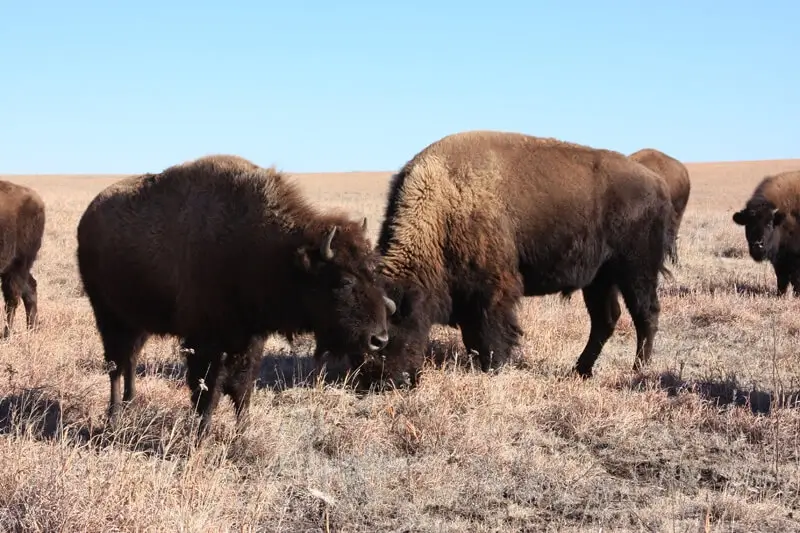
Some animals that live in the prairie like the American bison are grazers.
Some animals that live in the prairie, such as the American bison, are grazers. Others, like the black-tailed prairie dog and the American badger, are burrowers and spend most of their time underground. Other animals, such as the coyote, prey on smaller prairie animals. The prairie has lots of insects like crickets, caterpillars, and grasshoppers and is home to insect-eating birds like the western meadowlark and the killdeer.
