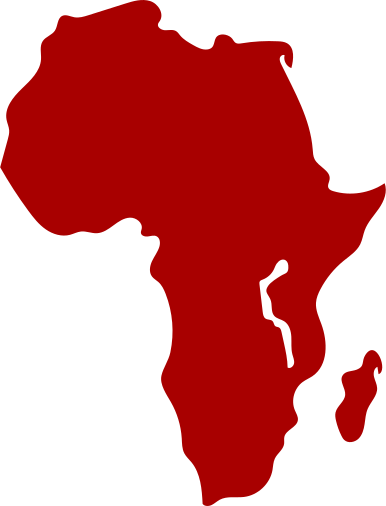
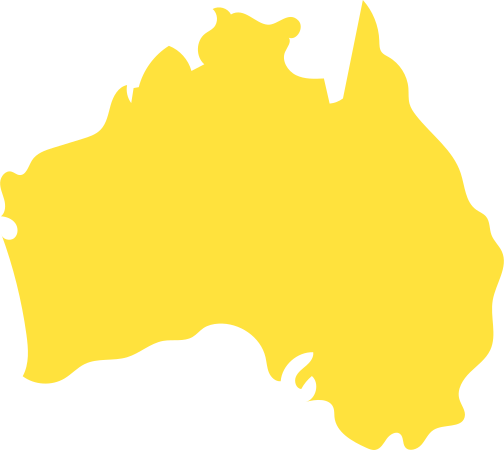
There are four living species in this family. Cassowaries are found in rainforests in Australia, New Guinea, and surrounding islands. Emus are found in Australia.
CASSOWARIES
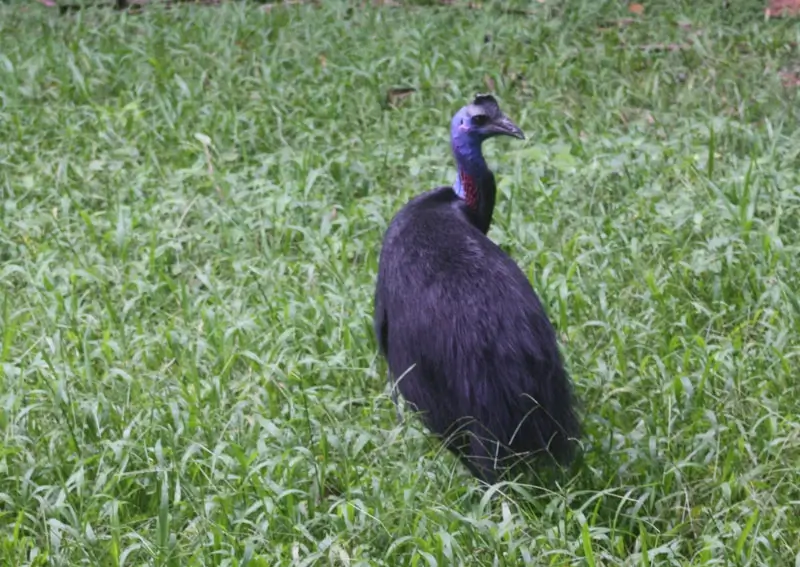
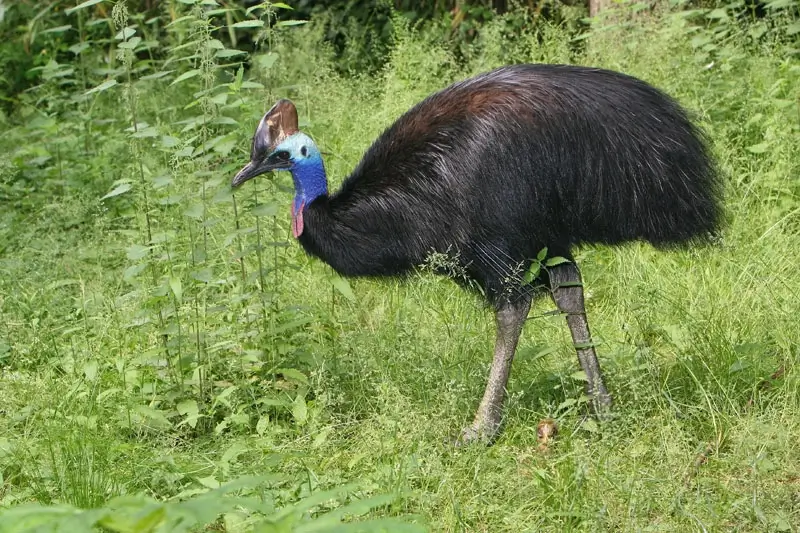
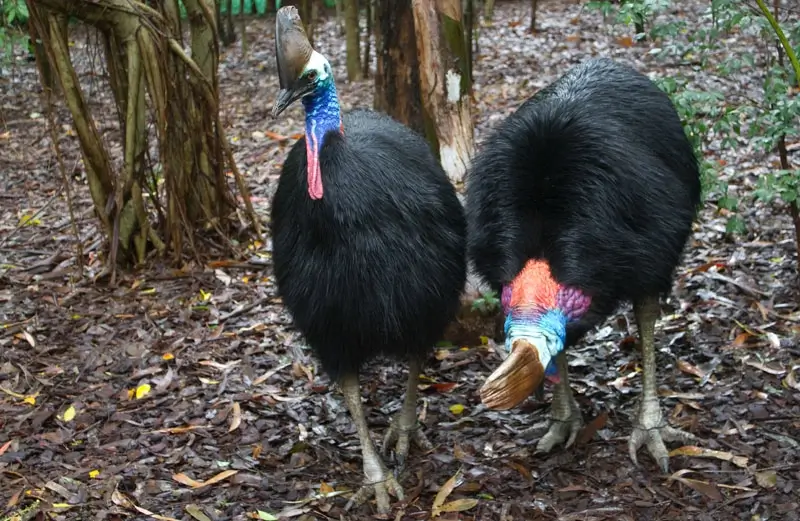
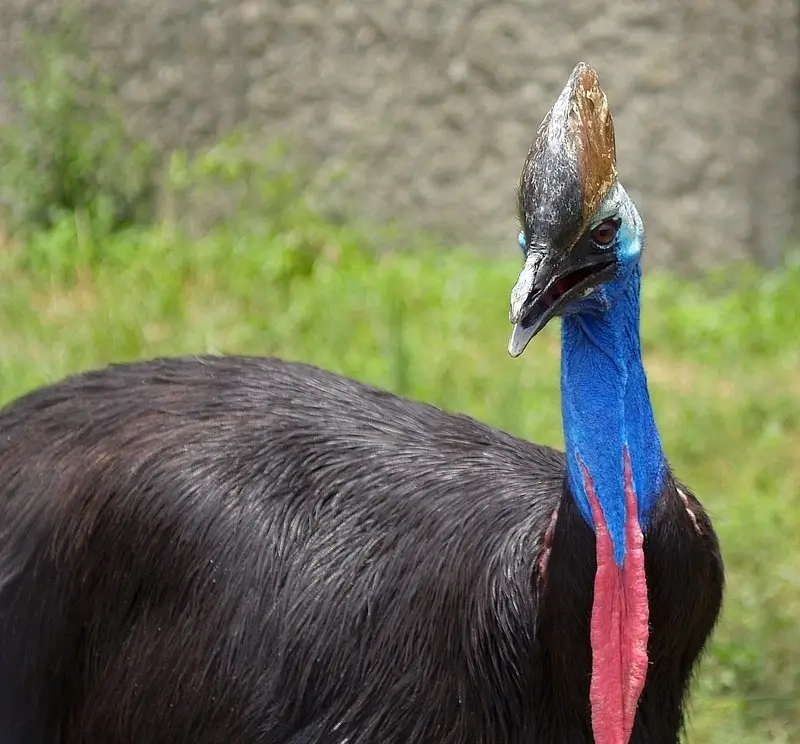
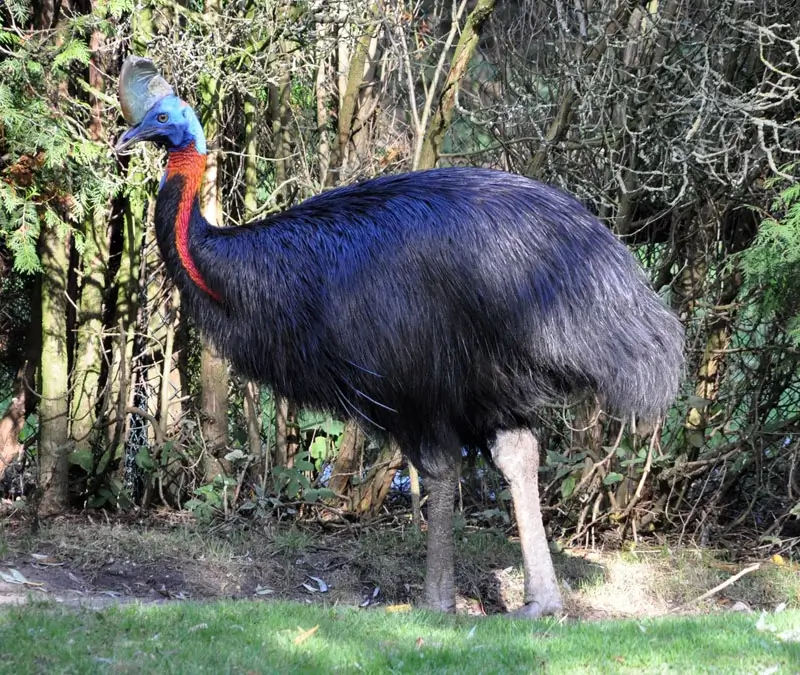
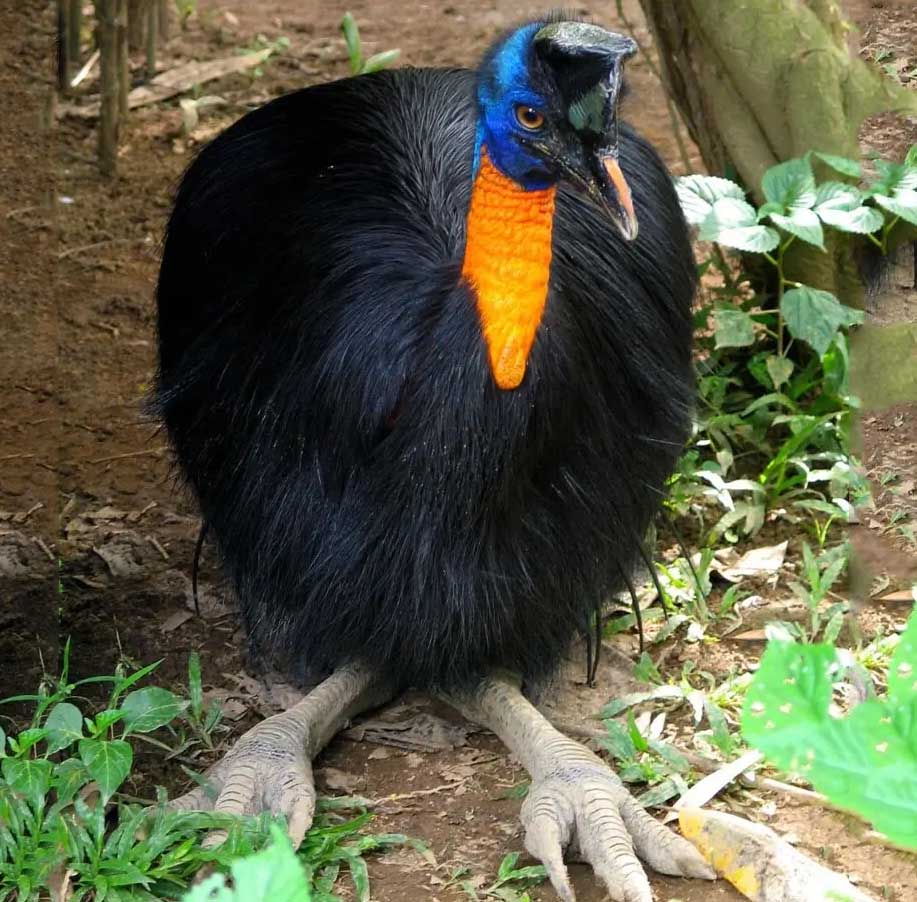
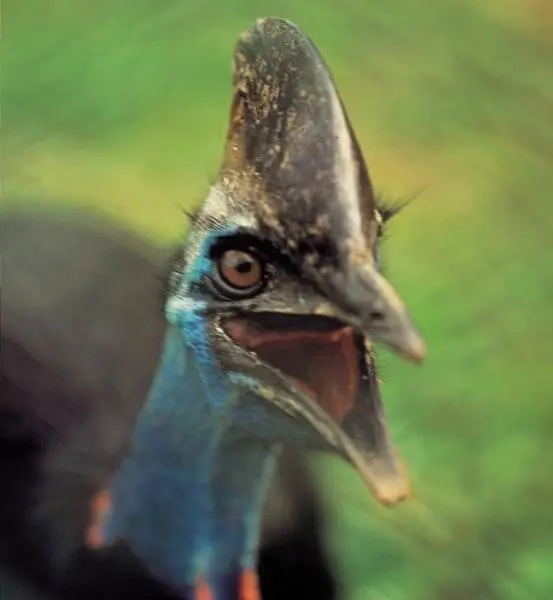
Cassowaries are around 6.5 feet (2 m) tall and weigh up to 130 pounds (59 kg). They have long legs, long necks, and rounded heads. They have long black feathers and blue and red featherless necks.
Cassowaries have a casque* on the top of their heads. Two species have wattles that hang from their necks. Females are usually larger and more brightly colored than males.
Cassowaries run at speeds of up to 30 mph (48.3 km/h) and jump to heights of 5 feet (1.5 m). If a cassowary is threatened, it kicks out and attacks with its powerful legs and sharp, dagger-like claws.
The female cassowary lays 3-8 eggs. The male incubates the eggs for 50-60 days and cares for the chicks. The cassowary eats mostly fruits, but it also eats insects, small mammals, amphibians, and reptiles.
EMUS
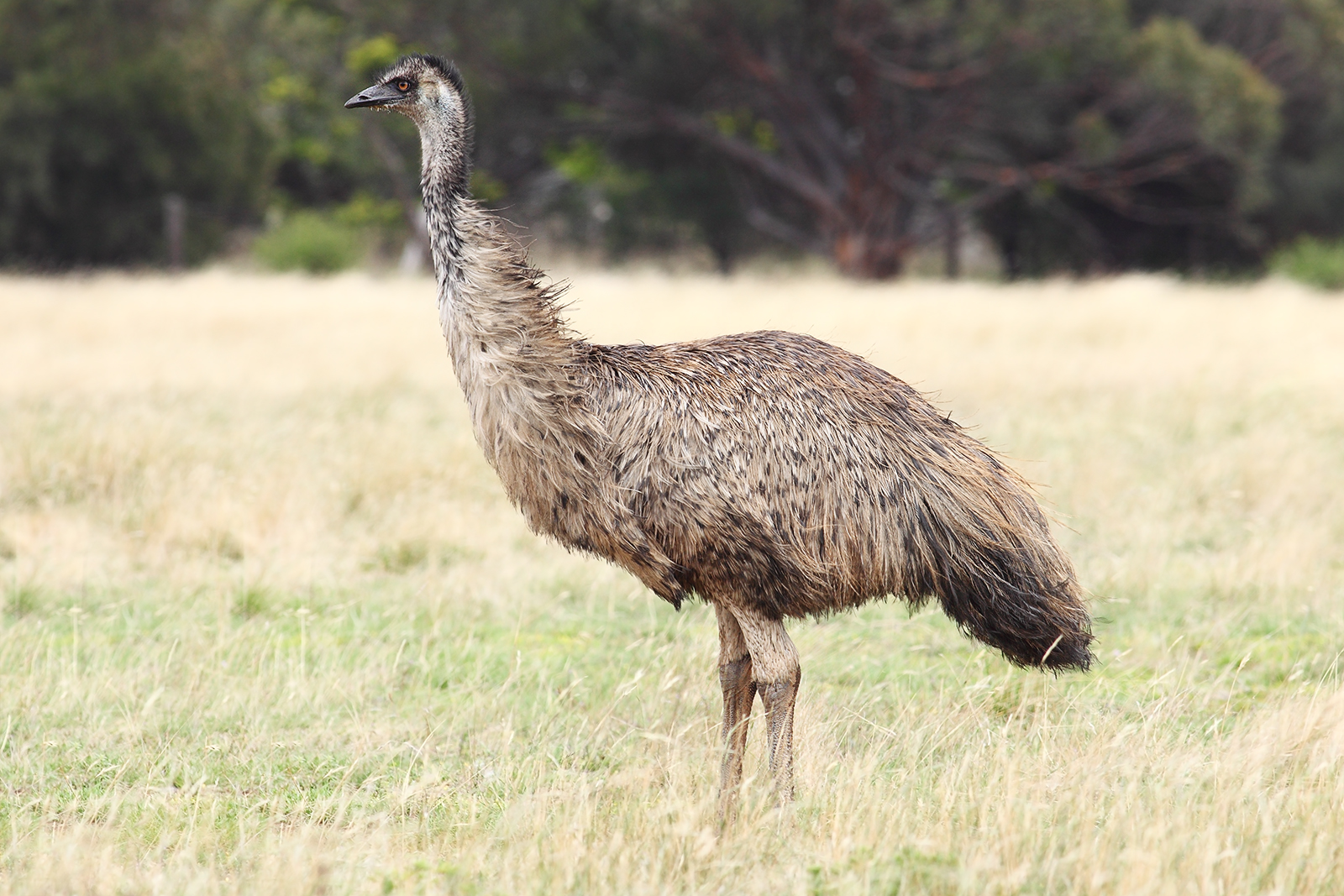
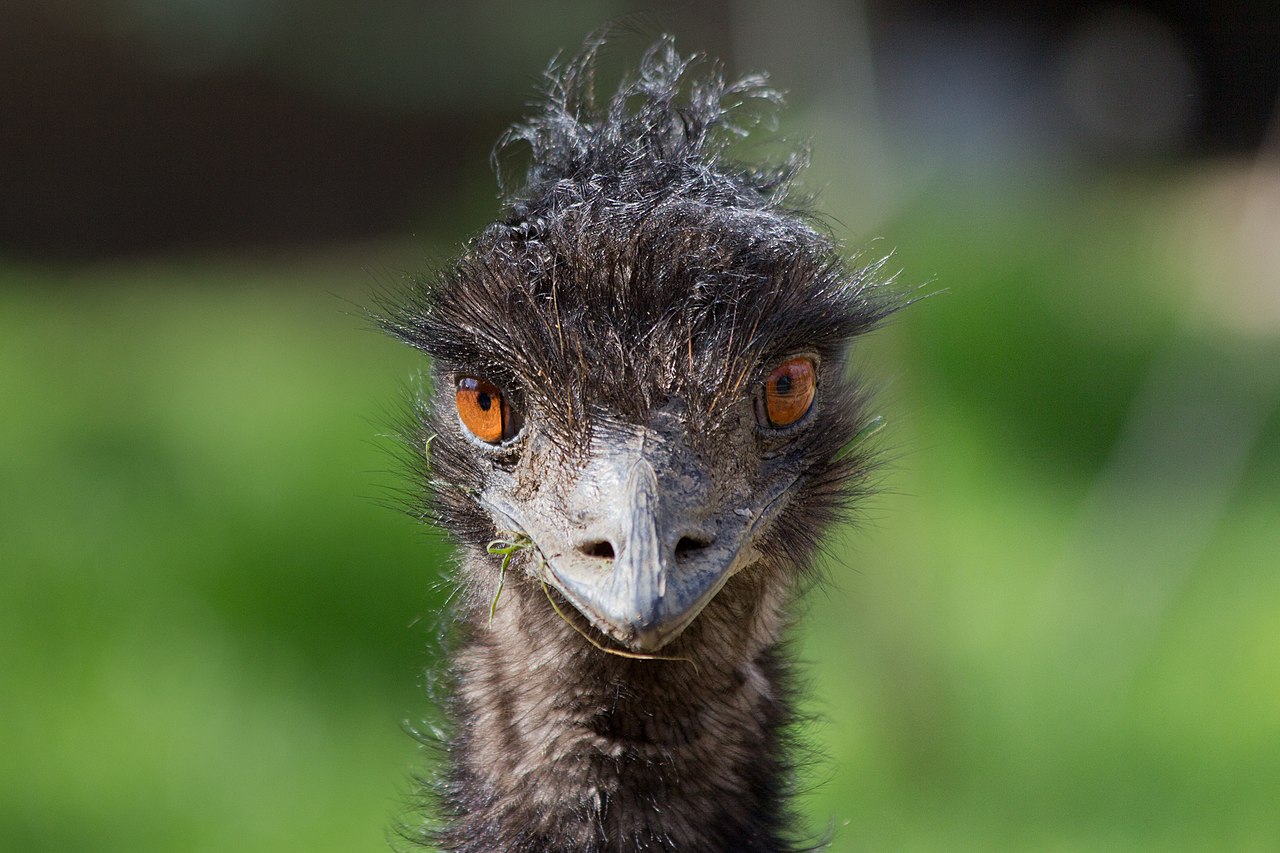
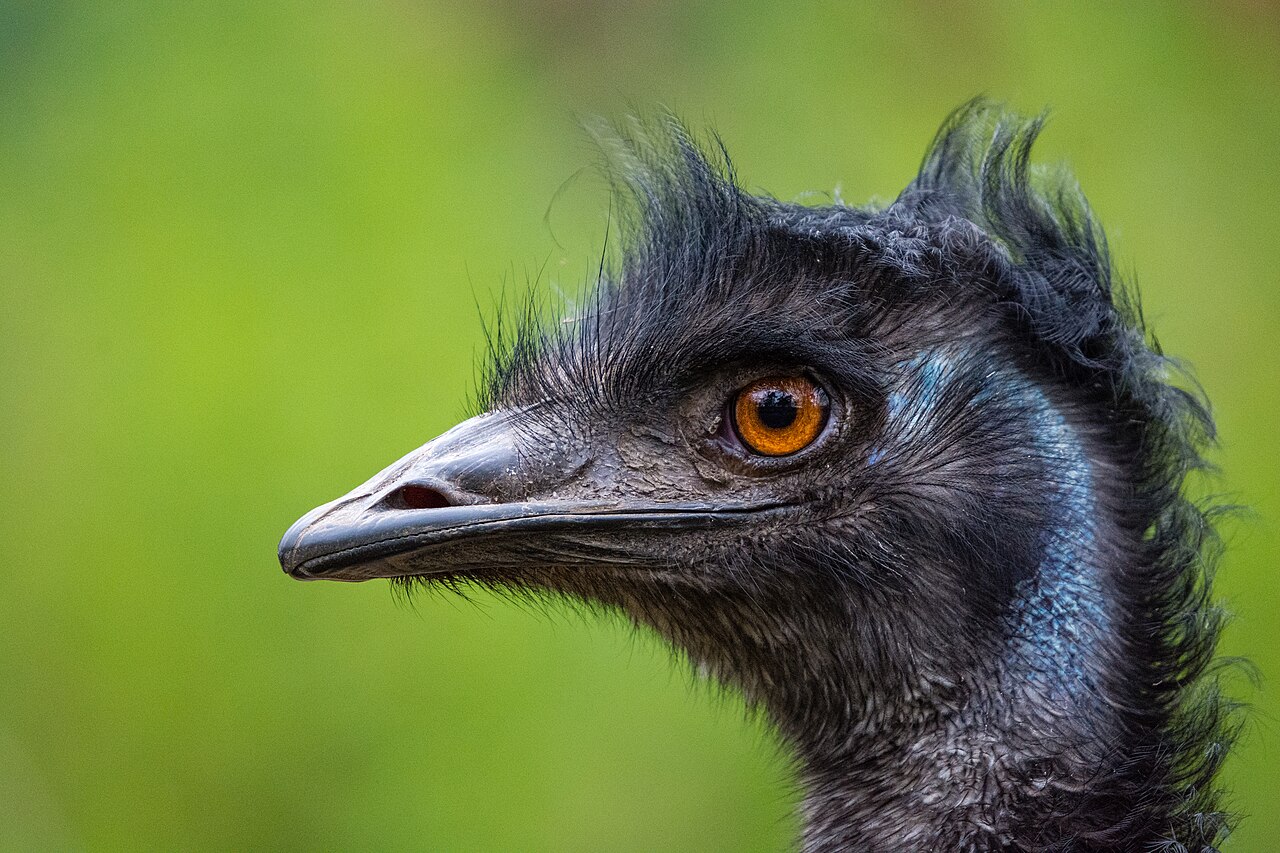
Emus are large, flightless, ostrich-like birds. They are the largest bird found in Australia and the second largest bird in the world.
They are around 6 feet (1.8 m) tall and can run at speeds of up to 30 mph (48.3 km/h).
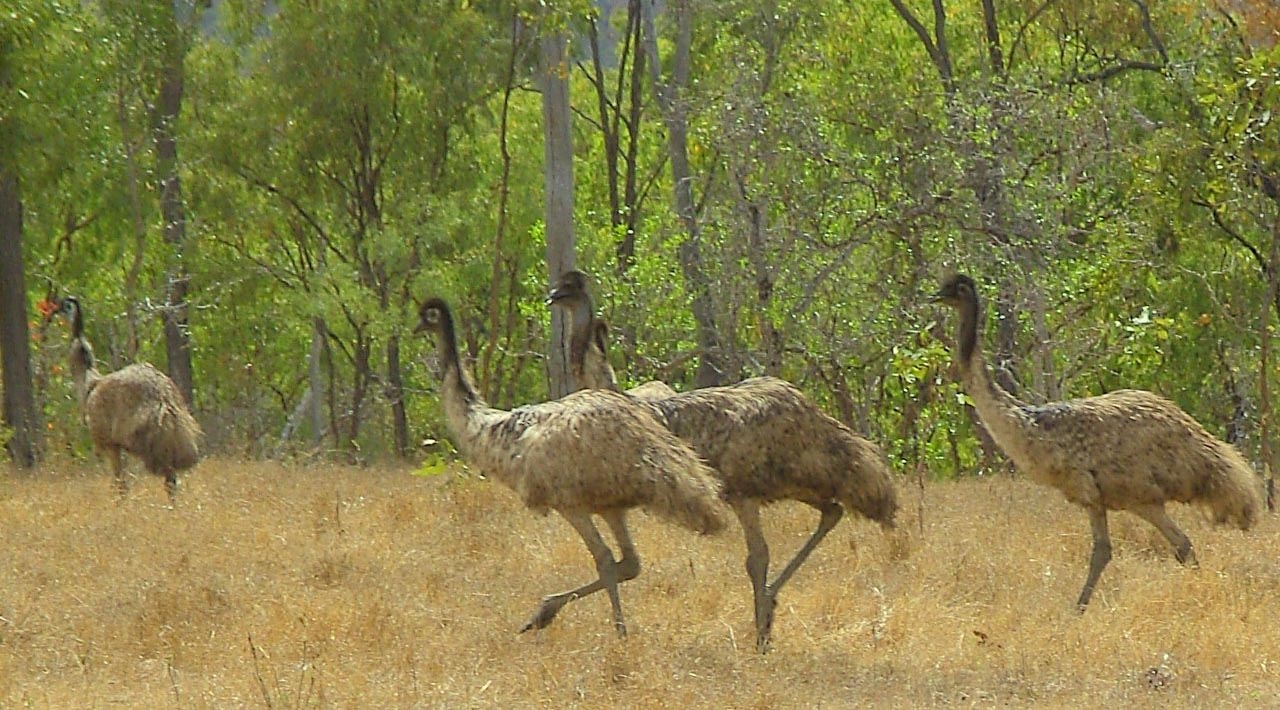
Emus are found in a variety of habitats, including dry plains and lightly forested woodlands. Emus have powerful legs, long necks, round heads, small wings, and shaggy gray feathers.
Emus move from place to place in search of food. They eat insects, grass, leaves, berries, flowers, fruit, and seeds.
The female emu lays 5-20 eggs in a nest on the ground. The male incubates the eggs for 8-10 weeks and raises the chicks. The chicks may stay with their father for up to two years.
*A casque is a hard, helmet-like growth on the head of some animals, especially birds such as cassowaries and hornbills.