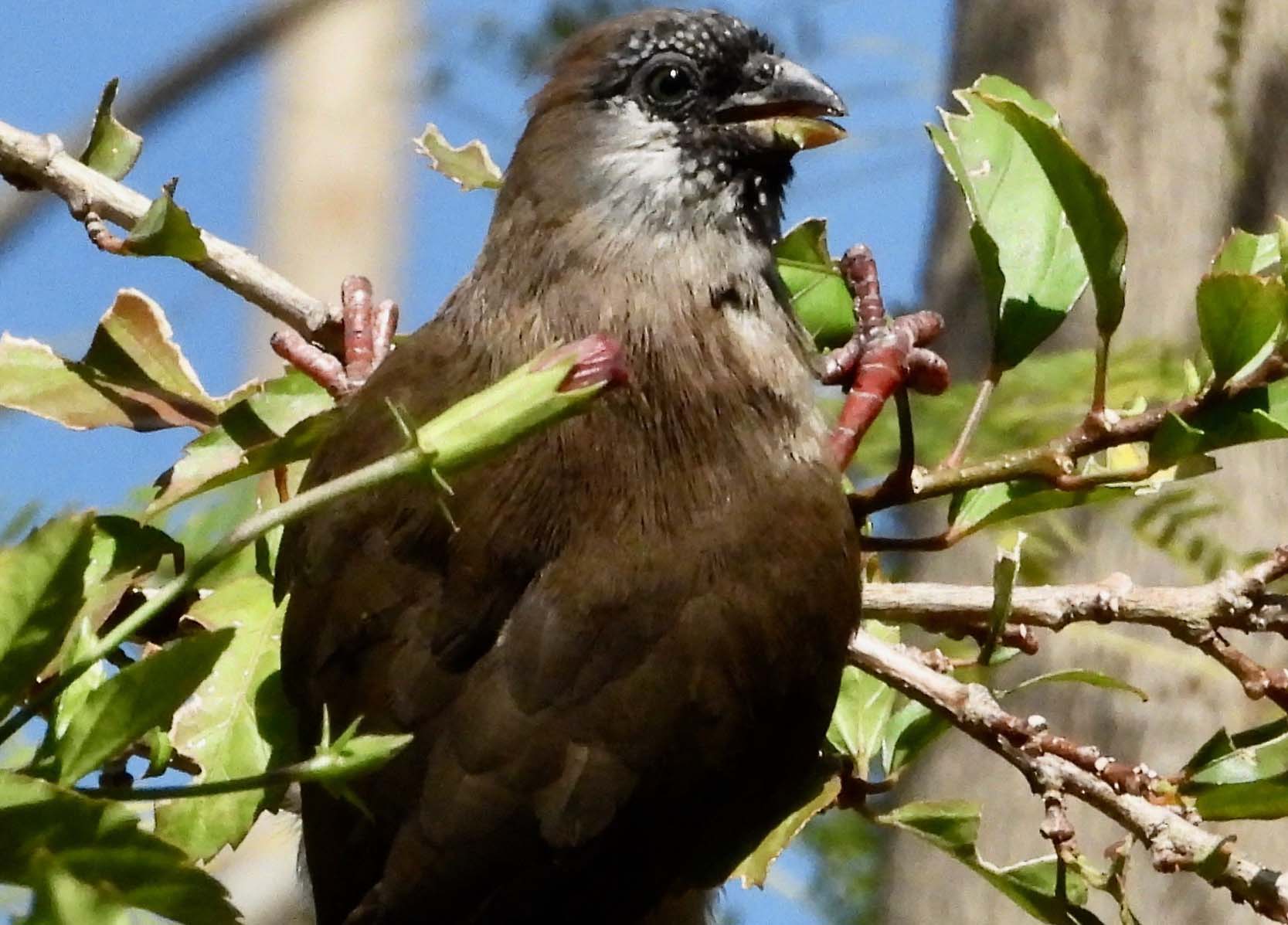
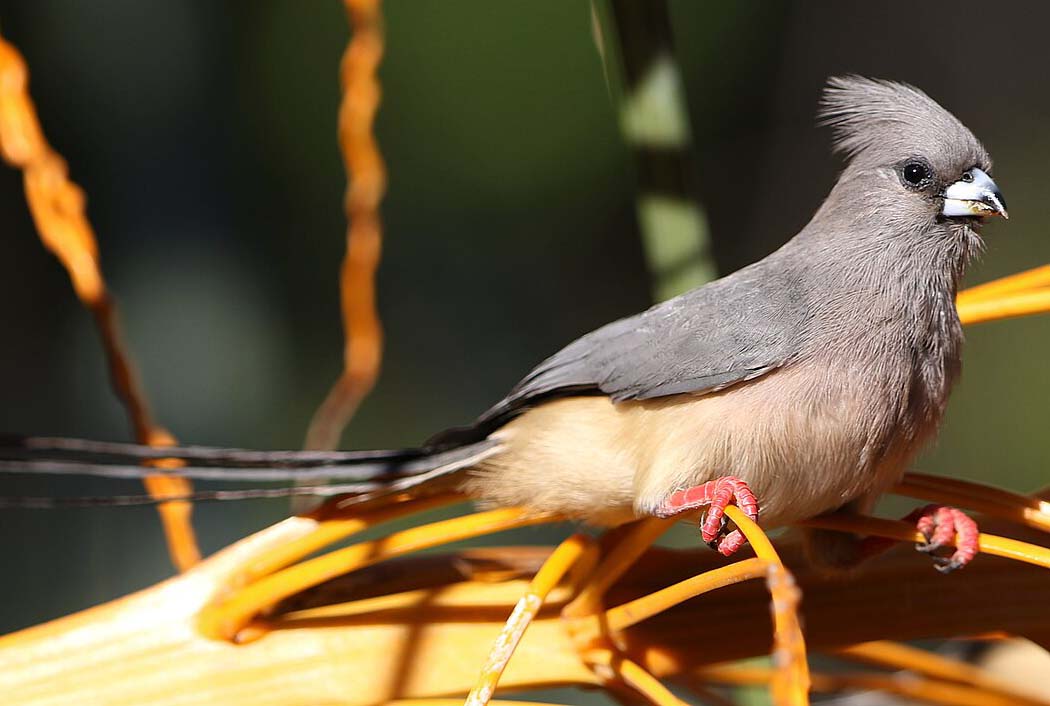
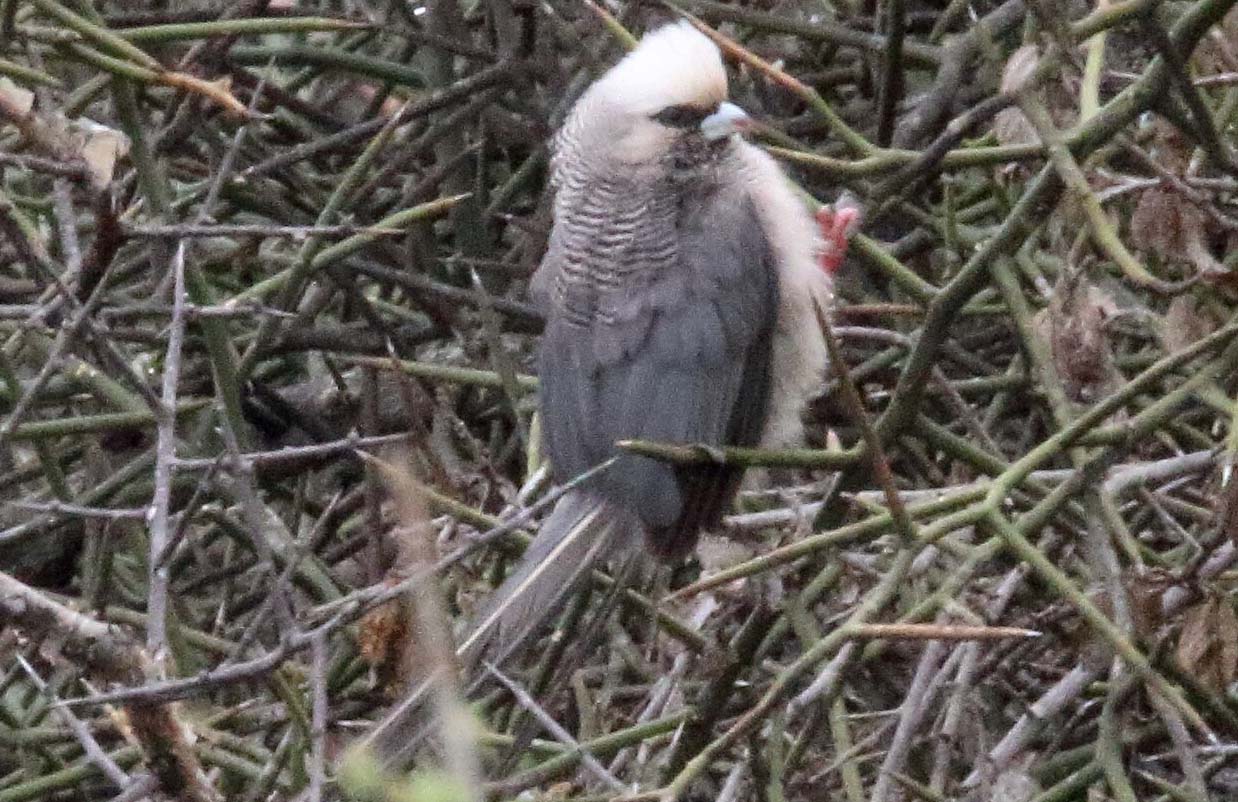
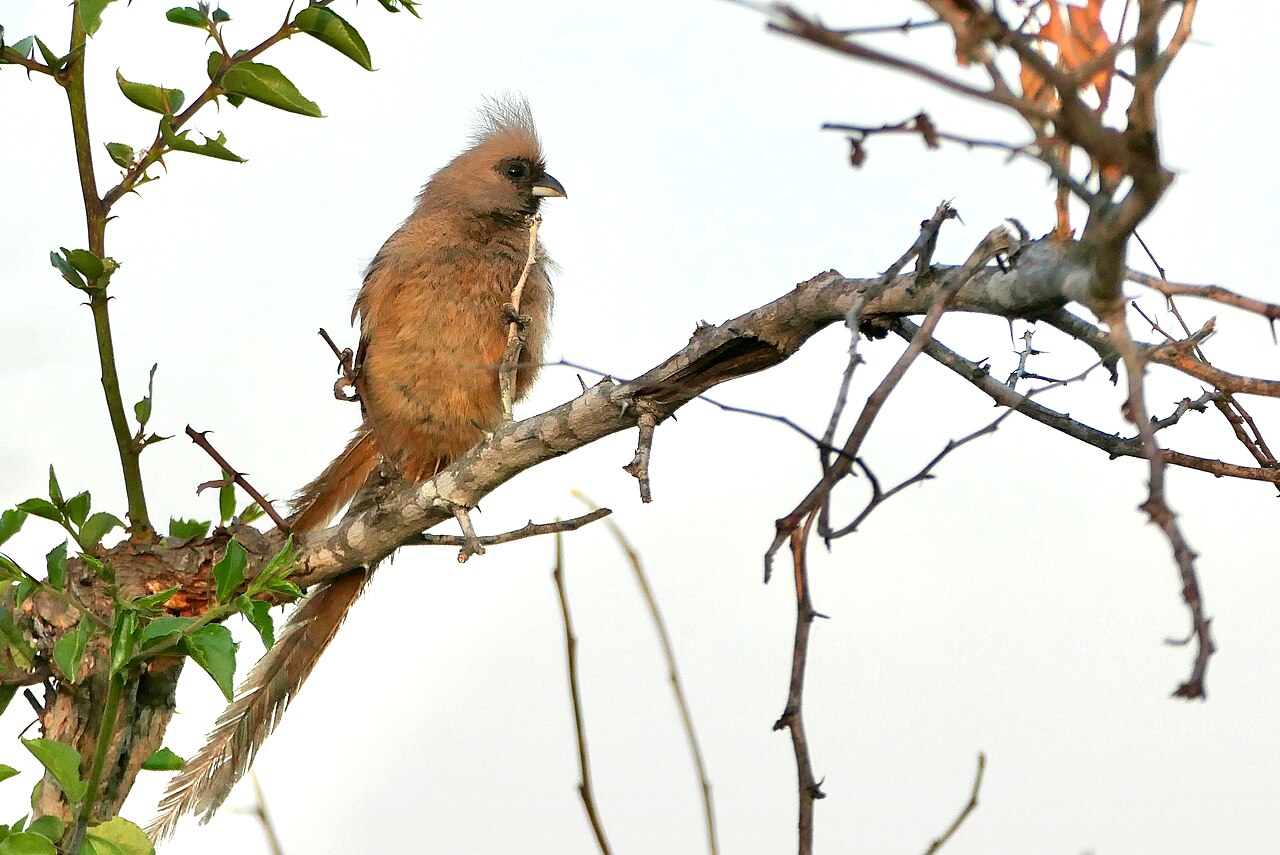
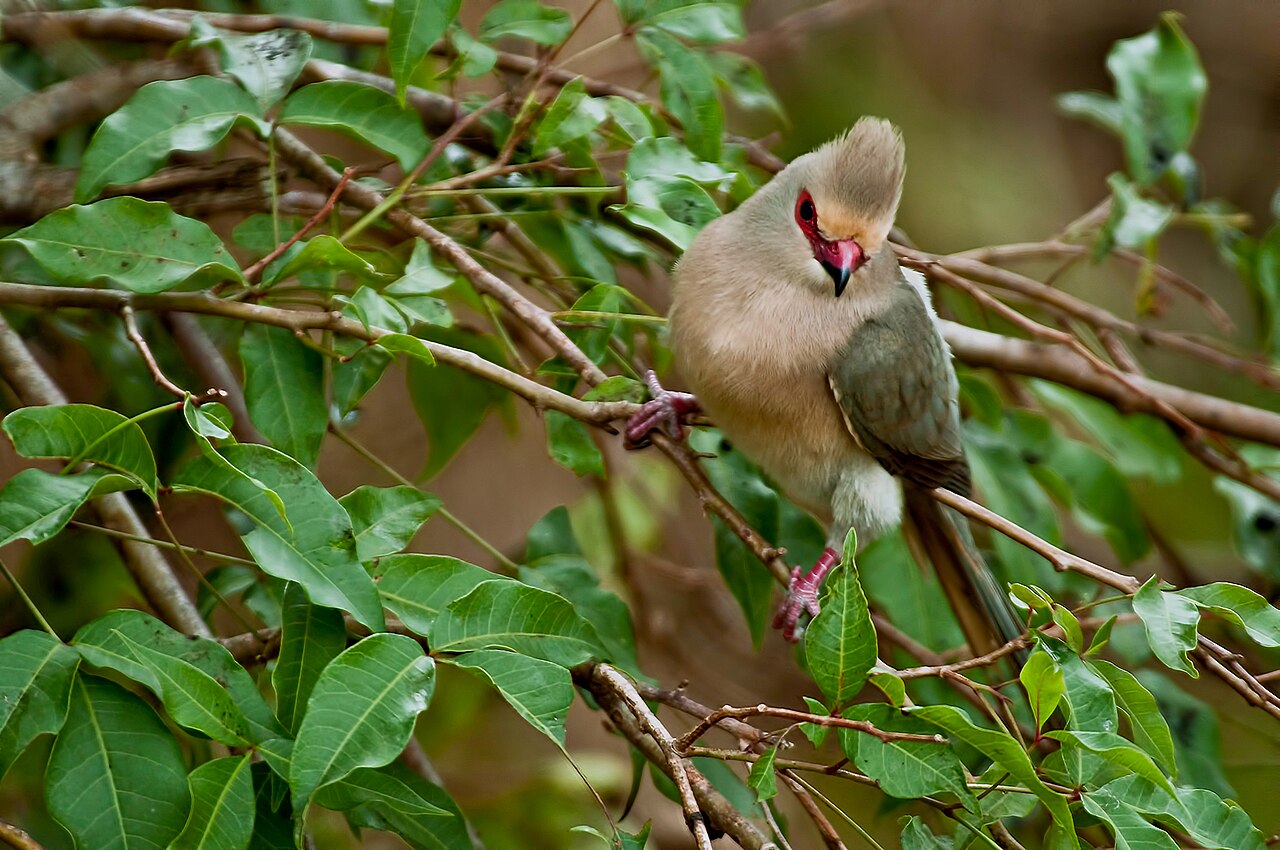
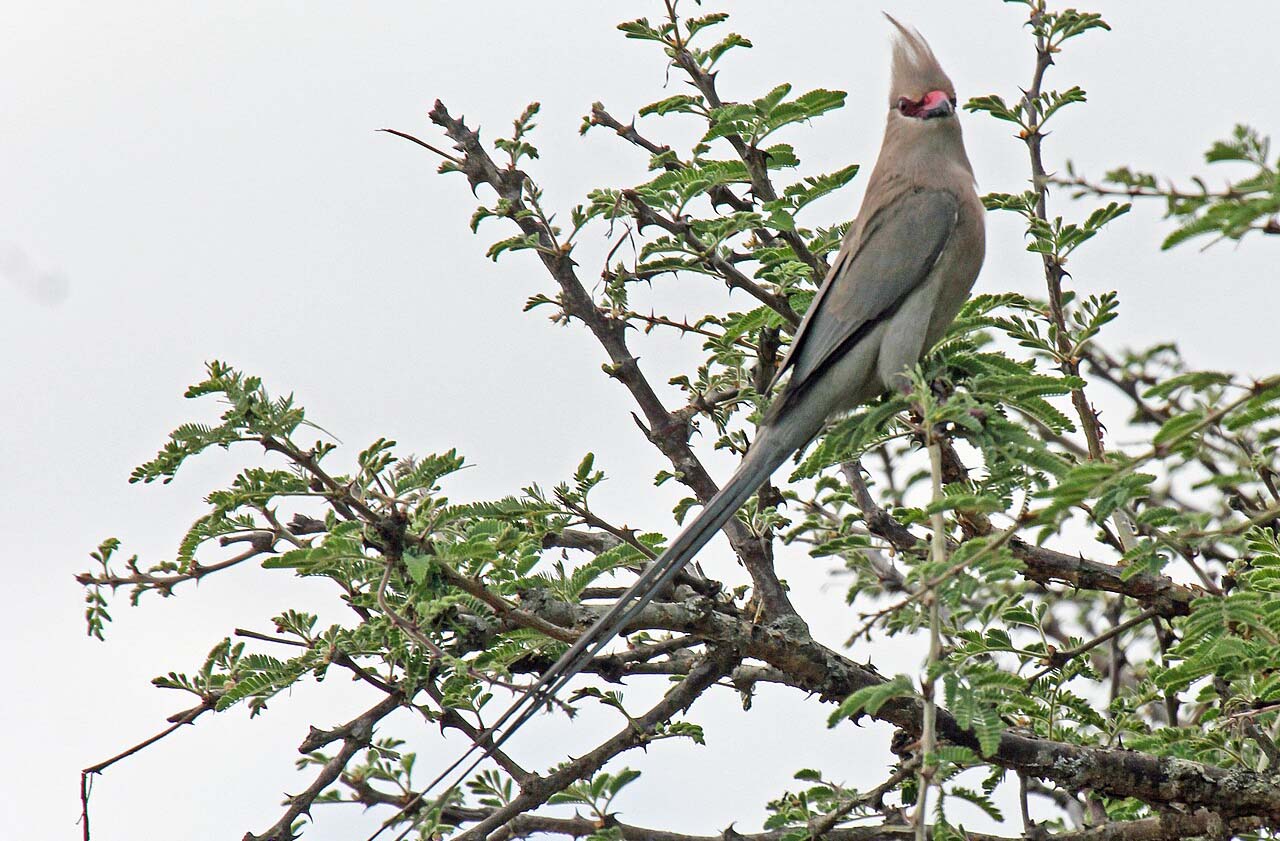
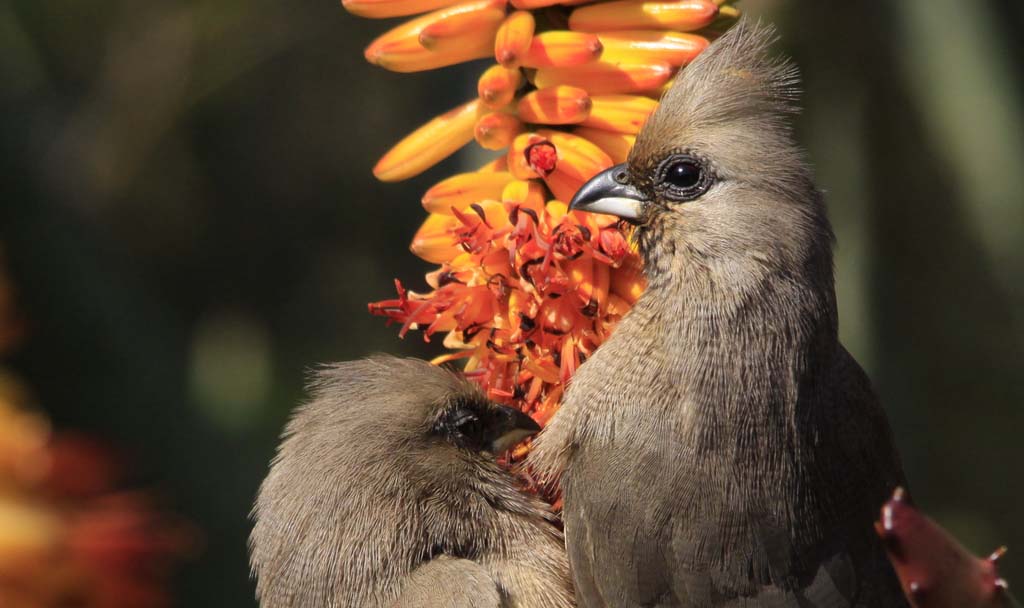
There are six species of mousebirds: the Red-backed Mousebird (Colius castanotus), the White-backed Mousebird (Colius colius), the White-headed Mousebird (Colius leucocephalus), the Speckled Mousebird (Colius striatus), the Red-faced Mousebird (Urocolius indicus), and the Blue-naped Mousebird (Urocolius macrourus).
Mousebirds are found throughout much of sub-Saharan Africa, where they live in woodlands, savannas, scrublands, gardens, and forest edges. They are small, slender birds that grow up to about 15 inches (38.1 cm) long, including their long, thin tails. Most species are gray or brownish-gray, with soft, fluffy feathers, stout bills, and distinctive crests on their heads.
Mousebirds get their name from the way they scamper through branches like mice rather than hopping from branch to branch like many other birds. Their feet are unusual because they can rotate their outer toes, allowing them to climb and grasp branches in different ways. Their strong feet and sharp claws also allow them to hang upside down while feeding.
Mousebirds mainly eat fruits, berries, leaves, buds, flowers, and nectar. They may also eat small insects on occasion. Because they feed heavily on fruit, they can help disperse seeds throughout their habitat.
These birds are highly social and are often seen in flocks of several to dozens of individuals. Group members feed, rest, and roost together and may huddle closely to stay warm during cool nights. Mousebirds build small cup-shaped nests in shrubs or trees, where the female lays a clutch of eggs. In some species, other flock members may help care for the young.
Mousebirds are also commonly known as colies. They are the only living members of the order Coliiformes.