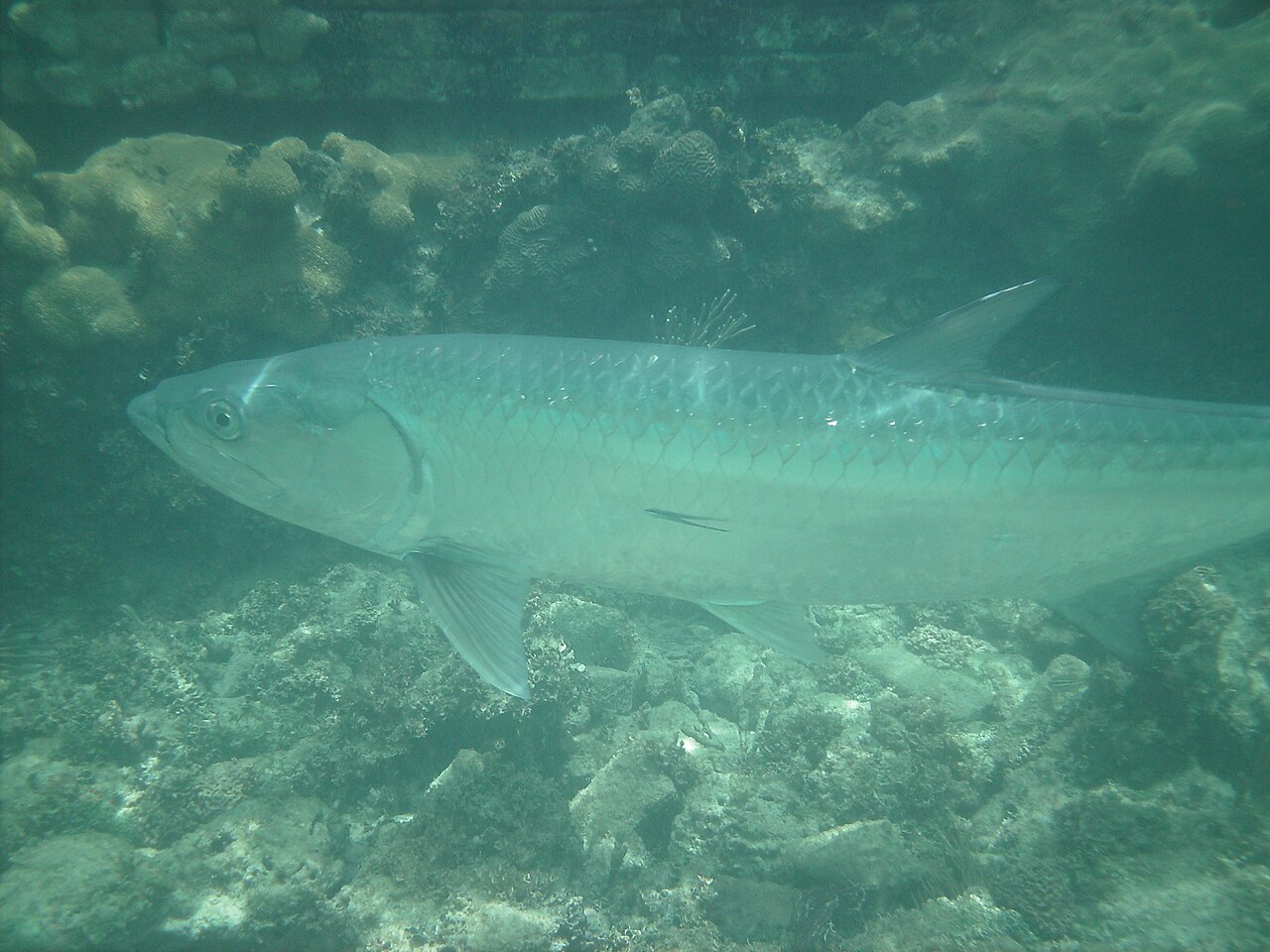
There are nine extant (living) species of ray-finned fish in this order, grouped into two families: Elopidae and Megalopidae. Many Elopiformes can tolerate a wide range of salinity (salt) levels, allowing them to live not only in the ocean but also in estuaries and coastal rivers.
Elopiformes are an ancient group with a long fossil record—in fact, more fossil species are known than living ones.
Their long, streamlined bodies help them swim quickly. Most species are covered in shiny, reflective scales, giving them a silvery appearance. They typically have large eyes and deeply forked tails.
Elopiformes are carnivores, feeding mainly on smaller fish and crustaceans. Their lower jaw can angle upward, helping them grasp slippery prey.
Their larvae, called leptocephali, are flat, transparent, and resemble eel larvae more than typical fish larvae. However, unlike eel larvae, they have a forked tail fin.