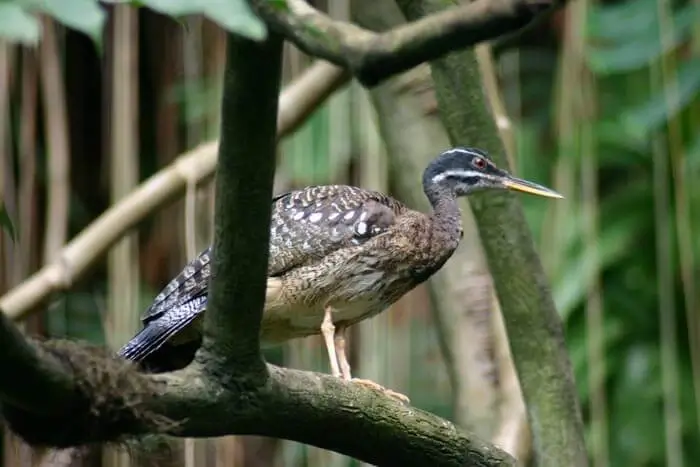
The Eurypygidae family has just one living species—the Sunbittern (Eurypyga helias). It lives in woodland swamps, streams, and forests from southern Mexico through Central America and much of tropical South America to Brazil and northern Bolivia.
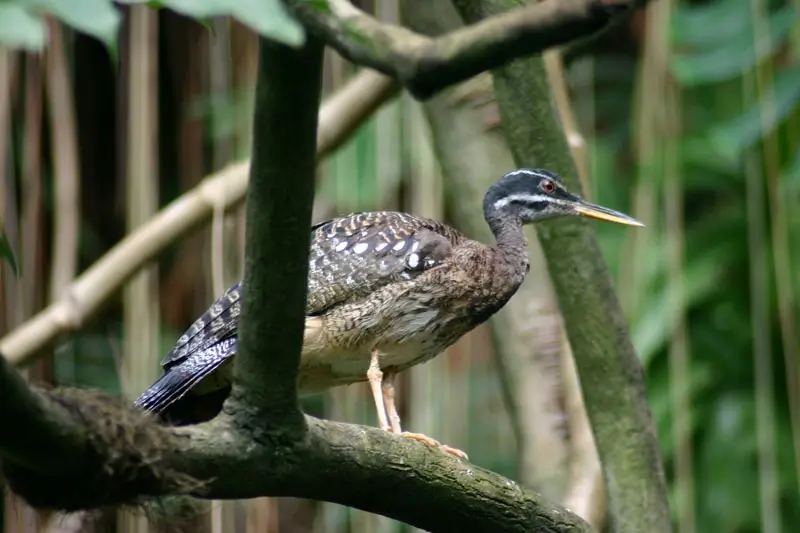
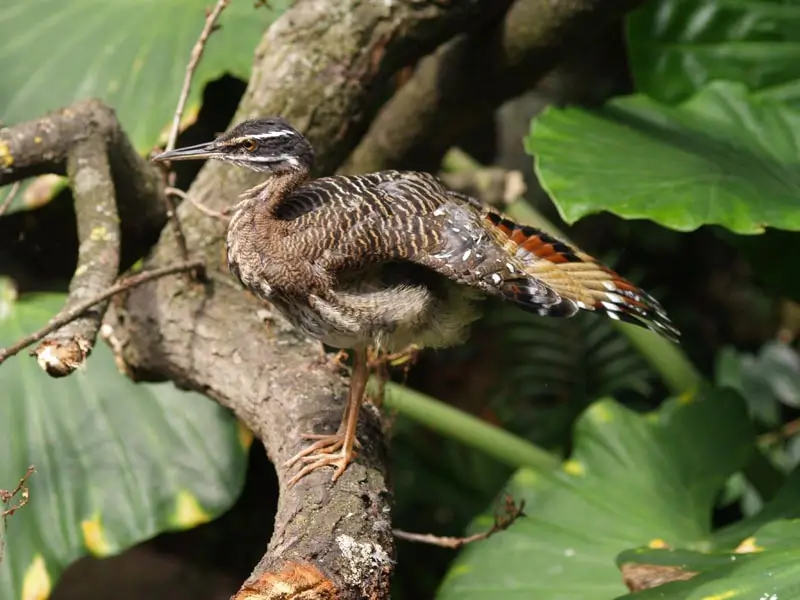
The Sunbittern is about 18 inches (45.7 cm) long. It has a long, straight bill, a slender neck, a long, pointed tail, and medium-length legs. Its mottled brown, gray, and black feathers help it blend into its surroundings.
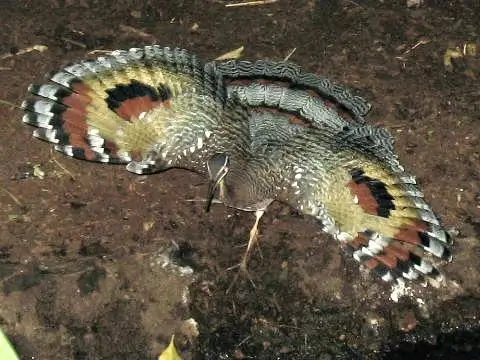
Its most unusual feature is the pair of large, colorful “eyespots” on its wings. These markings are hidden when the wings are folded but become visible when the bird spreads them. The Sunbittern flashes these eyespots to startle predators or protect its nest.
During courtship, the male and female perform a graceful dance with their wings and tails spread wide. Both parents build a dome-shaped nest in a tree, incubate the eggs, and care for the chicks.
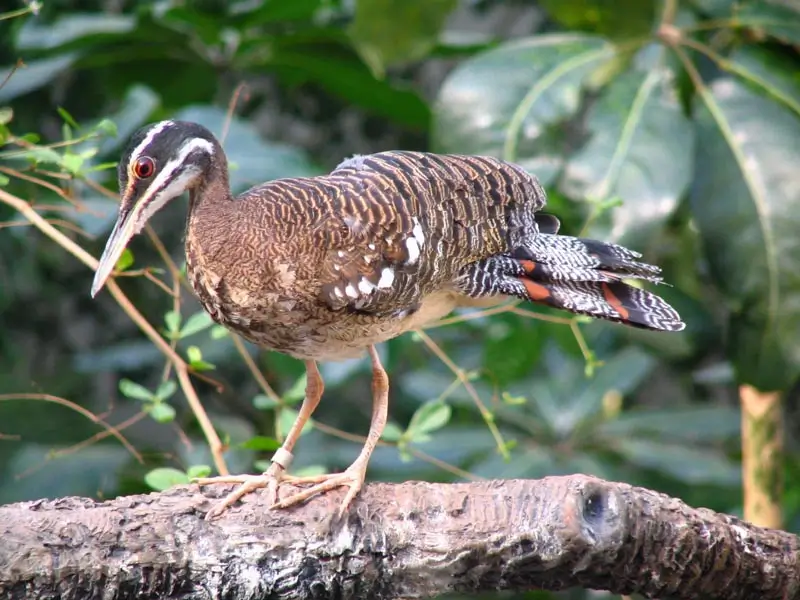
Sunbitterns feed on amphibians, fish, crustaceans, insects, and other small animals. They hunt by slowly wading through shallow water and quickly stabbing their prey with their sharp bills.
Sunbittern (Eurypyga helias)
The Sunbittern is found in Bolivia, Brazil, Colombia, Costa Rica, Ecuador, French Guiana, Guatemala, Guyana, Honduras, Mexico, Nicaragua, Panama, Peru, Suriname, and Venezuela. IUCN Redlist Status: Least Concern
Sunbittern (Eurypyga helias)
The Sunbittern's mottled plumage helps keep it camouflaged. IUCN Redlist Status: Least Concern
Sunbittern (Eurypyga helias)
The Sunbittern's most unusual feature is the large eyespots on its wings. They are only visible when its wings are open. It uses these eyespots to startle prey. IUCN Redlist Status: Least Concern
Sunbittern (Eurypyga helias)
The Sunbittern eats amphibians, fish, crustaceans, and insects. It wades in shallow water and stabs it prey with its sharp bill. IUCN Redlist Status: Least Concern