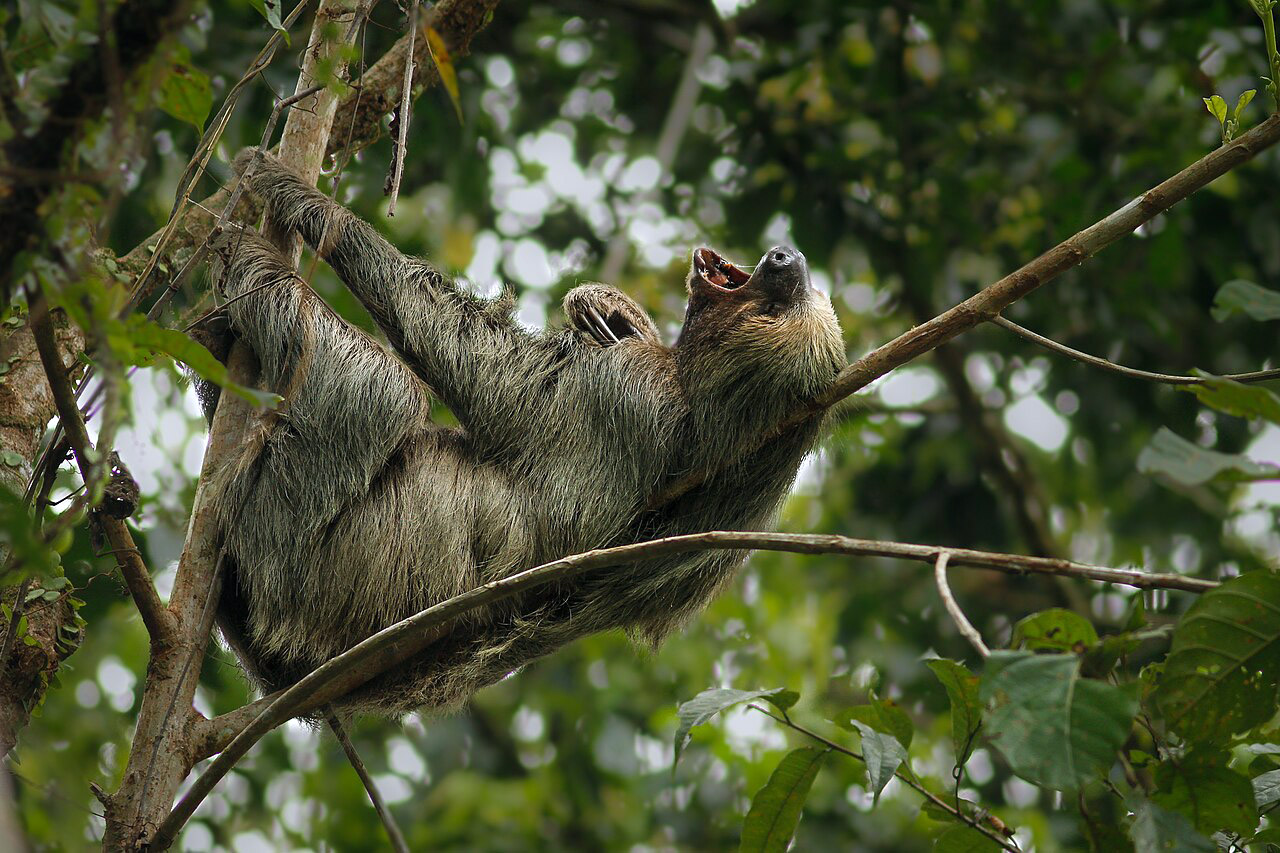
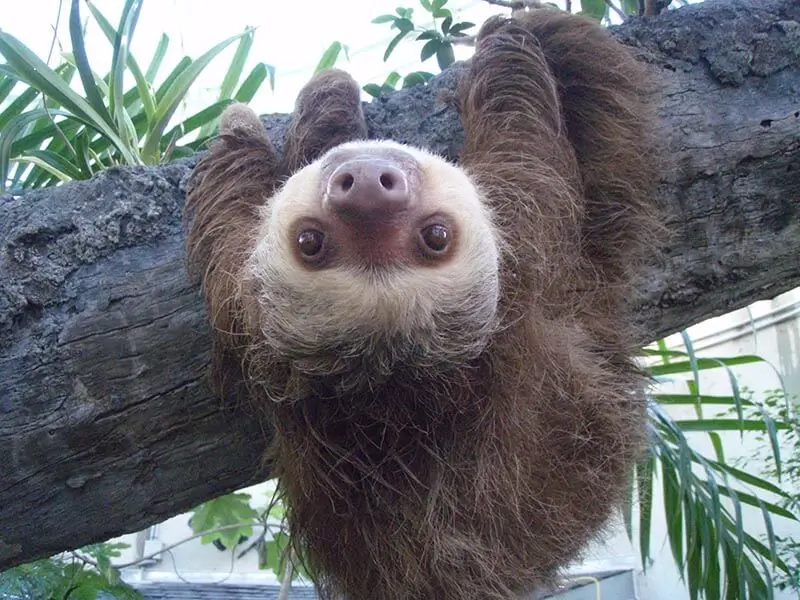
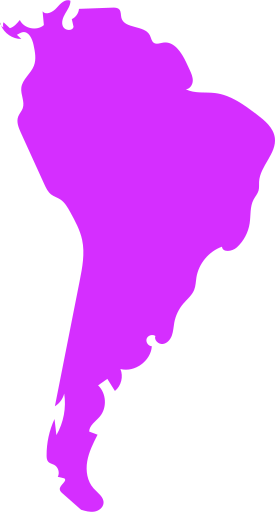
There are two extant (living) species in the Megalonychidae family: Linné’s Two-toed Sloth (Choloepus didactylus) and Hoffmann’s Two-toed Sloth (Choloepus hoffmanni). They live in tropical forests in Central America and northern South America. They spend most of their lives in trees.
Two-toed sloths are generally larger than three-toed sloths. They have round heads, tiny ears, long front and back limbs, and a very short tail. Their bodies measure about 21–35 inches (53–89 cm) long, depending on the species.
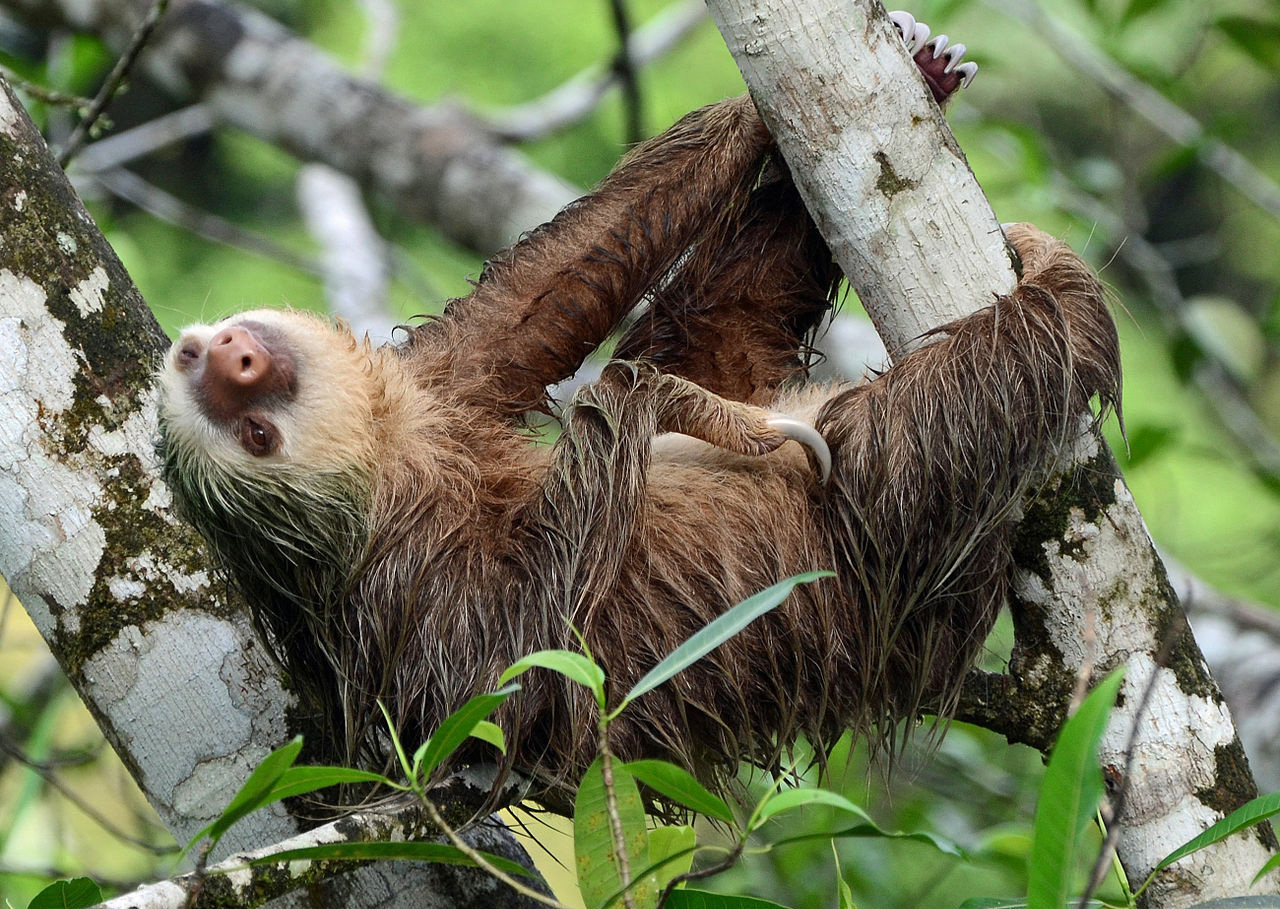
Two-toed sloths have two long, curved claws on each front foot and three claws on each back foot. These strong claws help them grip branches and hang upside down in trees.
Their long fur is usually grayish-brown, tan, or brown. It can develop a greenish tint because algae grow on the hairs. This greenish color helps the sloths blend in with the trees and hide from predators.
Unlike most mammals, a two-toed sloth’s fur grows from its belly toward its back. This unusual growth pattern helps rainwater drain away while the sloth hangs upside down.
Two-toed sloths are mainly herbivores. They eat leaves, buds, young twigs, fruit, and flowers. They sometimes eat insects or other small animals. They are primarily nocturnal, which means they are most active at night. They rest and sleep for many hours during the day. Their slow metabolism helps them conserve energy and survive on a diet that takes a long time to digest.
Linné's Two-toed Sloth (Choloepus didactylus)
Linné's Two-toed Sloth, asl known as Linnaeus's Two-toed Sloth or the Southern Two-toed Sloth, is the size of a small dog. It is found in northern Brazil, Colombia, Ecuador, French Guiana, Guyana, Peru, Suriname, and Venezuela. IUCN Redlist Status: Least Concern
Hoffmann's Two-toed Sloth (Choloepus hoffmanni)
Hoffmann's Two-toed Sloth is a good swimmer and will take advantage of the flooded forest floor during the rainy season to swim to a new area. It is found in Bolivia, Brazil, Colombia, Costa Rica, Ecuador, Honduras, Nicaragua, Panama, Peru, and Venezuela. IUCN Redlist Status: Least Concern