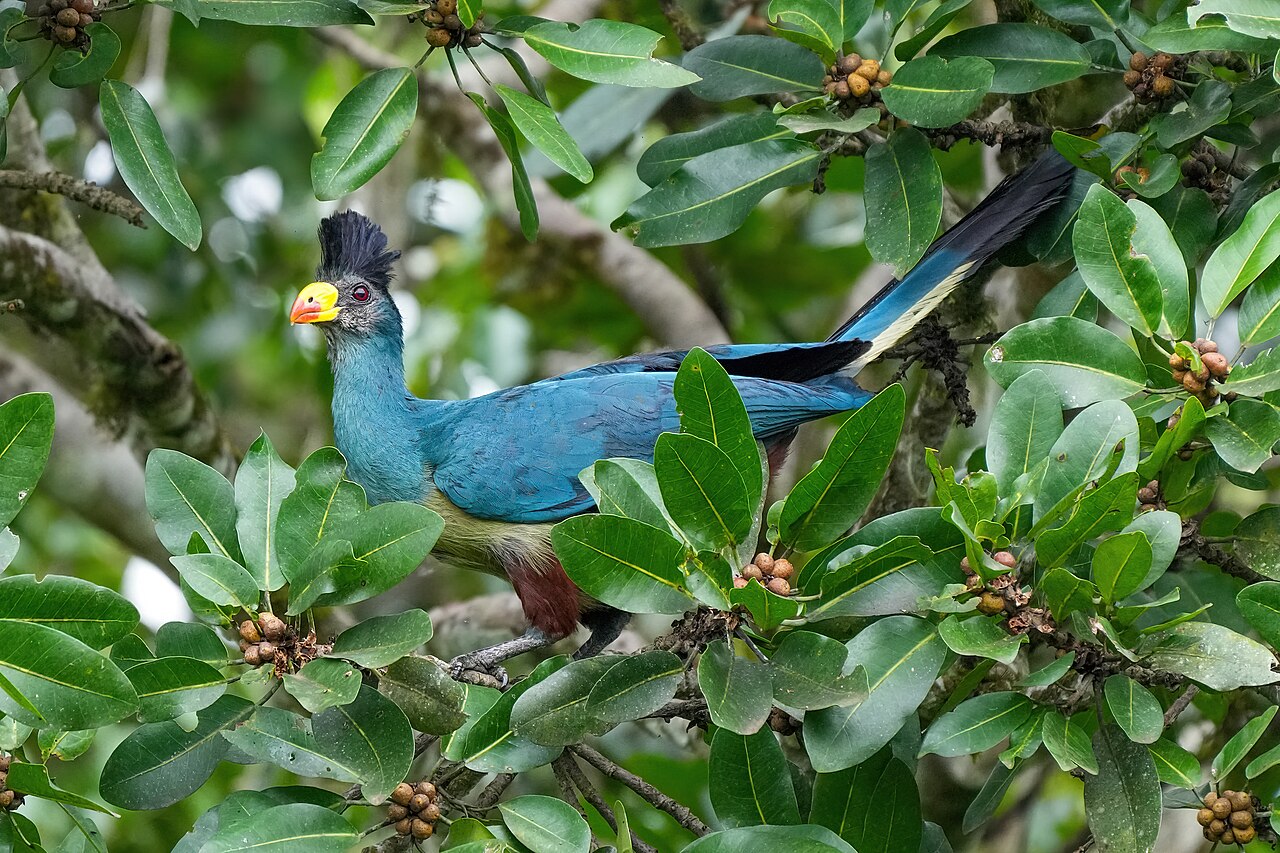
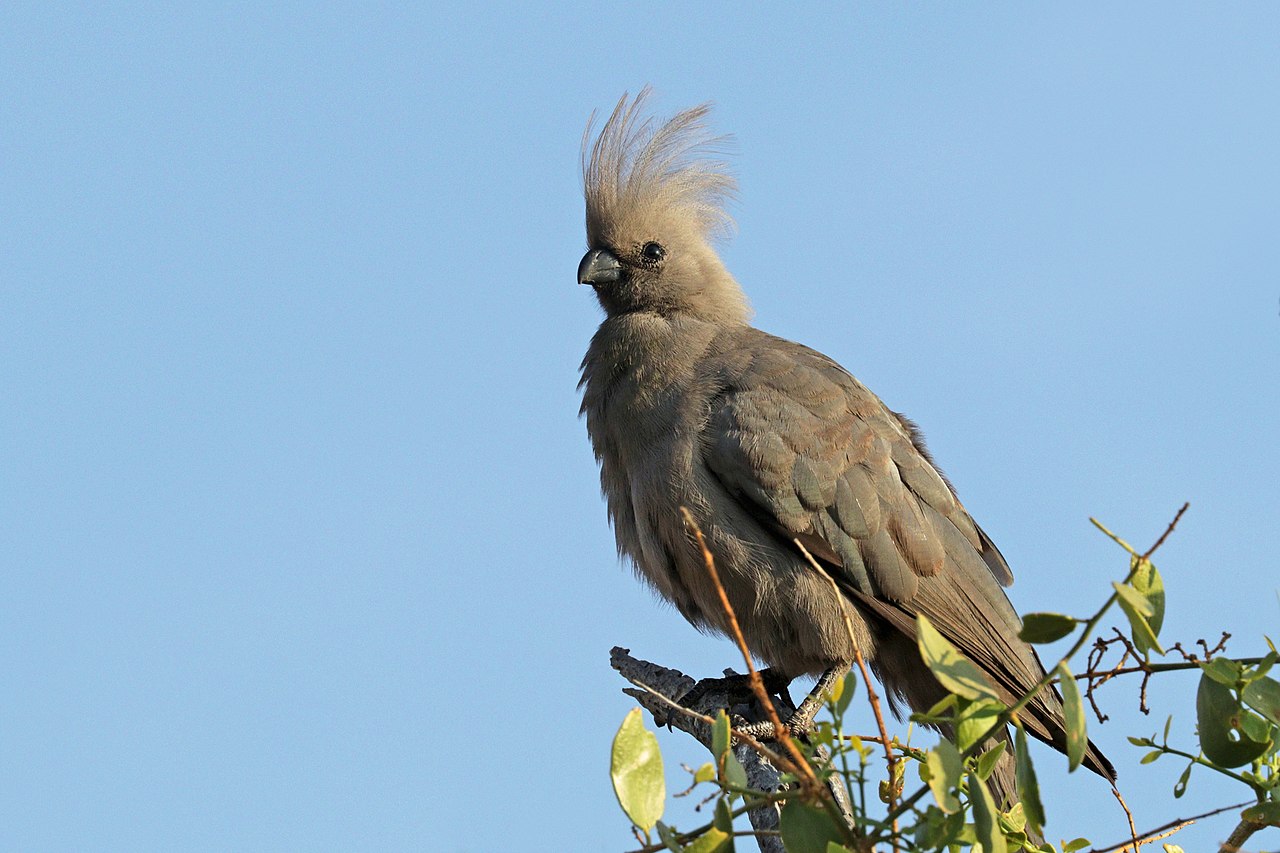
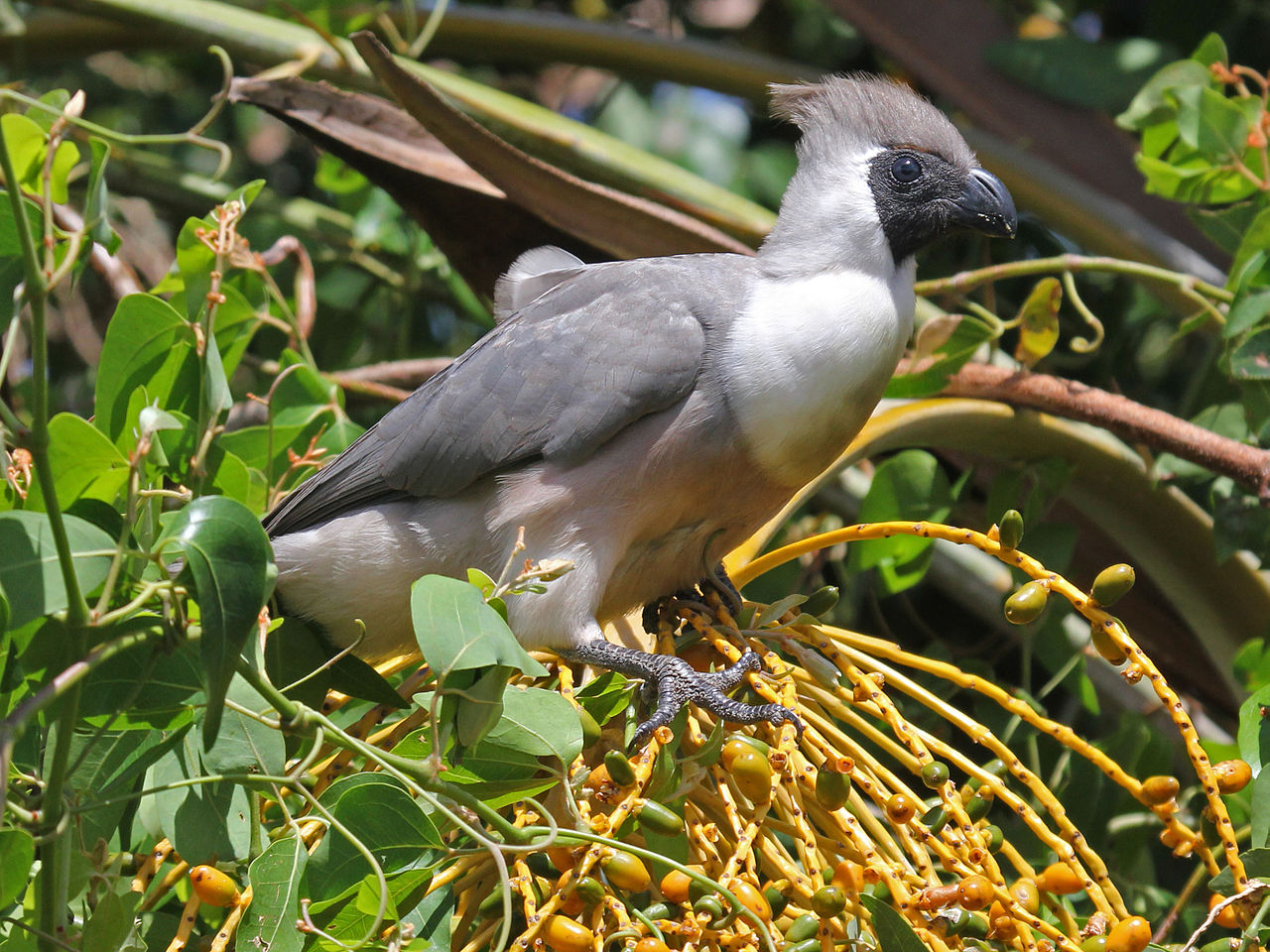
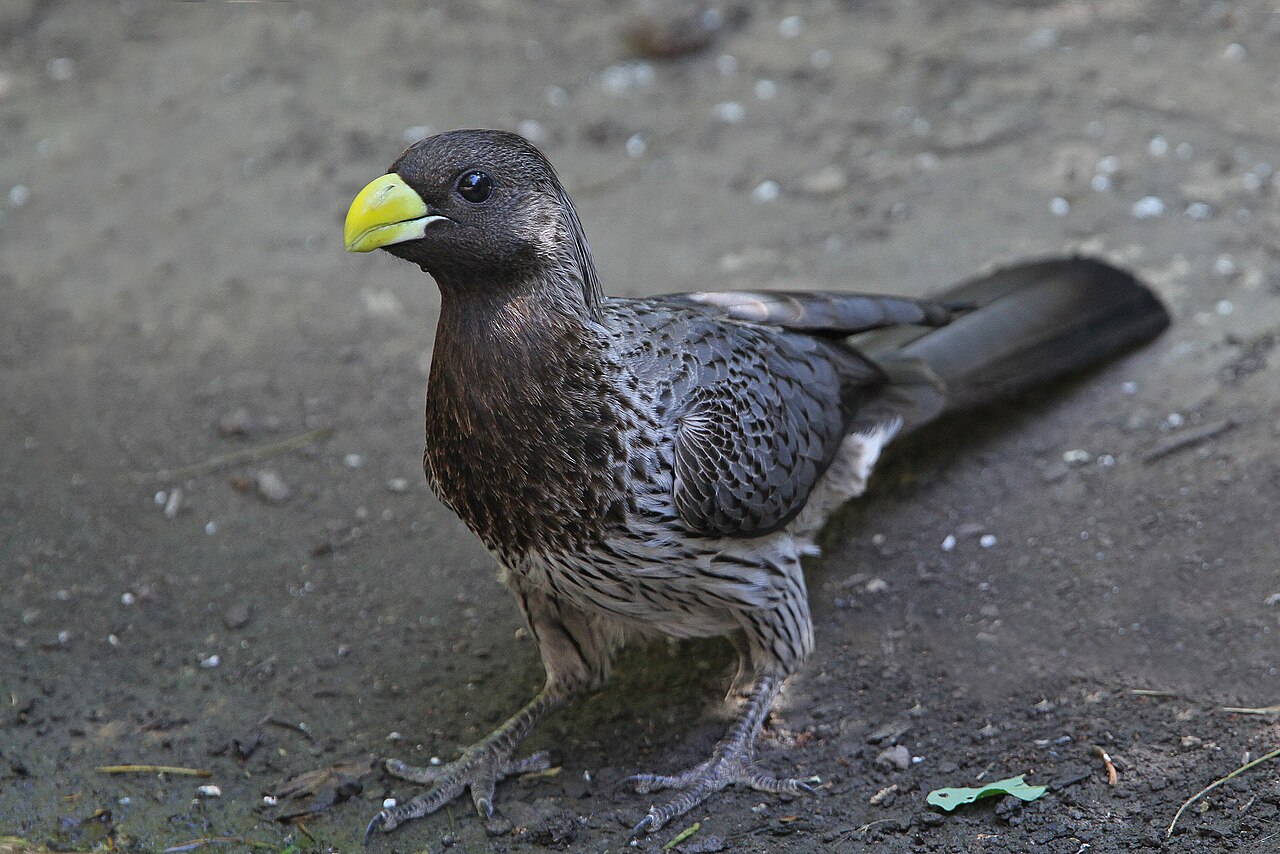
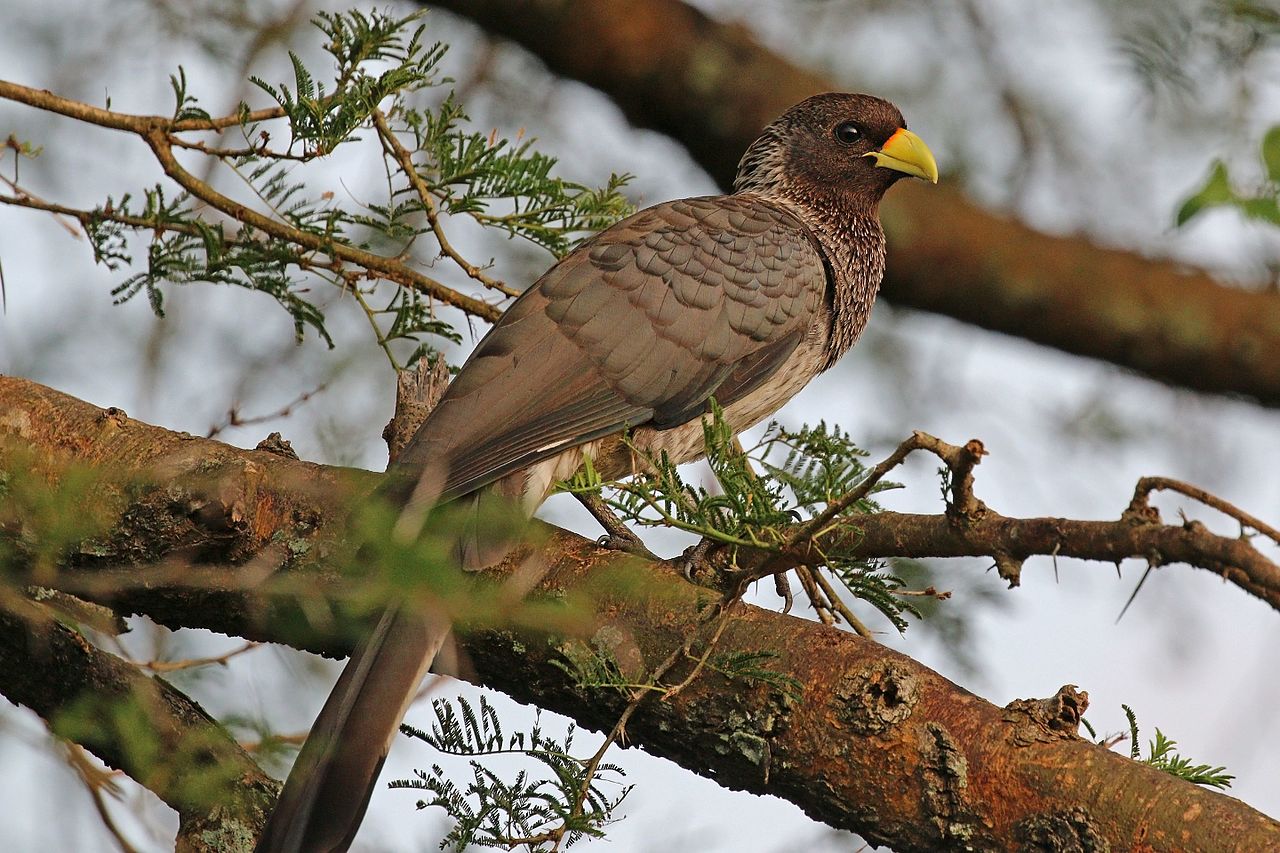
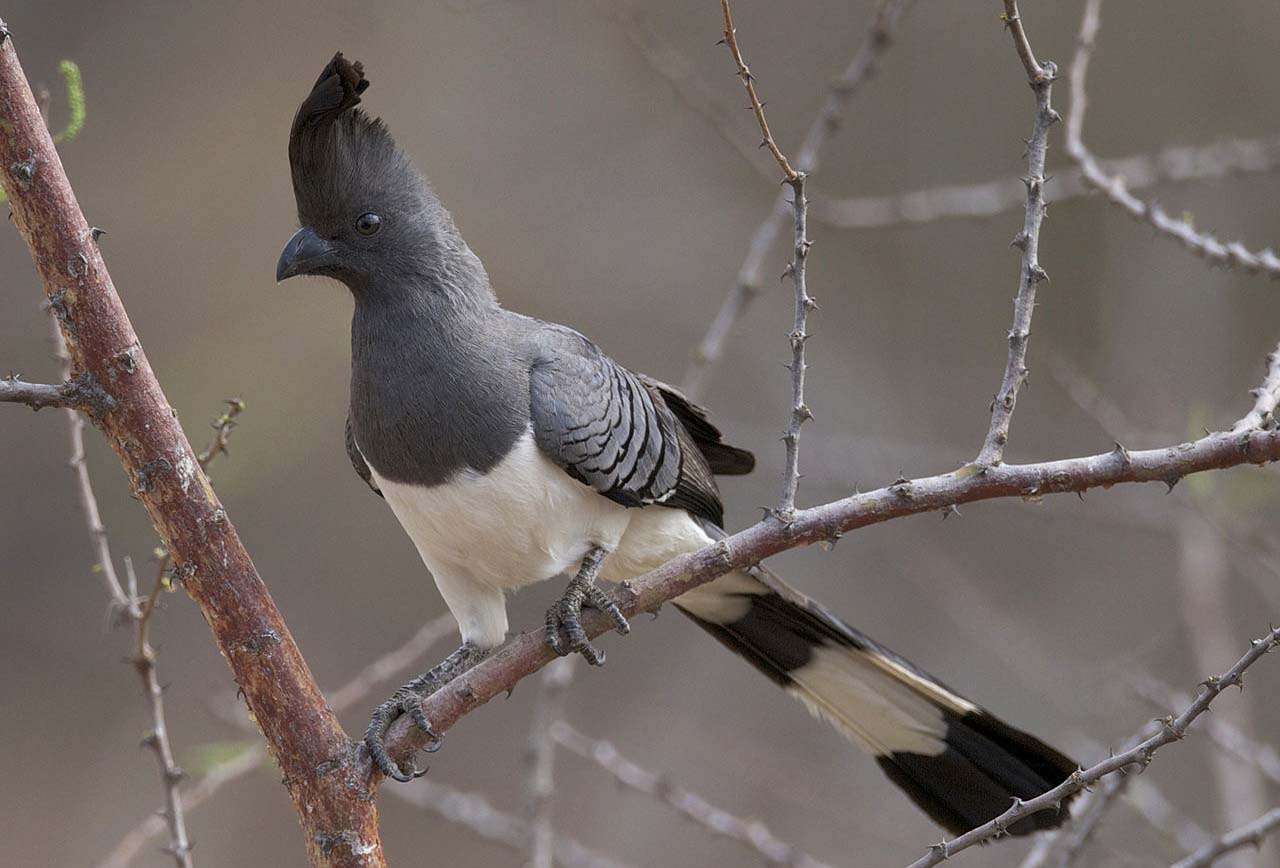
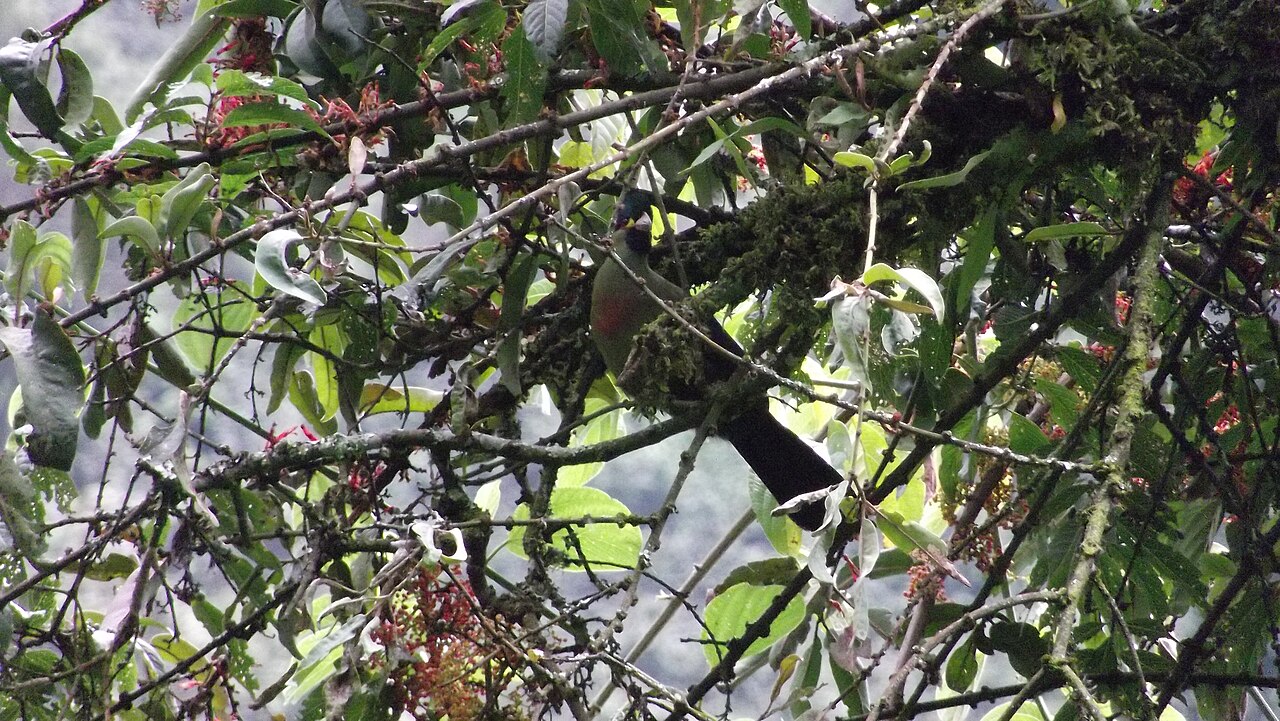
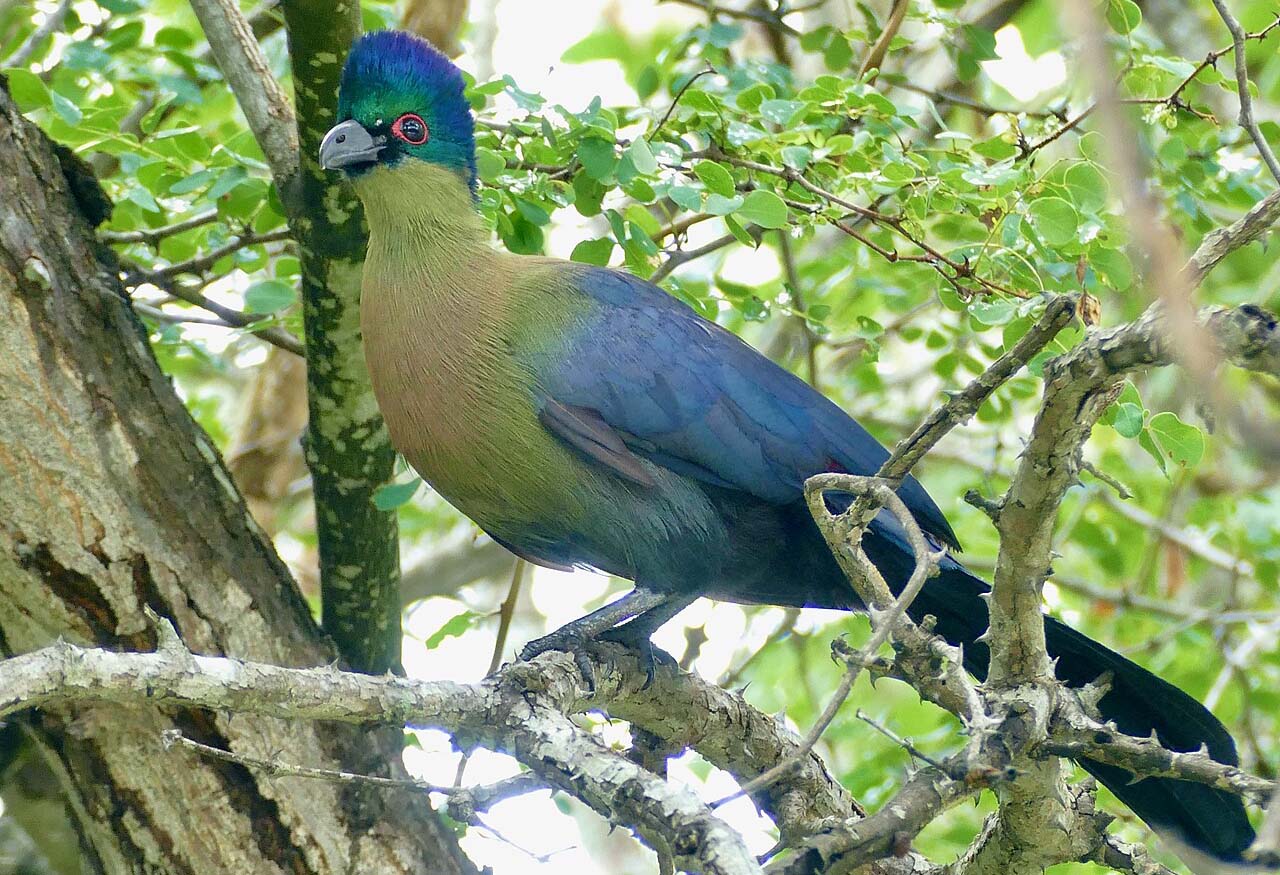
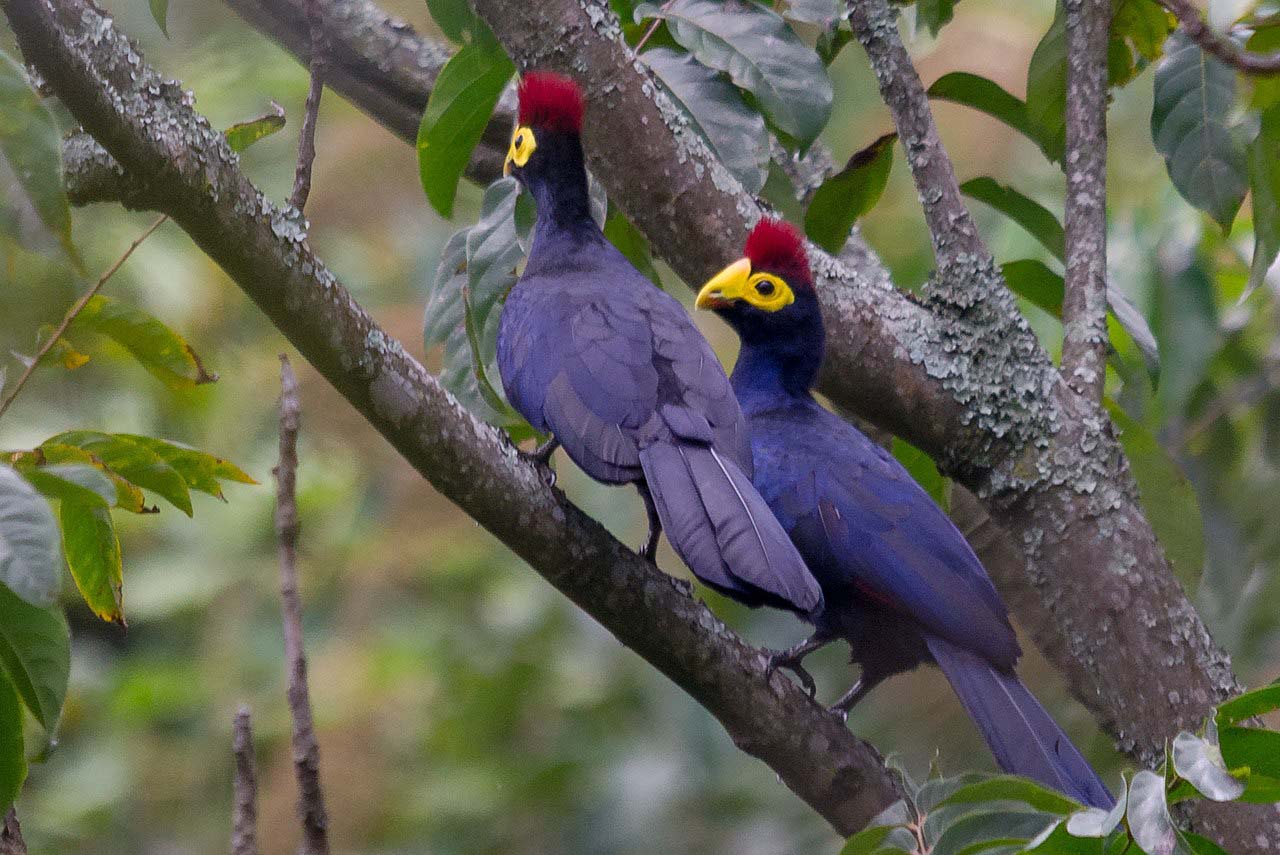
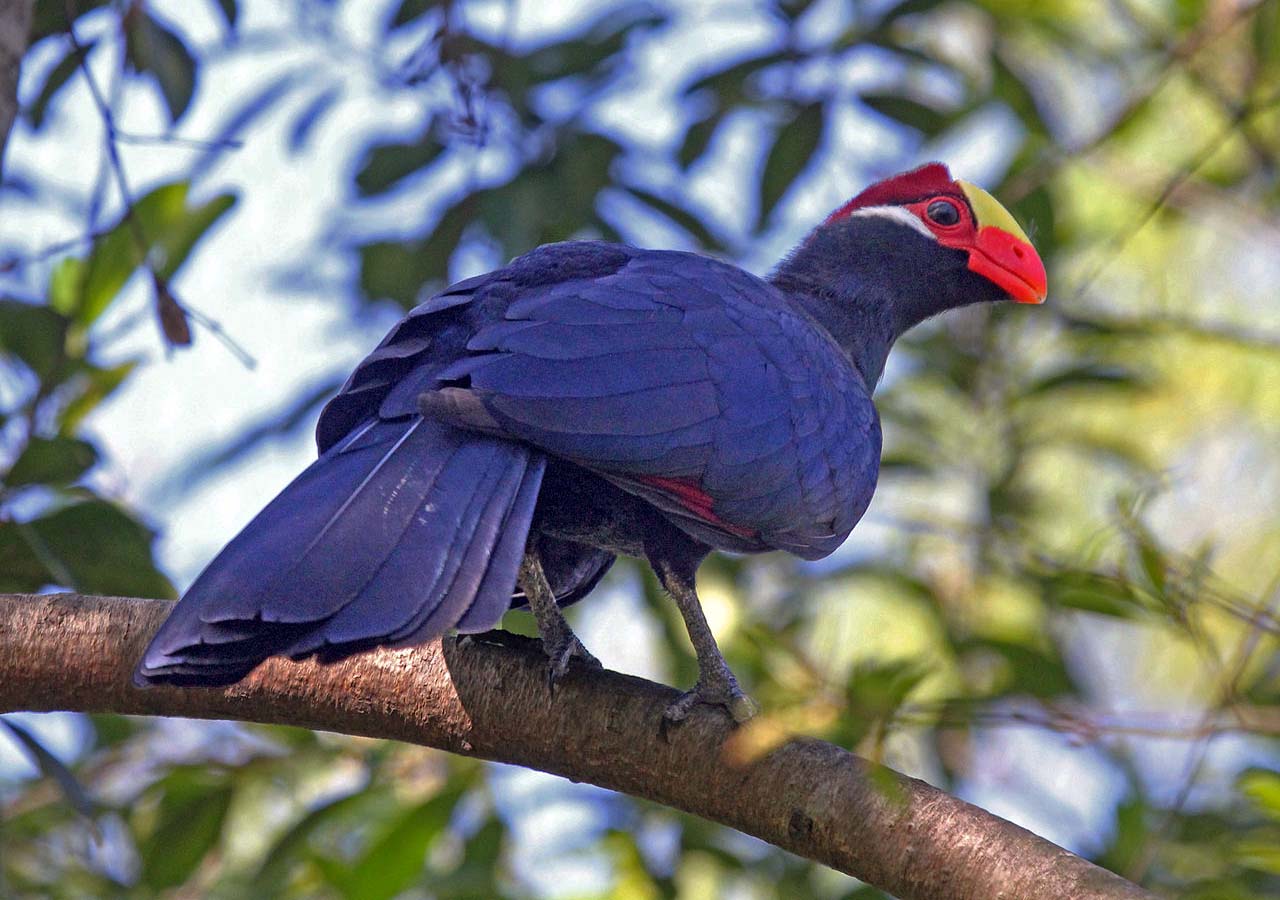
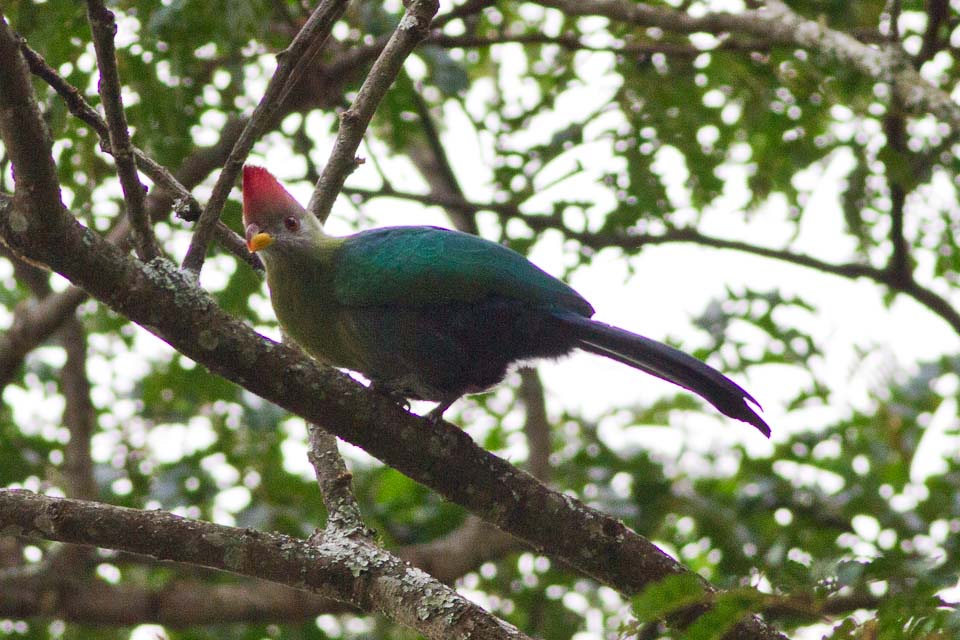
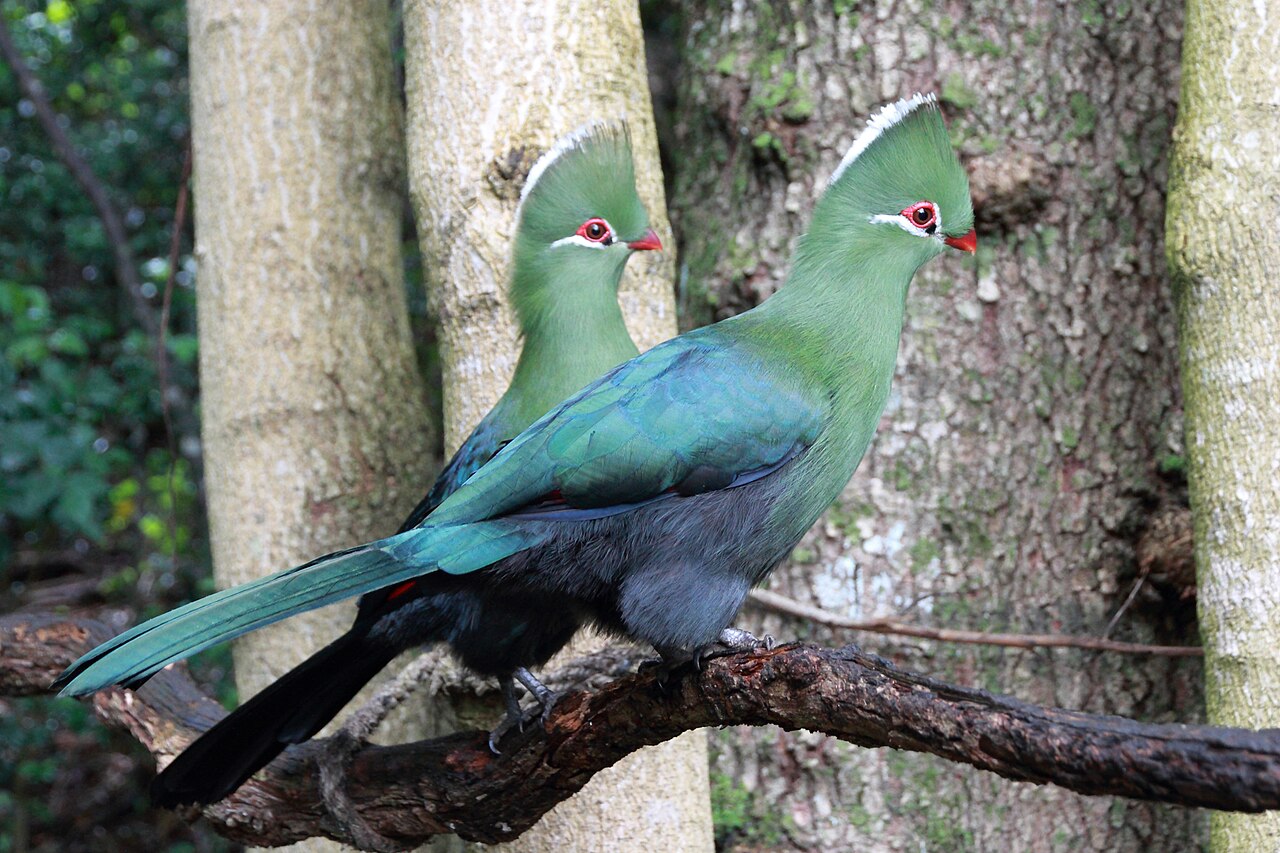
This family includes 23 species of birds. They are found in forests, woodlands, and savannas across sub-Saharan Africa.
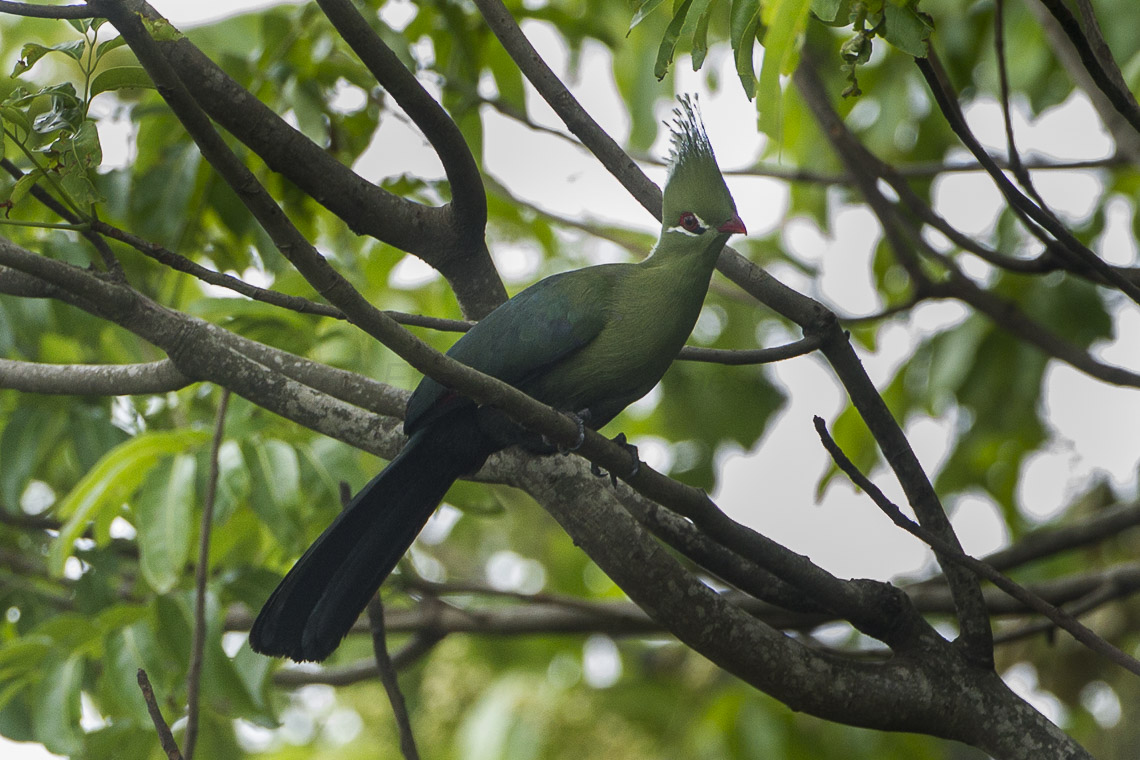
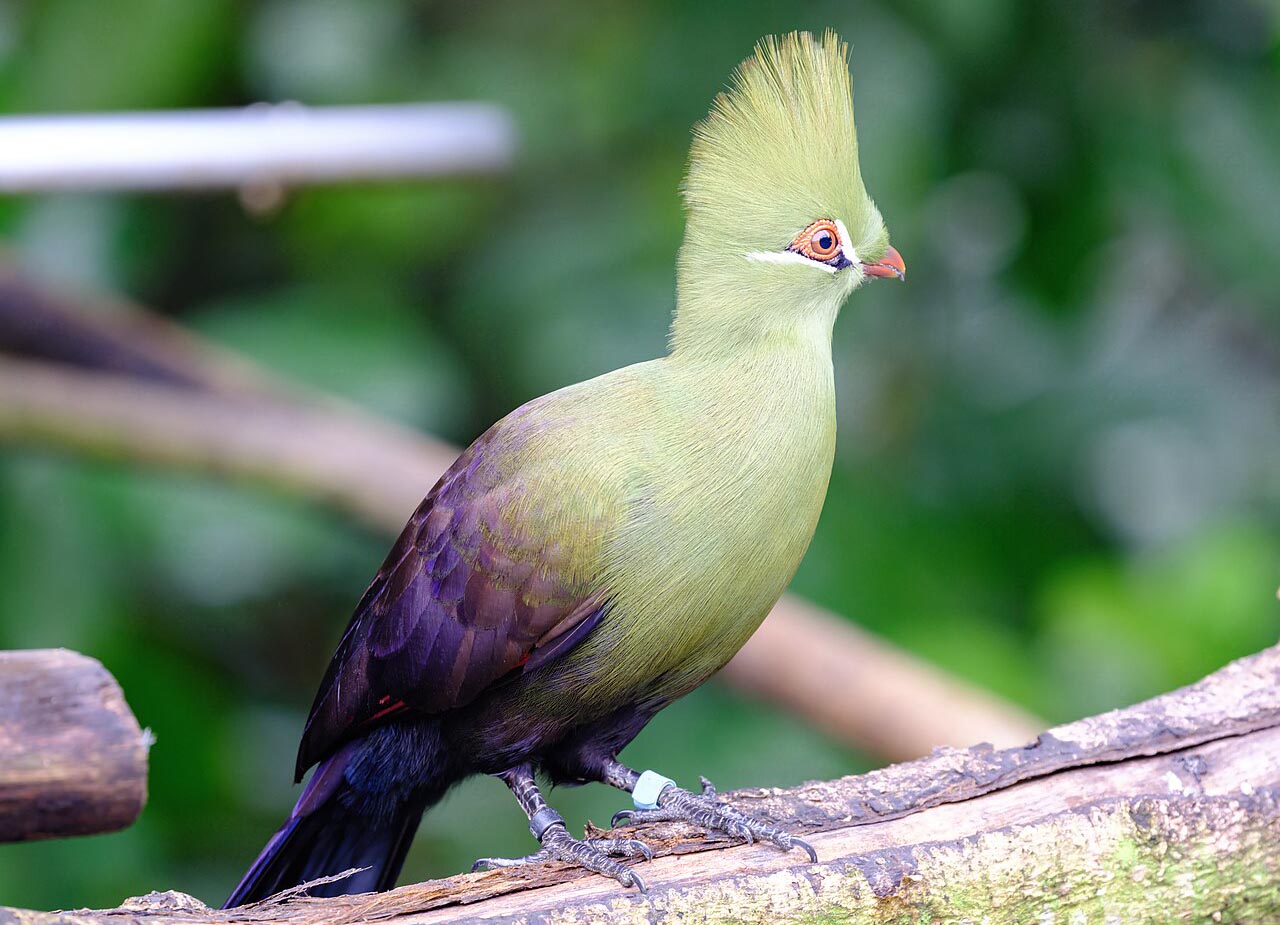
Turacos have short, rounded wings, long tails, slightly downcurved bills, and plump bodies. Although they are not strong long-distance fliers, they are excellent climbers. They move easily through trees by hopping from branch to branch and can also run quickly along the ground.
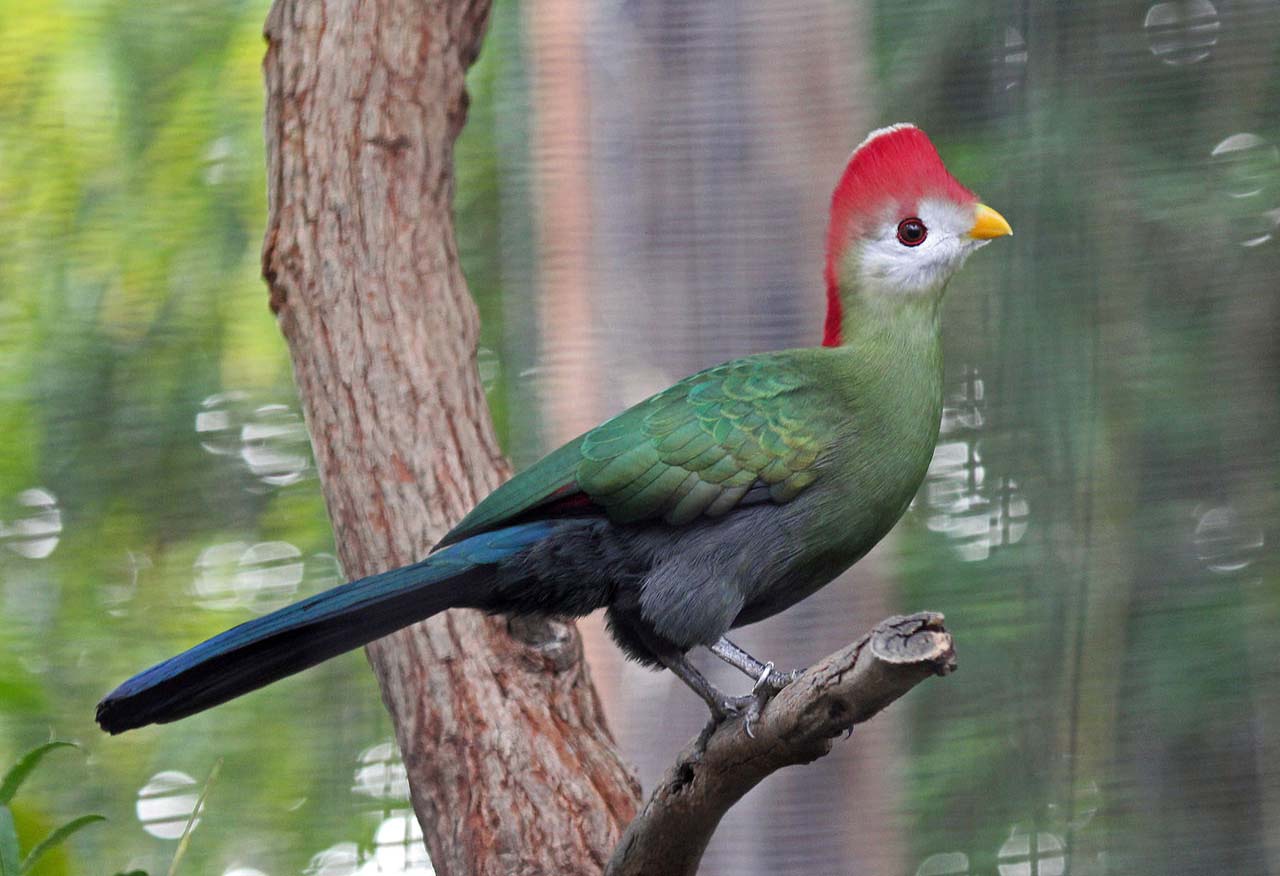
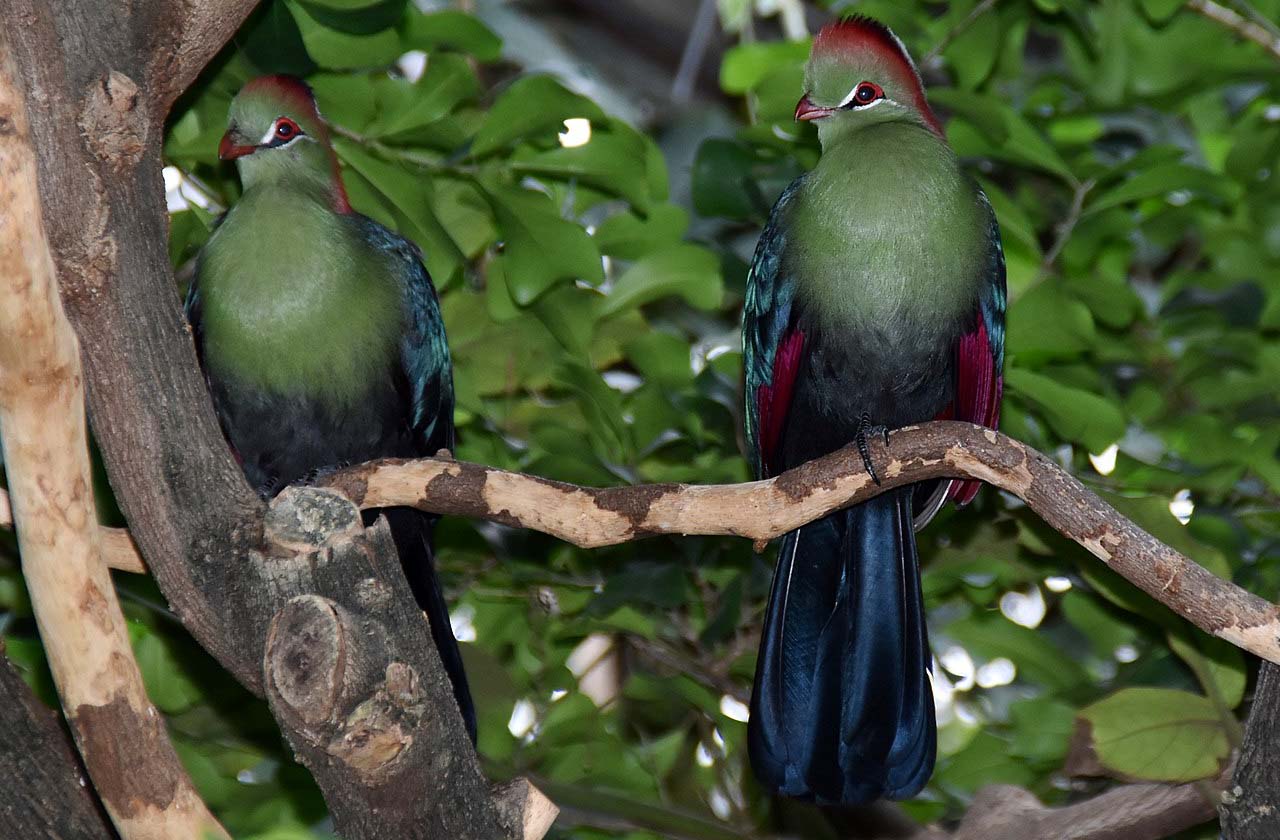
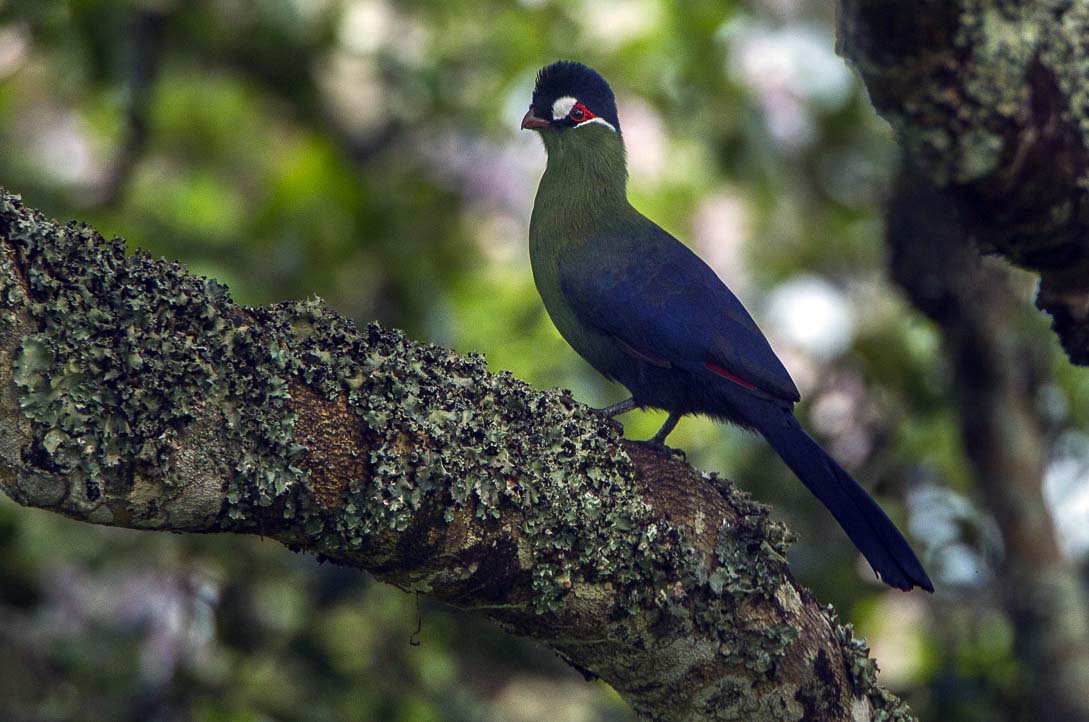
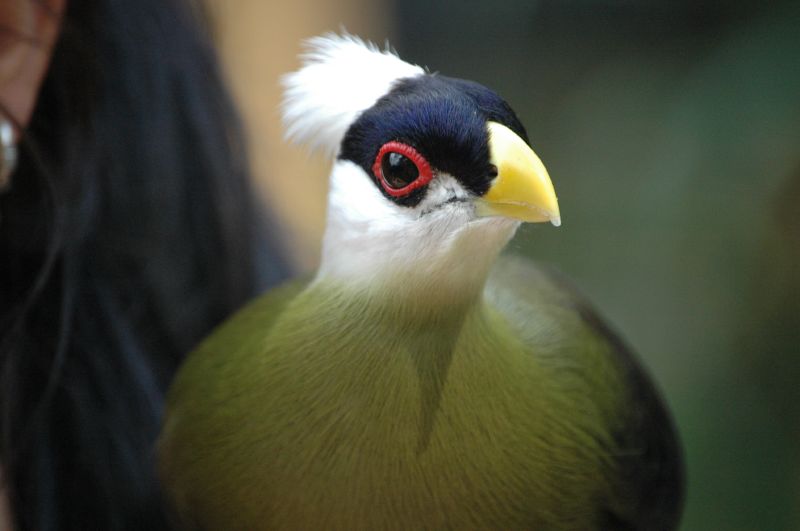
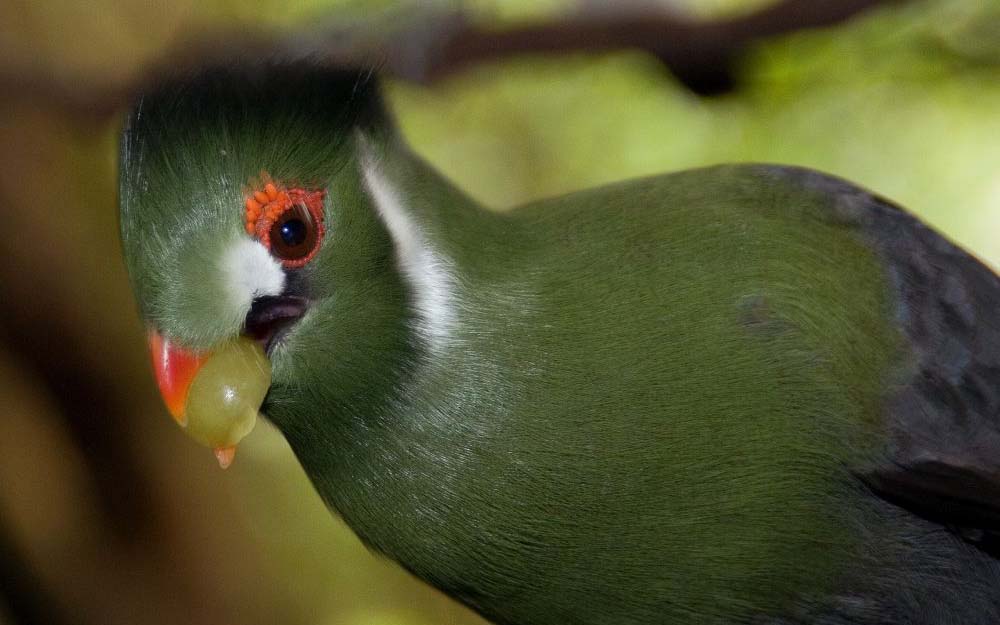
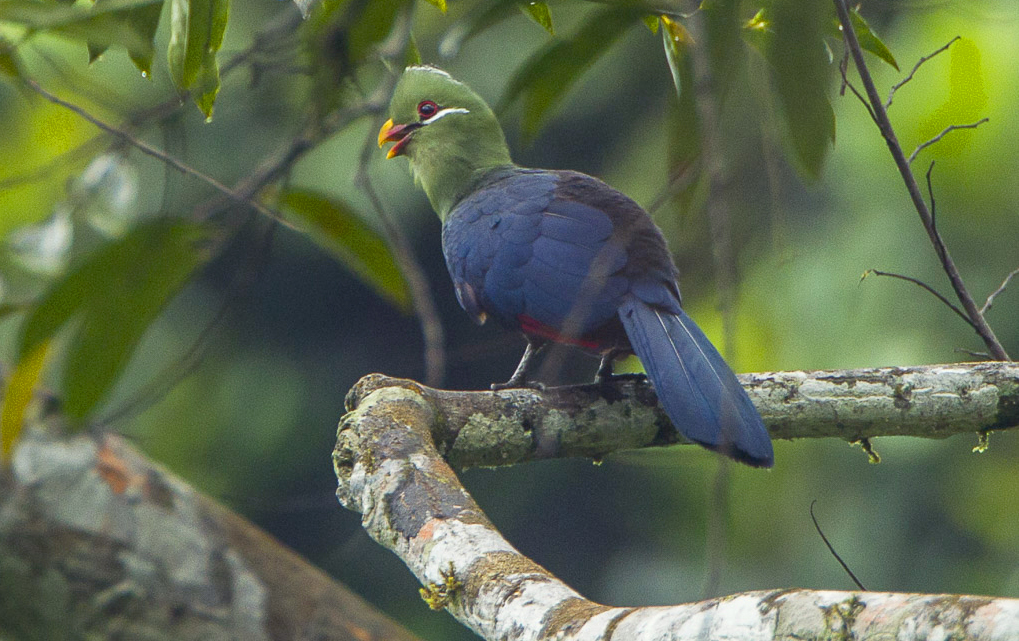
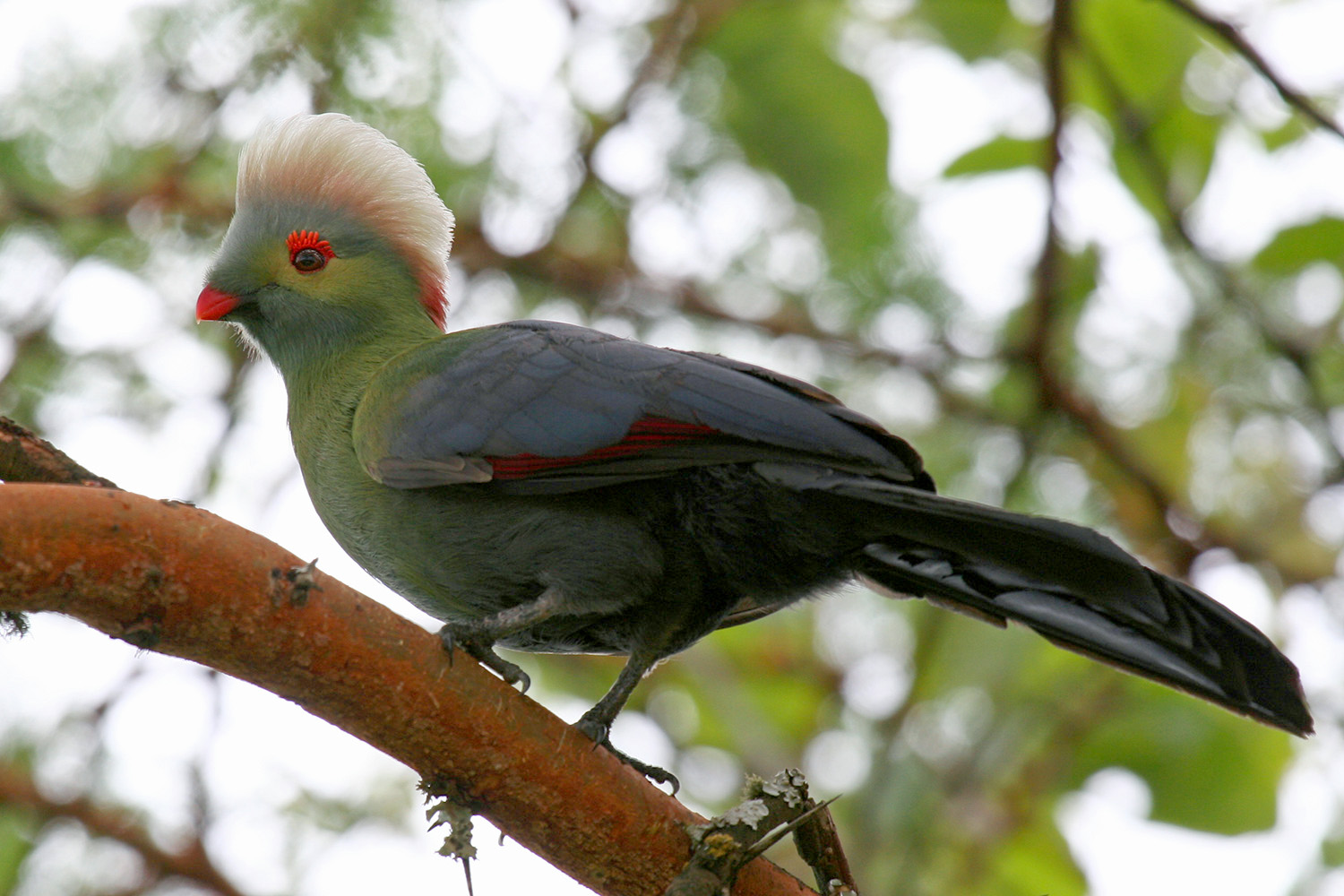
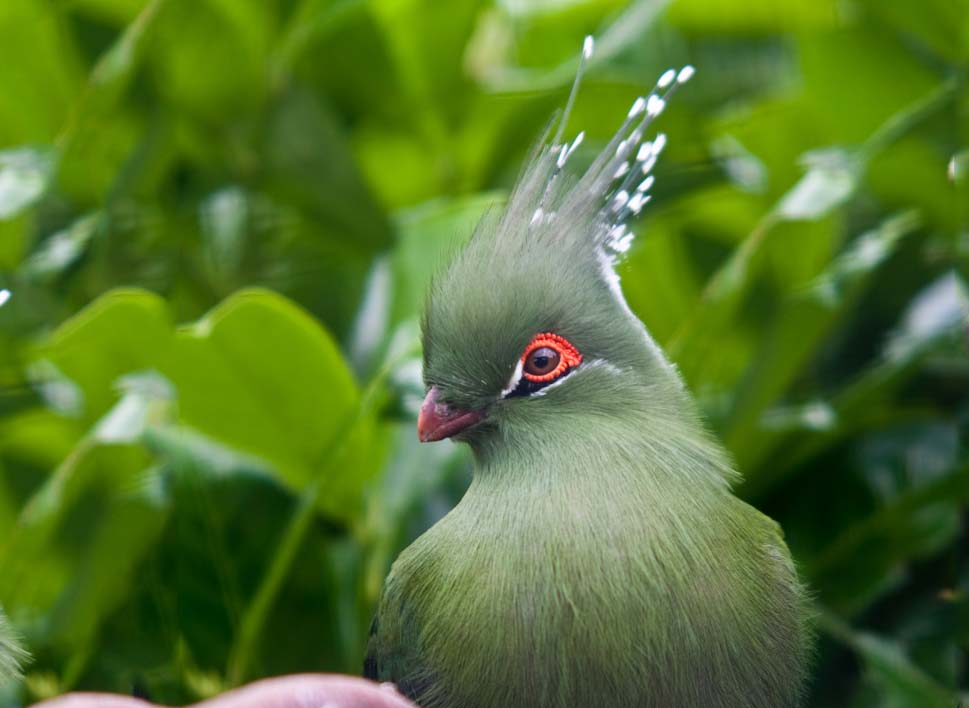
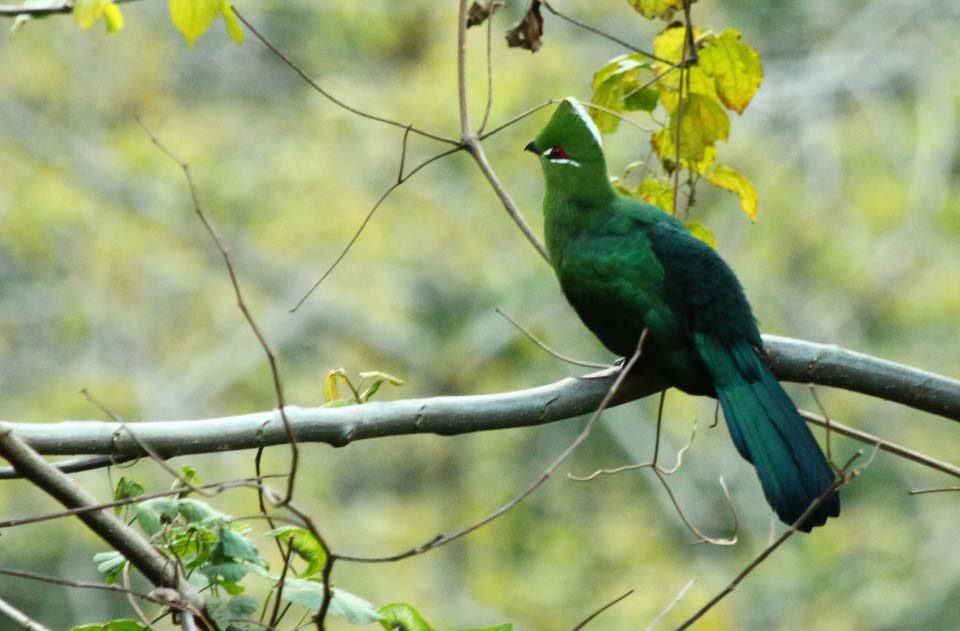
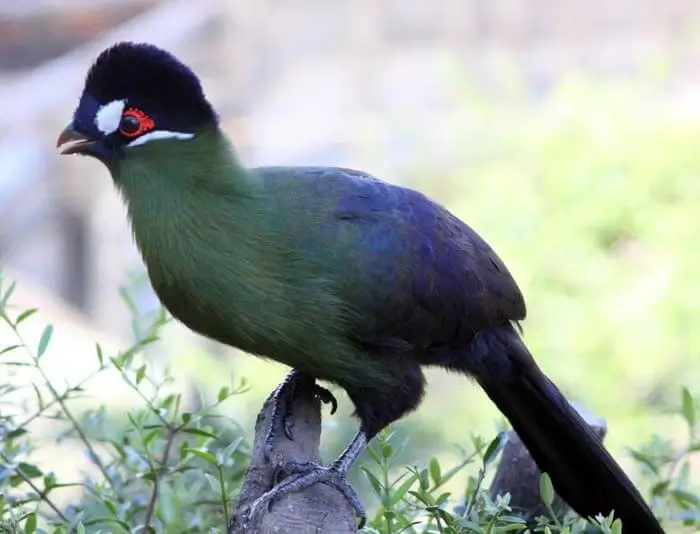
Many species are brightly colored, with shades of green, red, blue, purple, yellow, and white. Unlike most birds, their green and red colors come from unique pigments called turacoverdin (green) and turacin (red), rather than from the microscopic structure of the feathers.
Turacos eat fruit, leaves, flowers, buds, seeds, and insects, depending on the species and the season.
During the breeding season, a male and female work together to build a simple platform nest of sticks in a tree. The female usually lays two white eggs, and both parents take turns incubating the eggs and feeding the chicks after they hatch. The chicks are born with small claws on their wings, which help them climb through branches before they can fly.
Turacos usually live in pairs or small family groups, though some species gather in larger flocks. They are social birds that communicate with loud calls and often work together to defend their territory.