The Olive Warbler (Peucedramus taeniatus) is the only bird species in the Peucedramidae family. It lives in mountain forests—especially open pine and pine-oak forests—stretching from the southwestern United States through Mexico and Central America to Nicaragua.
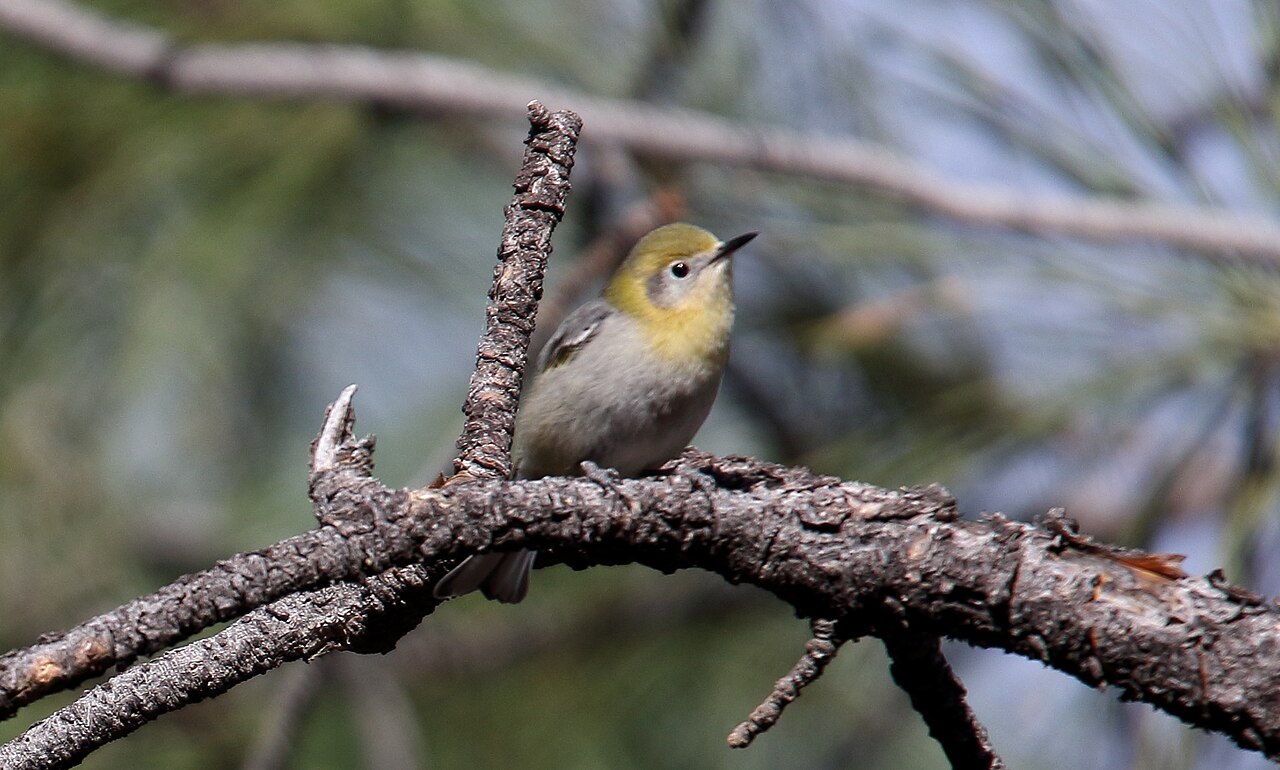
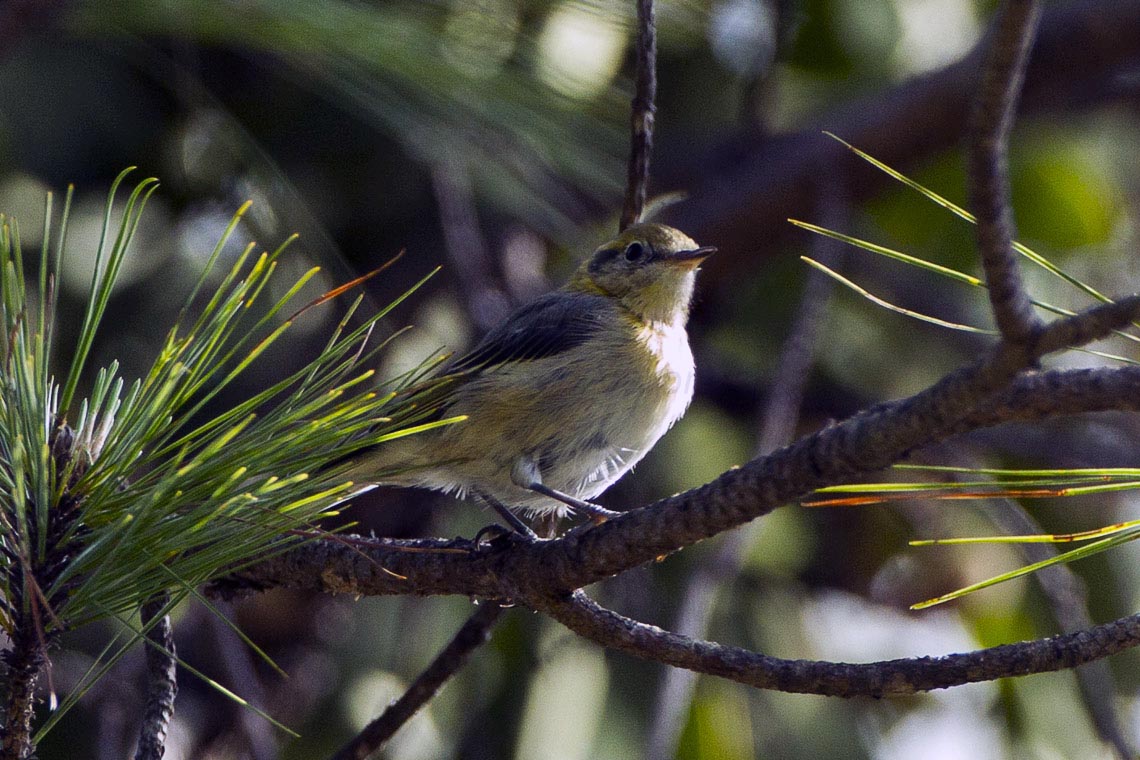
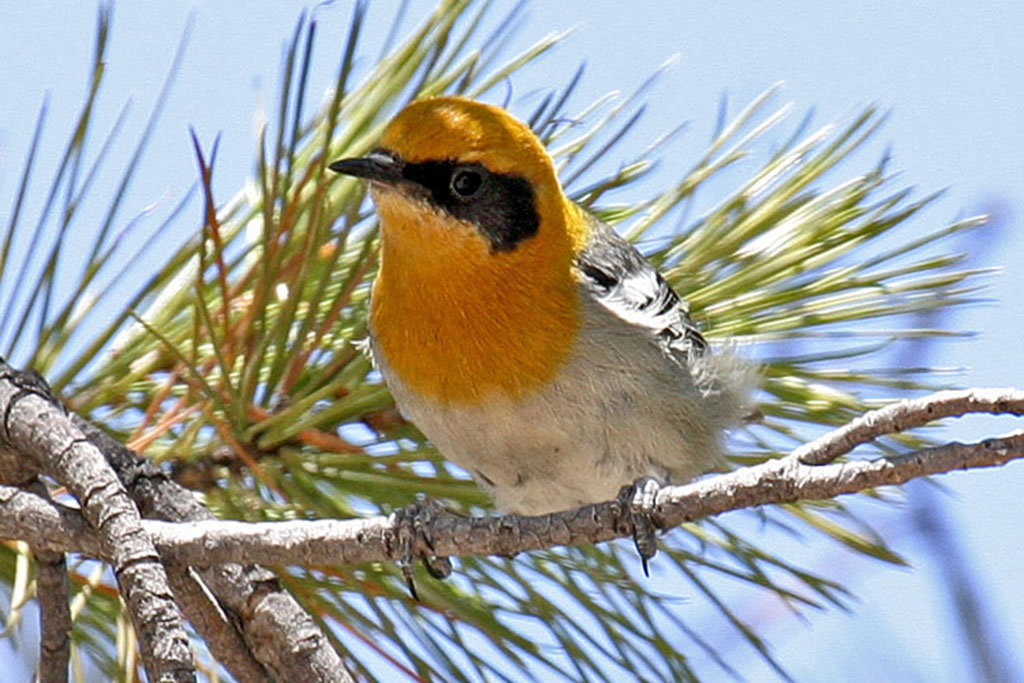
This small bird grows to about 5.3 inches (13.5 cm) long. It features a thin, pointed bill, a notched tail, and relatively long, thin legs. Adult males have a bright orange head and throat, a dark mask around their eyes, white wingbars, and a grayish body. Females look similar, but have a yellowish head instead of an orange one.
Olive Warblers eat insects, usually hunting them high up in pine branches and needles. Most Olive Warblers stay in the same area all year, but some birds found in the northern parts of their range make short seasonal migrations.
Even though “warbler” is in its name, DNA testing revealed that the Olive Warbler isn’t a member of the Parulidae, or New World warbler family. family. It is an ancient lineage more closely related to birds in the Prunellidae (accentor) and Fringillidae (finch) families.
Olive Warbler (Peucedramus taeniatus)
The Olive Warbler is found in Arizona and New Mexico. It is also found in Mexico, Guatemala, El Salvador, Honduras, and Nicaragua. IUCN Redlist Status: Least Concern
Olive Warbler (Peucedramus taeniatus)
Female Olive warblers have a yellowish-gray crown on their heads and on the nape of their necks. IUCN Redlist Status: Least Concern
Olive Warbler (Peucedramus taeniatus)
The Olive Warbler is an insectivore. IUCN Redlist Status: Least Concern