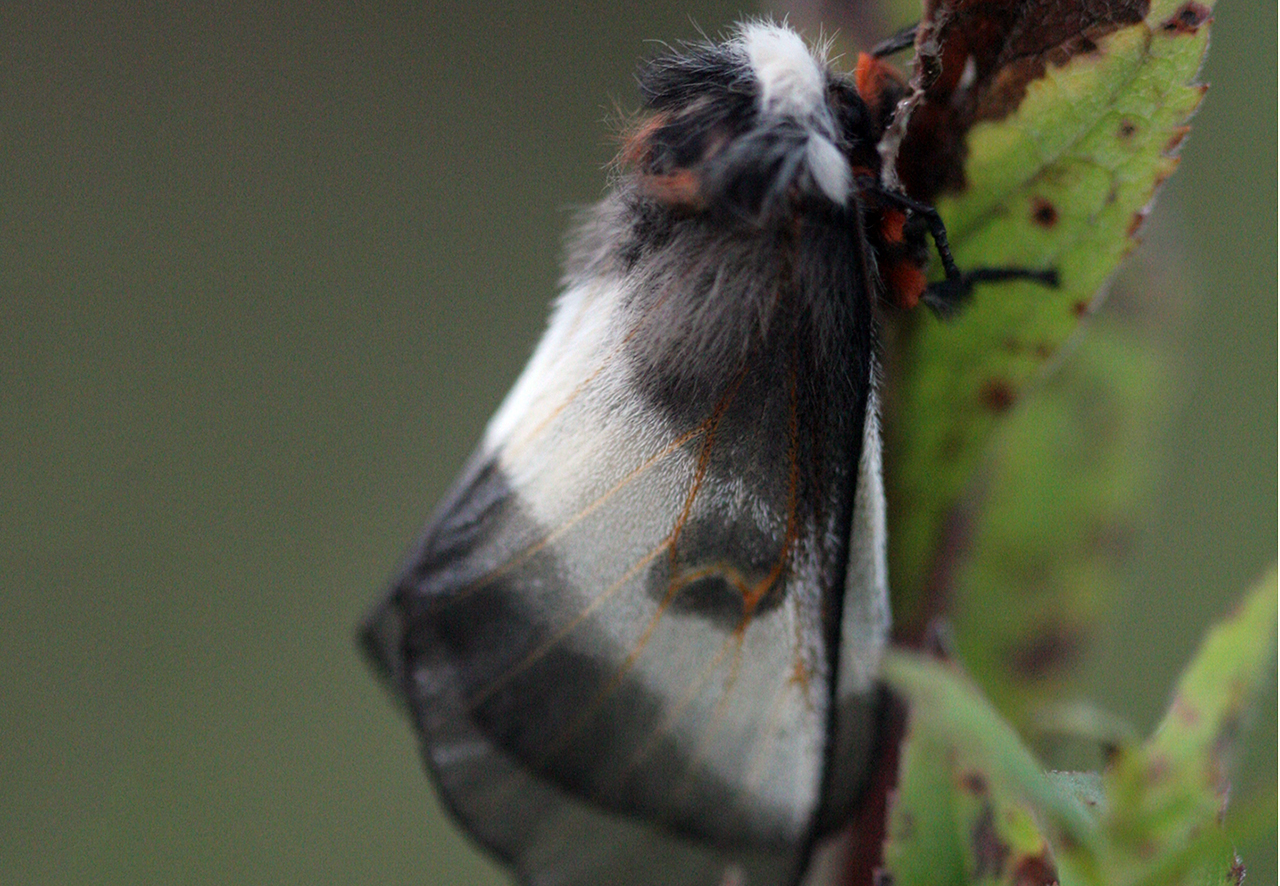
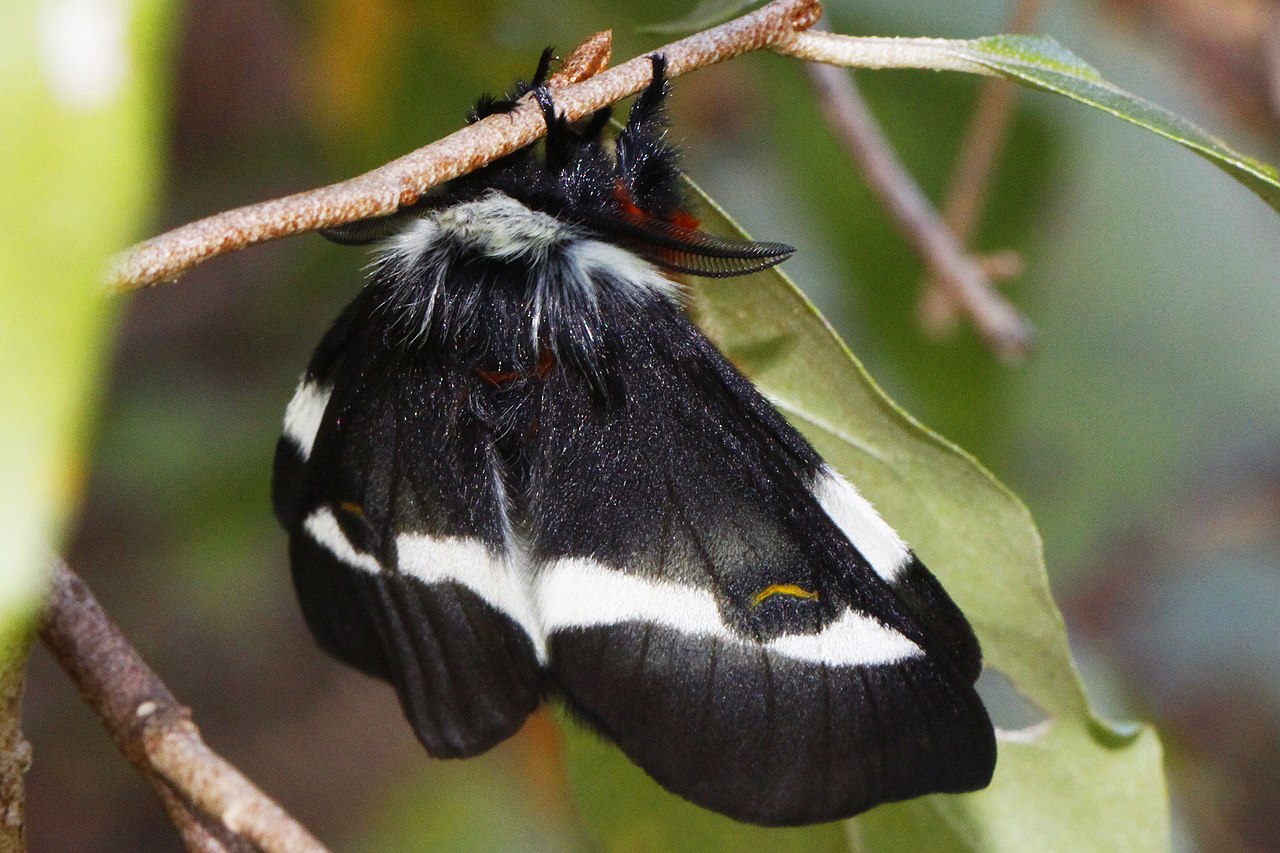
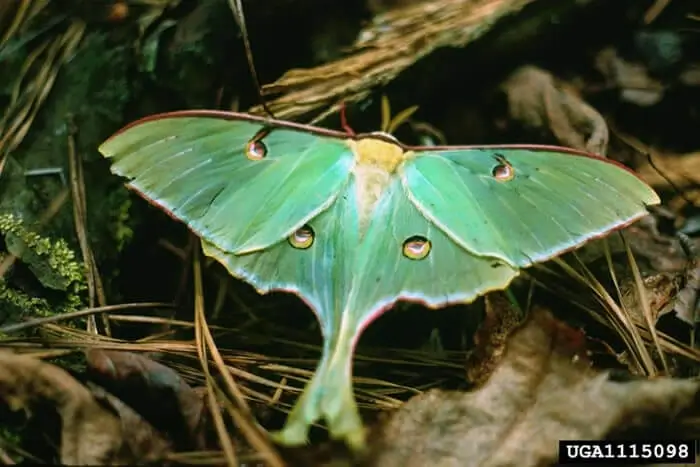
There are over 2,000 species of large moths in this family. Species in this family are found all over the world, but the largest number of species are found in the tropics. The largest moth in North America, the cecropia moth, is a member of this family.
Many of the moths in this family are brightly colored and have large, transparent eyespots. Many species have large, feathery antennae.
Most species in this family are nocturnal, and the adults live for a short period, usually less than a week, and do not feed.
Many of the caterpillars of species in this family are brightly colored and covered with spines, although some are smooth or fuzzy.
Most of the caterpillars in this family feed on the foliage of trees or shrubs. Many species spin a cocoon that is attached to a host plant or hidden under leaf litter.
Silkworm moths are not in the same family as the mulberry silkworm (Bombyx mori) that is raised in captivity and used to create the silk that is used in clothing, but silk from the cocoons of some some species of giant silkworm moths, like the Chinese Tussah moth (Antheraea pernyi) and the Assam silkmoth (Antheraea assamensis), has been cultivated in the wild and used to create silk cloth.
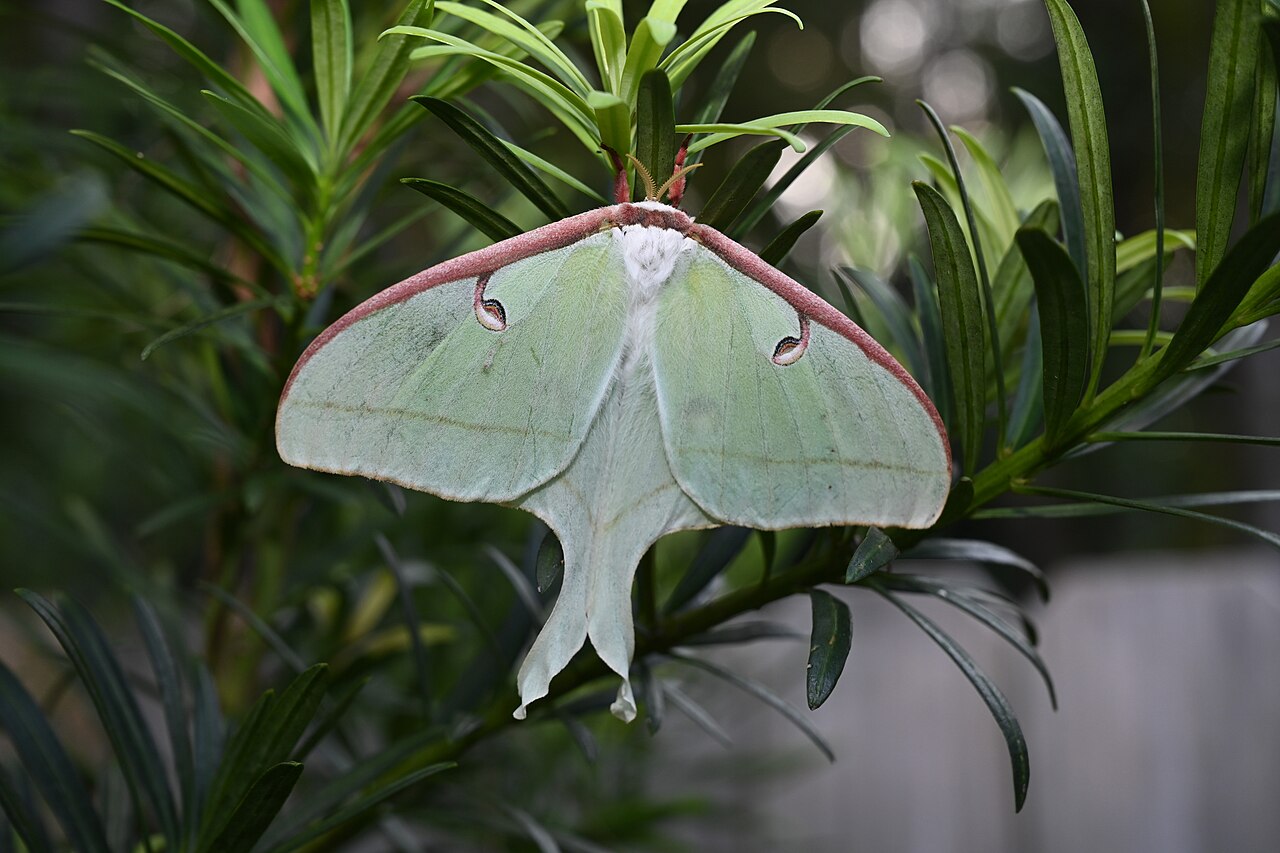
Luna Moth (Actias luna)
The luna moth is found across Canada from Nova Scotia west to Saskatchewan south to Florida, the Gulf coast, Texas, and North Dakota. It is found in New Hampshire.
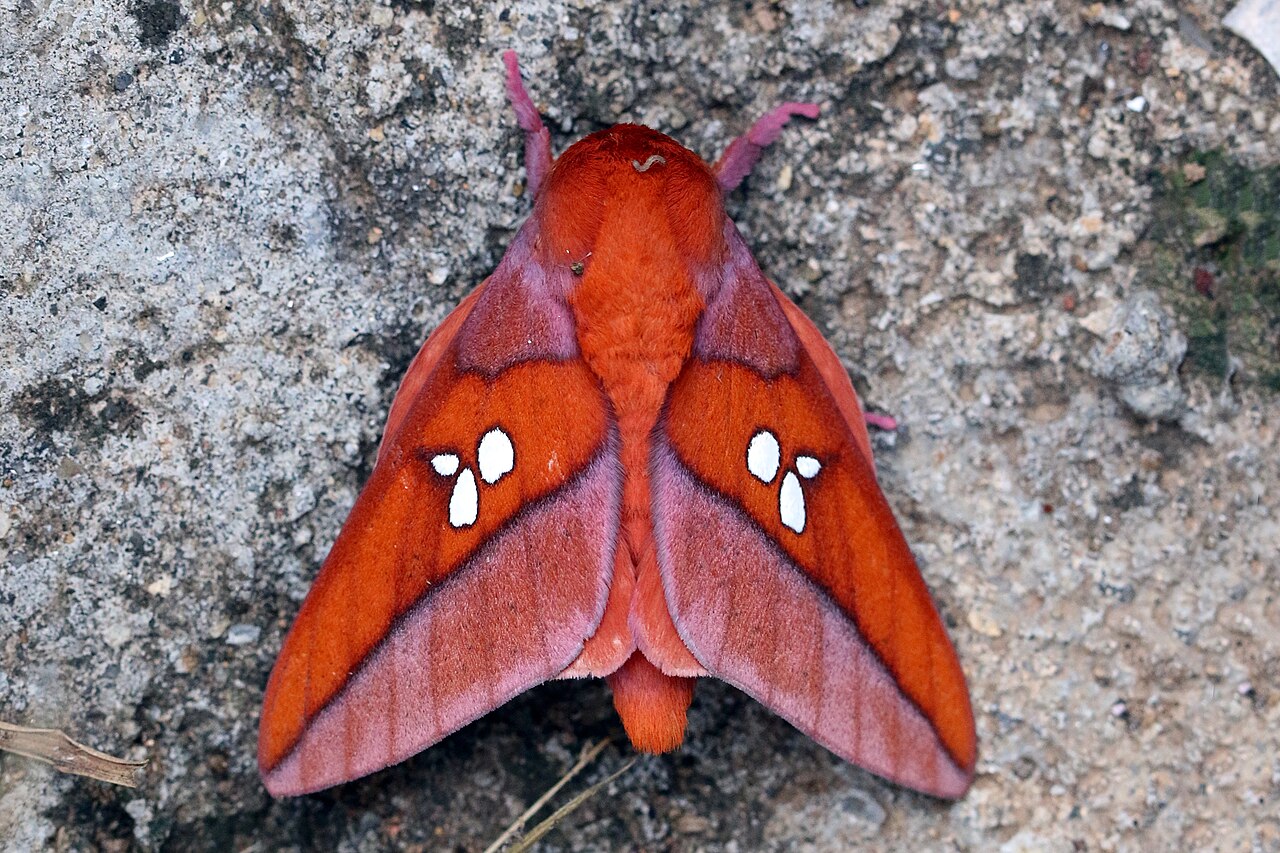
Giant Silk Moth (Adelowalkeria tristygma)
The giant silk moth is found in southeastern Brazil, Paraguay, and northeastern Argentina.
Spiny Oakworm Moth (Anisota stigma)
The spiny oakworm moth is found from Southeastern Canada and southern New England west to Minnesota, south to central Florida, the Gulf Coast, and central Texas. It is found in New Hampshire.
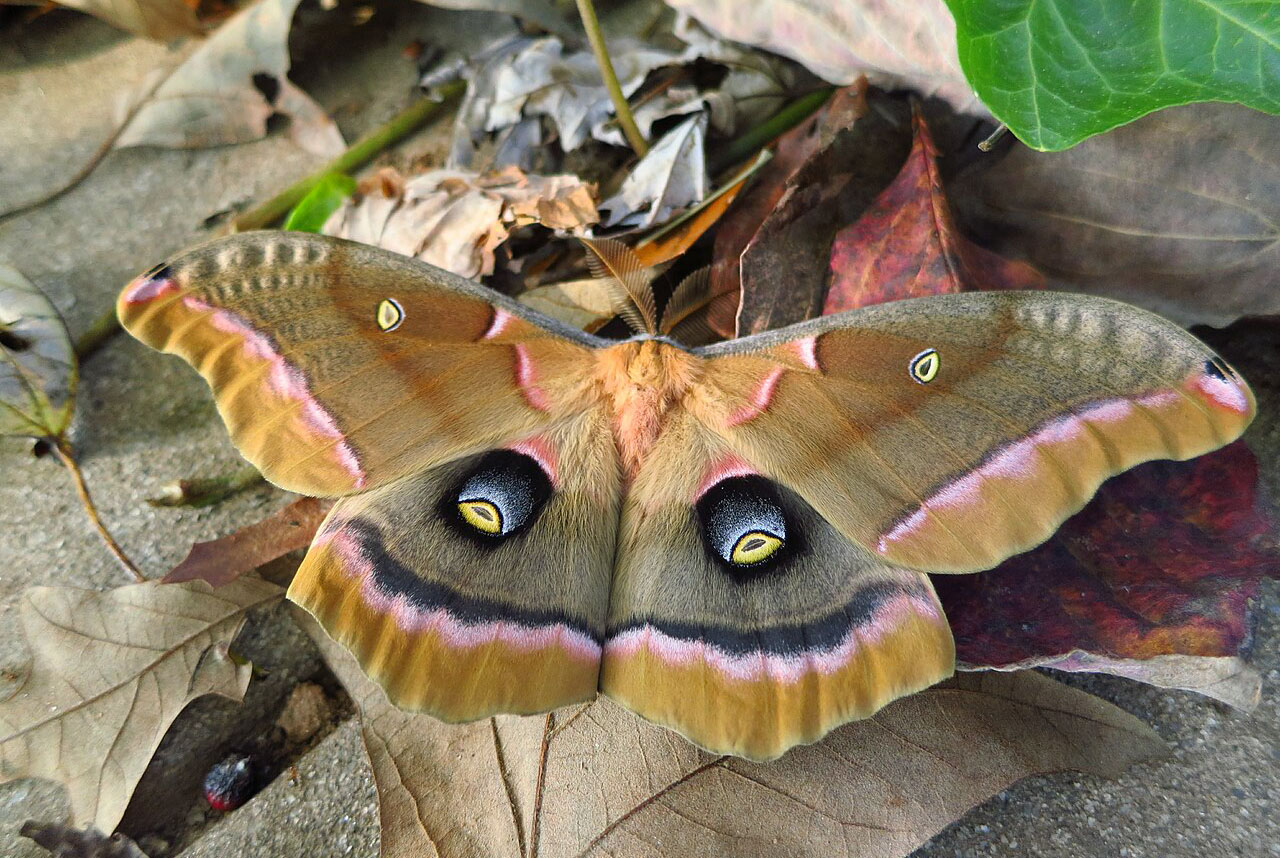
Polyphemus Moth (Antheraea polyphemus)
The polyphemus moth is found across most of Canada, the U.S. and Mexico. It is found in New Hampshire. IUCN Redlist Status: Least Concern
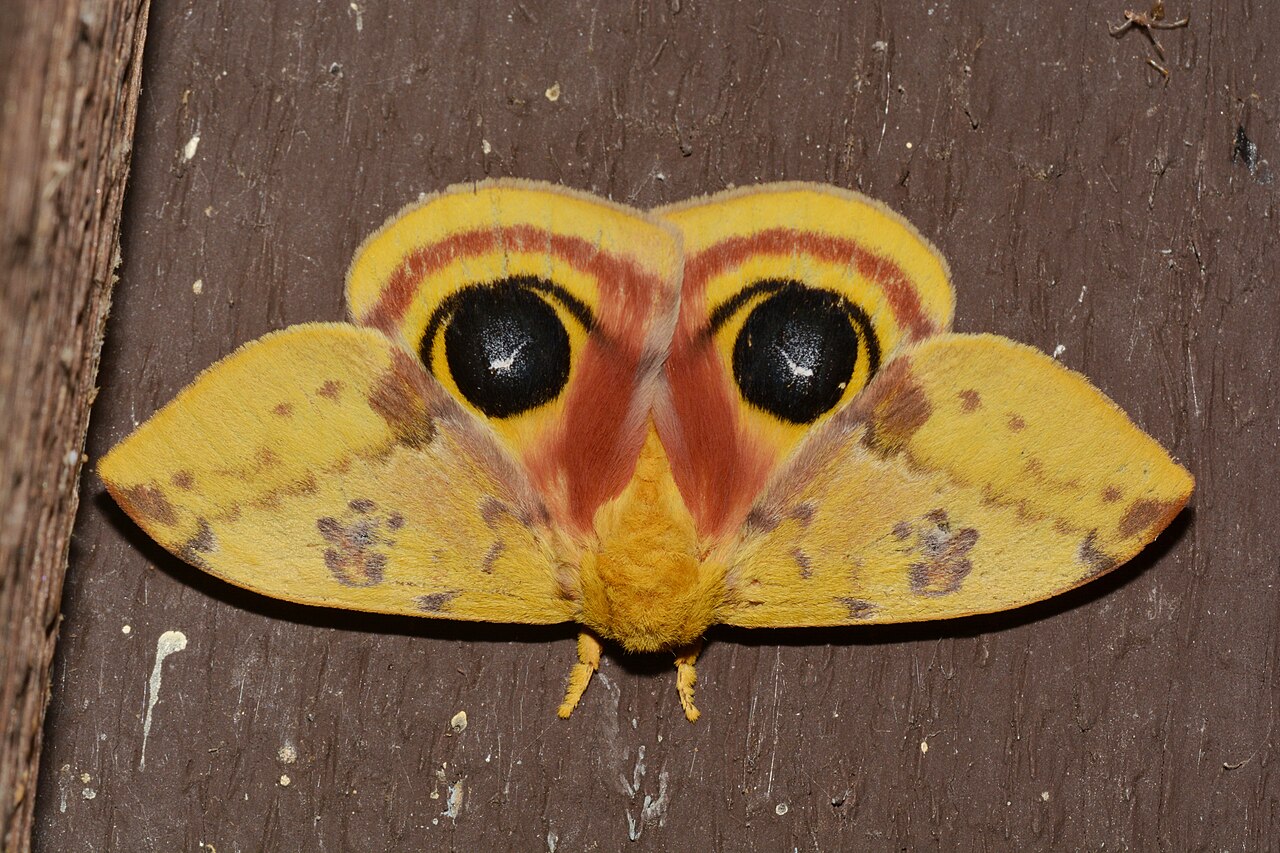
Io Moth (Automeris io)
The Io moth is found across southern Canada south through Maine to Florida and Nebraska and Colorado south to Texas and Arizona and into Mexico and Costa Rica. It is found in New Hampshire.
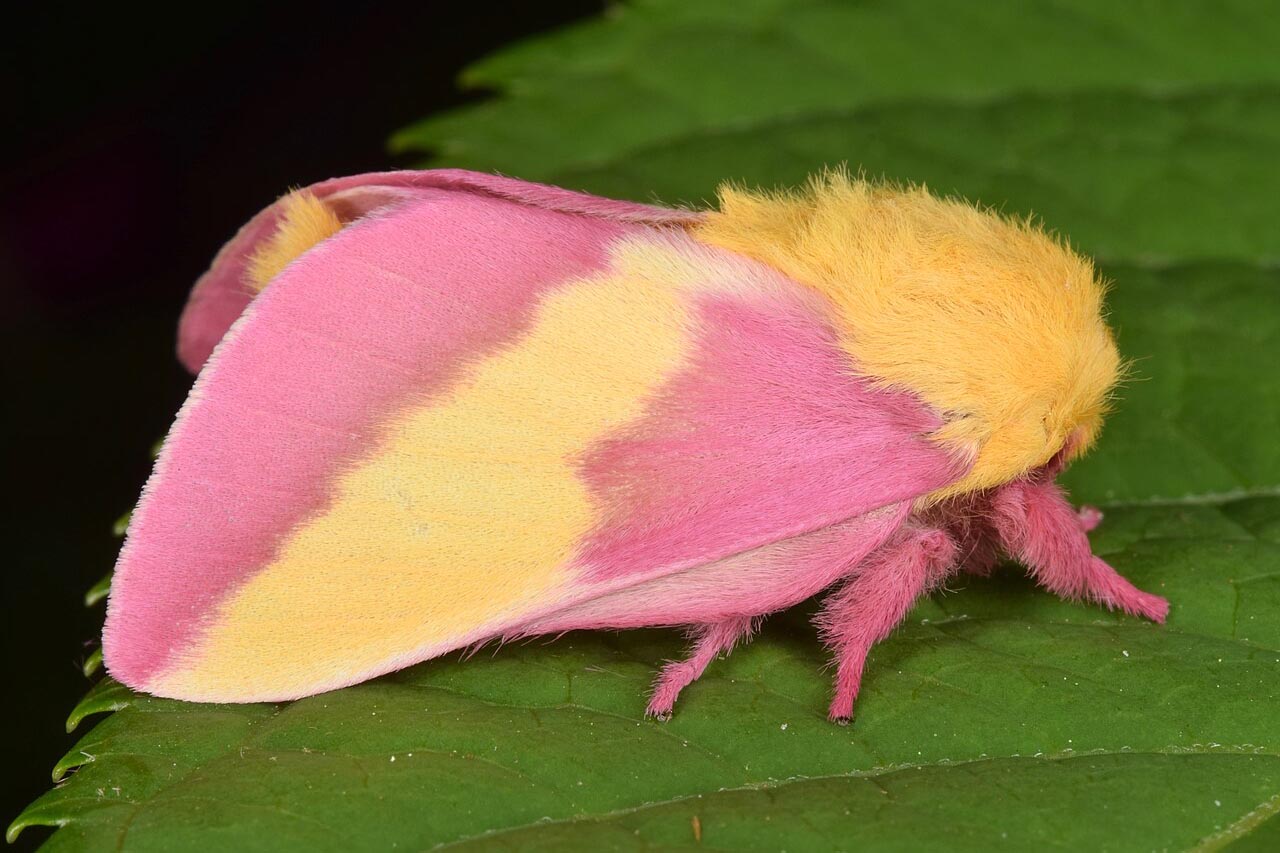
Rosy Maple Moth (Dryocampa rubicunda)
The rosy maple moth is found from Nova Scotia west through Quebec to Ontario and Minnesota and south to Florida, the Gulf Coast, and east Texas. it is found in New Hampshire.
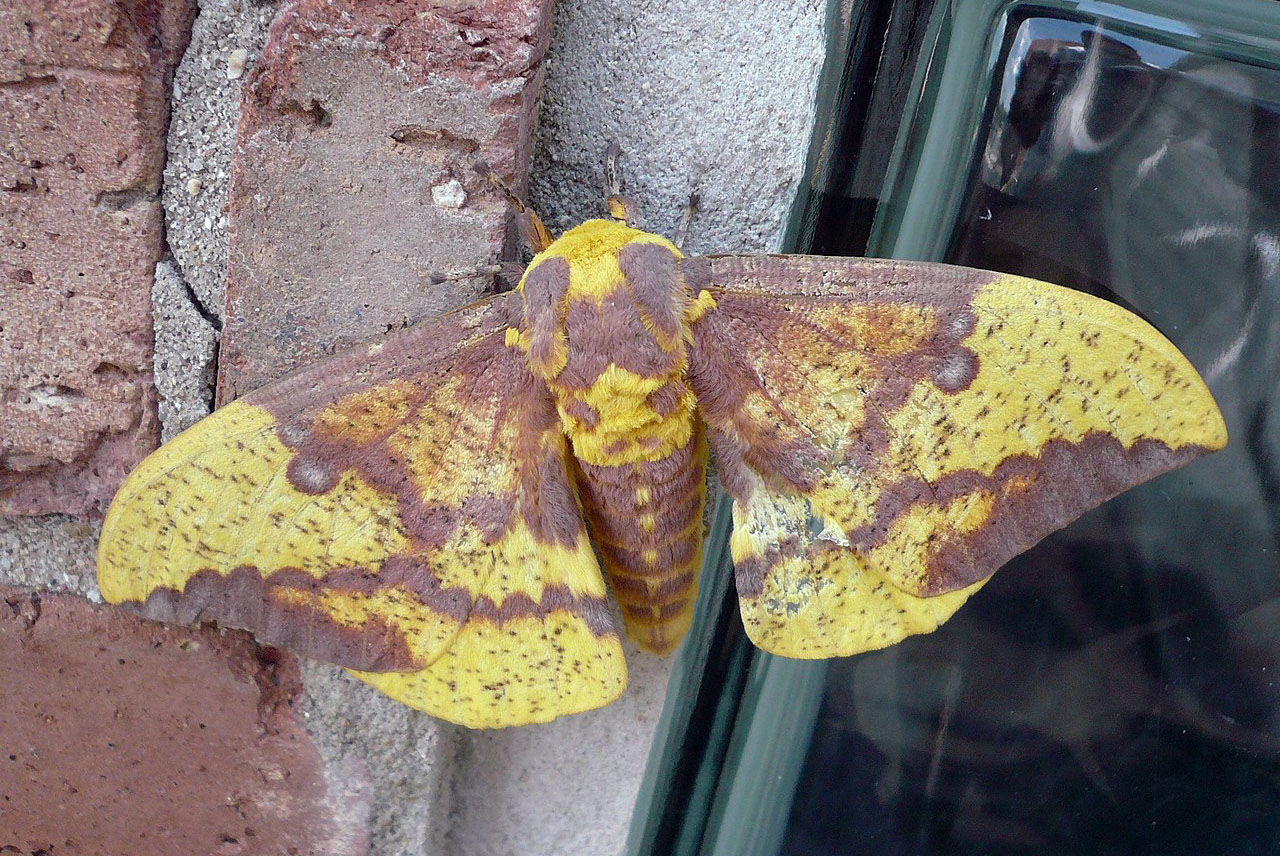
Imperial Moth (Eacles imperialis)
is found across the eastern United States from Maine west to Nebraska and south to Florida and Texas. It can be found in New Hampshire.
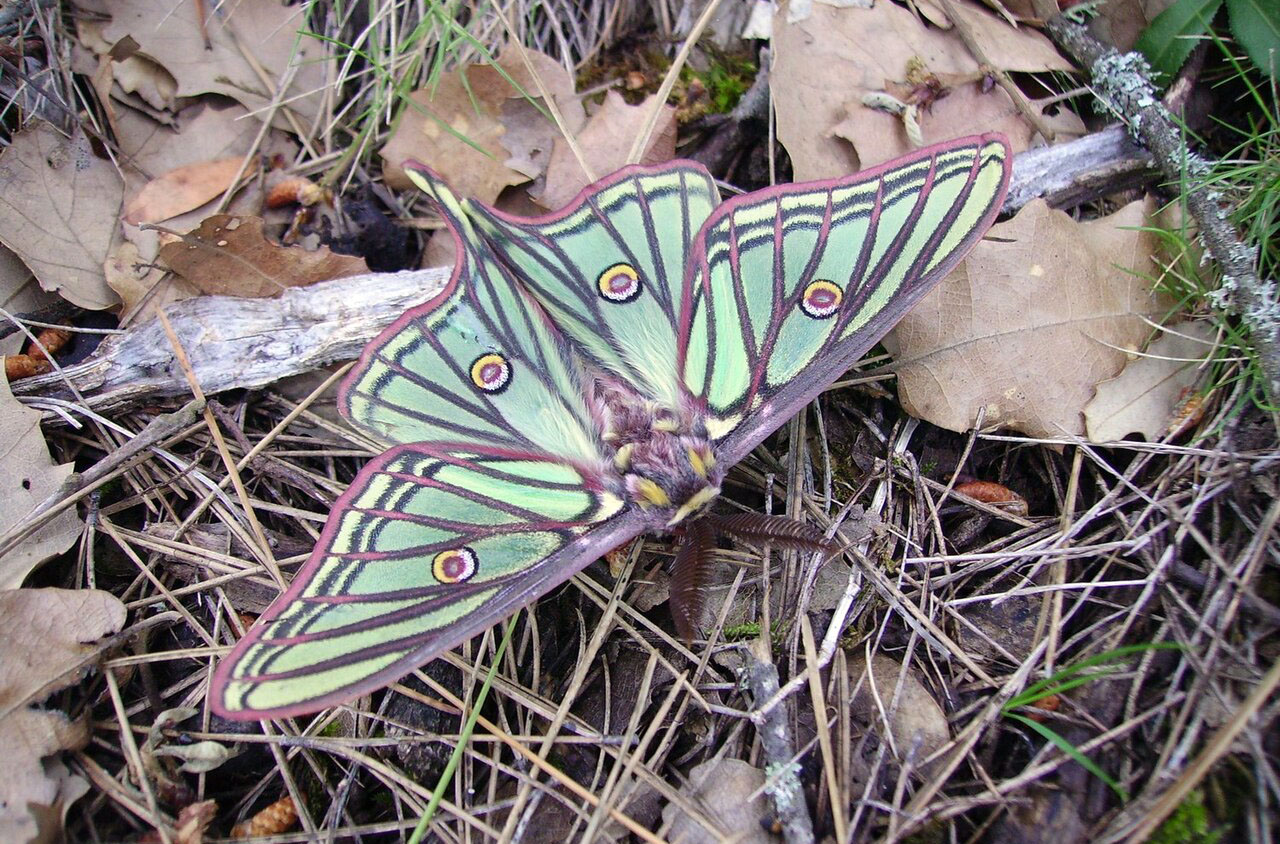
Spanish Moon Moth (Graellsia isabelae)
The Spanish moon moth is found in Spain and France. IUCN Redlist Status: Daya Deficient
New England Buckmoth (Hemileuca lucina)
The New England buckmoth is found in southern Maine, New Hampshire, southeastern Vermont, and Massachusetts.
Eastern Buckmoth (Hemileuca maia)
The eastern buckmothmoth is found across the eastern United States from Maine west to Kansas and south to Florida and Eastern Texas. It is found in New Hampshire.