There are two living species in the hoopoe family and one extinct species.
The two living species are the Common Hoopoe (Upupa epops), also called the Eurasian Hoopoe, and the Madagascar Hoopoe (Upupa marginata).
The Common Hoopoe is found across Europe, Asia, and Africa, while the Madagascar Hoopoe is found only on the island of Madagascar.
Hoopoes live in warm, dry, open habitats such as grasslands, savannas, and farmland. They are very good runners and make their nest in tree cavities or rock crevices.
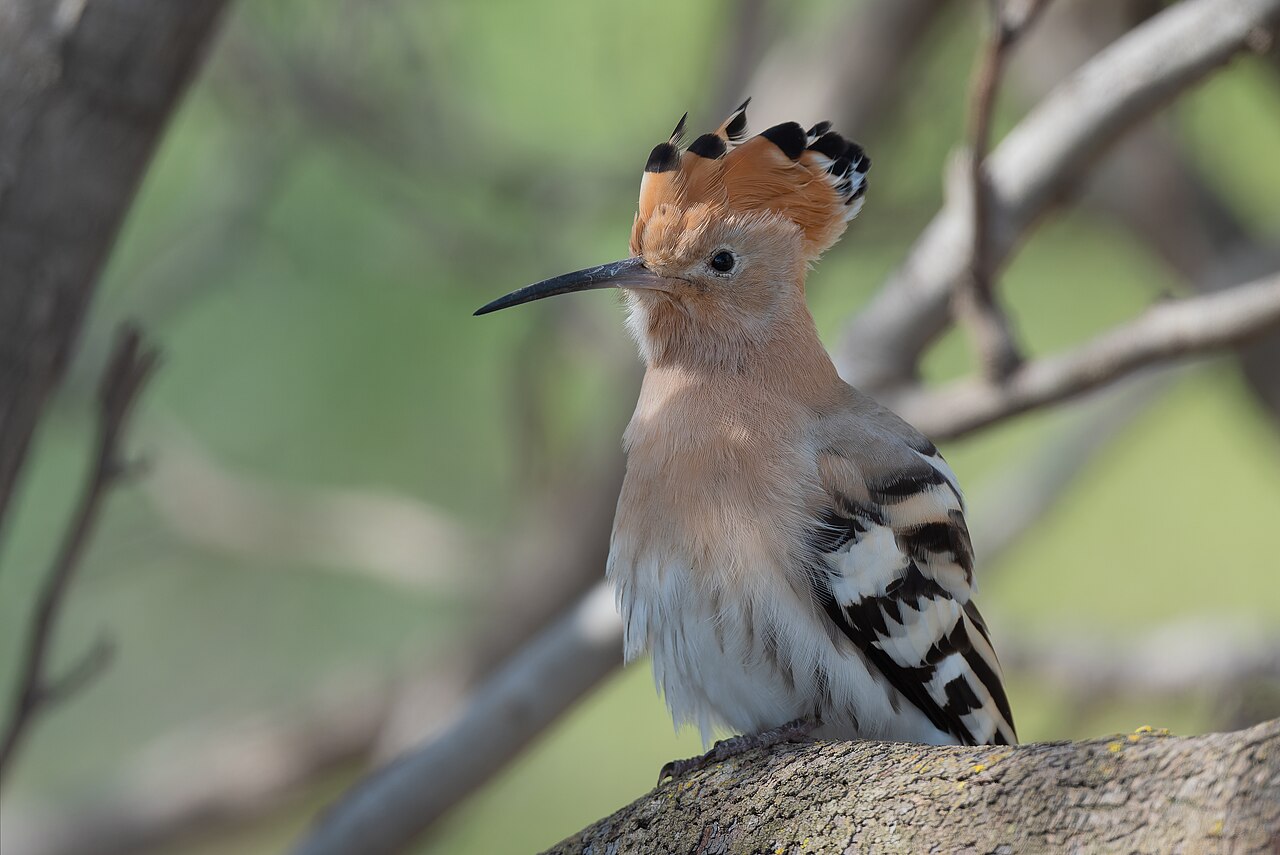
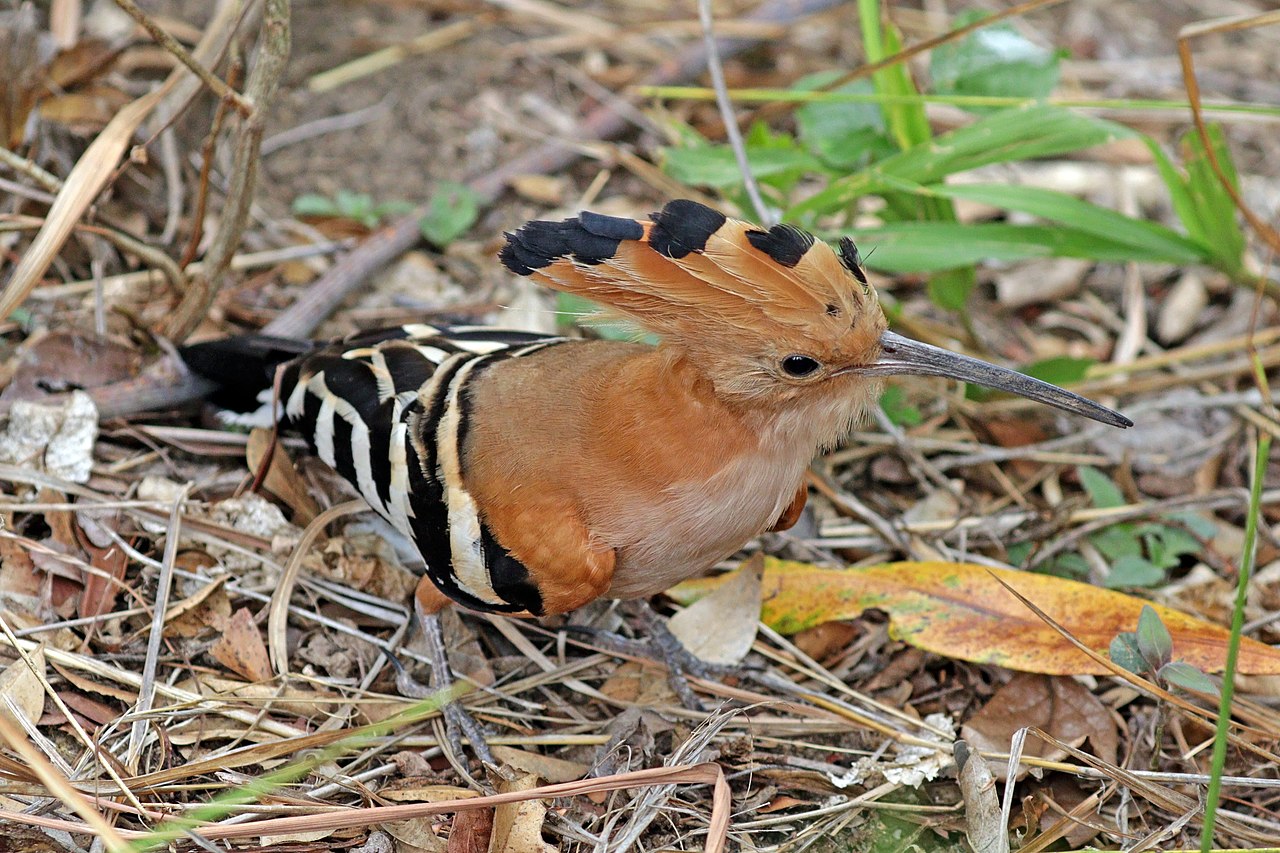
Hoopoes are easy to recognize. They are 10-12 inches (24.4-30.5 cm) in length with cinnamon-brown feathers, black-and-white striped wings, long curved bills, and square tails.
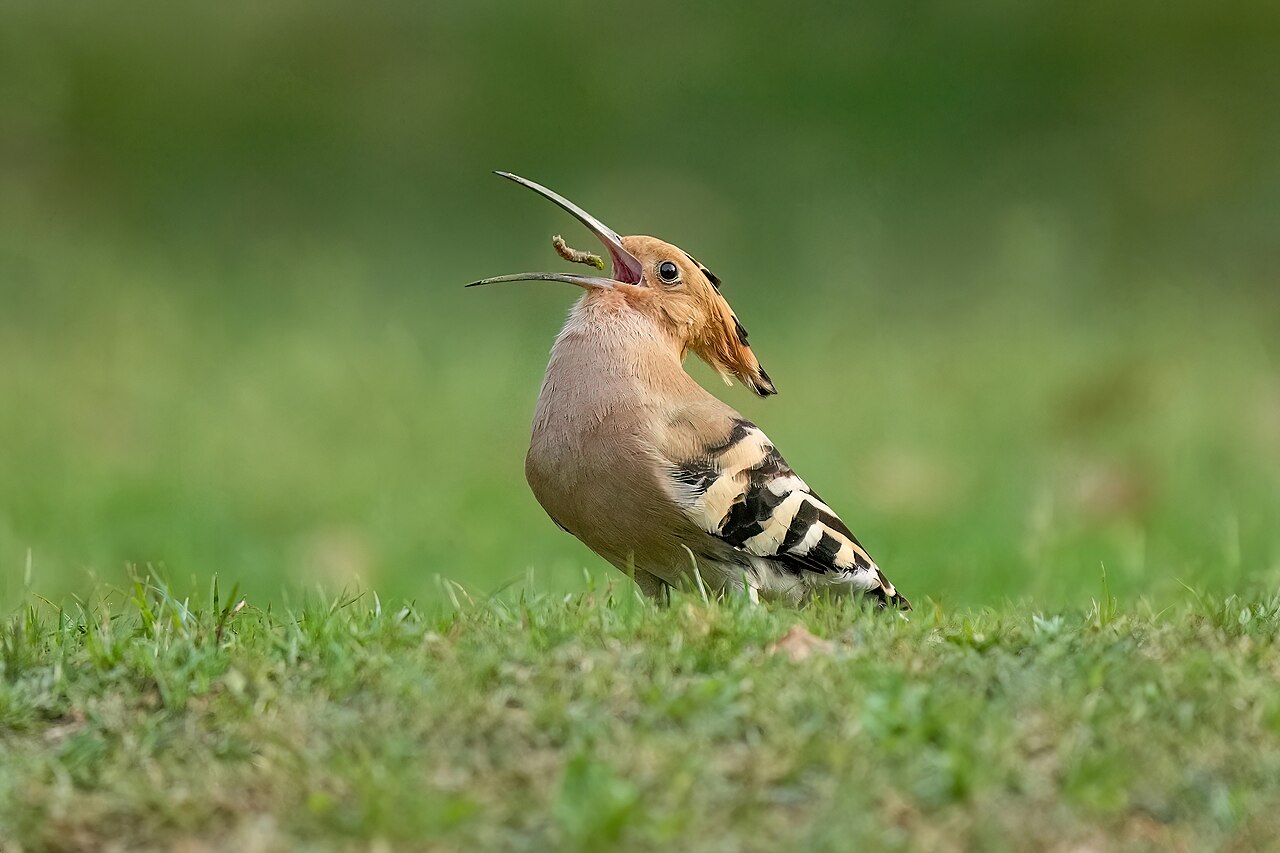
They are best known for the fan-shaped crest of feathers on top of their heads, which they can raise and lower like a Mohawk. Hoopoes use their long bills to probe the ground for, using their long, pointed bills to probe for insects, worms, and small lizards.
The Saint Helena Hoopoe, also known as the Giant Hoopoe (Upupa antaios), is an extinct species that once lived on the island of Saint Helena in the South Atlantic Ocean. It disappeared around the 1500s.
Common Hoopoe (Upupa epops)
The Common Hoopoe is found across much of Europe, Asia, and Africa. IUCN Status: Least Concern
Madagascar Hoopoe (Upupa marginata)
The Madagascar Hoopoe is only found in Madagascar. IUCN Status: Least Concern