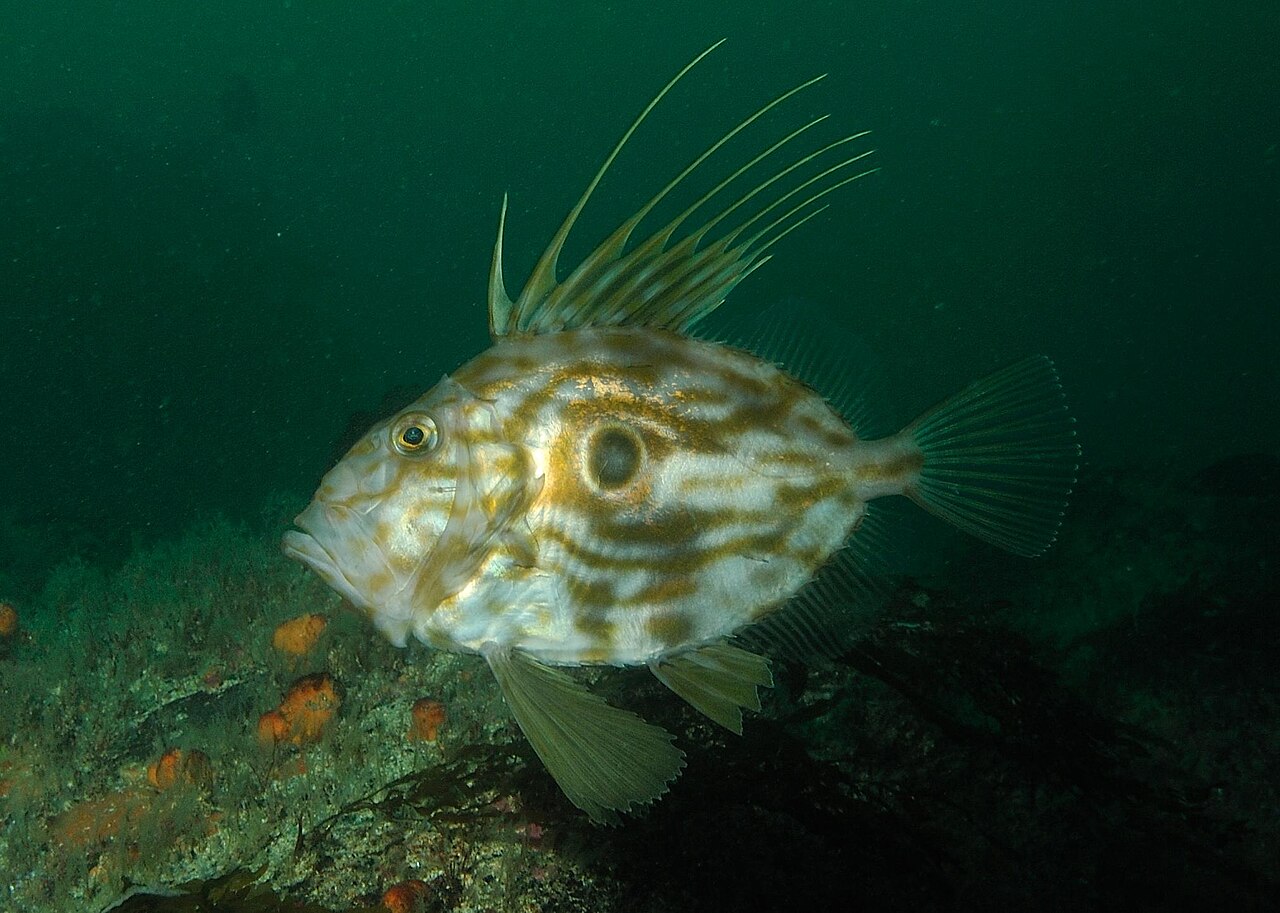
There are 33 species in six families in this order. These fish have thin, disk-shaped bodies and a striking appearance.
Most species live in deep marine waters, although some can be found closer to shore. They are found in oceans around the world, especially in temperate and tropical regions. Because they live so deep in the ocean, they are not often seen by people.
Their bodies are very compressed (flattened), which makes them look almost like a plate when viewed from the front. They also have large eyes that help them see in dim light, along with long, spiny fins that can make them appear larger and more intimidating to predators.
They range in size from the dwarf dory (Macrurocyttus acanthopodus), which is about 1.7 inches (4.3 cm) long, to the Cape dory (Zeus capensis), which can grow up to 35 inches (90 cm) in length.
Fish in the order Zeiformes are carnivores. They feed on small fish and invertebrates. Their mouths can extend forward quickly, allowing them to suction-feed, or suck in prey in a fast motion.