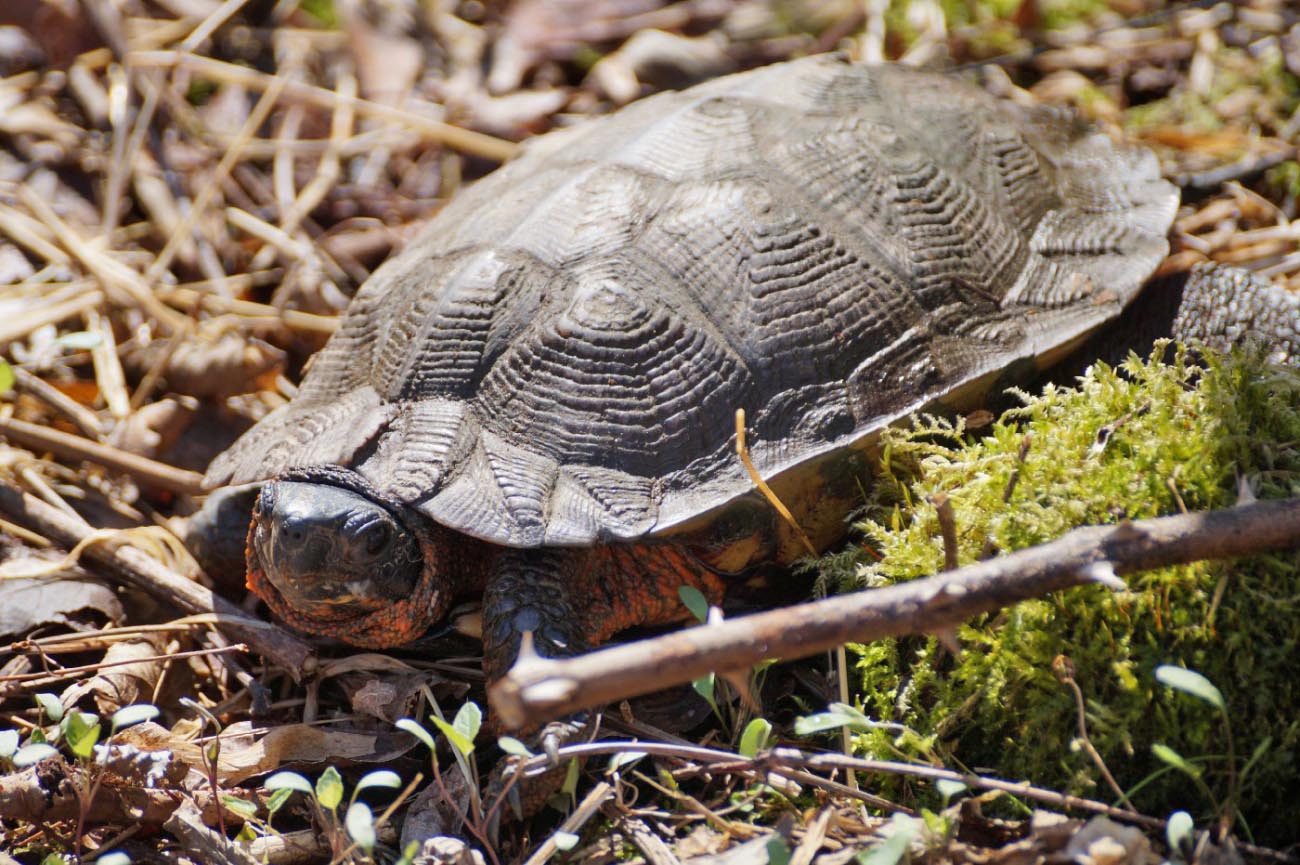
In segment one Patrice looks at some of the factors that could endanger plant and animal species. Then she joins Dave to learn about the wood turtle. Next, we take an up-close look at the peregrine falcon. Finally, Sarah and Octave join Susi von Oettigen of the U.S. Fish and Wildlife Service as she monitors the health of dwarf wedge mussels.
Program Objectives
Students will:
Discuss how species diversity helps maintain healthy ecosystems.
Describe how changes in an environment can lead to extinction.
Explain the role of adaptation in extinction.
Describe the ways humans have contributed to species extinction or endangerment.
Recognize the distinct characteristics of the peregrine falcon.
Explain how the peregrine falcon was almost eliminated and how it came back from possible extinction.
Pre-Viewing Activities
Using the blackboard, whiteboard, or a wall chart, have students brainstorm factors that they think could endanger plant and animal species. When the list is done, have the student categorize the factors as natural events, human impact, or a combination of both.
Post-Viewing Activities
Using the list generated for the previewing activity, have students further discuss the factors on the list and identify animal and plant species that have been impacted by those factors.
Have each student research a plant or animal species in their state that is endangered or threatened. During their research students should identify factors that are impacting the species and identify efforts that are being made to help the species. Have them also develop other strategies for saving the species.
Hands On: Get Active
Get Active
Research on local endangered or threatened plant or animal species.
In this activity, students will choose a plant or animal species in their area that is threatened or endangered. They will then create a public awareness campaign to help others learn about the species and the challenges it faces.
First, students will research the species to learn about its habitat, why its population is declining, and what people can do to protect it. Next, the class will develop a plan for educating others about the species and encouraging positive action.
The campaign may include activities such as writing letters, designing posters or social media messages, organizing a habitat clean-up, speaking with local community members or media outlets, fundraising, or creating presentations for the school.