The Arctic fox is about 3 feet in length (0.91 m) and weighs between 5 and 15 pounds (2.3-6.8 kg). Males are larger than females.
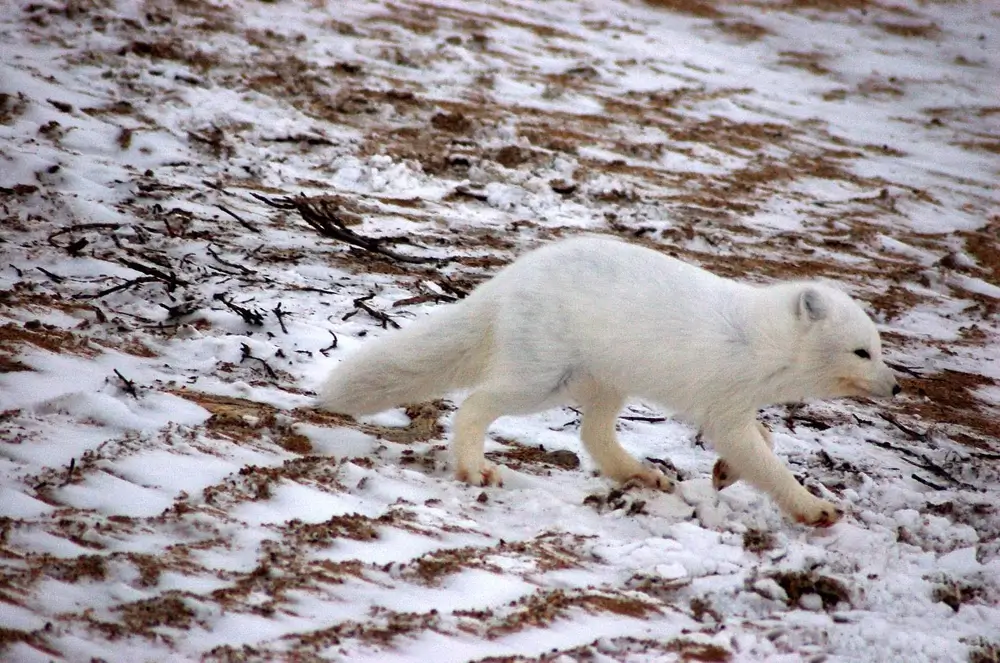
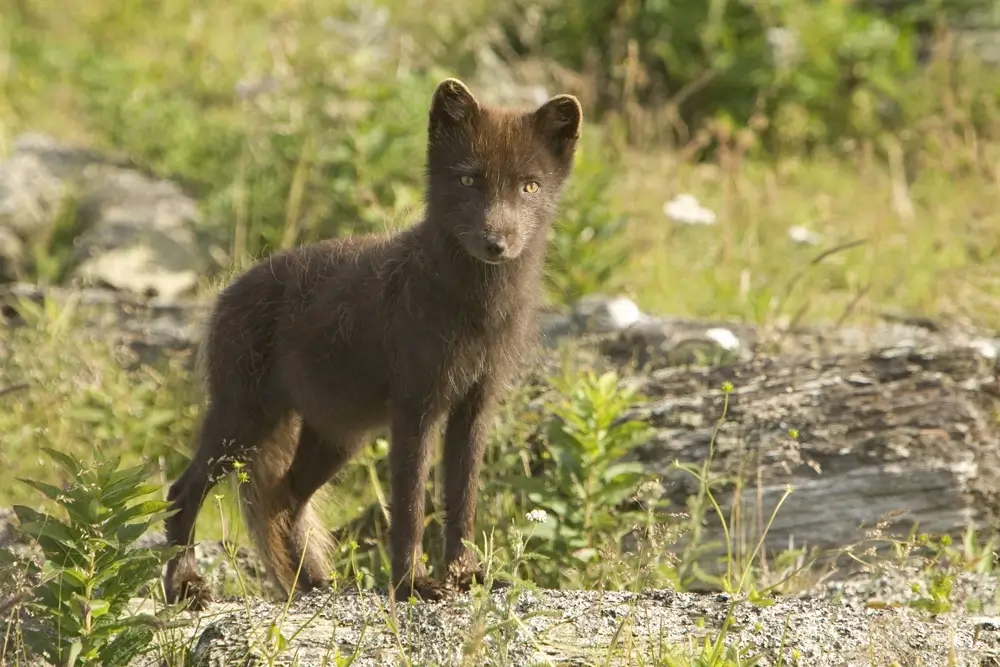
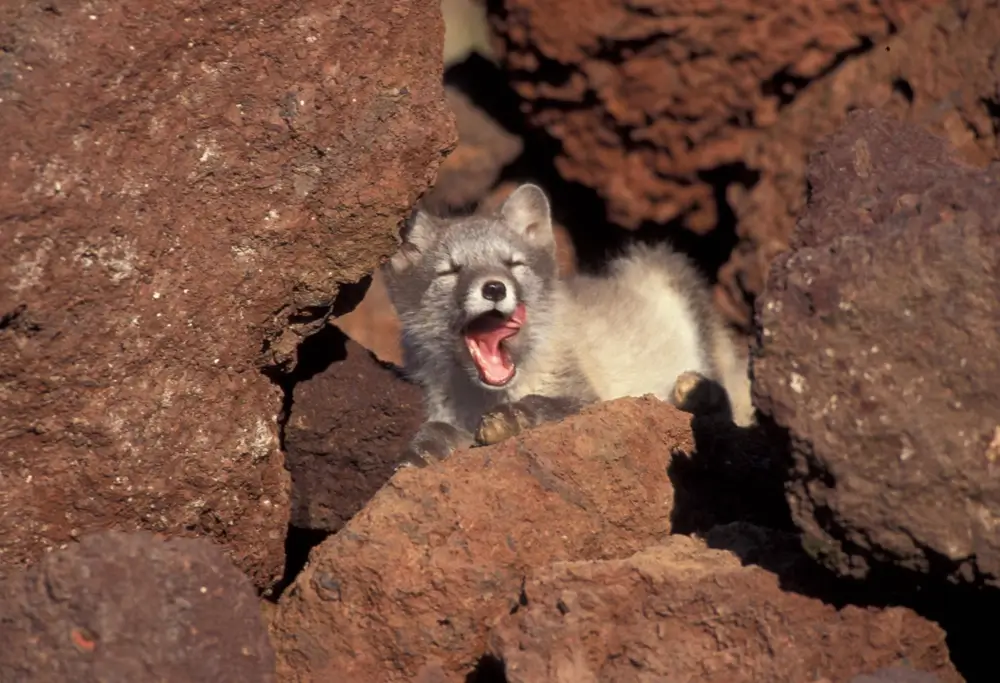
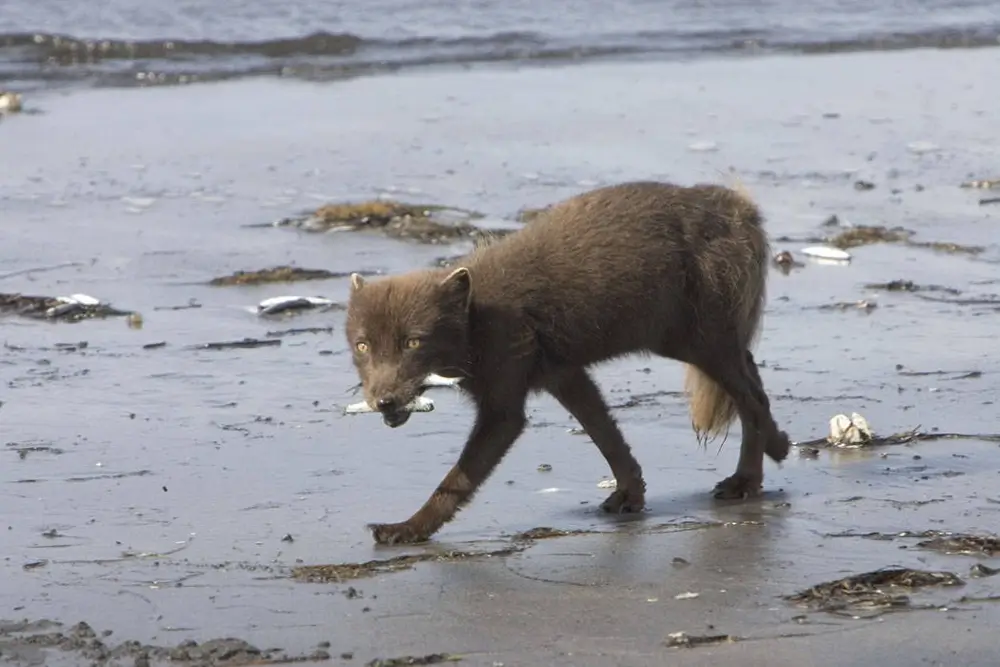
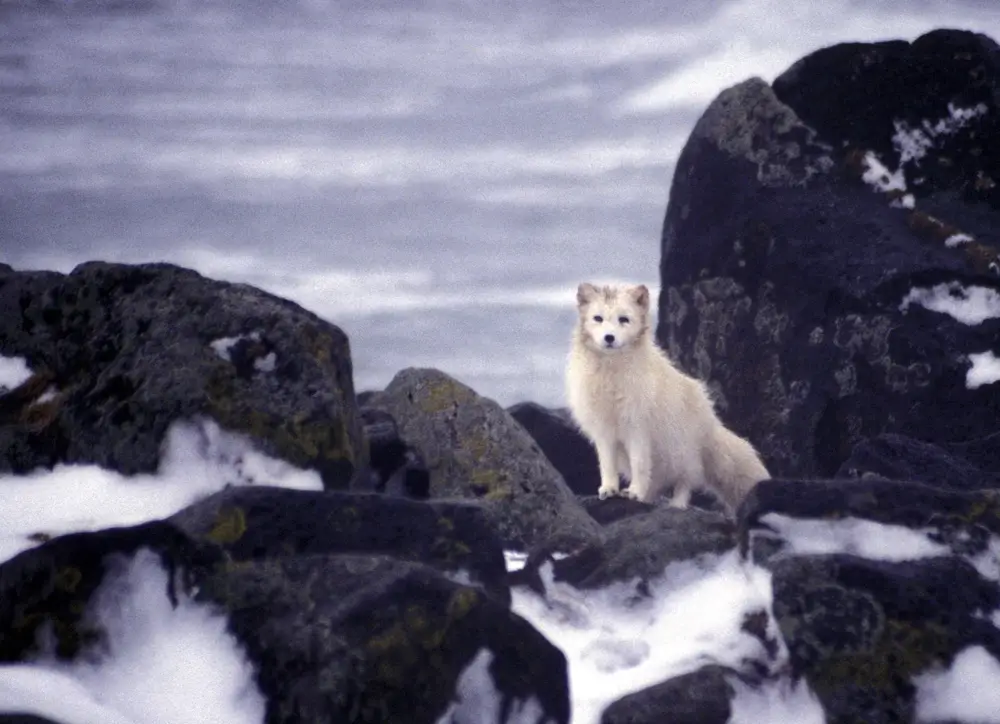
It is dark gray to brown or bluish-brown in the summer. In the winter, its fur is white or creamy white. It has a long bushy tail, a short nose, and small ears. It has short, stubby legs and thick fur.
Its short legs and nose, thick fur, and small ears are adaptations that help it survive in cold climates. Because its legs are so short and its ears and nose are small, there is less of the fox exposed to the cold.
The Arctic fox also has thick fur and hair on its paw pads that help keep it warm. The fur on its paws also gives the fox traction, so it doesn’t slide on the ice.
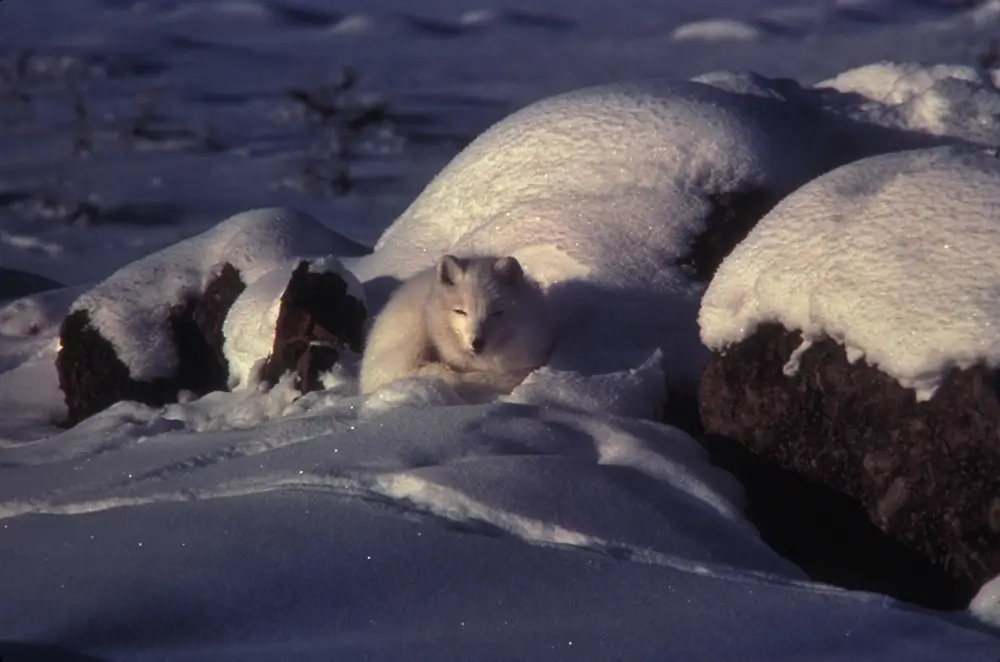
When the Arctic fox is sleeping, it protects its nose from the cold by curling its bushy tail around its body.
Habitat
In the summer, the Arctic fox lives in the tundra at the edge of the forest. In the winter, it is found on ice floes where its white coat serves as camouflage.
Its den is usually a burrow in a hillside or a bank. The burrow has more than one entrance. In the winter, the fox often makes its den in a snowbank.
Diet
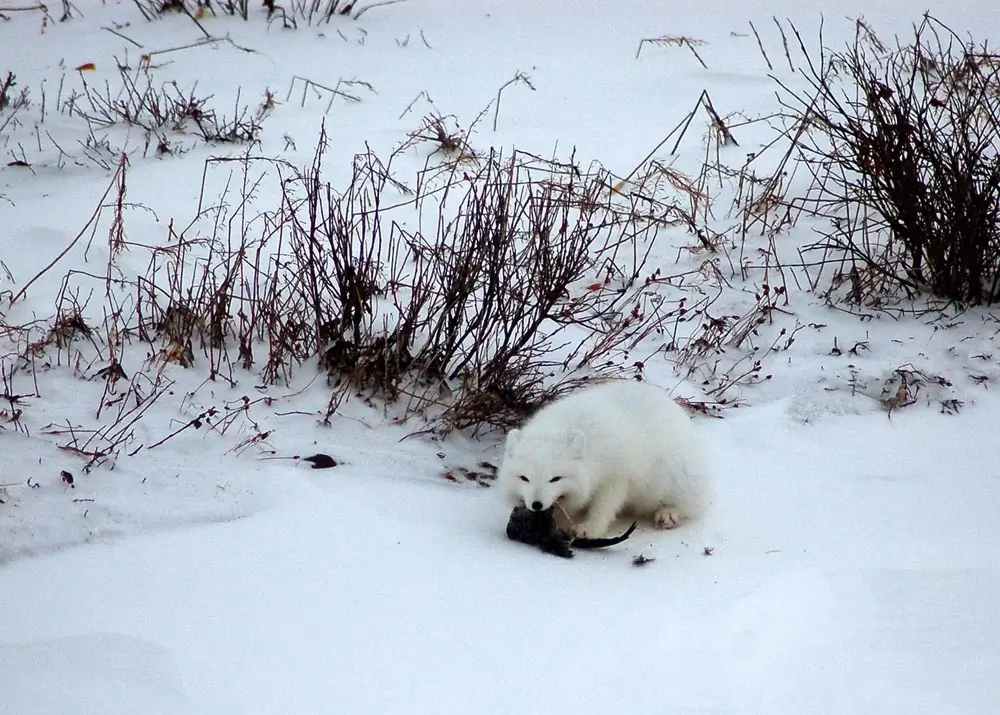
The Arctic fox is an opportunistic eater. That means it eats just about whatever it comes across. It eats small mammals like lemmings, voles, and ground squirrels; birds, insects, eggs, berries, and carrion (dead animals).
In winter, it often follows polar bears and wolves and eats their leftover kill. If food is really scarce, it eats the feces (poop) of other animals. In the summer, the Arctic fox carries extra food to its den and stores it under rocks to eat later. The Arctic fox sometimes even makes its own freezer by digging a hole in the permafrost and storing its food there.
A major food source for the Arctic fox is the lemming—a small rodent that lives on the Arctic tundra. In fact, Arctic fox populations often rise and fall in a roughly four-year cycle that closely follows changes in lemming populations.
Life Cycle
The Arctic fox mates between February and June. The female builds a new den and gives birth to 6-12 dark-furred kits. Both the female and the male take care of the young kits.
The male guards the den and brings food for the mother and her kits. The kits are weaned (no longer need their mother’s milk) between two and four weeks of age.
The Arctic fox has a lifespan of 3-6 years in the wild. In captivity, they can live to be 15 years old.
Behavior
The Arctic fox is nomadic, which means it moves from place to place in search of food. In the summer, Arctic foxes live in family groups made up of a male, one or two females, and the kits. The second female is usually a leftover kit from the year before. She doesn’t breed, but she helps care for the young.
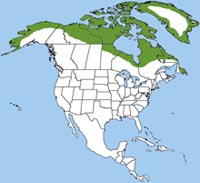
In North America, the Arctic fox is found from western Alaska east through northern Canada and in Greenland. It is also found in the Arctic regions of Europe, Asia, and Iceland.