The bufflehead is the smallest diving duck in North America. It measures about 12-16 inches (30.5-40.6 cm) long, with a wingspan of roughly 21-24 inches (53.3-61 cm). It usually weighs between 0.7 and 1.2 pounds (0.3-0.5 kg).
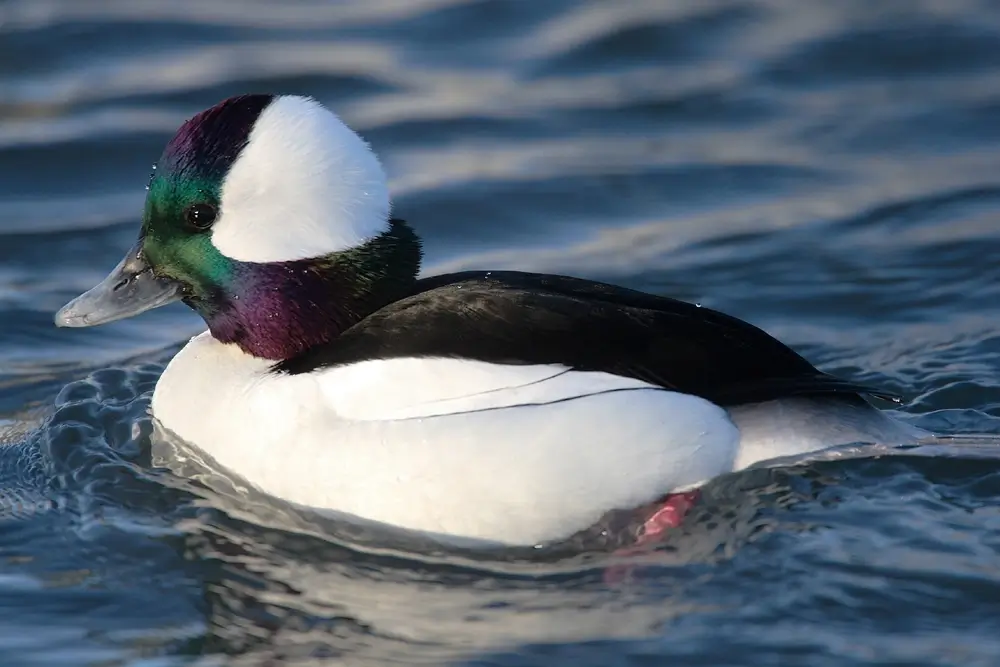
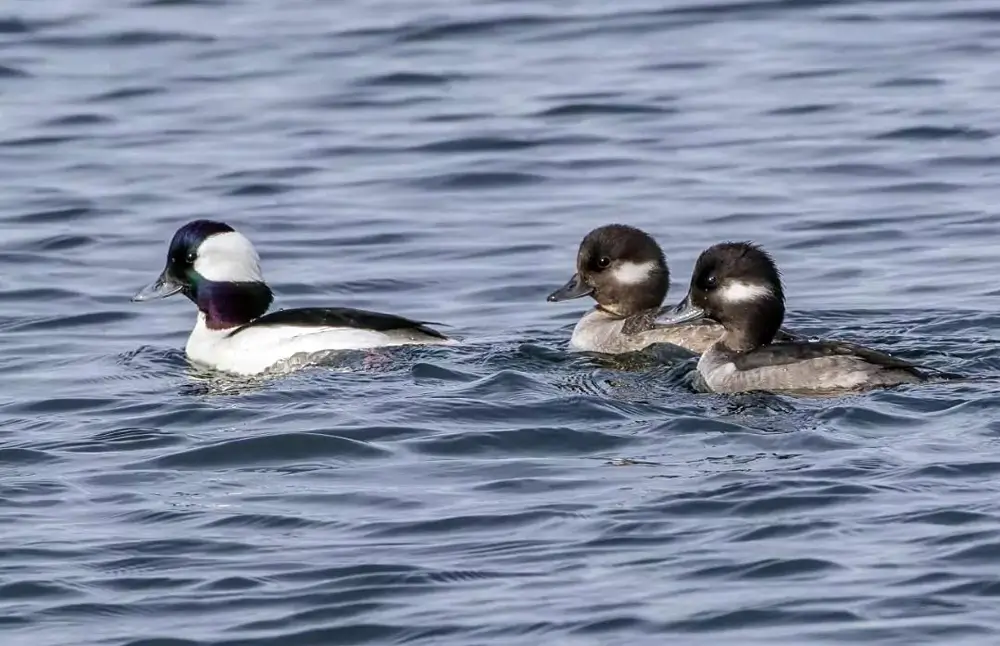
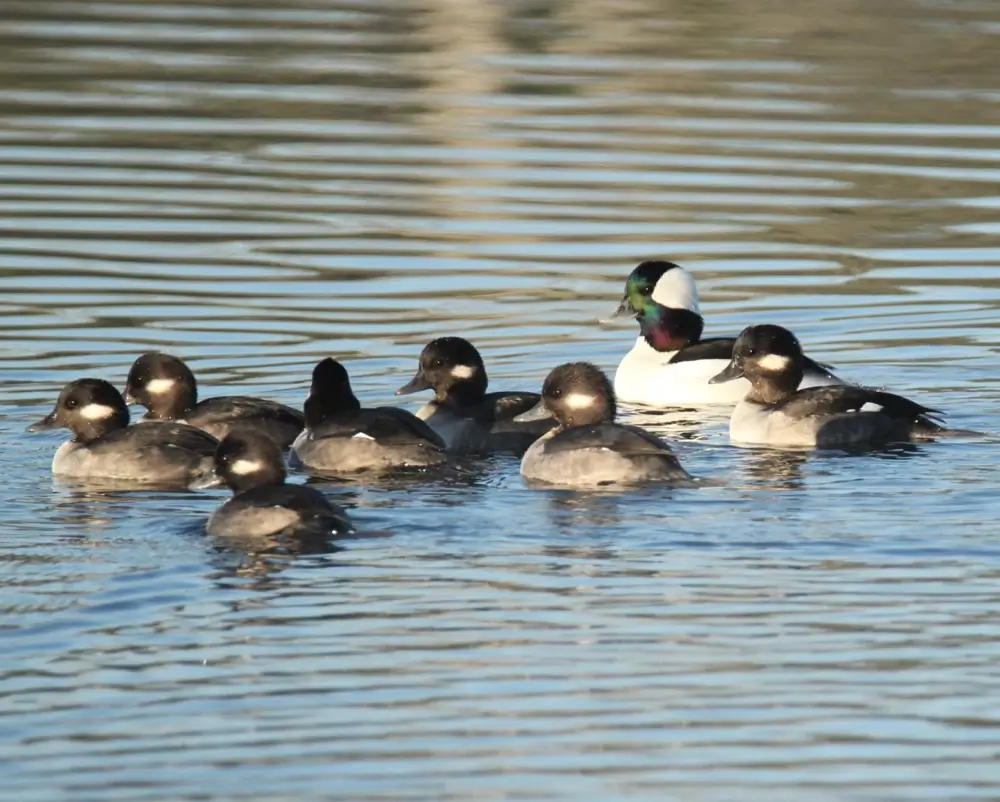
The male bufflehead is striking in appearance. He has a mostly white body with a black back. His head is black with iridescent* green and purple feathers, and he has a large white patch that wraps around the back of his head.
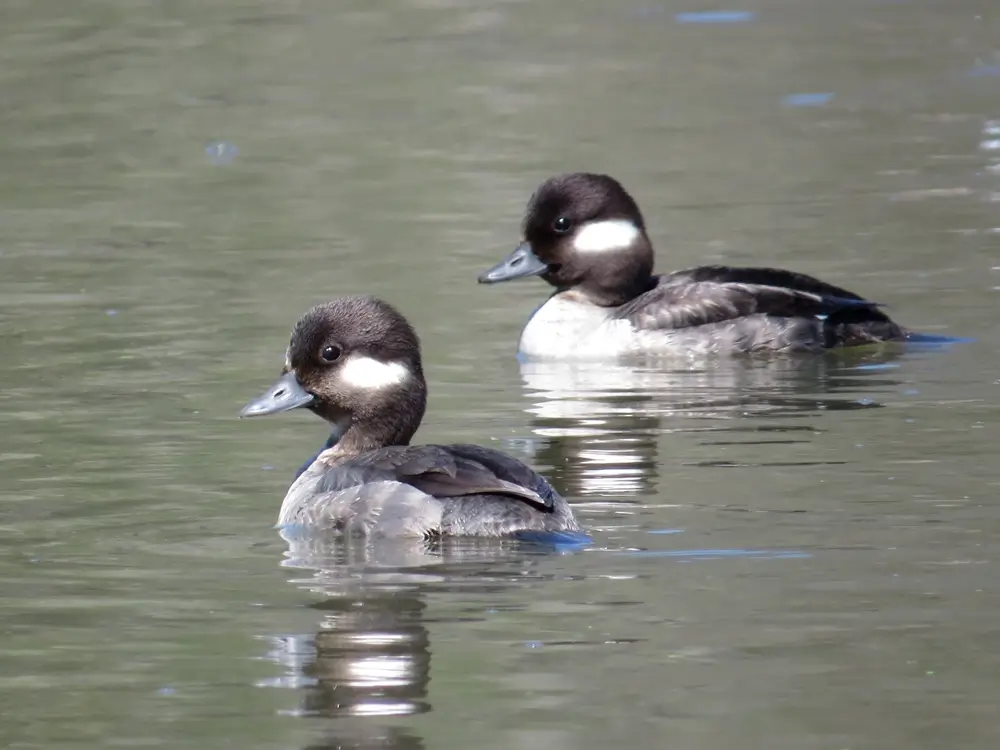
The female is more muted in color. She has a dark brown to grayish body, a grayish belly, and a small white patch on her cheek.
Both males and females have short necks and small, narrow bills that are usually dark gray to black.
*Iridescent means something shines with bright, rainbow-like colors that seem to change when you look at it from different angles—like a soap bubble or a butterfly’s wings.
Habitat
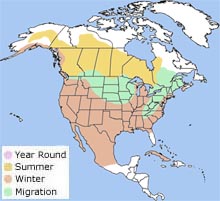
During the breeding season, the bufflehead is found in freshwater ponds and small lakes with poplar or aspen stands or in coniferous forests with poplar or aspen trees inhabited by northern flickers.
In the winter, it is found in shallow saltwater bays and estuaries, in lakes, and in rivers.
Diet
The bufflehead is a diving duck. It dives for food like insects, crustaceans, mollusks, and seeds. Its prey is swallowed while the bufflehead is underwater.
It feeds in small flocks of around ten birds. One bufflehead usually keeps watch while the others are diving for food.
Life Cycle
The female bufflehead usually returns to the area where she was born in early spring to breed. During courtship, the male tries to attract a female by bobbing and shaking his head and flying over her. He may also chase other males away from a lake or pond he claims as his territory. Males typically mate with only one female, and some pairs may stay together for several breeding seasons.
The female lays 6-11 ivory-colored eggs, usually one egg per day. She nests in a tree cavity, often about 2 feet (0.61 m) above the ground, and commonly uses abandoned woodpecker holes, especially those made by northern flickers.
The female incubates the eggs, which hatch after about 25–30 days. Once incubation begins, the male leaves and does not help raise the young. When the ducklings are a few days old, the female calls them out of the nest. The tiny ducklings must jump down from the cavity to the ground, and then she leads them to water.
In the wild, buffleheads typically live 2-3 years. However, the oldest known bufflehead lived at least 18 years and 8 months.
Behavior
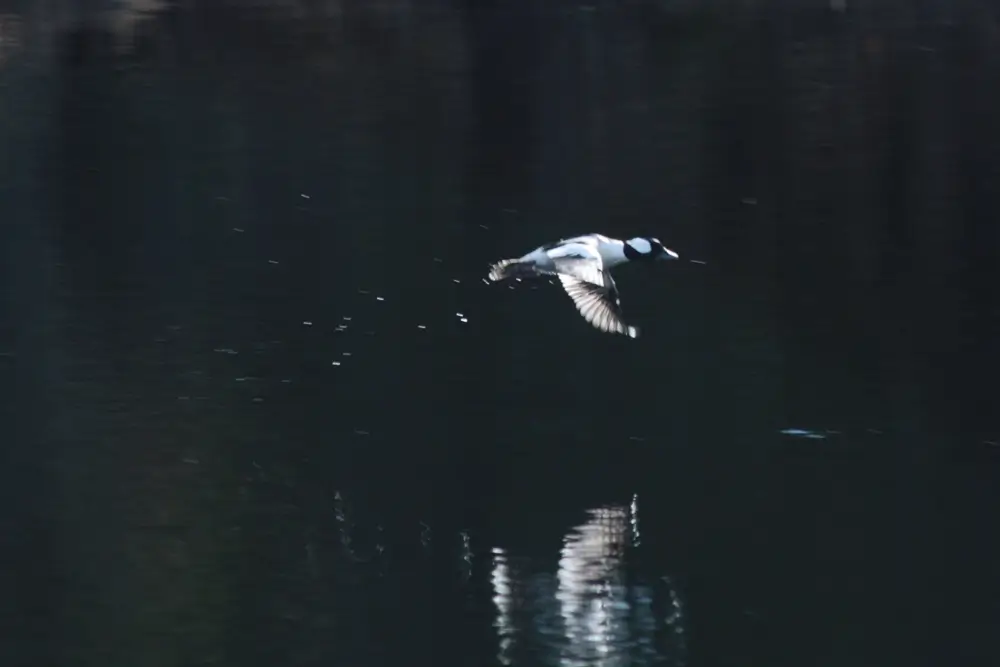
The bufflehead is awkward on land because its feet are set far back on its body, but it is an excellent swimmer and a fast flier. To take off, it often runs across the water’s surface to build enough speed to launch itself into the air. Once flying, it stays low, usually skimming just above the water.
Did You Know?
The bufflehead was first called the buffalo head because of the male’s large domed head.
Support for NatureWorks is provided by:
The Bufflehead in NH
During its migration, the bufflehead can be found on lakes, ponds, and rivers across New Hampshire.
In the winter, it can be found in the coastal waters of New Hampshire, including Great Bay.