Cactus Wren

Campylorhynchus brunneicapillus

Kingdom
Phylum
Class
Order
Family
Genus

Cactus Wren

Campylorhynchus brunneicapillus

Kingdom
Phylum
Class
Order
Family
Genus

Characteristics

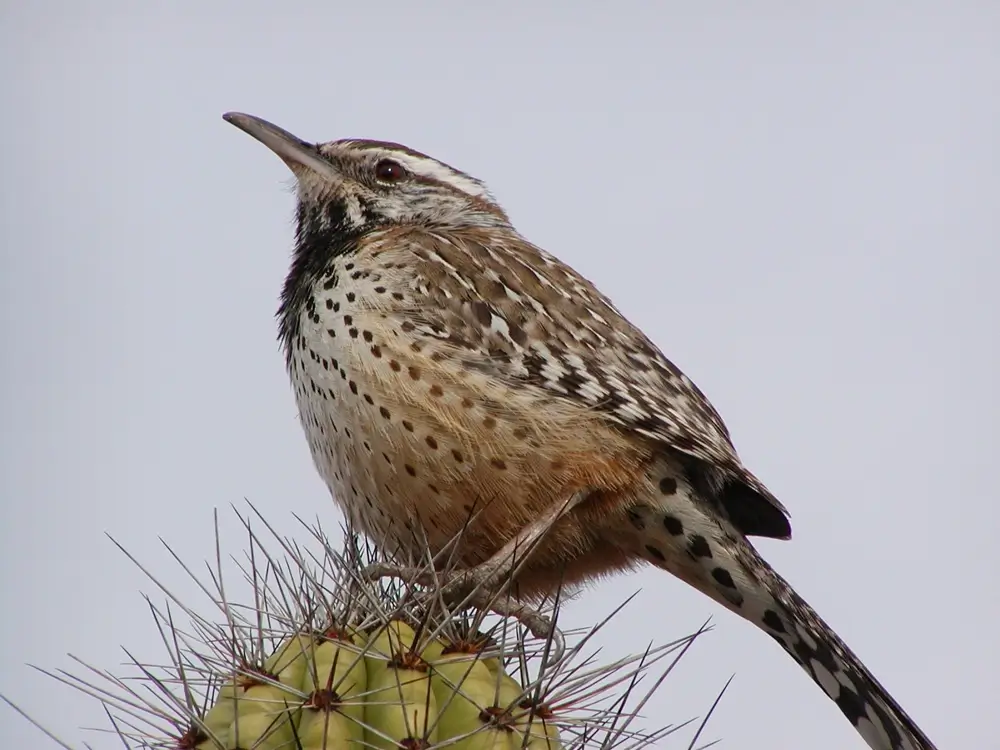
The cactus wren is 7.1-8.7 inches (18-22.1 cm) in length and has a wingspan of 10.6-11 inches (26.9-27.9 cm).

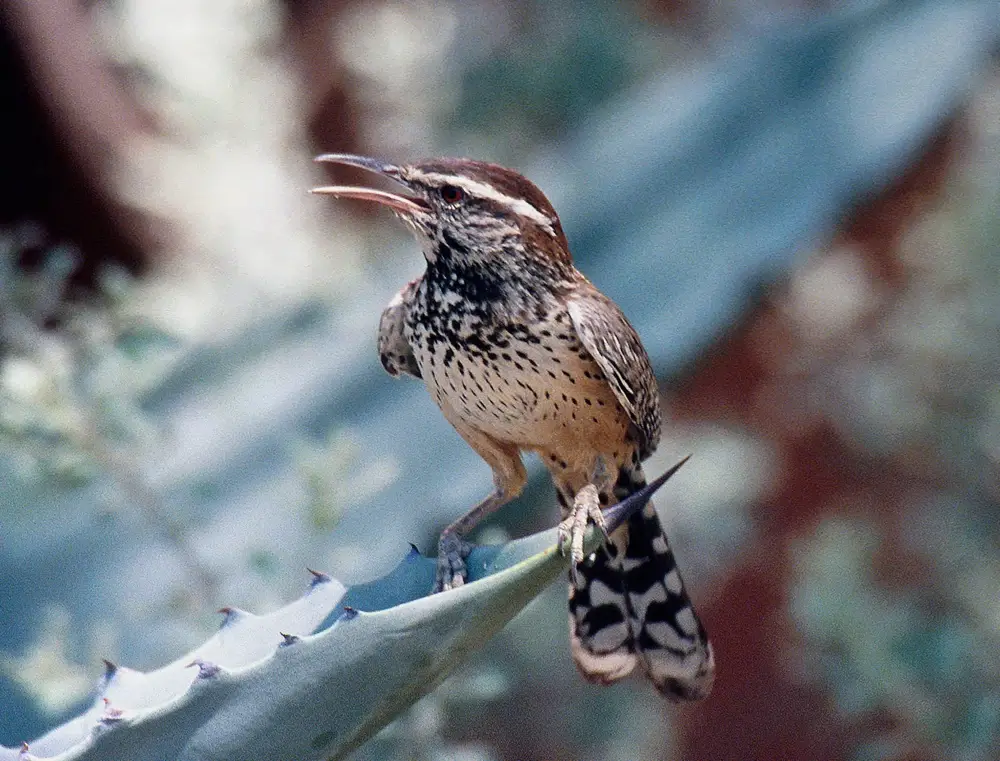
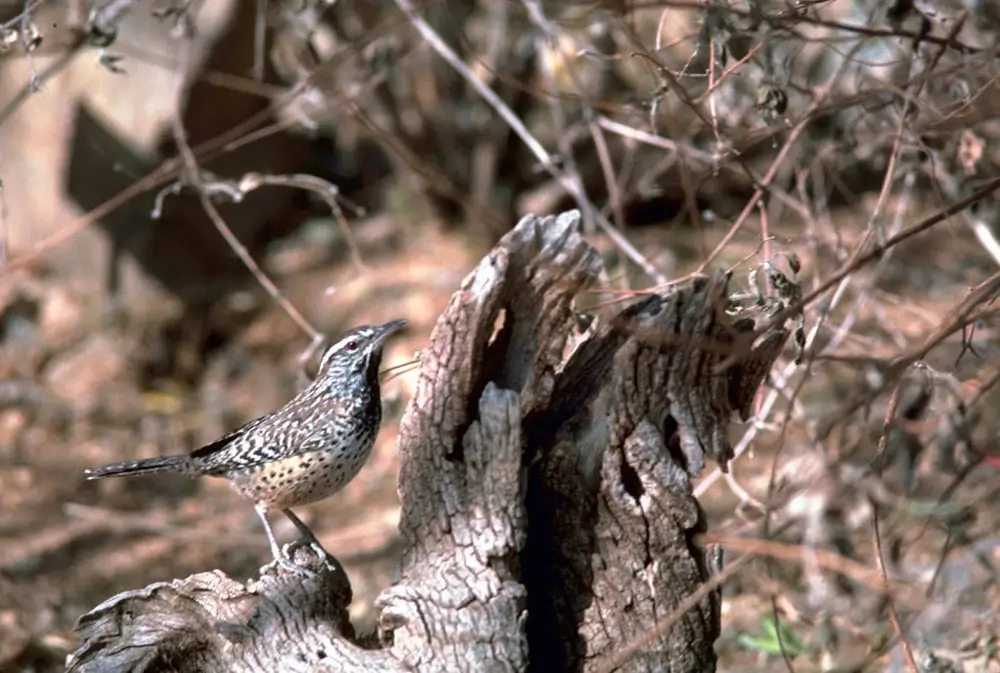
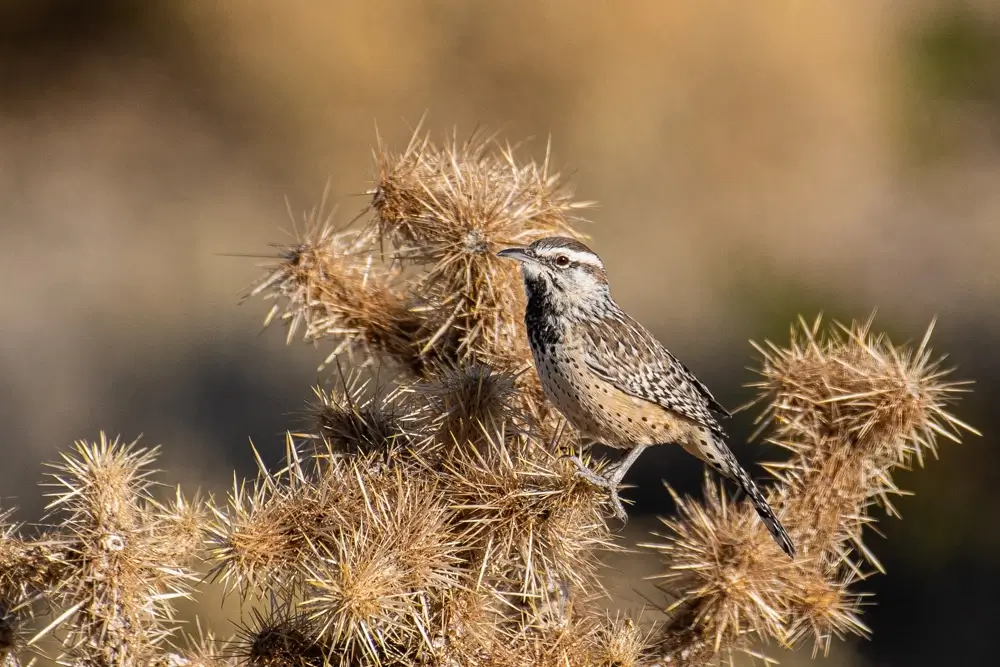
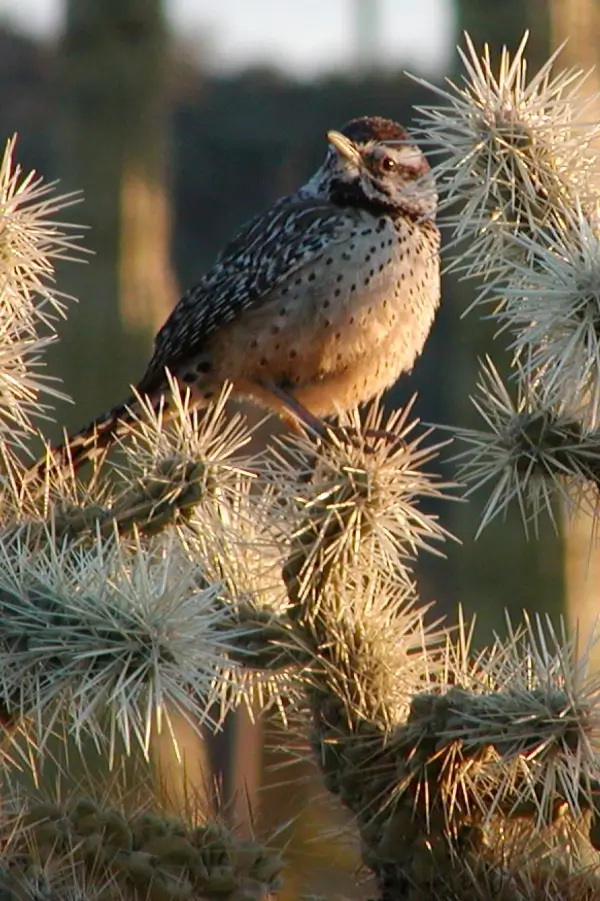
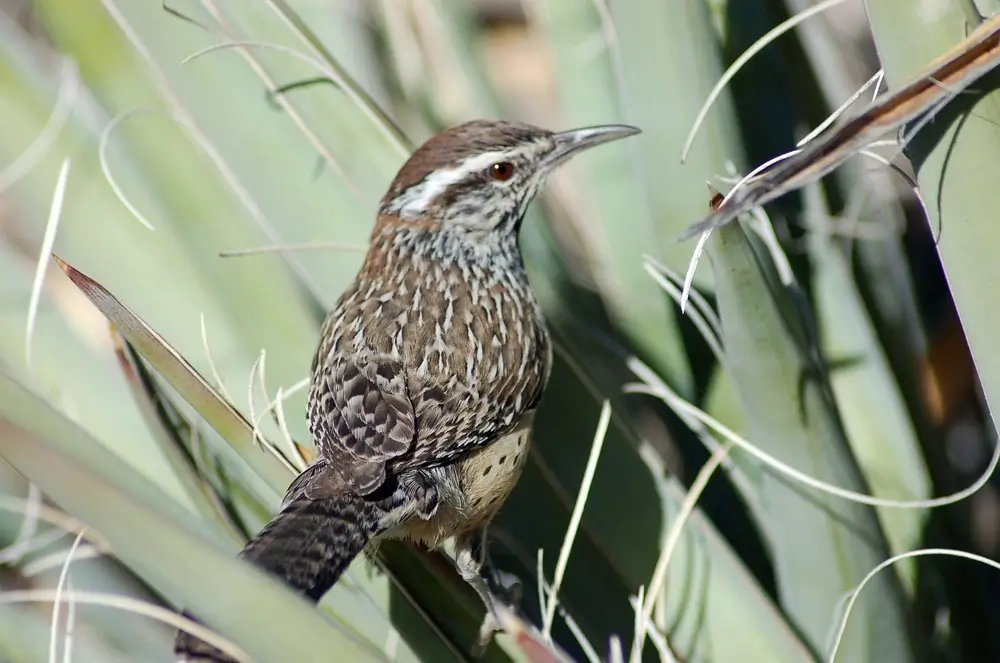
It has a white belly with brown spots, and speckled brown, black, and white feathers on its back, wings, and head. It has black feathers on its throat and a long stripe of white feathers above its eyes that looks like eyebrows.

It has long legs and a long, slightly downcurved, pointed bill.

Habitat

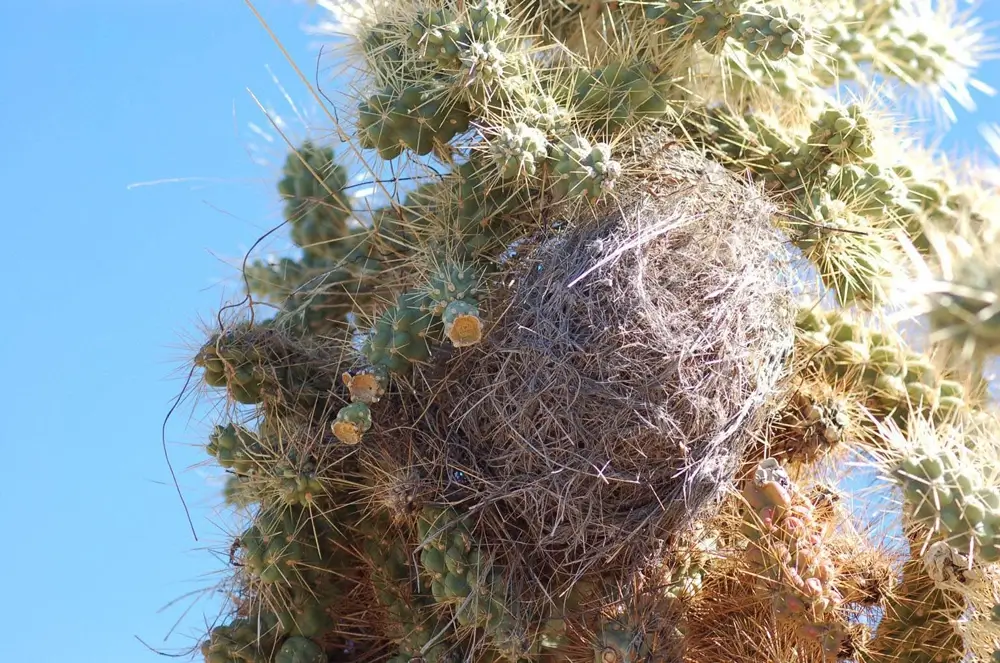
The cactus wren lives in desert thickets* and areas with large cacti, such as the cholla. It needs areas with cactus, thorny plants, or bushes strong enough to hold its large nests.

*A thicket is a dense group of bushes, shrubs, or small trees that grow very close together.

Diet

The cactus wren forages for food on the ground. It uses its long bill to turn over things on the ground. It eats ants, beetles, grasshoppers, wasps, fruits, and seeds. Sometimes it eats small frogs and lizards.

It is adapted for life in the desert and gets most of the water it needs to survive from the food it eats.

Life Cycle

The cactus wren usually mates from late February through March. Each breeding season, the female can raise as many as three broods. She chooses a nesting spot in a large cactus, dense shrub, tree, or thicket to help keep the eggs safe. Both the male and female work together to build the nest.

The nest is made with grass and straw and is lined with feathers. The nest is large and shaped like a football. It has a side entrance that helps protect fledglings (young birds with flight feathers) from predators.

The female lays  3-6 eggs. The eggs take a little more than two weeks to hatch. The young wrens leave the nest after about three weeks, but they depend on their parents for food for another month.

Behavior

Cactus wrens don’t just build nests for raising their young during the breeding season—they use them all year long. They often sleep, or roost, in their nests at night to stay safe and protected from predators and harsh weather.

Did You Know?

The male cactus wren stays very busy during breeding season. He often builds a second or even a third nest while the first nest still has chicks inside. While the female is incubating the next clutch of eggs, the male helps care for the young in the earlier nest by bringing them food and protecting them.


National Park Service

Support for NatureWorks is provided by:

The Cactus Wren in NH

World Status: Least Concern

Listen Here

Andrew Spencer, xeno-canto.org
cactus wren

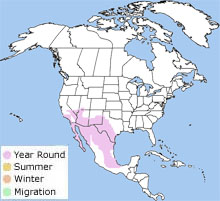
Range

The cactus wren is found in desert areas of southern California, southern Nevada, Arizona, New Mexico, Utah, western Texas, and Mexico.