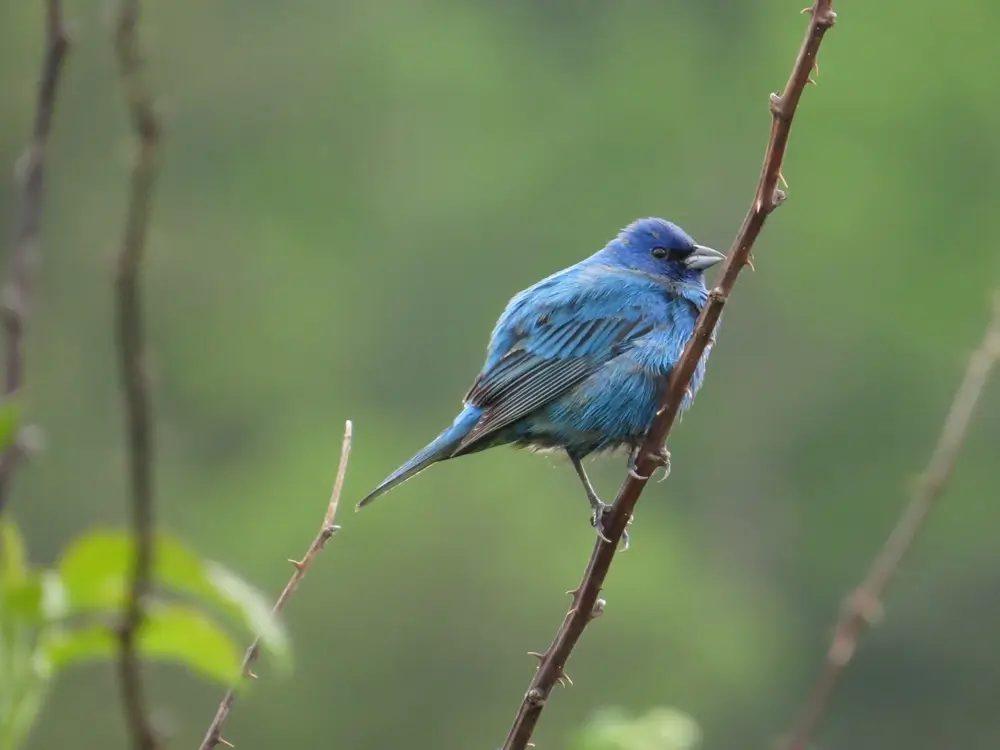
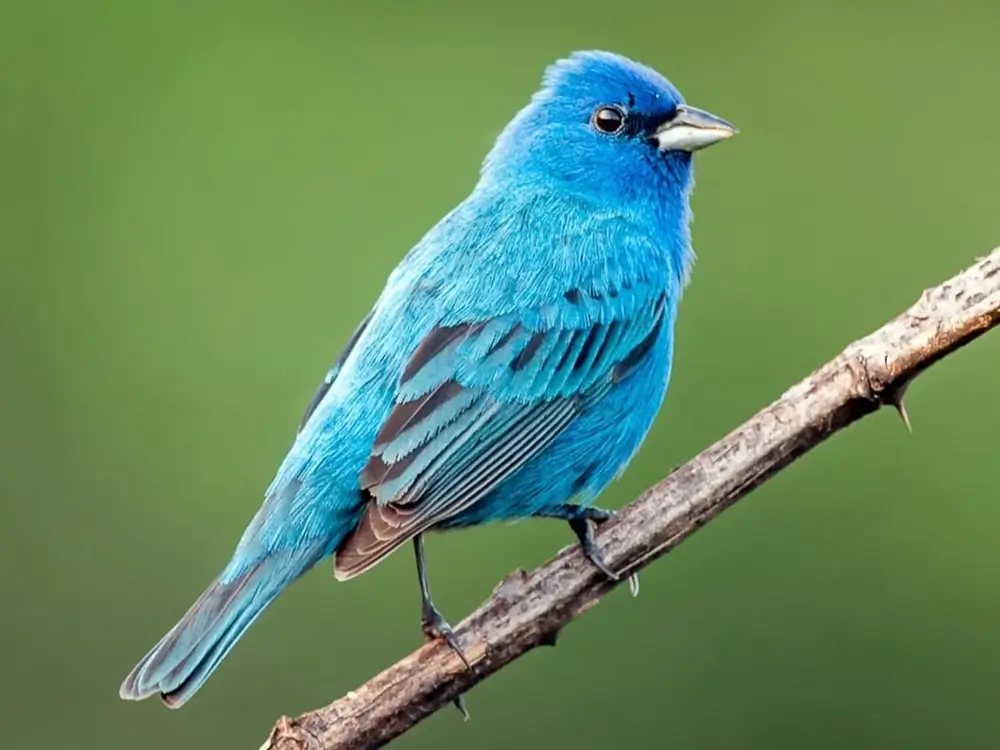
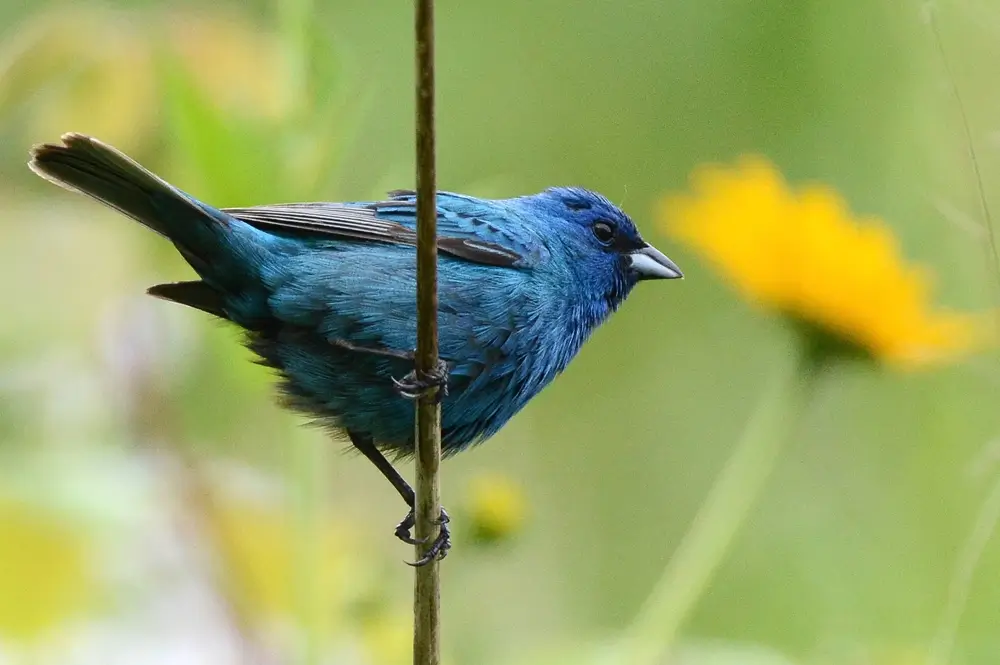
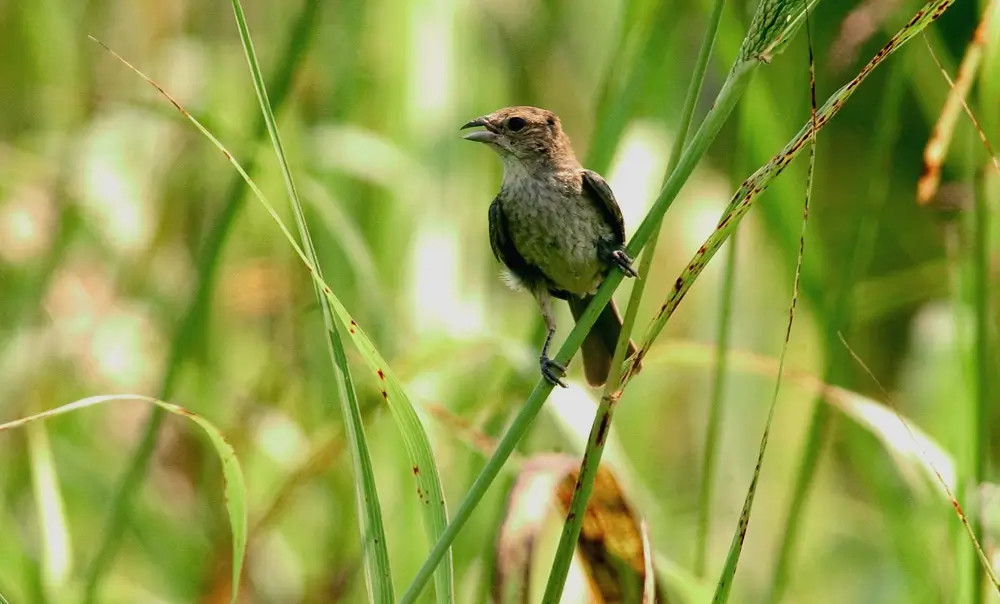
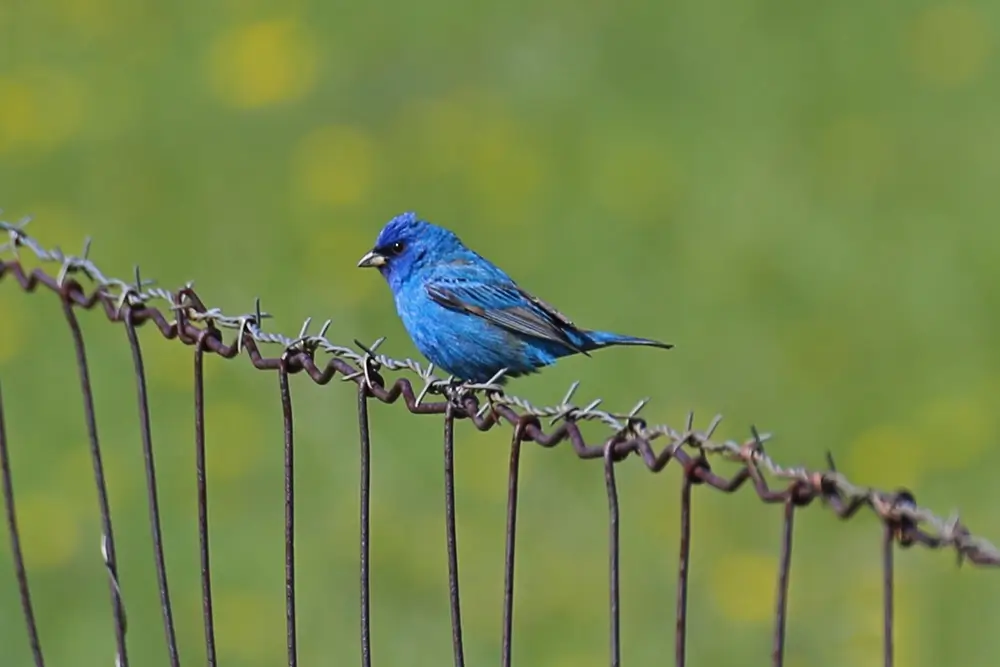
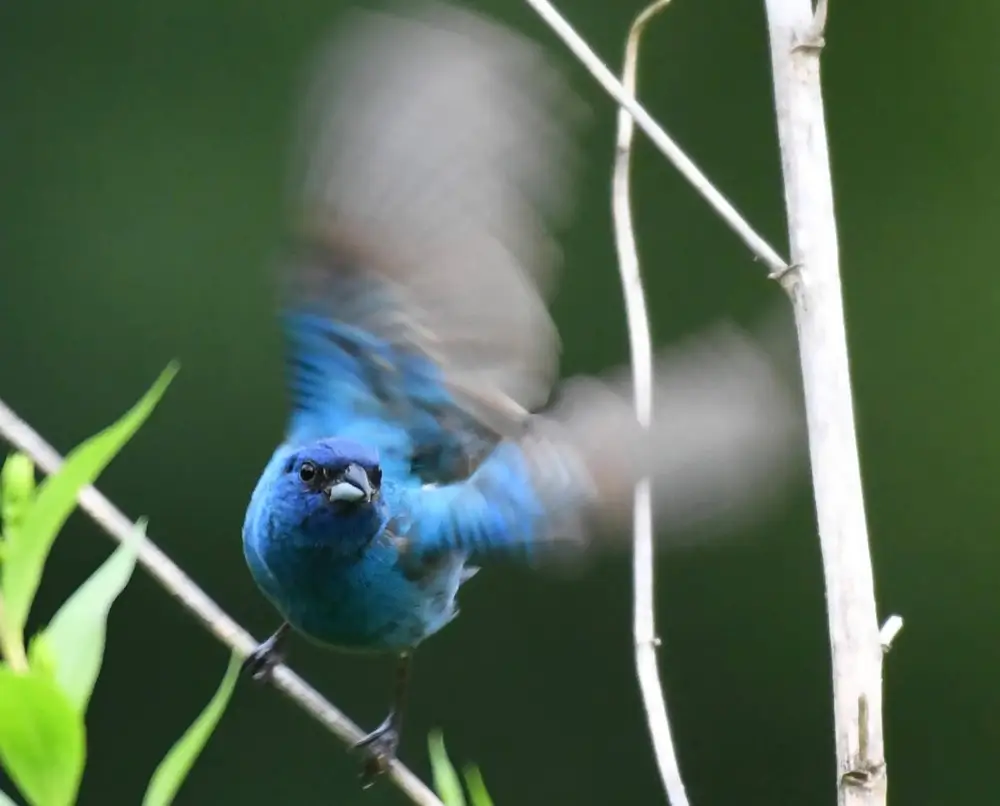
The indigo bunting is 4.7-5.1 inches (12-13 cm) in length with a wingspan of 7.5-8.7 inches (19-22 cm).
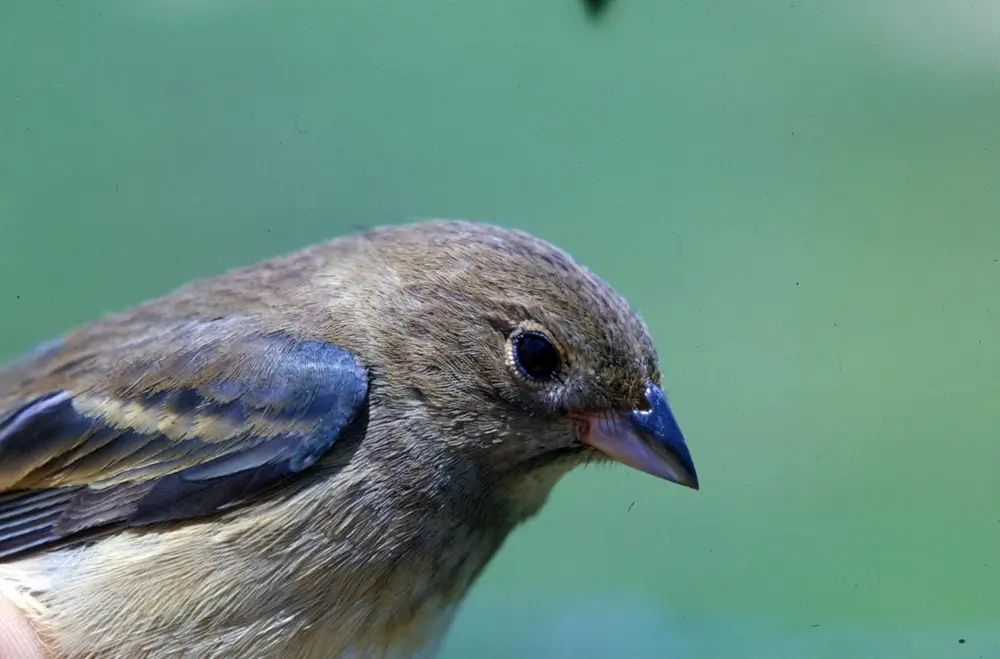
It has a small, cone-shaped bill and gray or black legs and feet. The male is a bright blue during the breeding season and a duller blue in the winter. The female is brown with a lighter streaked breast and a touch of blue on her tail and shoulders.
Habitat
The indigo bunting is found in brushy and weedy areas at the edges of farmland, orchards, woods, powerline and railroad openings, swamps, and streams.
Diet
The indigo bunting eats spiders, insects, berries, and seeds. It feeds alone during the breeding season and in flocks in the winter.
Life Cycle
During the breeding season, the male chooses and defends a breeding territory. The female indigo bunting chooses a nesting site and builds a nest of leaves, grass, and bark in a shrub.
She lays 1-5 eggs and incubates them for 12-14 days. The female feeds and cares for the chicks. The chicks fledge when they are 8-14 days old, but stay with the female for a few more weeks. The female may have more than one brood a year.
The indigo bunting has a lifespan of up to 10 years in the wild.
Behavior
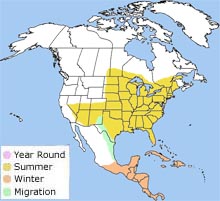
The indigo bunting is a neotropicalmigrator. A neotropical migrator breeds in Canada and the U.S. and winters in Mexico, Central America, South America, or the Caribbean. It usually migrates at night and can travel as far as 2,000 miles to its winter range.
Did You Know?
Support for NatureWorks is provided by:
The Indigo Bunting in NH
The indigo bunting breeds across New Hampshire. They migrate south in the fall.