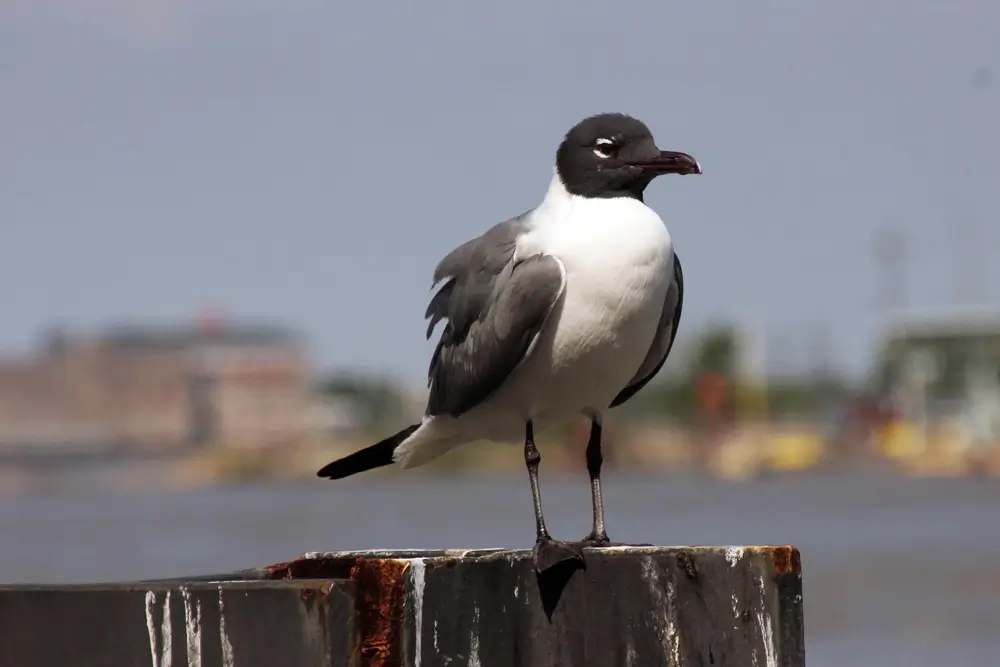
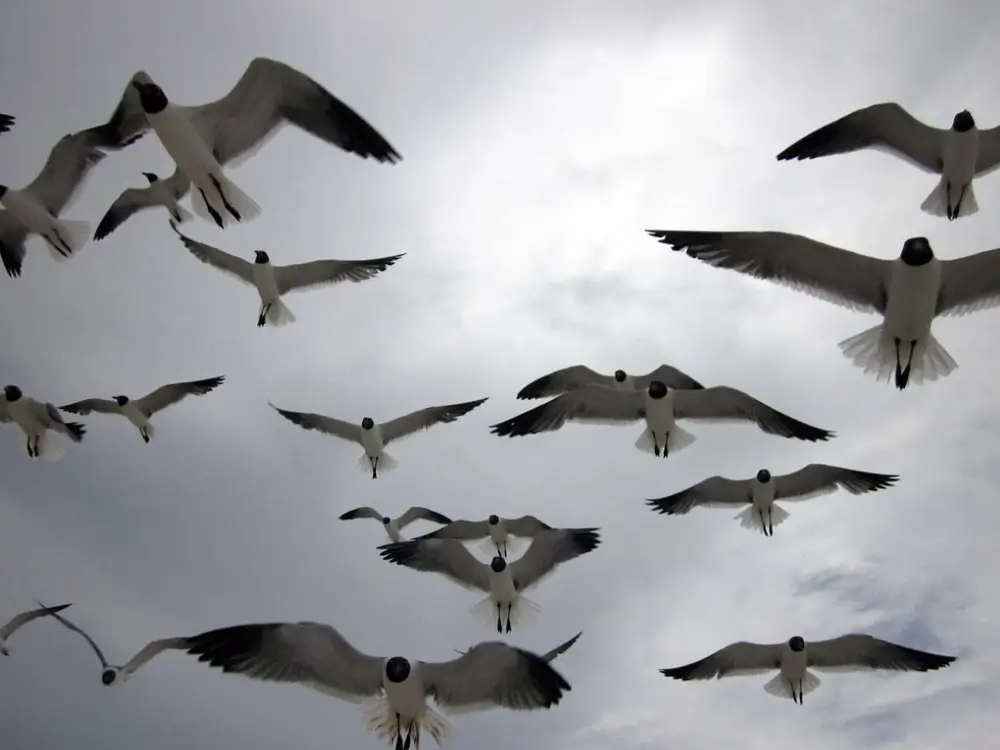
The laughing gull is a medium-sized gull, 15.3-18.1 inches (39-46 cm) in length, with a wingspan of 36.2-47.2 inches (92-120 cm).
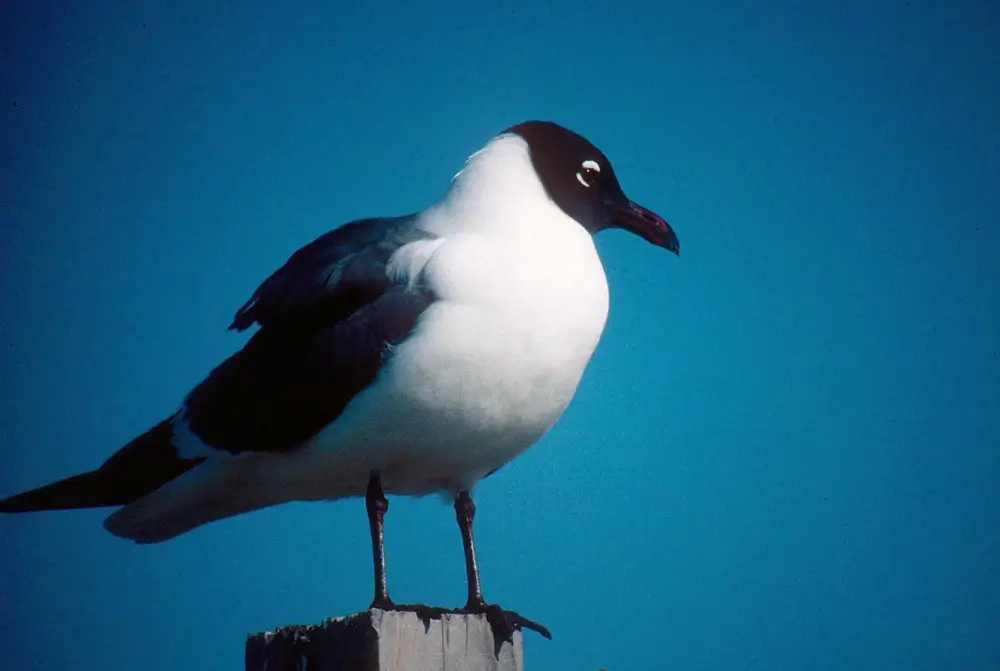
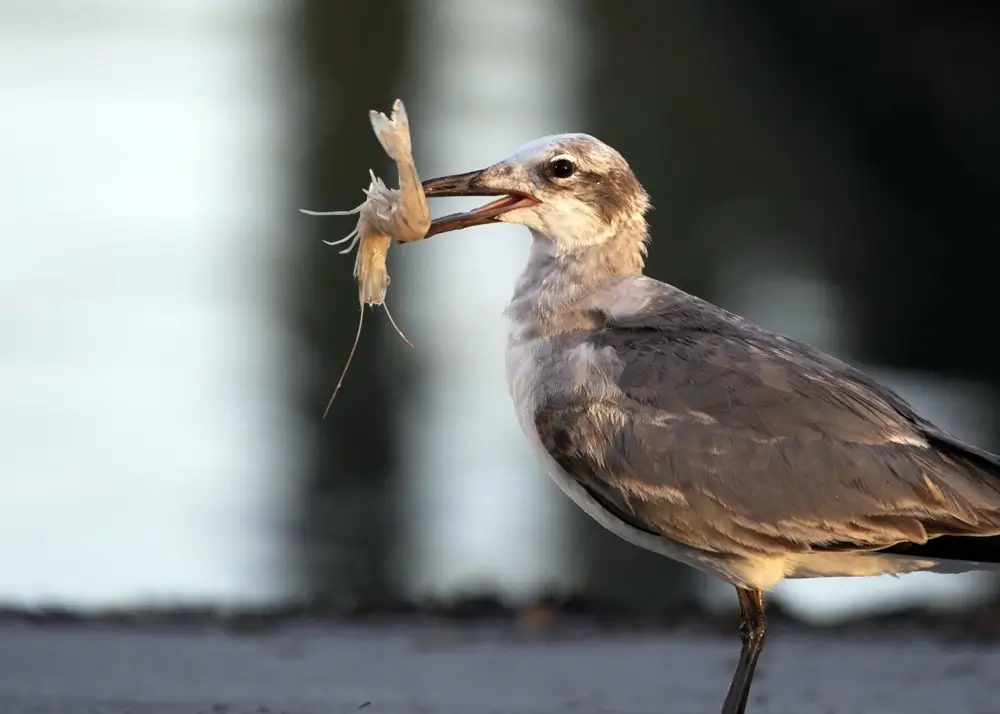
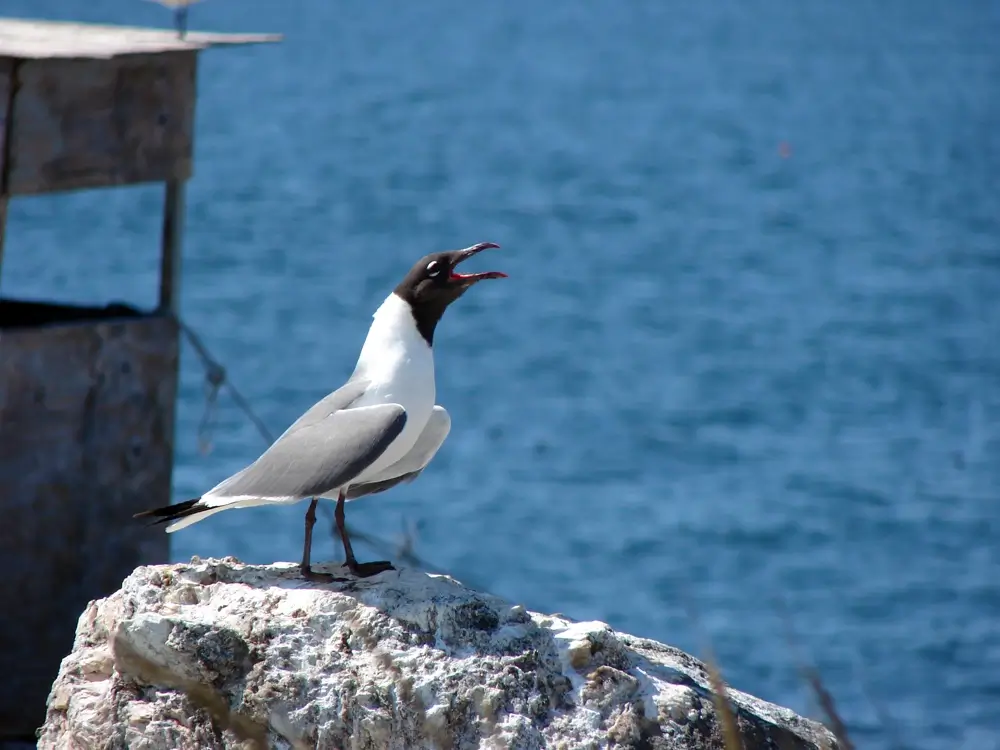
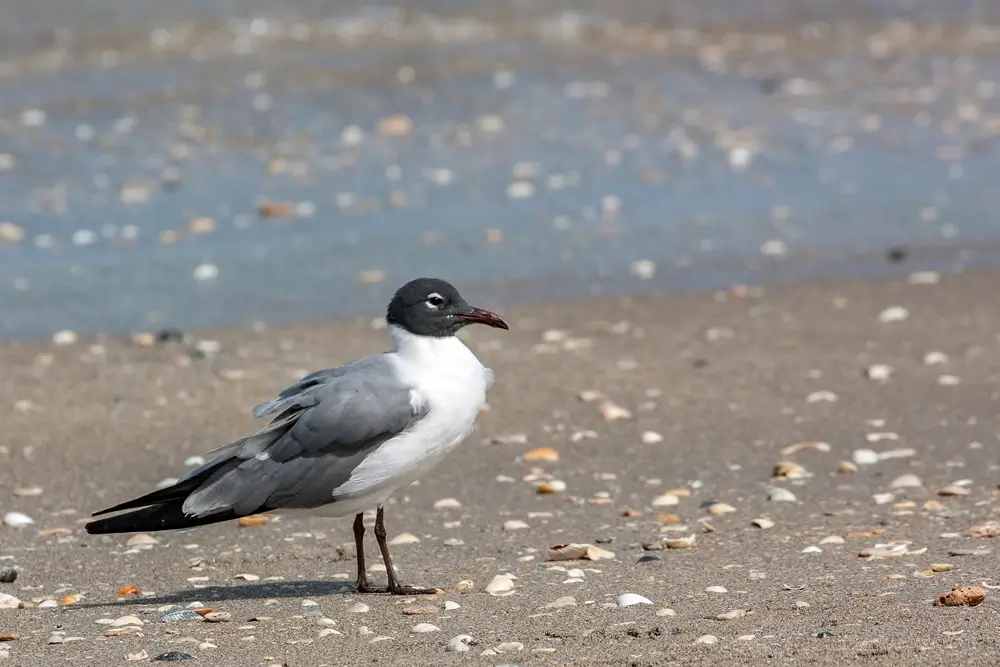
It has a black head and neck; a white breast and belly; a slate gray back; slate gray wings with back tips; and a dark red bill that is slightly hooked on the end. Its feet and legs are reddish-black. In the winter, its black head is greyish-white. Males and females look alike.
Habitat
The laughing gull is found on marshes, beaches, barrier islands, estuaries, and bays.
Diet
The laughing gull eats mollusks, fish, bird eggs, young birds, squid, crabs, and other crustaceans, insects, carrion (dead animals), and garbage.
It feeds on the water and on land. It swoops down to the water and skims the surface for food, or it dives into the water.
It also scavenges for food on land, and it catches insects in the air. In fact, if food is tossed in the air, the laughing gull can easily snatch it up. It also fights other birds for food.
Life Cycle
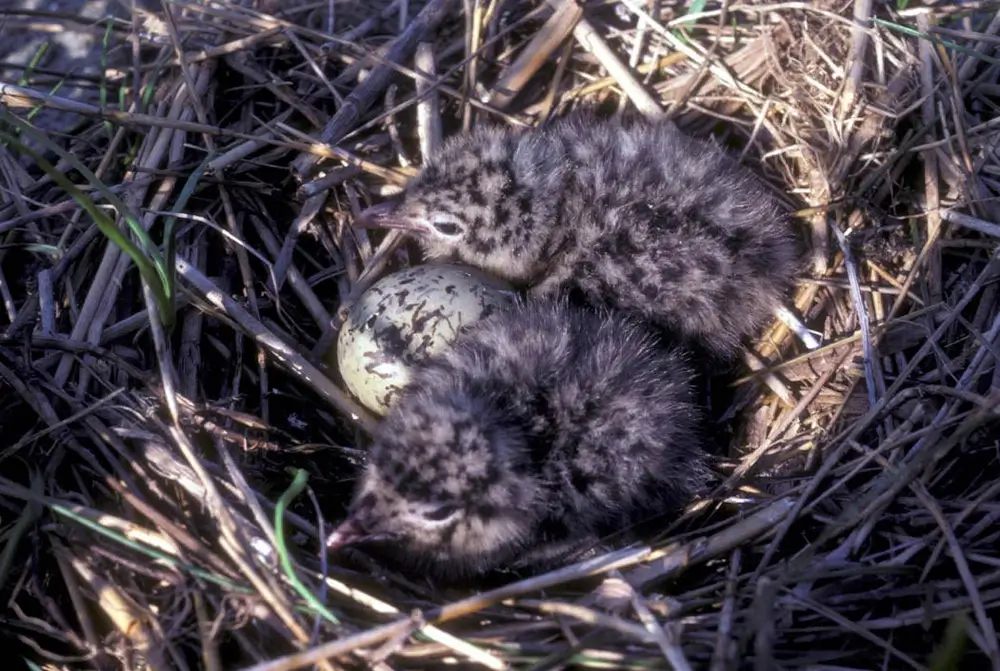
The laughing gull nests in colonies with other gulls and terns. The male and female build a platform nest of grass and weeds, placed in tall grass or shrubs. Occasionally, the laughing gull nests on open ground.
The female lays 2-4 eggs. The eggs are incubated for 20-23 days by both parents.
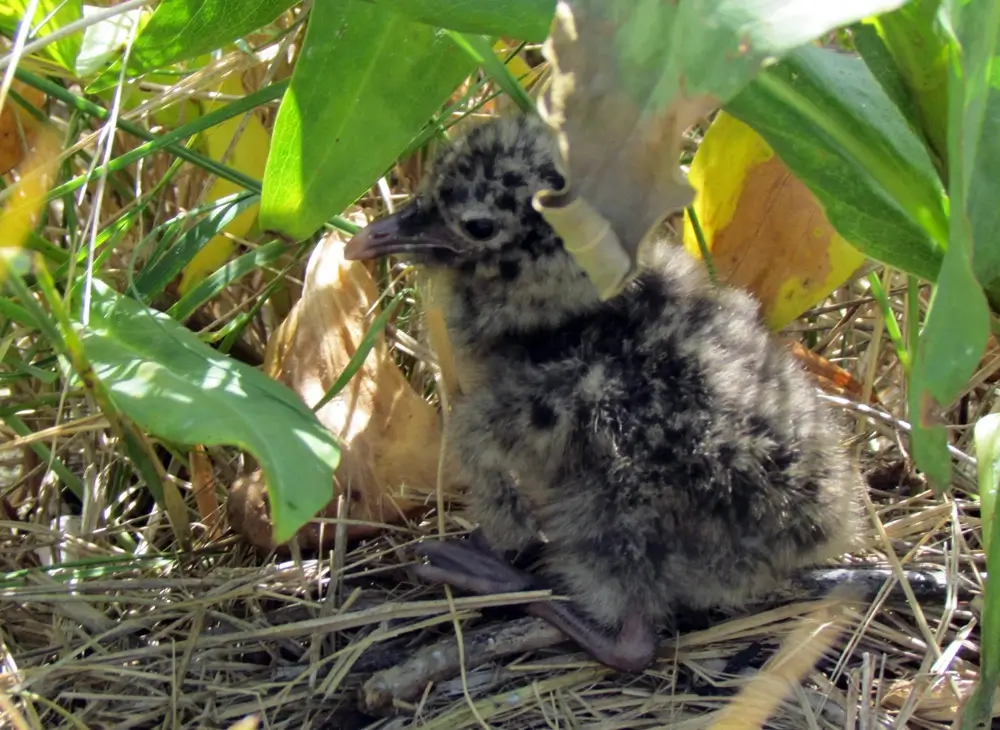
Chicks leave the nest a few days after hatching, but their parents care for them until they fledge when they are 35 days old.
The laughing gull has a lifespan of around 20 years. The oldest known laughing gull lived to be 22 years old.
Behavior
The laughing gull gets its name from its loud and high-pitched “ha ha ha ha ha ha” laughing call. It is a social bird and hunts, rests, nests, and migrates in groups.
Did You Know?
Support for NatureWorks is provided by:
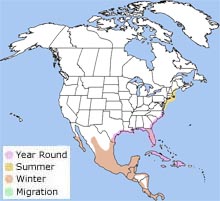
The Laughing Gull in NH
The laughing gull is not a year-round resident of New Hampshire, but it does breed in the state.