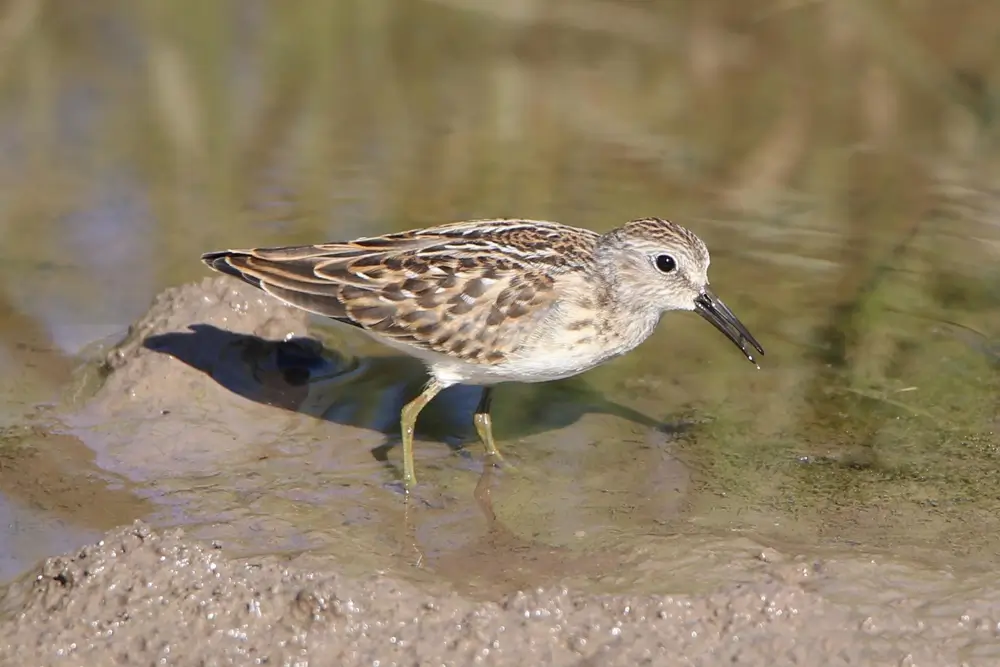
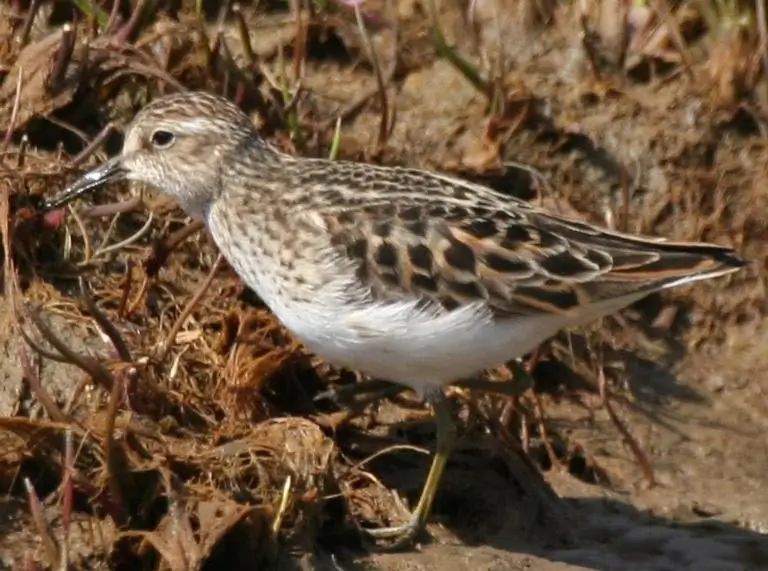
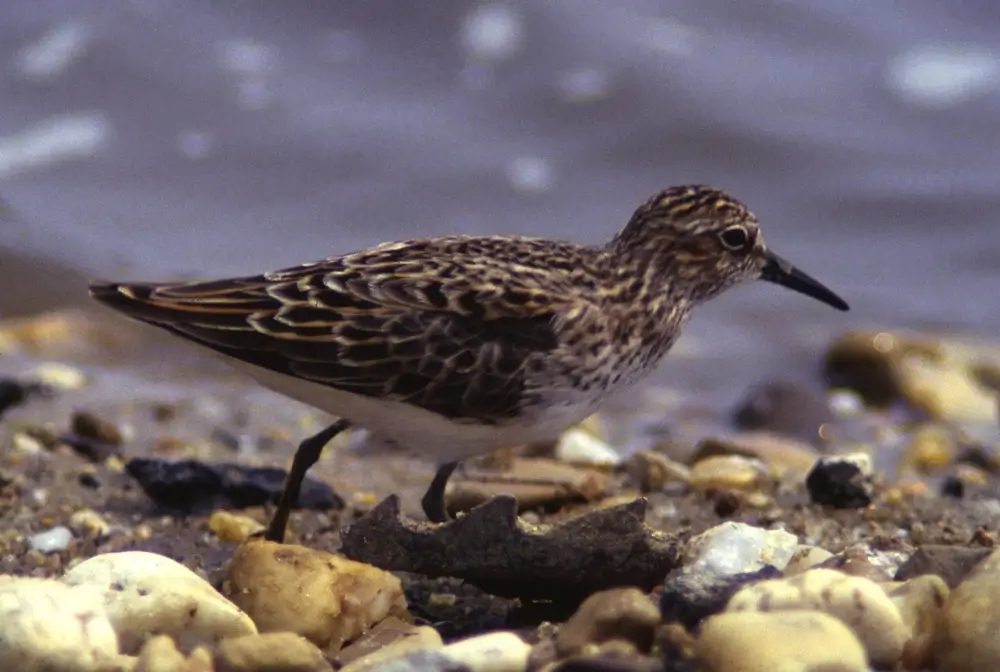
The least sandpiper is the smallest American shorebird. It is 5-6 inches (13-15 cm) in length with a wingspan of 10.6-11 inches (7-28 cm).
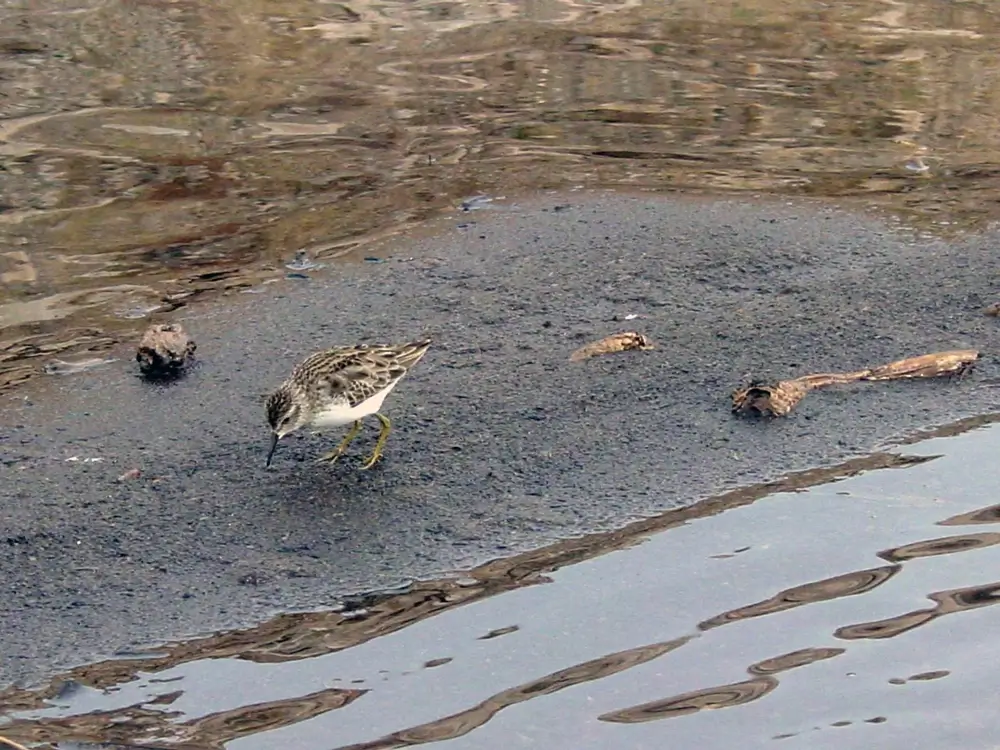
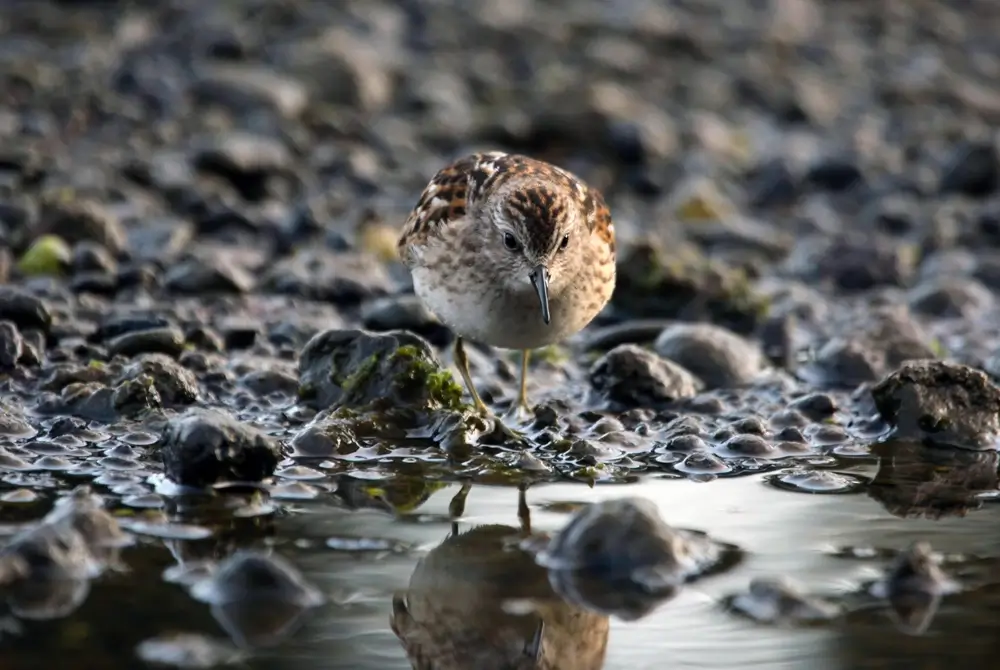
It has a pointed black bill with a slight droop at the end, long, yellowish legs, a short neck, and a reddish-brown back and wings marked with scalloped-shaped black markings edged in white.
It has white undersides, a streaky brown breast, and a black line on its rump that runs into its tail. It has a thin white line that runs across its upper wings, which is visible when it is in flight.
In the winter, it is more gray than brown. Males and females look alike.
Habitat
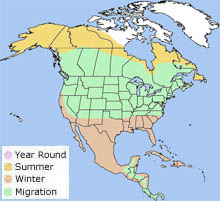
The least sandpiper is found on the tundra during the breeding season and on bogs, marshes with open areas, flooded fields, mudflats, and sandy beaches in the winter.
Diet
The least sandpiper eats insects, larvae, small crustaceans, mollusks, marine worms, and some seeds.
They walk with their heads down as they forage for food on the ground. Sometimes, they probe for food in the mud.
Life Cycle
The least sandpiper nests in colonies. The male arrives at the breeding grounds first and establishes a territory.
The male and female least sandpiper make a scrape or shallow depression in the ground and line it with leaves, moss, and grass. The female usually lays four eggs. Both parents incubate the eggs for 19-25 days.
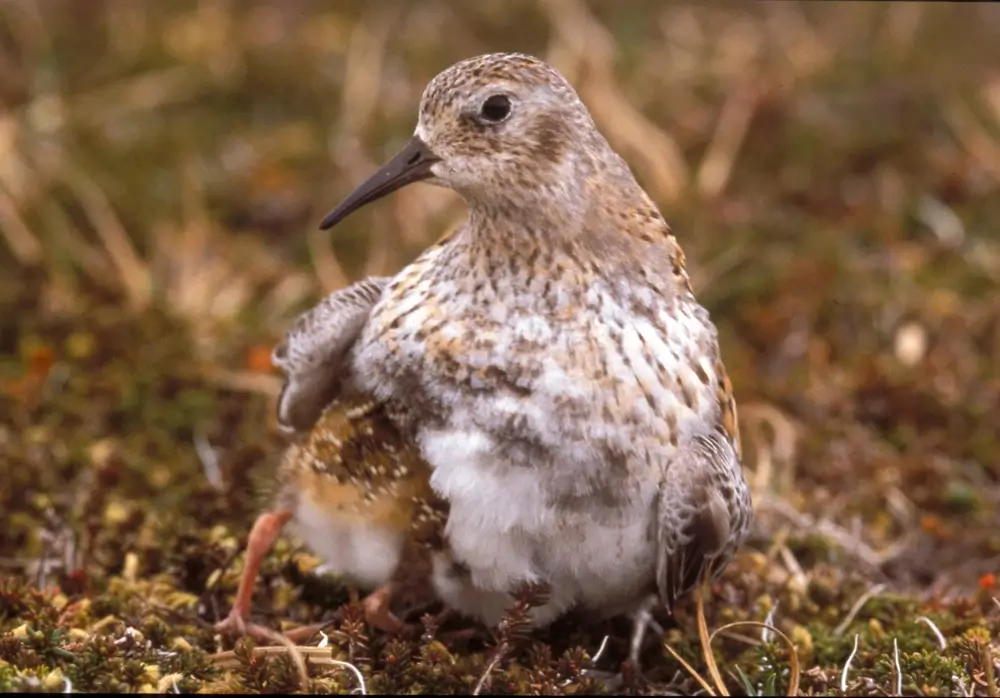
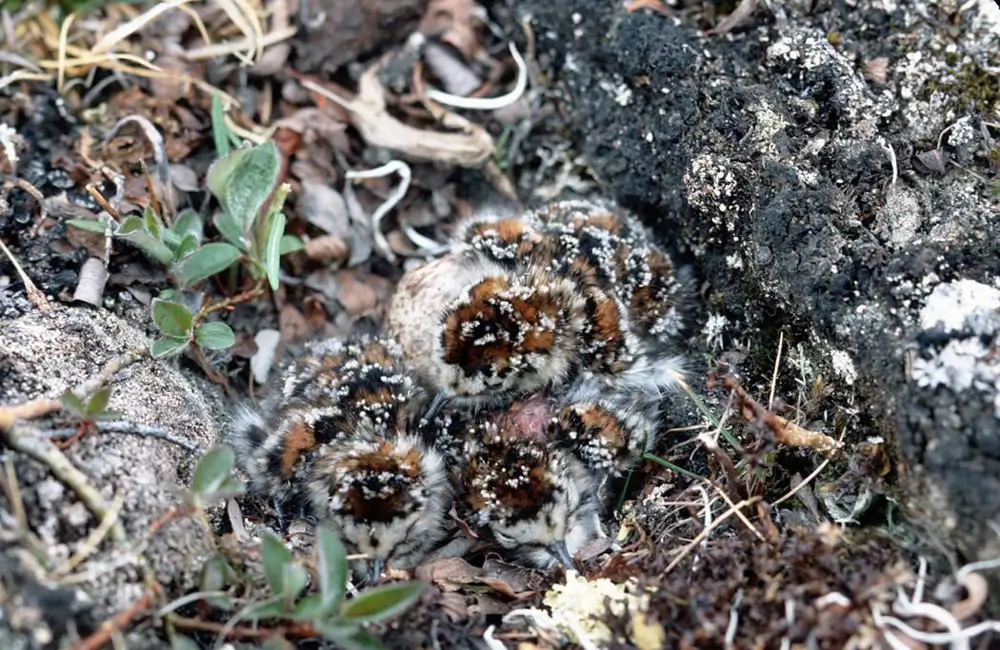
The chicks are precocial and leave the nest and feed themselves a day after hatching. The male and the female care for the chicks, but the female leaves before the chicks fledge (develop feathers for flight) at three weeks old.
The least sandpiper has an average lifespan of around 11 years. The oldest known least sandpiper was a female that lived to be 15 years old.
Behavior
The least sandpiper is a relatively solitary bird and usually roosts by itself or in small groups.
Did You Know?
Support for NatureWorks is provided by:
The Least Sandpiper in NH
The least sandpiper does not breed in New Hampshire, but it can be spotted in the state during migration in the spring and the fall.