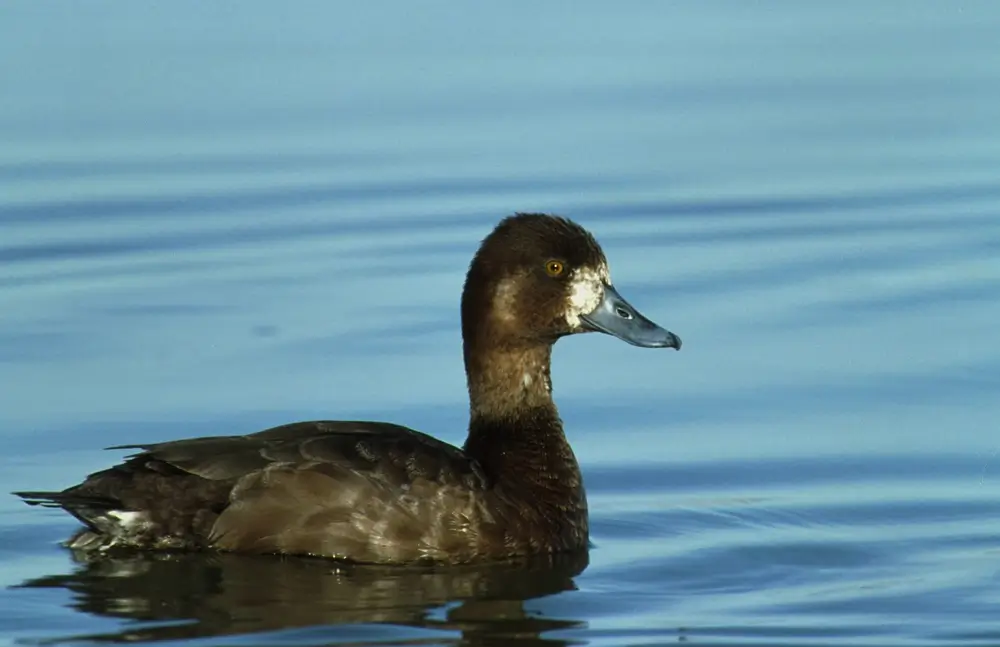
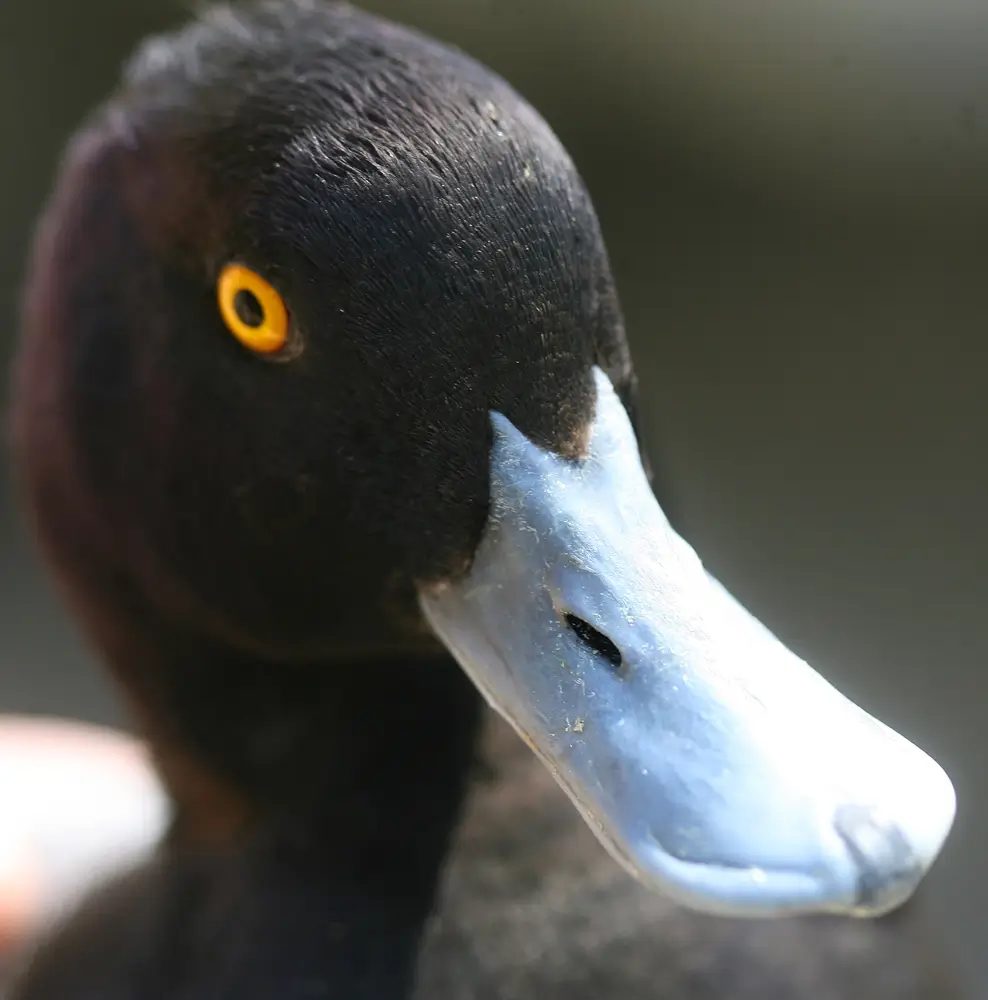
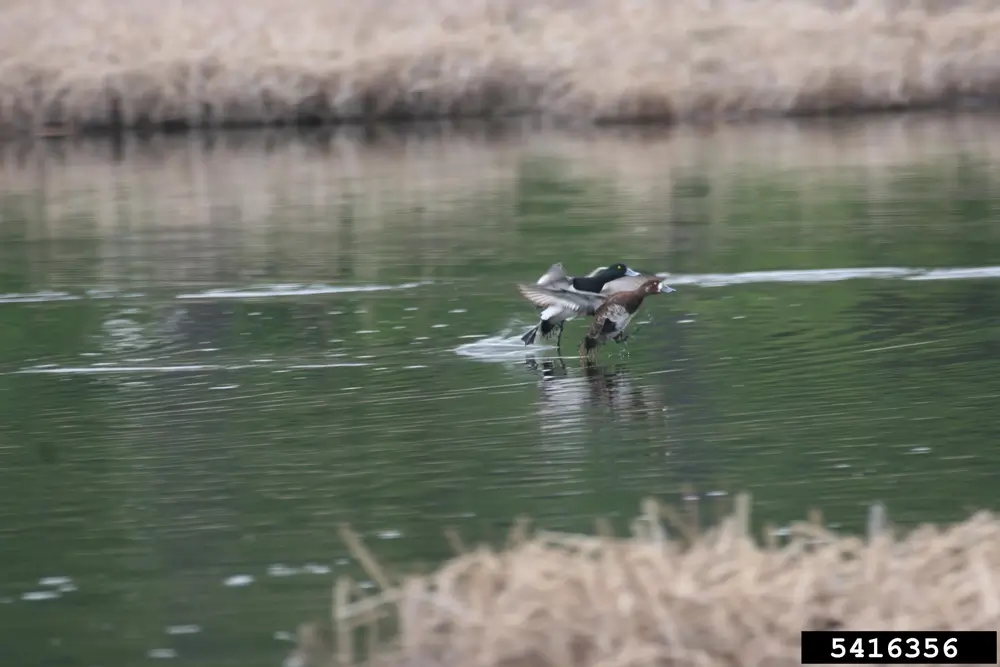
The lesser scaup is a small diving duck. It is 15-18 inches (38–46 cm) in length with a wingspan of 27-30 inches (68.6-76 cm).
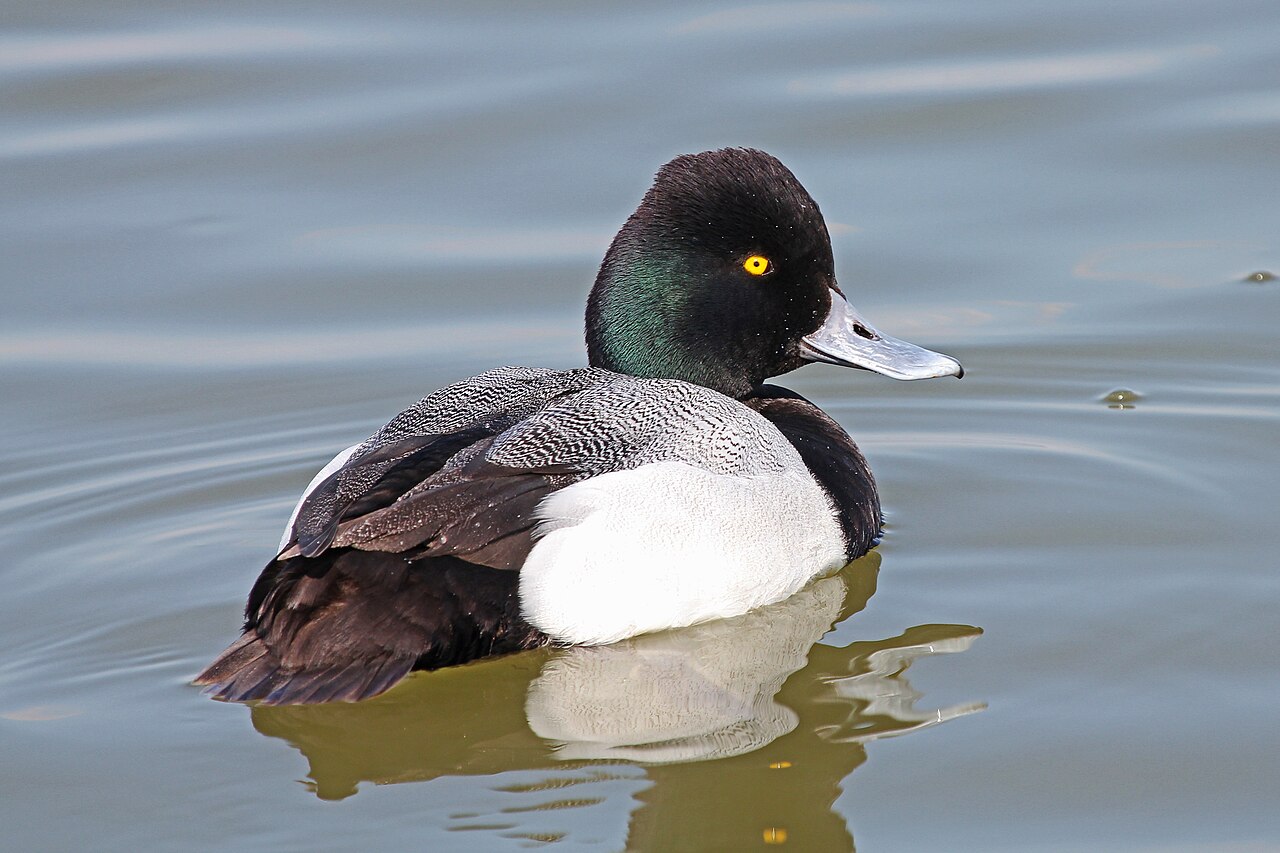
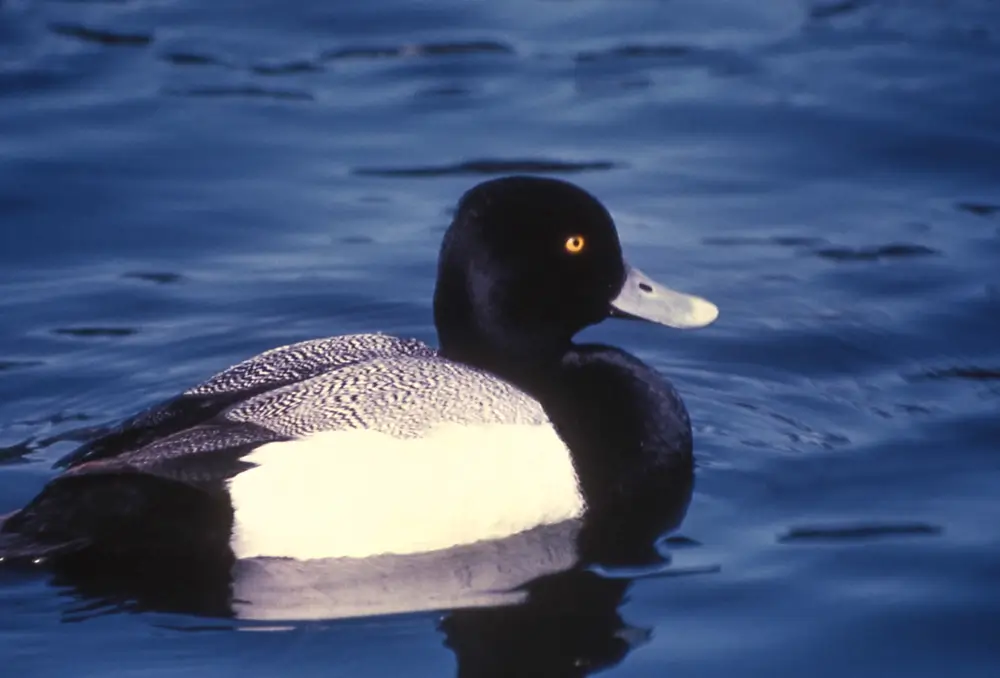
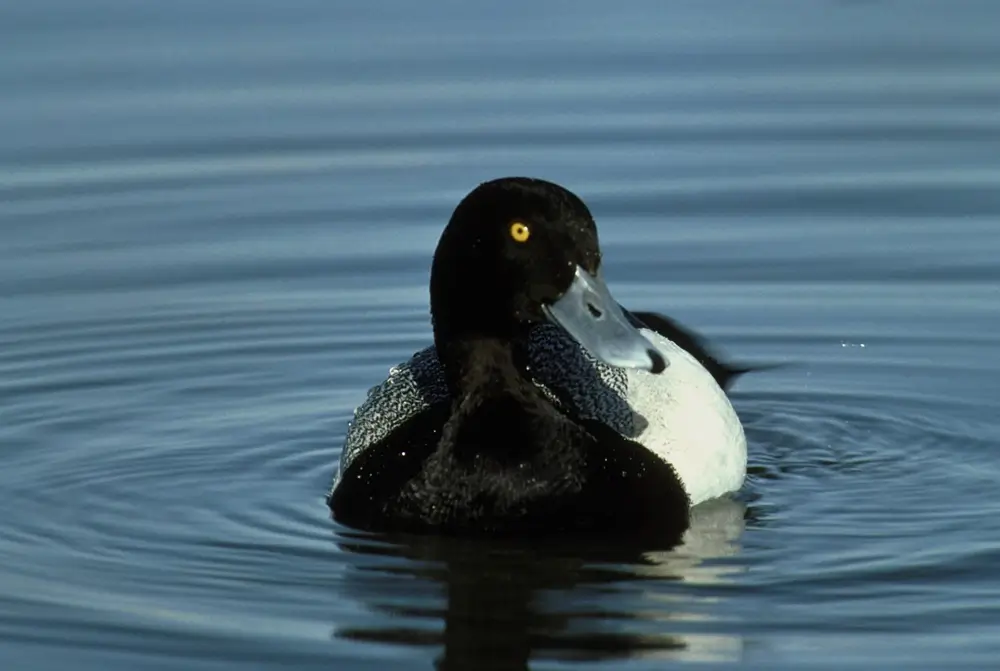
It has a slightly pointed head, yellow eyes, and a grayish-blue bill with a small black tip. The male has a black chest and tail and gray sides. He has a purple head that looks black.
The female is brown and has a white band around the base of her bill. Both males and females have a short white stripe on their wings.
The lesser scaup looks very similar to the greater scaup. The greater scaup is a little larger than the lesser scaup; its head is more rounded, and the black tip on the end of the bill is larger.
Habitat
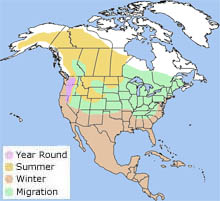
The lesser scaup is found on freshwater marshes, lakes, ponds, and bays during the breeding season. In the winter, it is found in saltwater, brackish, and freshwater habitats.
Diet
The lesser scaup dives for clams, snails, crustaceans, and aquatic insects. It also eats seeds and aquatic plants.
Life Cycle
The female lesser scaup lays 5-13 eggs in a scrape or shallow depression in the ground lined with grass and down. Nests are usually located near the water. Nests are usually located near the water. The male leaves when the female begins incubating the eggs.”
The female incubates the eggs for 23-28 days. The chicks are precocial, which means they can move around and feed themselves shortly after hatching. Soon after hatching, the female leads them to water where they can feed themselves. They can dive for food, but they can’t stay underwater for more than a few seconds. They are so buoyant that they pop right back up to the surface.
The ducklings fledge (develop feathers for flight) when they are 40-45 days old.
The lesser scaup has an average lifespan of around 4 years. The oldest recorded lesser scaup was a male that was at least 18 years old
Behavior
The lesser scaup will sometimes play dead when it is captured by a predator like the red fox. It holds still with its head stretched out, its eyes open, and its wings drawn into its body.
Did You Know?
Support for NatureWorks is provided by:
The Lesser Scaup in NH
The lesser scaup does not breed in New Hampshire, but it can be spotted in the state during its migration.