

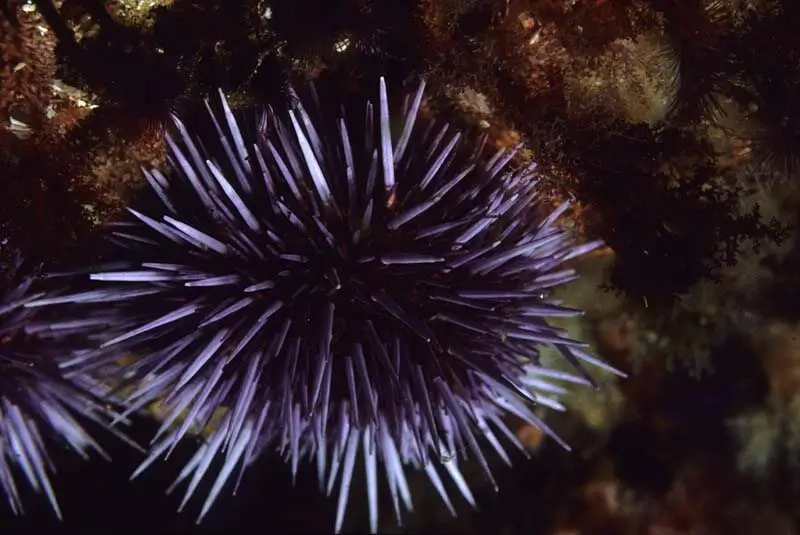
Sea urchins are related to starfish and like starfish they are divided into five parts and covered with spines.
The benthic zone of the ocean is very diverse. It includes underwater mountains, deep trenches, volcanoes, flat muddy plains, sandy areas, and rocky regions. A wide variety of life makes its home on the ocean floor.
Some organisms live buried in the mud, some crawl or swim along the bottom, and others attach themselves to the seafloor.
Life in the benthic zone is often grouped by size. Macrobenthos are the largest organisms, measuring more than one millimeter. These include animals like oysters, starfish, lobsters, sea urchins, shrimp, crabs, and coral.
Meiobenthos are smaller, ranging from one-tenth to one millimeter in size. This group includes tiny worms and other small organisms.
Microbenthos are the smallest organisms, measuring less than one-tenth of a millimeter. They include microscopic life such as diatoms, ciliates, and bacteria.
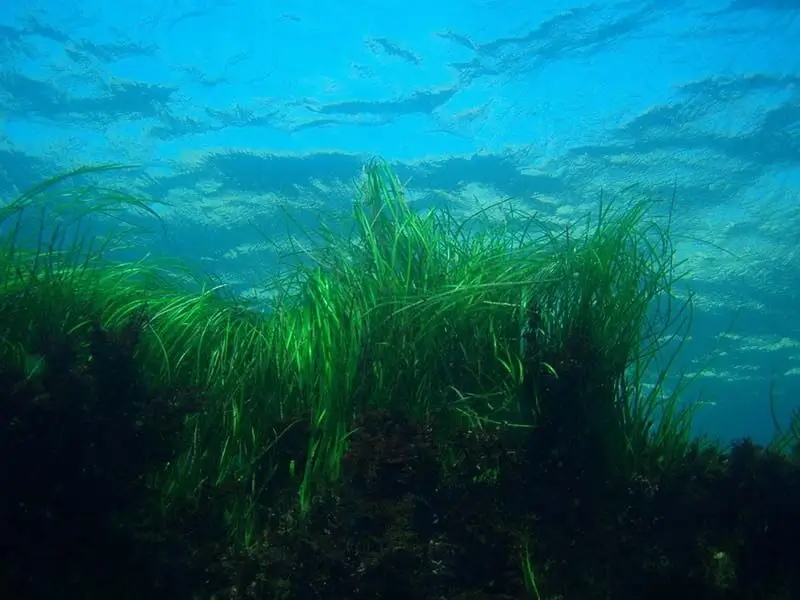
In the Sunlit zone of the ocean there are plants called seagrass. Seagrass isn't seaweed. It is a true plant.
In the sunlit zone of the ocean, there are underwater plants called seagrasses. Unlike seaweed, seagrasses are true flowering plants with roots, stems, leaves, flowers, and seeds.
They grow in shallow coastal waters, where sunlight can reach them for photosynthesis. Most seagrasses live in sandy or silty ocean floors, where their roots anchor them in place.
Seagrasses are well adapted to ocean life. They can survive in salt water, and their strong roots help them stay anchored even during waves and currents. These roots also help hold the seafloor together.
They absorb nutrients mainly through their roots and leaves and need to stay underwater to avoid drying out. Seagrass beds are important because they provide food and shelter for many marine animals.
They also help improve water quality by trapping particles and reducing erosion along coastlines.
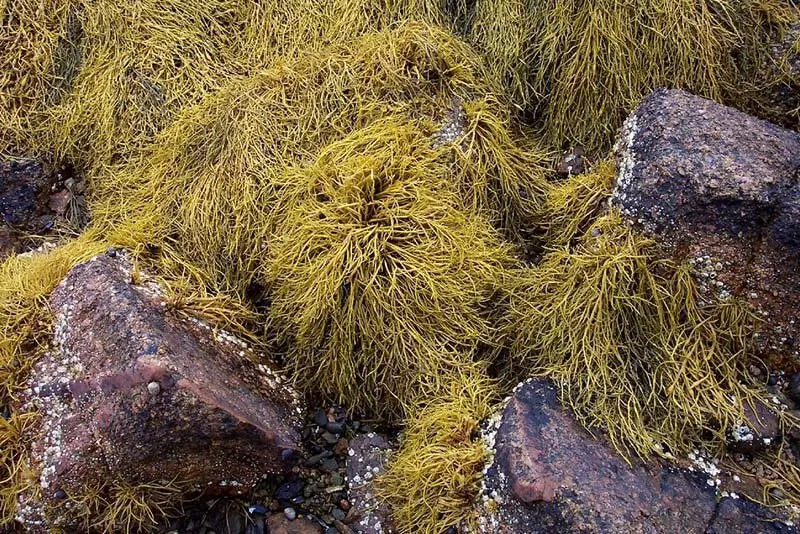
Seaweeds aren't plants. They are algae.
Seaweeds are not plants—they are algae, a group of protists. Unlike plants, algae do not have flowers, seeds, or fruit. Instead, they reproduce using spores.
Algae are very important because they produce much of Earth’s oxygen and form the base of most aquatic food chains. Many ocean animals depend on them for food.
There are three main types of algae: red, green, and brown. Some algae are very small and float in the ocean; these are called phytoplankton.
Seaweeds are large algae that grow in shallow water where sunlight can reach them. Most are attached to rocks or the ocean floor using holdfasts, which act like anchors. Most seaweeds in the ocean are red or brown algae.
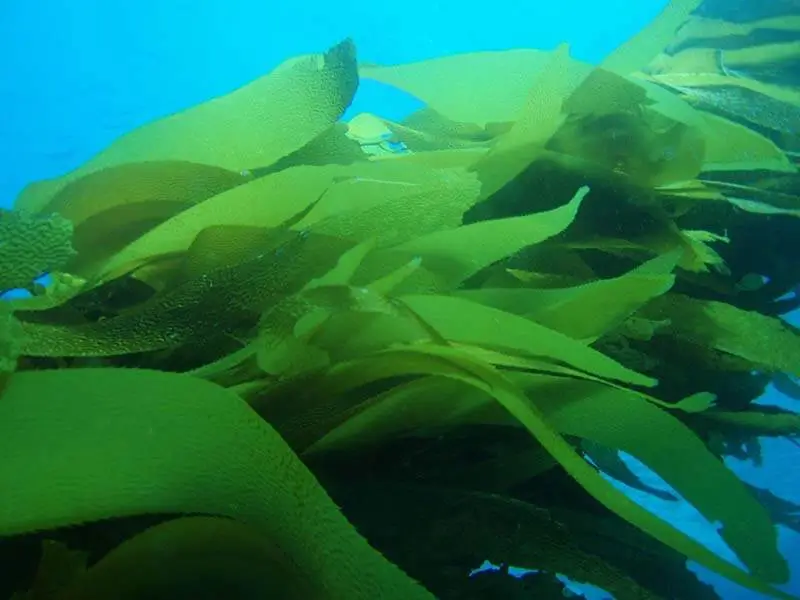
Kelp is a brown algae. Some species of kelp can grow 100 feet long.
There are over 5,000 species of brown seaweed. Brown seaweed is not always completely brown. It contains a brown pigment called xanthophyll and a green pigment called chlorophyll. Because of these pigments, brown seaweed can range in color from dark brown to greenish-brown.
Kelp is a type of brown algae. Some kelp species can grow up to 100 feet long. Most kelp have stem-like structures called stipes that help anchor them to the ocean floor.
Gulfweed is another type of brown algae. It has small, berry-like structures called pneumatocysts on its leaves. These air-filled sacs help keep the seaweed floating at the ocean’s surface.
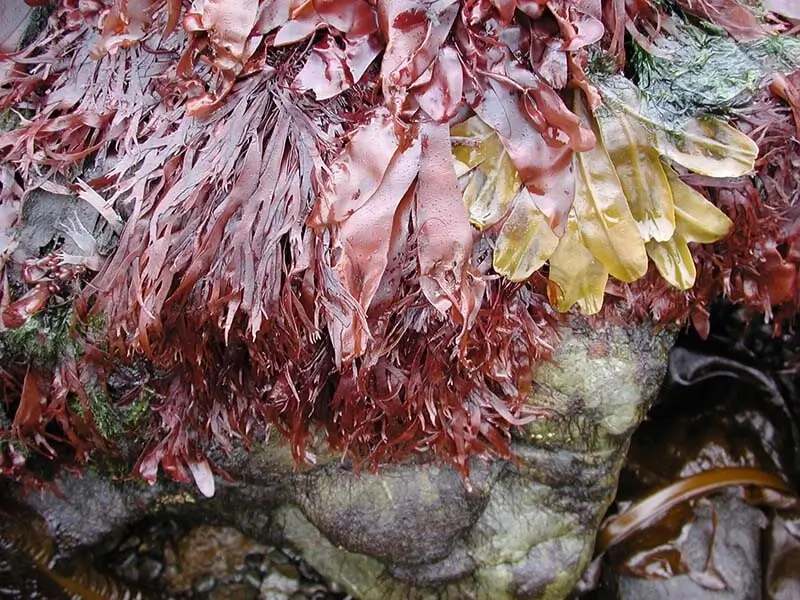
There are over 2,000 species of red algae seaweeds.
There are over 2,000 species of red algae, also known as seaweeds, and most of them are small. They are commonly found in both temperate and tropical oceans around the world.
Red algae get their reddish color from a pigment called phycoerythrin. This pigment helps them carry out photosynthesis, especially in low or dim light. Because they can use very little light to make food, red algae are often able to live in deeper ocean waters than many other types of algae.
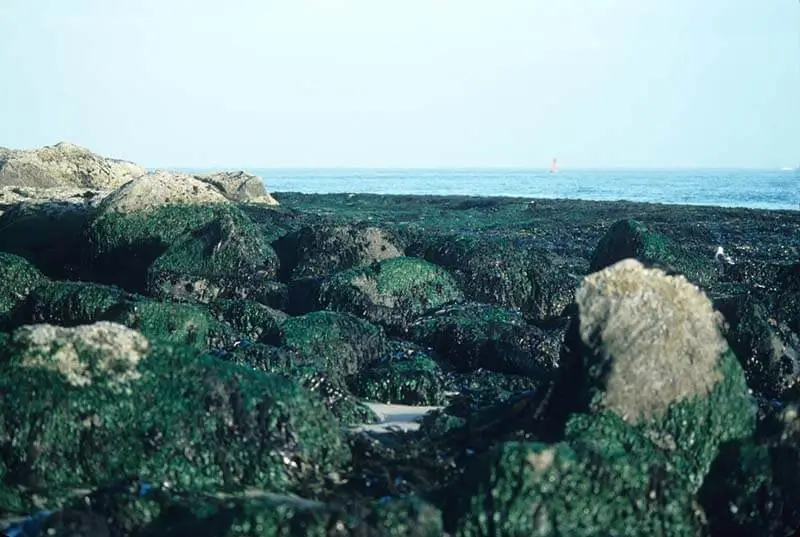
There are about 800 different of green marine seaweeds.
Green algae are most commonly found in freshwater and on land, although some also live in marine environments. They get their green color from chlorophyll, the same pigment that helps plants make food using sunlight.
In the ocean, green algae are less common than brown and red seaweeds. Scientists estimate there are about 800 species of green marine seaweeds.
One common example is sea lettuce, also known as Ulva. It can often be found growing in rocky areas and tide pools, where water collects during low tide.
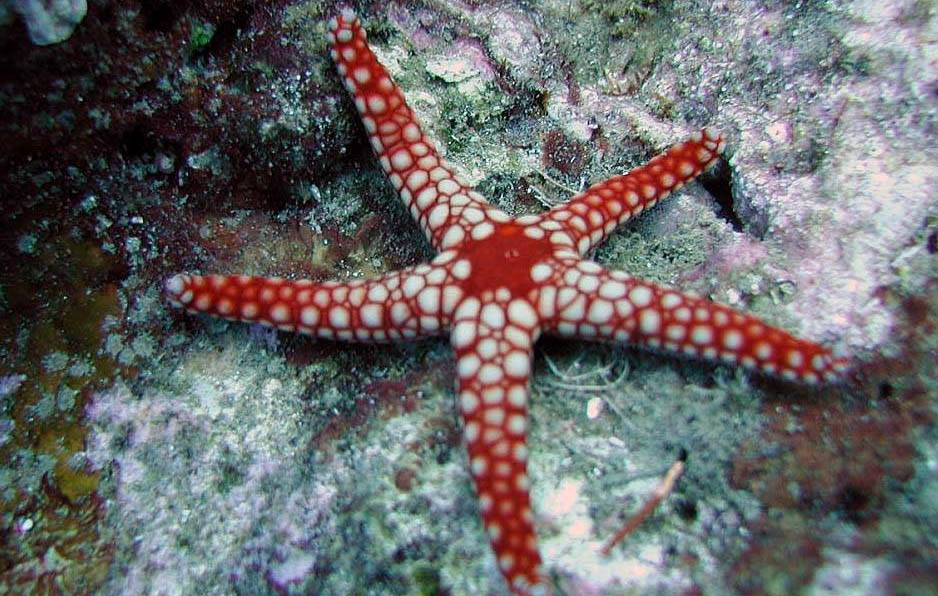
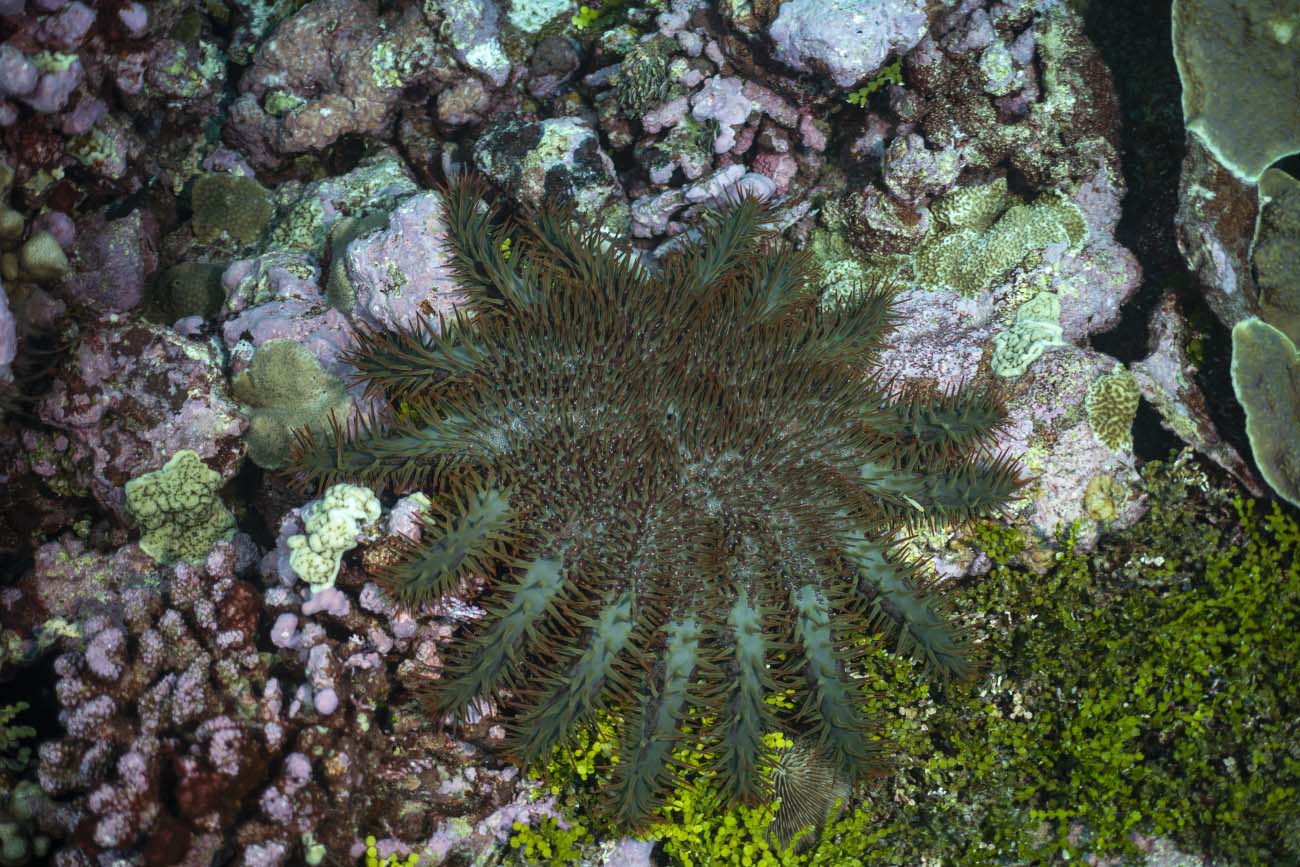
Starfish like this necklace starfish aren't fish. They are invertebrates.
Starfish aren’t actually fish. They are invertebrates, which means they have no bones.
There are about 1,800 species of starfish living in oceans around the world. Most have five arms, but some species have more. Their arms are hollow and often covered with small spines on top.
On the underside of each arm are tiny tube feet with suction cups. These help starfish move slowly along the ocean floor and hold onto rocks or prey.
Starfish can also regrow lost arms. If one is damaged or lost, a new arm can grow back over time.
A starfish’s mouth is on its underside. Some use their strong arms to pry open clams and other shellfish. In certain species, they can even push their stomach out of their mouth to digest food outside their body, then pull it back inside.
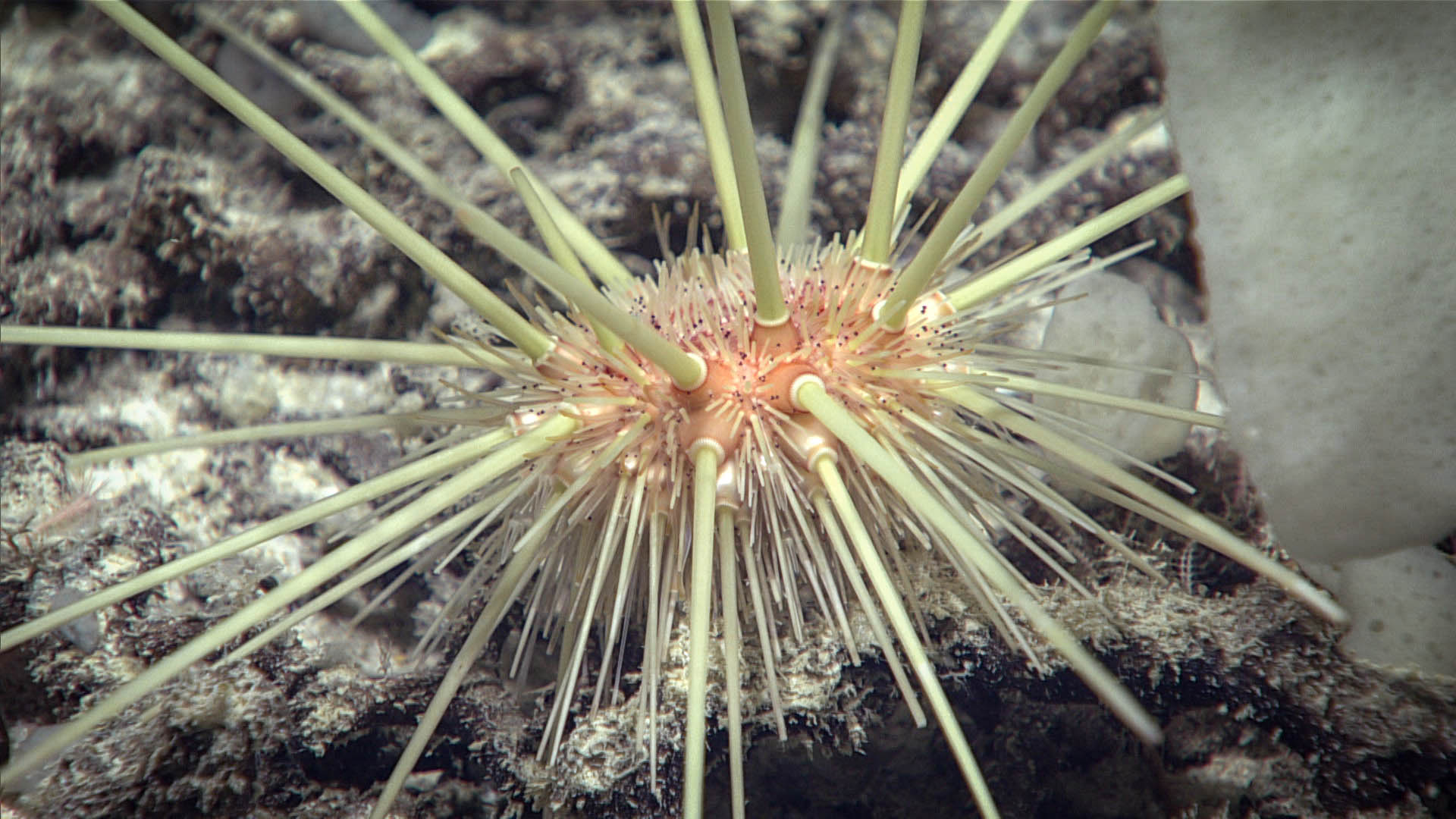
Sea urchins are related to starfish and like starfish they are divided into five parts and covered with spines.
Sea urchins are relatives of starfish and share a five-part body plan called radial symmetry. Instead of arms, they have round bodies covered in sharp spines that protect them from predators; some spines are even venomous.
They move slowly using tiny tube feet with suction-cup tips, which also help them hold onto surfaces and gather food. Their mouth is on the underside and has special teeth for scraping algae, while waste exits from an opening on the top.
Most sea urchins eat algae and live on the ocean floor, especially in rocky areas and coral reefs. About 700 species have been identified worldwide, and they vary in size, color, and spine length. Sea urchins can also hide in crevices or cover themselves with bits of shell or seaweed for extra protection. Some species play an important role in keeping ocean habitats healthy by preventing algae from growing too thick.
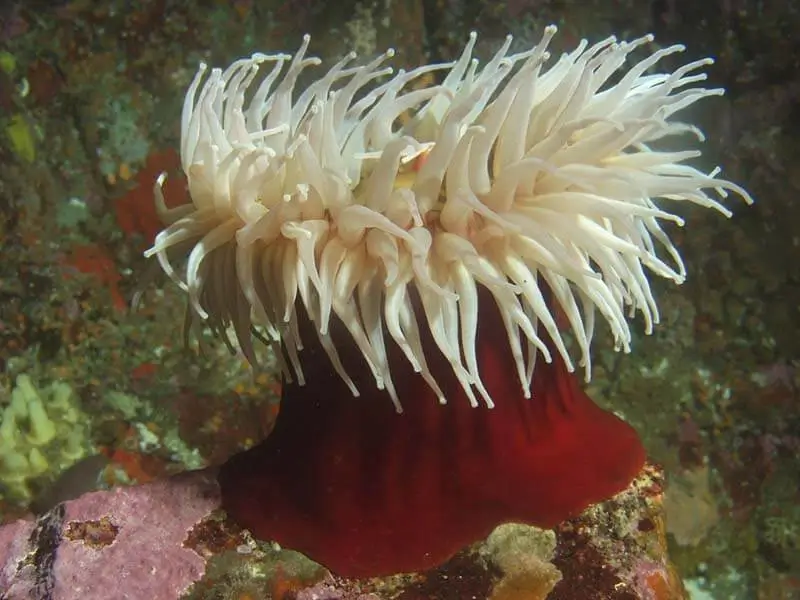
Sea anemone are invertebrates, like starfish and sea urchins.
Sea anemones are invertebrates, like starfish and sea urchins. There are about 1,000 species. They can be found at depths of up to 30,000 feet (9,144 m). Sea anemones live in all the world’s oceans, from cold polar waters to warm tropical seas. Some of the most colorful species are found in tropical waters.
Sea anemones come in many shapes and sizes. They can be smaller than an inch (2.5 cm) across or as large as 5 feet (1.5 m) in diameter. They have a mouth in the center of their body, usually surrounded by petal-like tentacles. These tentacles are used to catch food. Many have tiny, venomous stingers that can paralyze prey. The anemone then pulls the food into its mouth using its tentacles.
Most sea anemones attach themselves to rocks, the ocean floor, or even animals using a structure called a pedal disc. The pedal disc is on the bottom of the anemone and works like a suction cup. While most sea anemones stay in one place, some can move very slowly by creeping along on their pedal disc. A few species bury their bodies in sand or silt, leaving only their tentacles and mouth exposed, and some species can even float in the water.
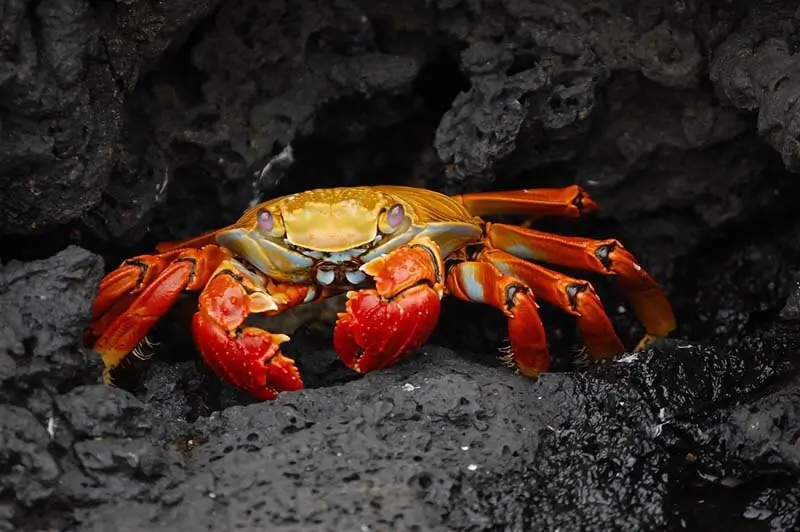
Crabs are crustaceans. They have outer shells or exoskeletons that protect them from predators, ocean currents and waves.
Crabs are a type of crustacean. They have hard outer shells, called exoskeletons, that protect them from predators, strong ocean currents, and waves. There are about 4,500 species of crabs, and they can live in both freshwater and saltwater environments.
Crabs do have tails, but they are tucked under their bodies, so you usually can’t see them. Like fish, crabs breathe using gills. Most crabs move by crawling along the ocean floor, although some species can swim.
Crabs have large front pincers, called claws, which they use to catch and eat prey such as clams, small fish, snails, and even other crabs. They can also use their claws to crack open hard shells. Many crabs are scavengers, meaning they often wait for food to pass by. They may search for food by sifting through sand or mud with their legs and antennae, or by sensing it with their antennae.
