

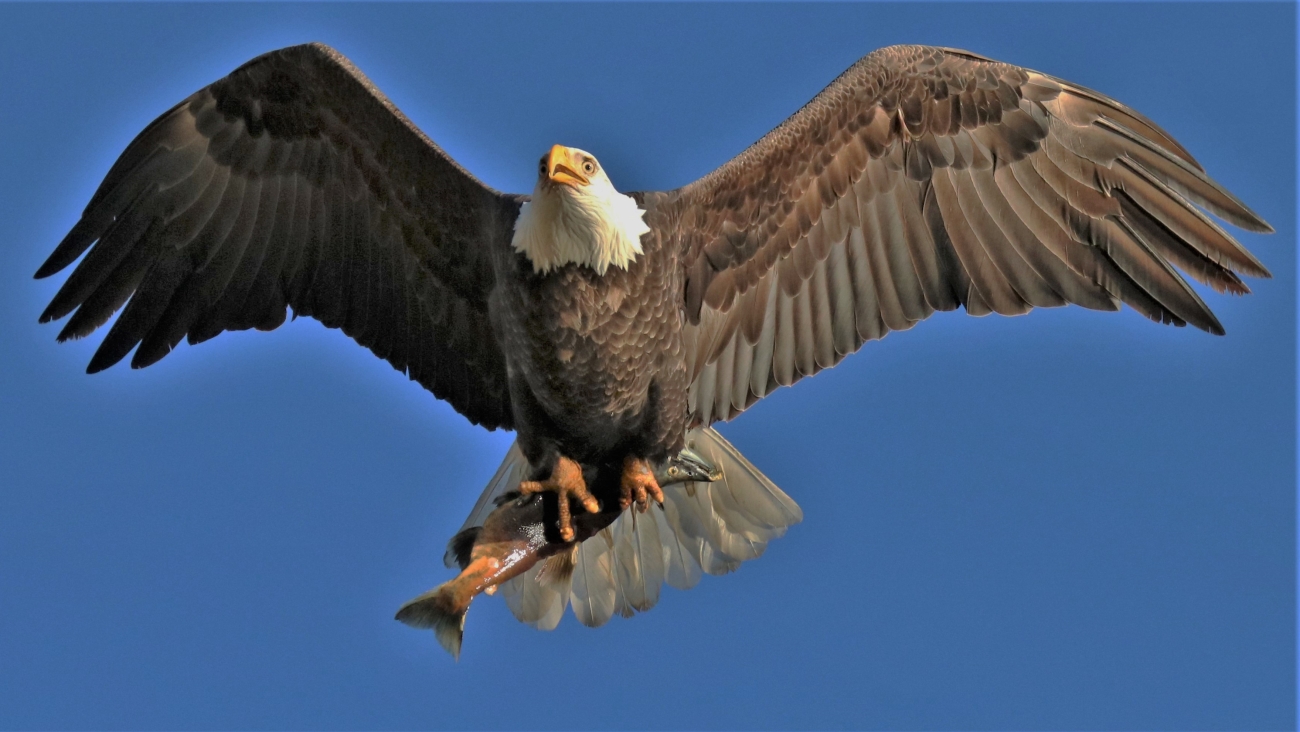
A bald eagle grips a fish in its talons.
Birds’ legs and feet come in many shapes and sizes, depending on where they live and how they behave. Most birds have four toes, each ending in a claw. In some birds, like hawks and eagles, these claws are very long and sharp. These strong claws, or talons, are used for catching and gripping prey.
A common toe arrangement in birds is called anisodactyl. In this pattern, three toes point forward and one toe, called the hallux, points backward. This is the most common type of foot in birds. It is found in most songbirds, many perching birds, and some birds of prey.
This toe pattern helps birds grip branches tightly, making it easier for them to perch, balance, and stay secure while resting or sleeping.
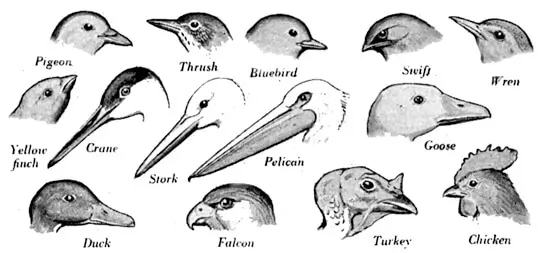
Birds’ bills are adapted for the food they eat. Northern cardinals have strong, conical bills that help them crack open seeds. Hummingbirds have long, thin bills that help them collect nectar.
Hawks and falcons have strong, hooked bills that help them tear into their prey. Pelicans have large pouches of skin on their lower bill that can hold fish. Ducks, swans, and geese have flat bills that help them filter food from the water.
Woodpeckers have strong, pointed bills that help them drill holes into trees and extract insects. Looking at a bird’s bill can often tell you a lot about what and how the bird eats, where it lives, and even how it behaves!
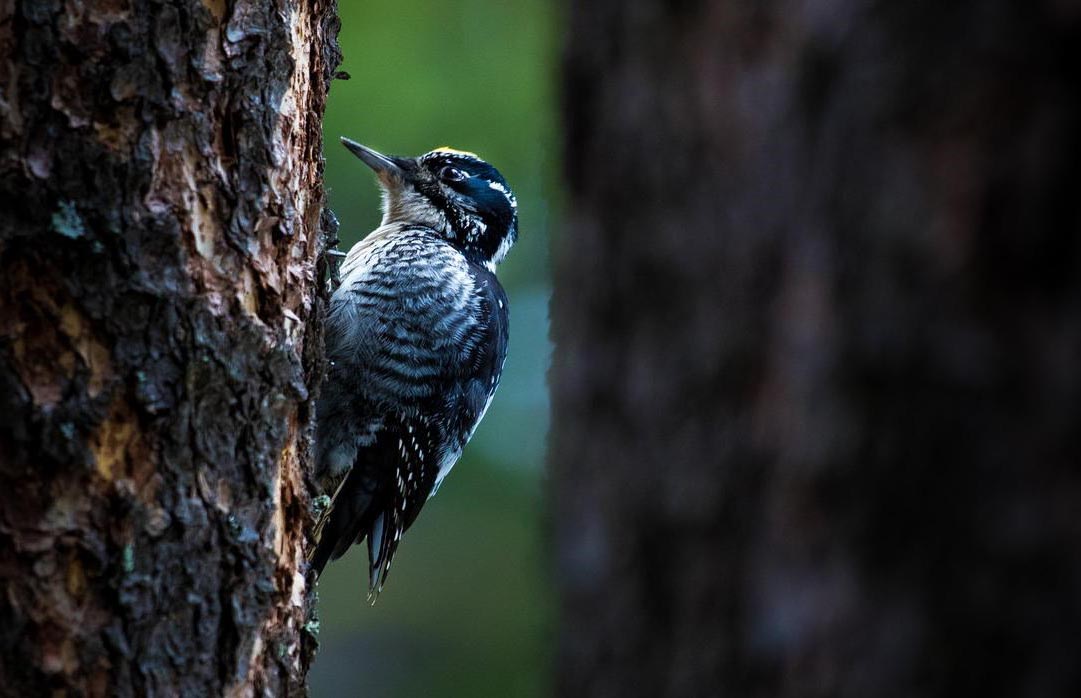
Unlike most birds, the American Three-toed woodpecker has two front toes and one back toe.
Some birds, like parrots, have zygodactyl feet. Zygodactyl feet have toes in a 2:2 arrangement. This gives their feet super gripping power.
Some birds, like the three-toed woodpecker, have only three toes – two in the front and one in the back.
The ostrich is the only bird that has only two toes – a large toe that is about seven inches long with a sharp claw and a shorter toe about four inches long with no claw. Wading birds have long legs and long, thin toes that help them walk in wetlands. Water birds like ducks and geese have short legs and webbed feet that help propel them in water.
Like bills, a bird’s legs and feet can tell you a lot about where a bird lives, how it behaves, and what and how it eats.
