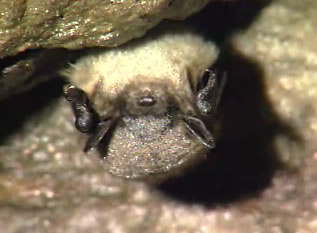
Not all bats want to live in our attics… the red, the silver-haired and the hoary bat are strictly forest-dwellers, often using the cavities of dead trees to roost or raise young. But for the types of bats that like attics — and caves and other “hibernacula” — the loss of historical structures and improved batproofing in buildings may be causing a decline in populations.
Not all bats want to live in our attics… the red, the silver-haired, and the hoary bat are strictly forest-dwellers, often using the cavities of dead trees to roost or raise young. But for the types of bats that like attics — and caves and other “hibernacula” — the loss of historical structures and improved batproofing in buildings may be causing a decline in populations.
What happens when bat habitats dwindle? Dr. Scott Reynolds, an independent bat researcher, looks for answers as he probes New England’s attics and caves, preaching awareness and co-existence along the way.