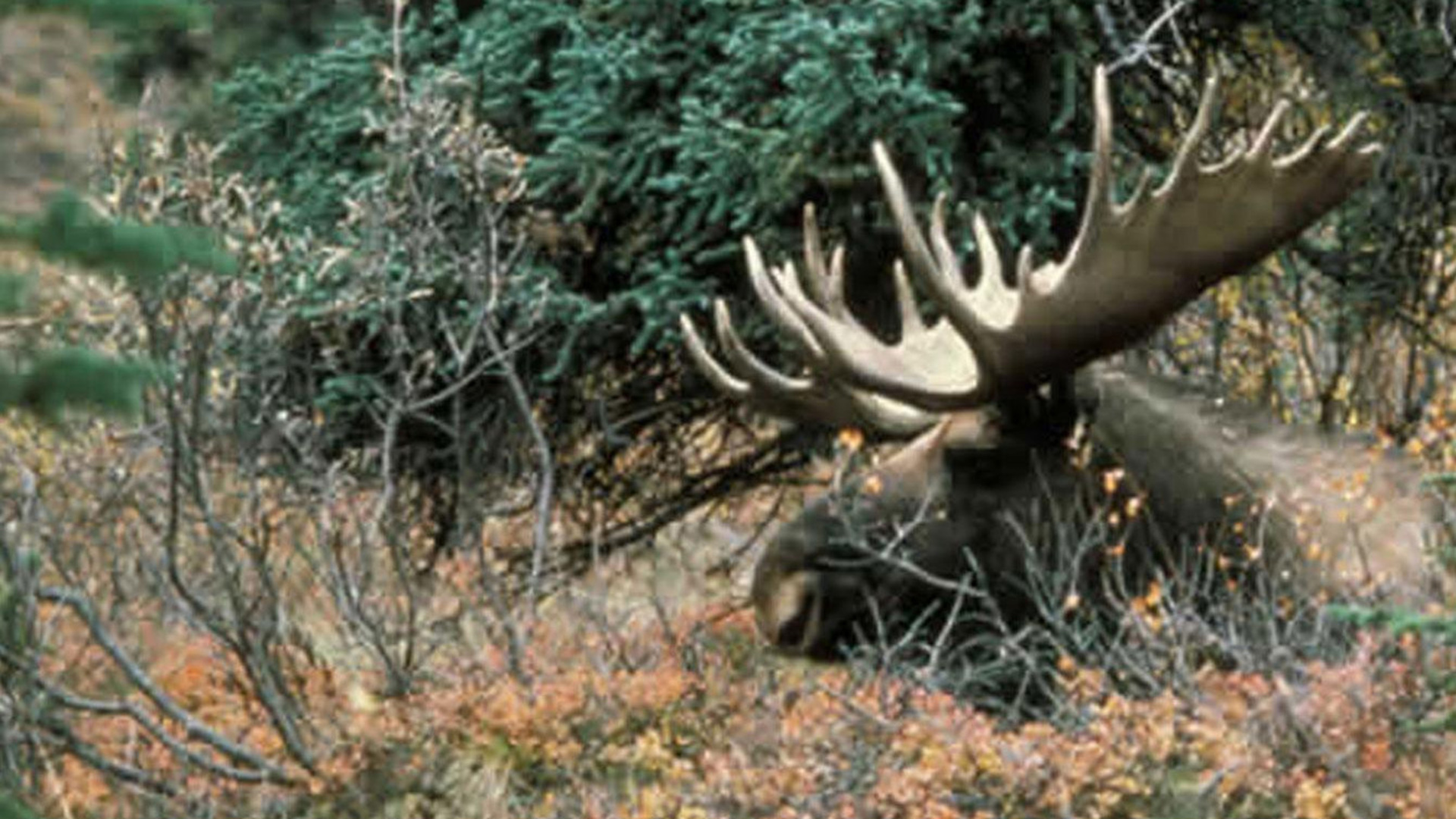
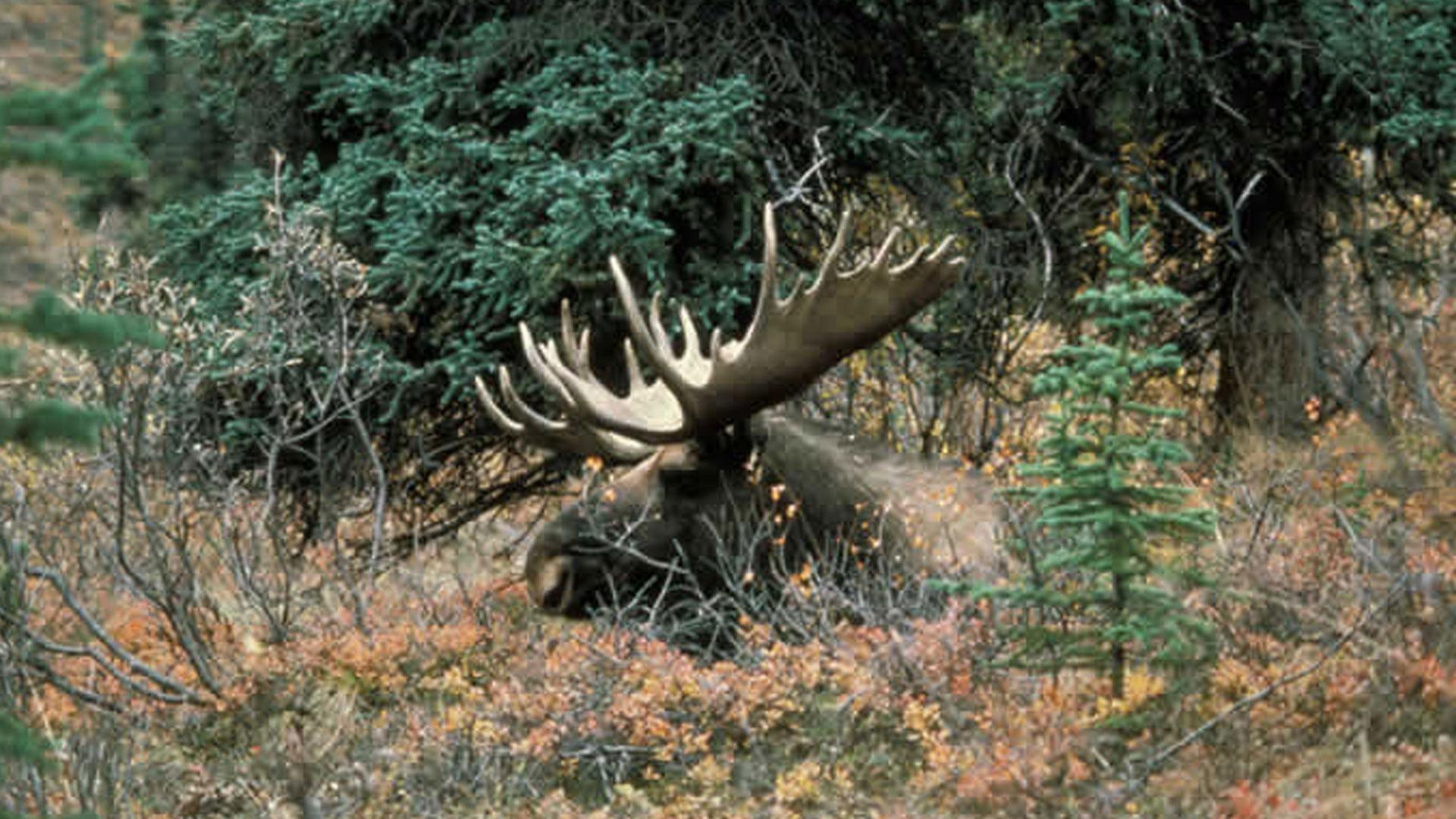
Learn about the moose and how population impacts the survival of a species. Discover how scientists are using technology to learn more about wildlife. Learn how animals use a home range and establish territory and explore the history behind the names of some common New Hampshire animals.
Learn about the moose and how population impacts the survival of a species. Discover how scientists are using technology to learn more about wildlife. Learn how animals use a home range and establish territory and explore the history behind the names of some common New Hampshire animals.
Keeping track of animal populations is essential for maintaining healthy, sustainable wildlife. Biologists and scientists monitor animals for many reasons. By using a range of techniques—such as tracking, medical testing, and direct observation—they can better understand a species’ health, behavior, and needs.
Some animals, however, are especially challenging to study. In New Hampshire, monitoring the moose population is a top priority, but capturing and tagging these large, wild animals often requires extreme measures.
In Milan, New Hampshire, the arrival of “moose wranglers” from Wyoming’s Hawkins and Powers Wildlife Capture Team marks the start of an important moose research project.
Using helicopters and net guns, the wranglers capture and fit cow and calf moose with radio collars, while Wildlife Journal cameras document the process. Using GPS technology, researchers from the University of New Hampshire will track these moose over four years to answer key questions about the state’s population. Their findings will help scientists better manage critical habitat, improving the moose’s chances of surviving the winter and boosting calving success.