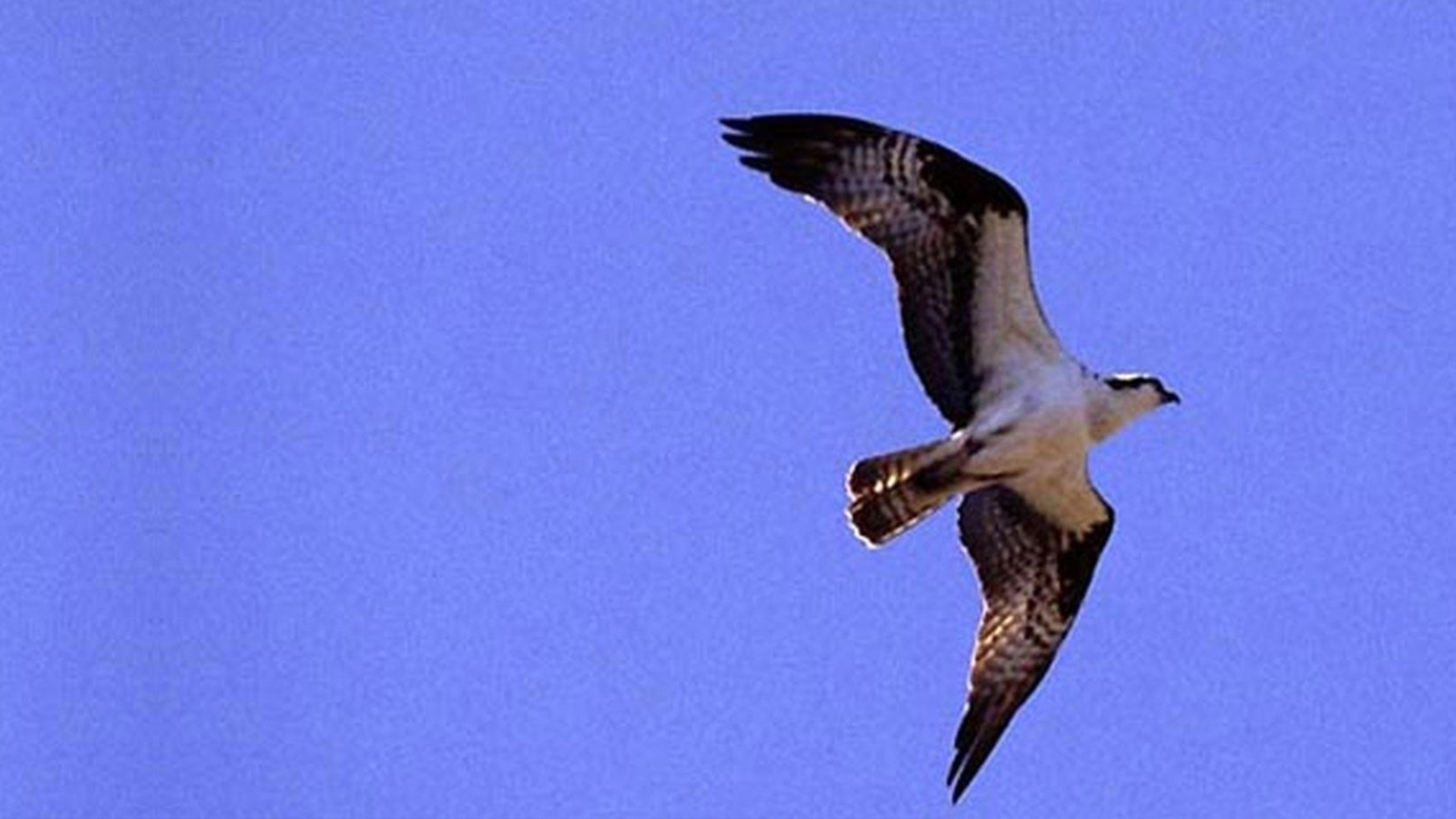
Having a place to breed is critical to the survival of species like the osprey. Learn more about this bird and what scientists are doing to help the osprey breed and thrive.
Having a place to breed is critical to the survival of species like the osprey. Learn more about this bird and what scientists are doing to help the osprey breed and thrive.
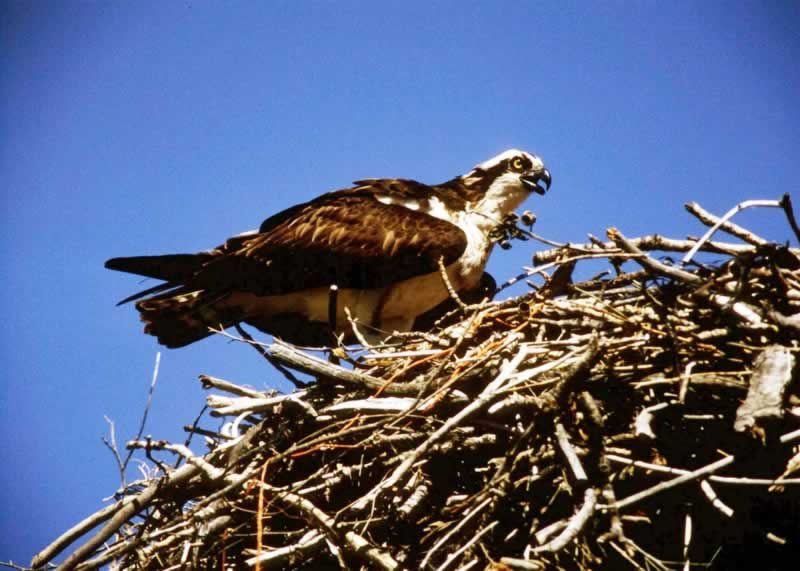
What do telephone poles have to do with ospreys? Ospreys like to nest at the very top of tall, bare trees — and well-placed phone poles make an excellent substitute for natural snags.
Project Osprey is based on the “if you build it, they will come” principle. Workers erect phone poles in desirable osprey habitat near prime fishing waters, and construct platforms and partial nests at the top. The human-made nesting platforms give the ospreys a head start, encouraging young ones to set up in unclaimed territory. The platforms also give wildlife scientists, like Chris Martin of Audubon, a chance to tag the birds and do research. Researchers put up metal guards around nesting poles and trees to discourage nest-robbing by predators.
Osprey return to New Hampshire from southern wintering grounds each spring to breed near rivers, lakes, and estuaries where they hunt for fish. Recovery efforts have already helped the birds to expand their breeding range; roughly two dozen pairs of osprey have nested and raised young in four different New Hampshire watersheds — Androscoggin, Merrimack, Connecticut and Great Bay — in the last few years.
… that the osprey is found on every continent, except Antarctica!
… that sometimes an osprey catches a fish that is too heavy to carry off. If the osprey can’t let go of the fish, it can be pulled underwater and drown.