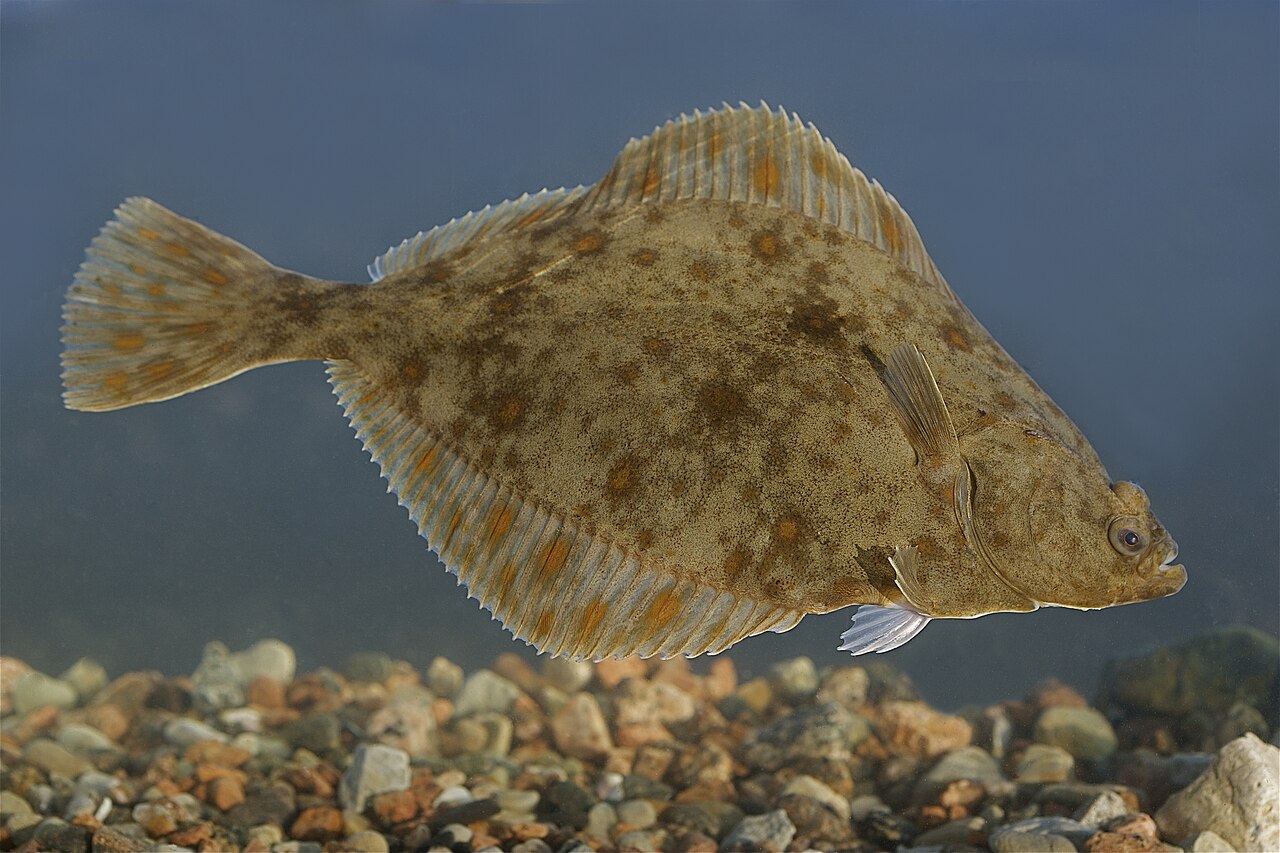
The Pleuronectiformes order includes a group of fish commonly known as flatfish. There are about 800 species of flatfish, found in around 11 families.
These unusual fish are best known for their flattened bodies and for having both eyes on one side of their head.
Flatfish vary widely in size. Some of the smallest species are only about 2 inches (5.1 cm) long, while the largest—such as halibut—can grow to over 8 feet (2.5 meters) in length and weigh several hundred pounds (kilograms).
Most flatfish live on or near the ocean floor, where they rest on sandy or muddy bottoms. They are excellent at blending into their surroundings, using camouflage to stay hidden from predators and sneak up on prey.
Flatfish are found in oceans around the world, from shallow coastal waters to deeper offshore areas. Some species also enter estuaries, where freshwater and saltwater mix.
Flatfish are especially known for their unique development. When they are young, they swim upright like most fish. As they grow, one eye gradually moves to the other side of the head, and their body tilts so they lie flat on one side.
This adaptation allows them to live on the ocean floor. Many species can also change color to match their surroundings and often bury themselves in sand to hide from predators and ambush prey.