

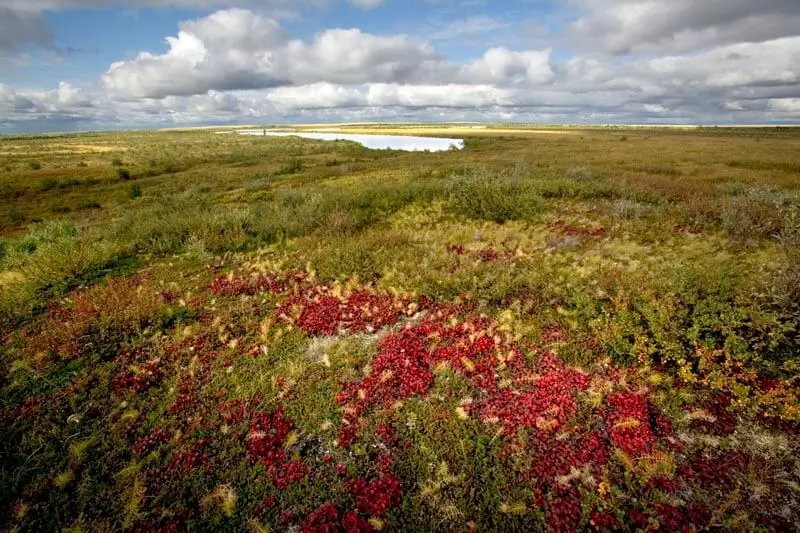
The growing season in the tundra is very short, usually only 6 to 10 weeks!
Beneath the tundra lies permafrost, a layer of soil that is permanently frozen, and can be hundreds of feet or meters thick in some places.
The tundra is very dry, receiving less than 15 inches (38.1 cm) of rain or snow each year. Even though it is so cold, it is considered a desert because it gets so little precipitation.
The growing season in the tundra is one of the shortest on Earth, lasting only about 6 to 10 weeks each year. During this short summer, only the top layer of soil—called the active layer—thaws. The deeper ground remains frozen solid.
Because of the permafrost, water from melting snow and ice cannot soak into the ground. Instead, it collects on the surface, forming bogs, puddles, and shallow ponds. This standing water helps keep the tundra moist and supports plants and animals.
When the surface soil thaws, plants such as mosses, grasses, and small shrubs begin to grow quickly. Tiny organisms like bacteria and fungi also become active, helping to break down dead material and recycle nutrients.
The tundra is one of the harshest biomes and it is definitely the coldest!
Plants must grow, reproduce, and complete their life cycles in a very short time. Fortunately, the tundra experiences long daylight hours in the summer—sometimes nearly 24 hours of sunlight each day, giving plants extra energy, allowing them to grow quickly despite the short season. As a result, the tundra bursts into life during the summer, with mosses, grasses, and small flowering plants covering the landscape before the cold returns.
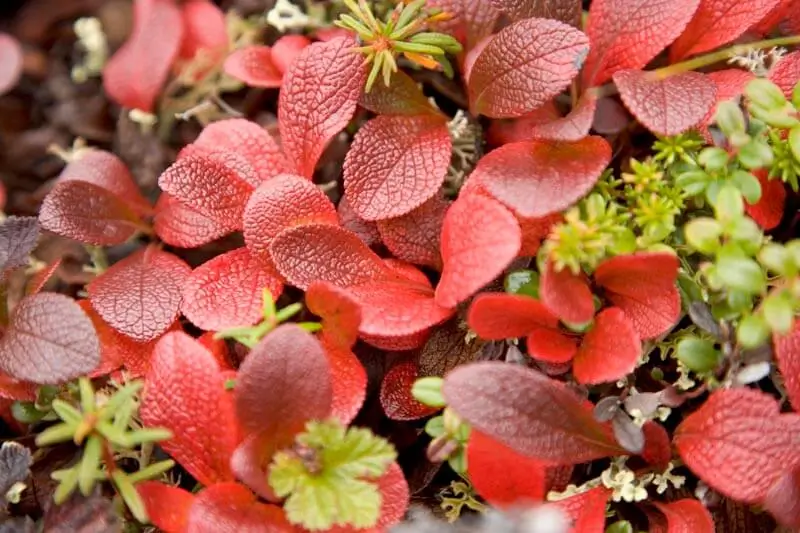
Thousands of plant species live in the Arctic tundra. Most of these plants are small and grow close to the ground. This helps protect them from strong winds and freezing temperatures. Some common tundra plants include lichens, short shrubs, sedges, grasses, wildflowers, dwarf birch trees, and willow trees.
Cushion plants are another type of tundra plant. They grow low to the ground in tight, rounded clumps. They are called cushion plants because their shape looks like a soft cushion. This shape also helps them stay warm and survive in the harsh tundra environment.
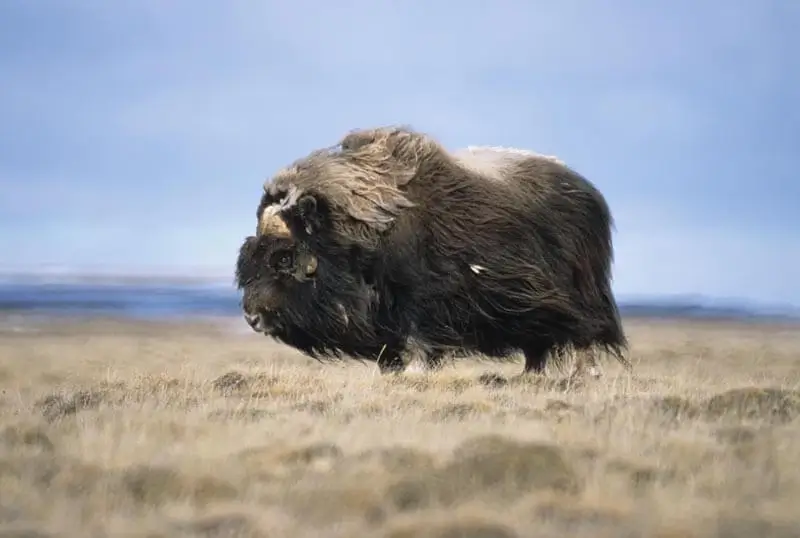
Animals that live on the tundra must be able to adapt to very cold temperatures. They must also be able to raise their young during the very short summer months.
Animals found in the tundra include the musk ox, the Arctic hare, the polar bear, the Arctic fox, the caribou, and the snowy owl.
Many tundra animals, like the caribou and the semipalmated plover, migrate to warmer climates during the winter.
Others, like the arctic ground squirrel, survive by hibernating through the cold months.