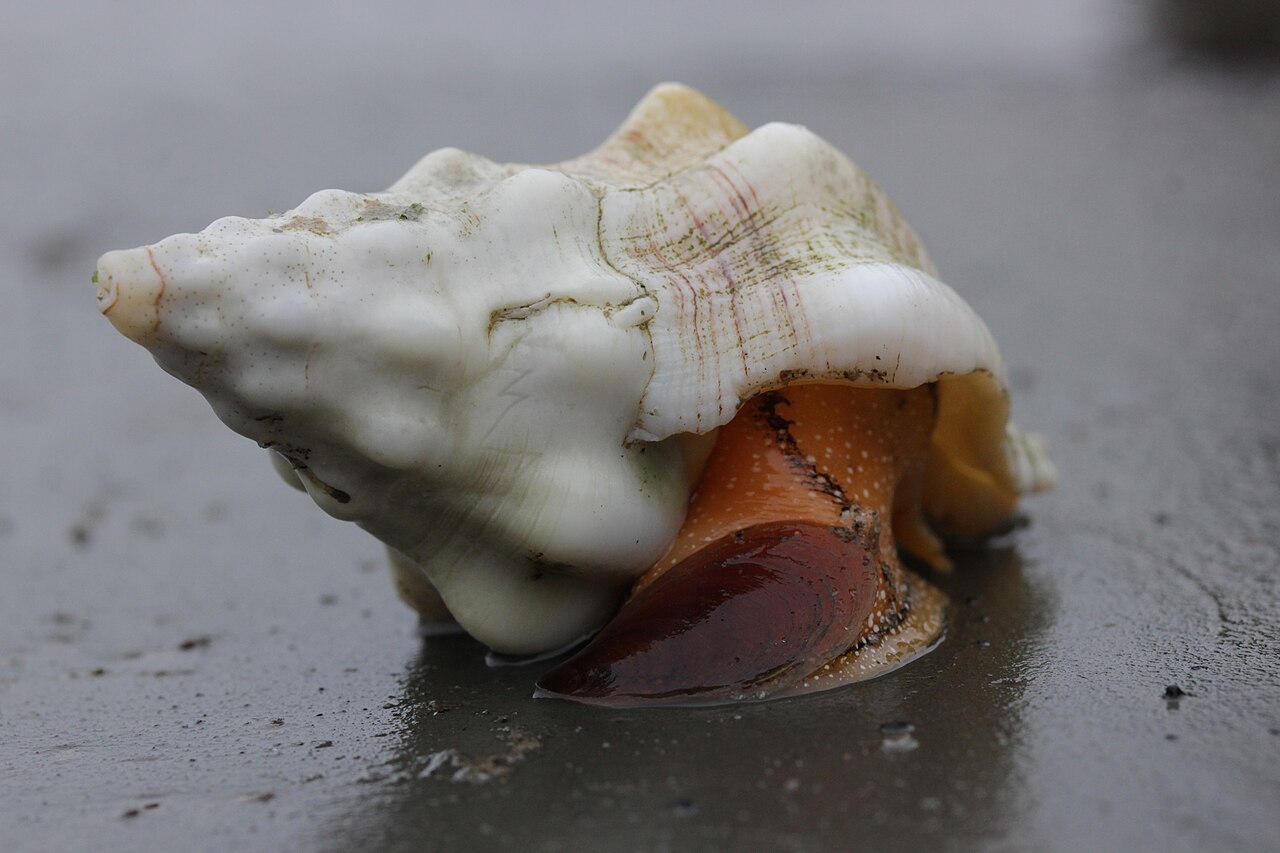
The subphylum Conchifera is a large and diverse group within the phylum Mollusca. Most conchiferans have (or once had) a shell made of calcium carbonate. In many species, this shell is a single, solid structure that helps protect their soft bodies and comes in a wide variety of shapes and sizes. Many of the shells you find on the beach come from animals in this group.
There are more than 85,000 living species of Conchifera, spread across hundreds of families. They are found all over the world—in oceans, freshwater habitats, and even on land.
The major classes of Conchifera include:
Monoplacophora – These deep-sea mollusks have a simple, cap-like shell. They resemble limpets and were once thought to be extinct until living species were discovered in the 1950s.
Gastropoda – This is the largest group of Conchifera and includes snails and slugs. Many gastropods have coiled shells, like garden snails, while others, such as slugs, have reduced or no external shell.
Bivalvia – These mollusks have two hinged shells and include clams, oysters, mussels, and scallops. They live in marine and freshwater environments and are important both ecologically and as a food source.
Cephalopoda – This group includes octopuses, squids, cuttlefish, and nautiluses. They are among the most complex mollusks, known for their intelligence, excellent eyesight, and ability to change color. Most have reduced, internal, or absent shells, although nautiluses retain a well-developed external shell.
Scaphopoda – Also called tusk shells, these animals live buried in seafloor sediments. Their long, curved shells resemble tiny elephant tusks.