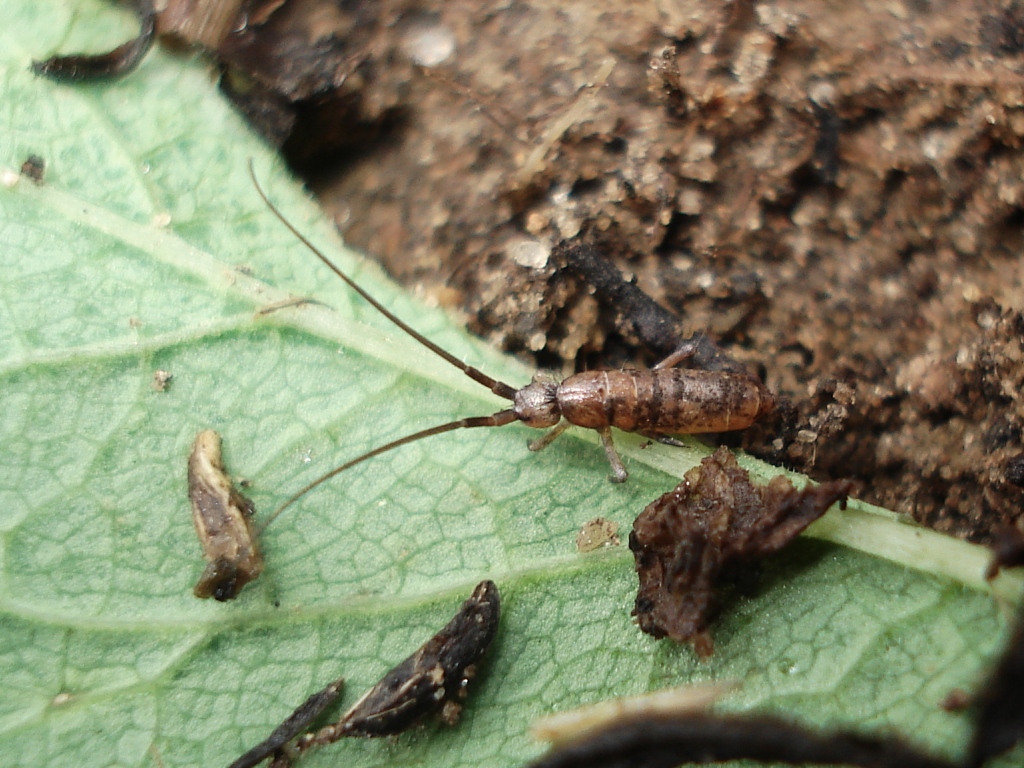
Collembola, also known as springtails, are a group of tiny, wingless hexapods found around the world. They look a bit like insects, but they belong to their own class and are not considered true insects.
There are more than 9,000 known species of springtails, grouped into about 30 families, and scientists are still discovering new species. Most springtails are very small, usually only less than a tenth of an inch or a few millimeters long, so they often go unnoticed.
Springtails are found on every continent, including Antarctica. They are especially common in moist environments. You can find them in soil, leaf litter, under rocks, on tree bark, and in moss. Some species live on the surface of ponds or in caves.
Sprintils get their name from a special forked structure called a furcula. The furcula works like a spring. When released, it snaps against the ground and launches the springtail into the air, helping it escape from predators.
Springtails are decomposers and help break down dead plants and other organic matter, returning nutrients to the soil and supporting plant growth.