The Menuridae family includes two extant (living) species: the Superb Lyrebird (Menura novaehollandiae) and Albert’s Lyrebird (Menura alberti). Both species are found in forested areas of eastern Australia.
Lyrebirds are large birds, measuring about 31.5–39.4 inches (80–100 cm) in length, including their tails. They are mostly brown and look somewhat like large pheasants.
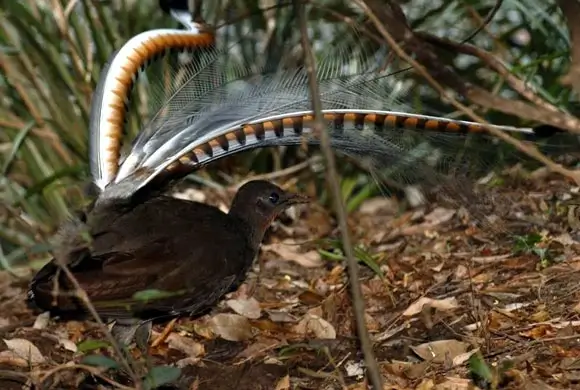
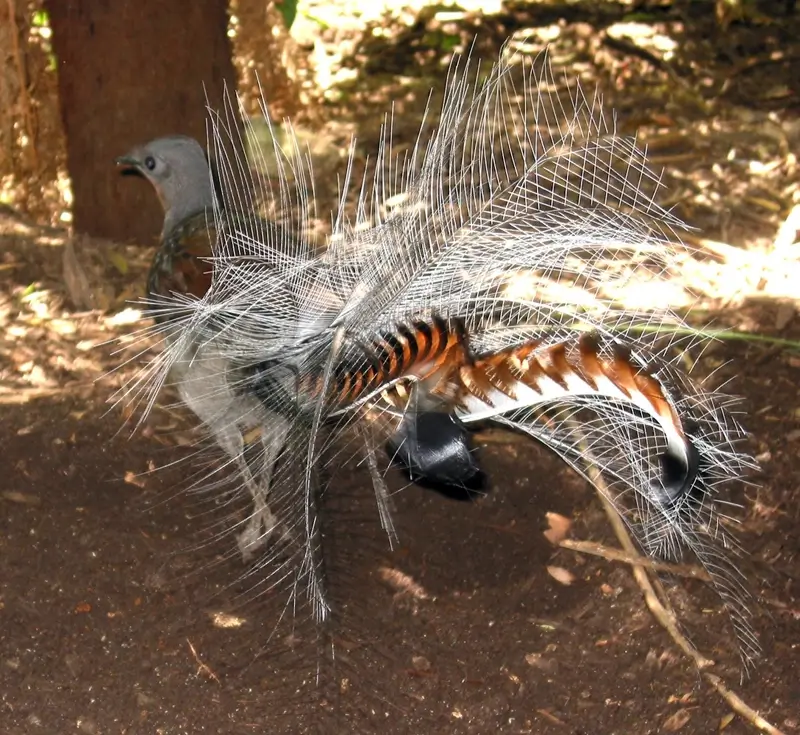
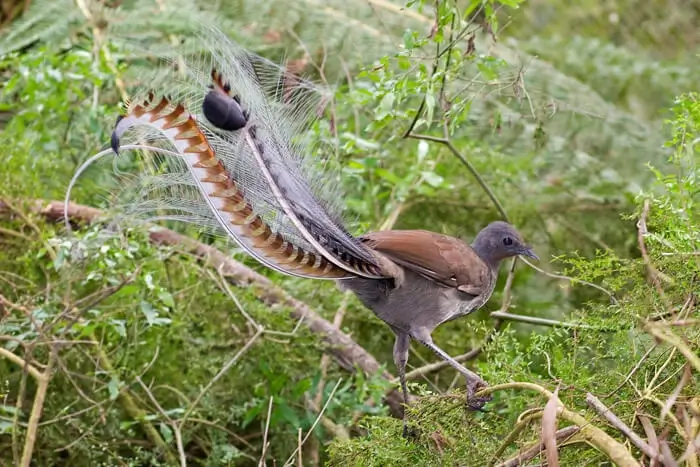
Male lyrebirds have long, elaborate tails. When a male Superb Lyrebird displays his tail, some of the feathers form a shape that looks like a lyre, a type of stringed musical instrument.
Lyrebirds spend much of their time on the ground. They search through leaf litter with their feet for food, including insects, spiders, worms, and sometimes seeds. They sleep in trees at night.
Lyrebirds are famous for their remarkable vocal abilities. Male lyrebirds can imitate the calls of other birds and even sounds made by people, such as car engines, chainsaws, and dog barks.
Albert's Lyrebird (Menura alberti)
Albert's Lyrebird is found in Australia. IUCN Redlist Status: Least Concern
Superb Lyrebird (Menura novaehollandiae)
The Superb Lyrebird is found in Australia. IUCN Redlist Status: Least Concern
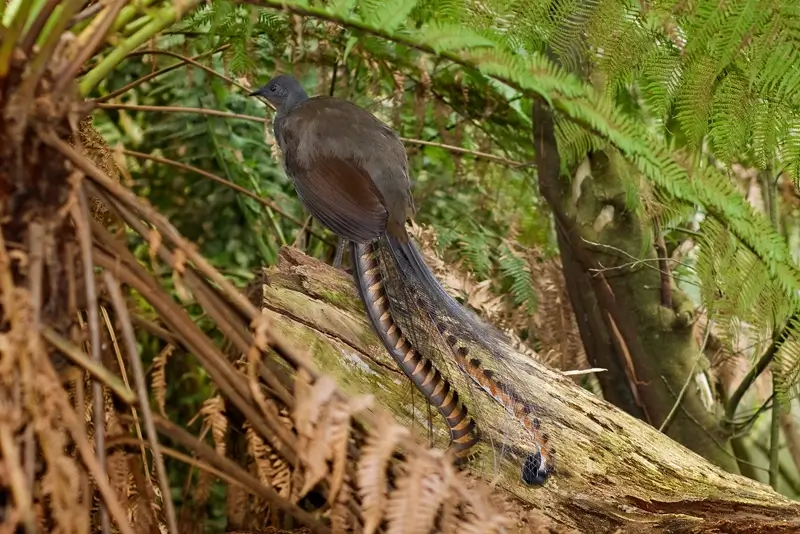
Superb Lyrebird (Menura novaehollandiae)
Only male lyrebirds have elaborate tail feathers. IUCN Redlist Status: Least Concern
Superb Lyrebird (Menura novaehollandiae)
Lyrebirds have great vocal ability and are known for their loud ringing call. They can even mimic other sounds. IUCN Redlist Status: Least Concern