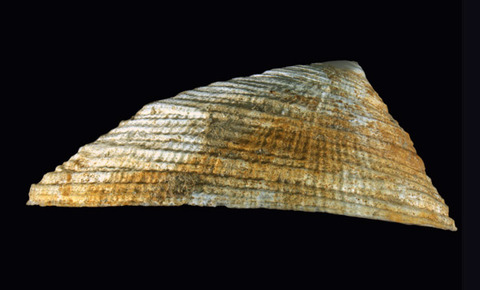
This small class of mollusks was once thought to be extinct for more than 500 million years, until a living specimen was found in 1952. There are now about 30-40 known species of monoplacophorans. They live deep in the ocean, often thousands of feet (or meters) below the surface, where it is very dark, cold, and under high pressure. Because of this, they are rarely seen and are still not well understood.
Monoplacophorans have a simple, cap-shaped shell and look a bit like a limpet. Under the shell, their bodies show a unique feature: repeated internal organs, including multiple pairs of gills, muscles, and kidneys. This repeating pattern is unusual among mollusks and has helped scientists learn more about how animal body plans evolved.
They are slow-moving bottom dwellers that creep along the seafloor using a muscular foot. Most are believed to be grazers or scavengers, feeding on microorganisms, algae, and organic matter they find on the ocean floor.