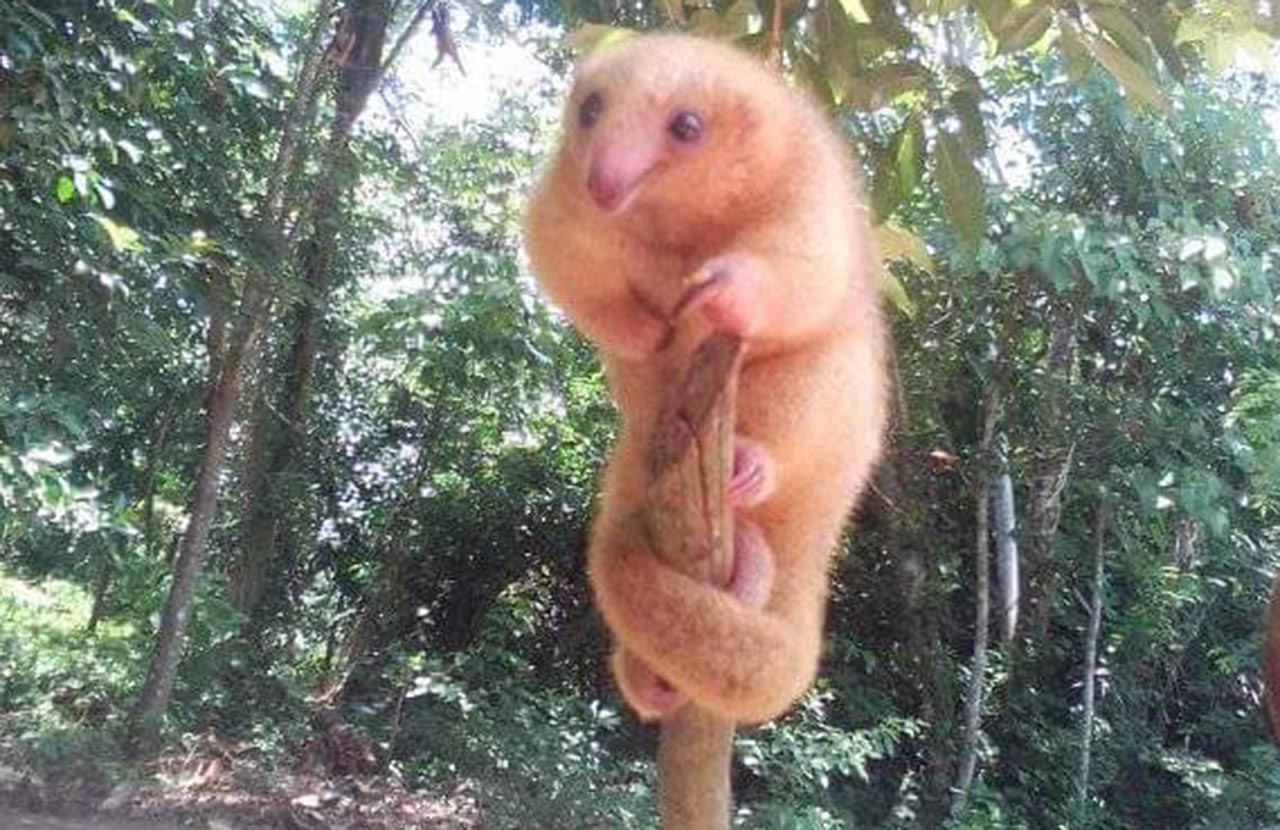
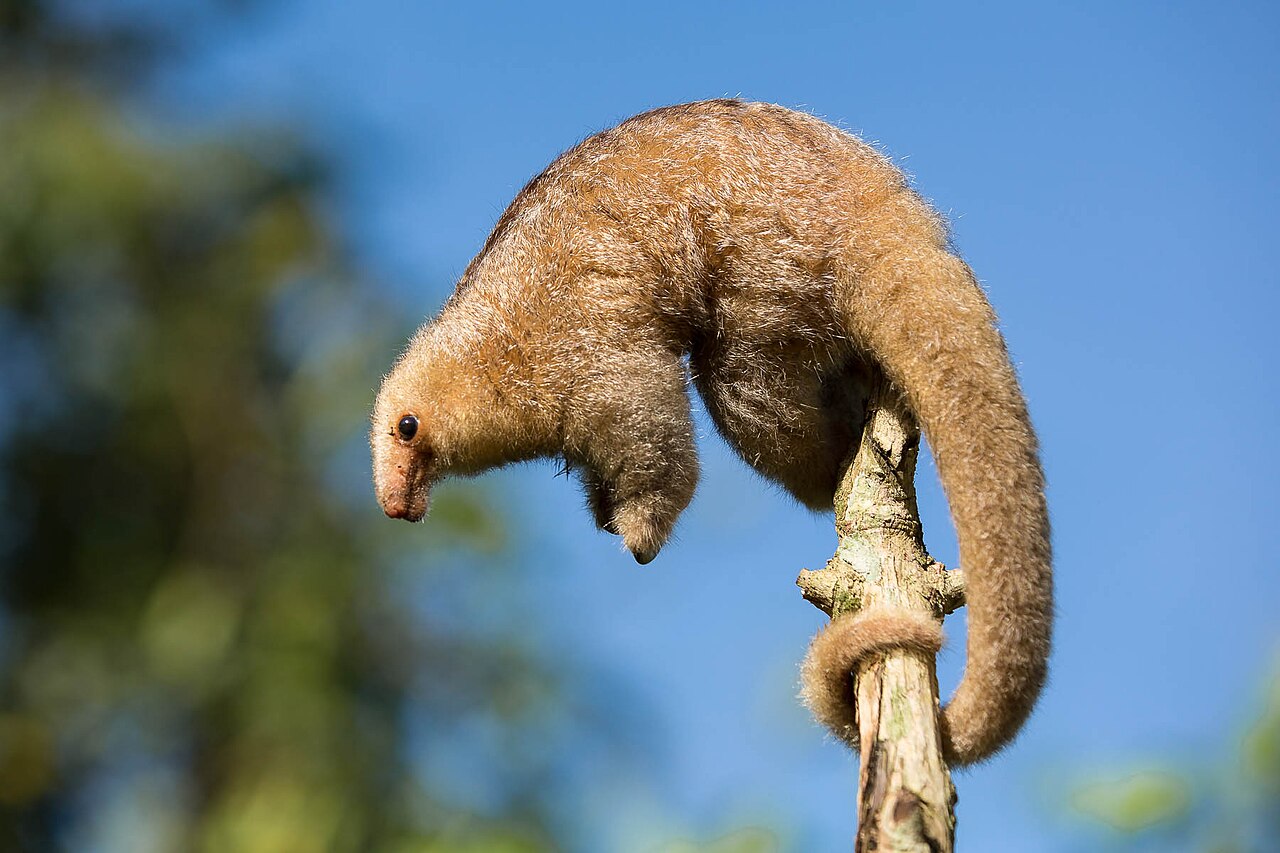
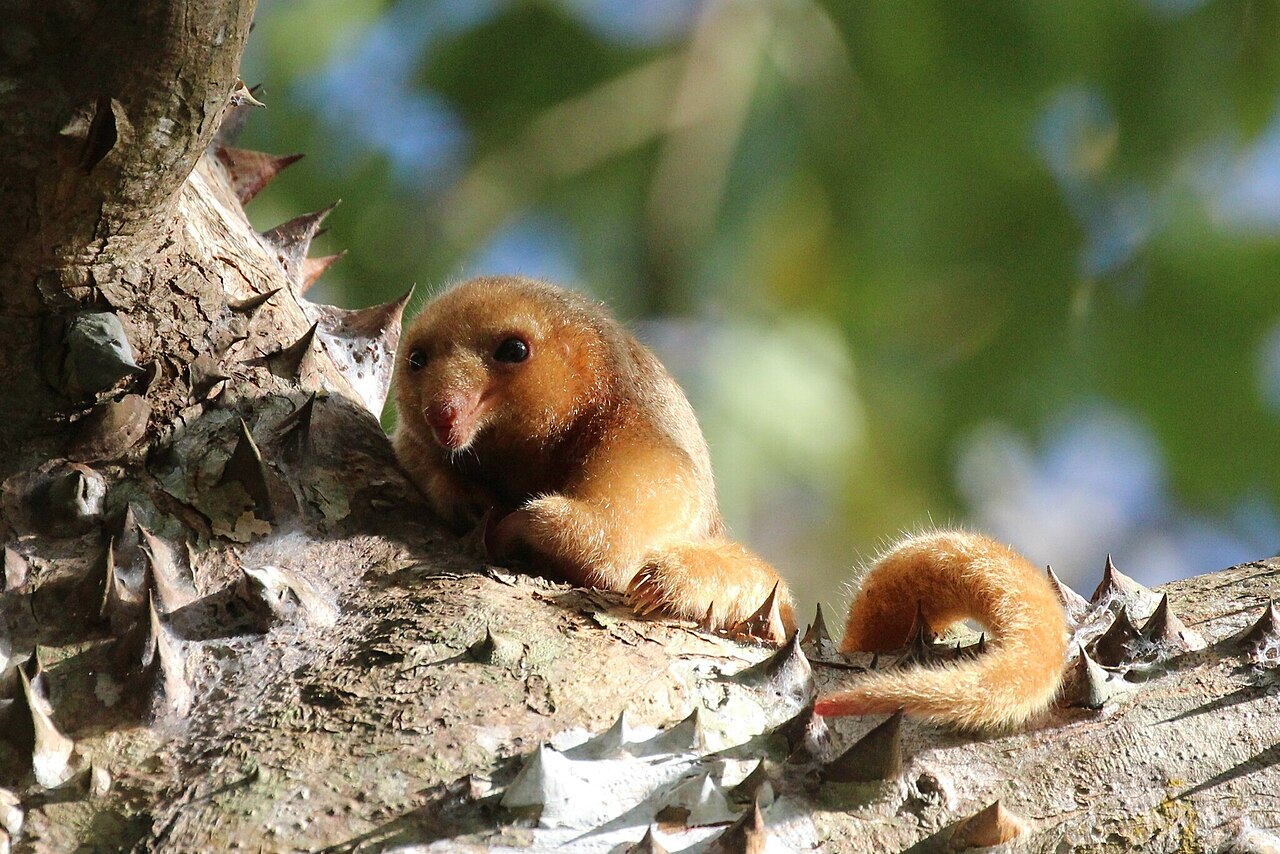
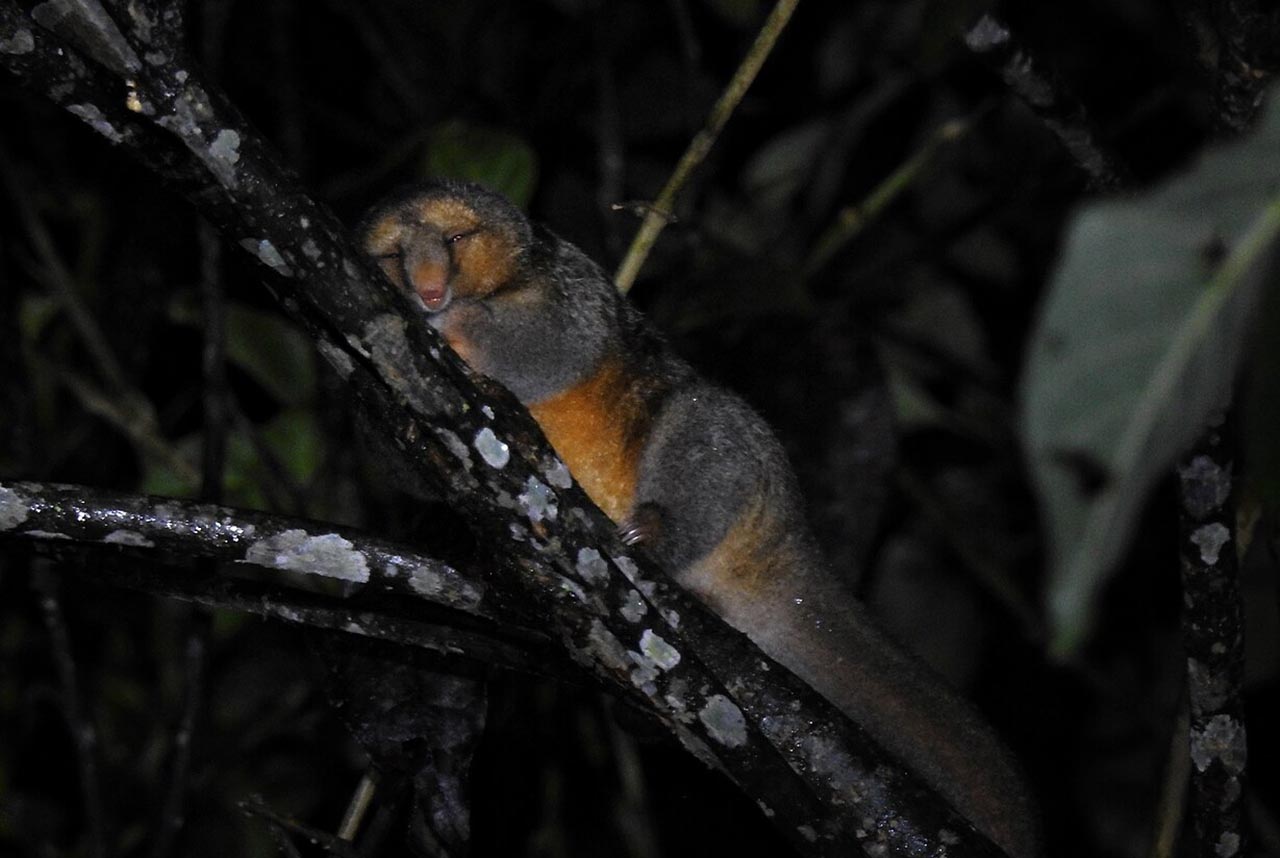
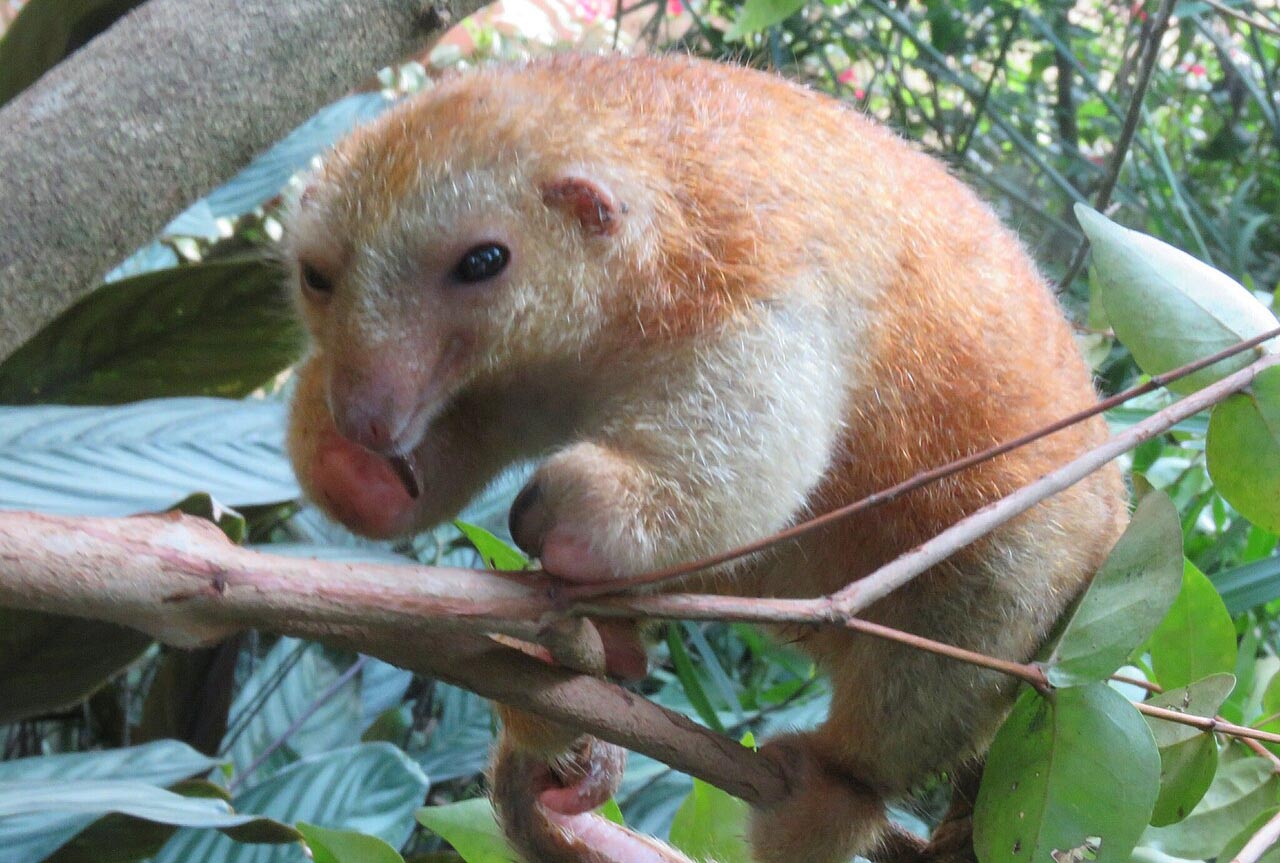
The Cyclopedidae family includes seven species of silky anteaters, also known as pygmy anteaters. These tiny mammals live in tropical forests from southern Mexico through Central America and into South America.
Silky anteaters are nocturnal, meaning they are active at night. They spend almost all their time in trees, climbing among branches and rarely coming down to the ground.
Silky anteaters are the smallest anteaters in the world. Their bodies measure about 7.3–8.5 inches (18.5–21.5 cm) long, and their tails can be nearly as long as their bodies. They have thick, soft, silky fur that is usually yellowish-brown, a short snout, and a long, partially prehensile tail that helps them grip branches.
Silky anteaters are insectivores, meaning they eat insects. Their diet consists mainly of ants, especially those that live in trees. They use their long, sticky tongues to collect ants from nests and crevices in tree bark. Their strong claws help them open insect nests and climb among branches. Their diet may also include termites and small beetles, although ants are their main food.
Female silky anteaters usually give birth to a single baby. The mother places her baby in a nest made of dry leaves inside a hole in a tree. Both parents help care for the young, and the male sometimes carries the baby on his back.
Until recently, scientists thought all silky anteaters belonged to a single species. After more than 10 years of research, scientists published a study in 2017 that identified at least seven species. They compared the animals’ DNA, skulls, fur patterns, and geographic ranges to determine that they were different species.