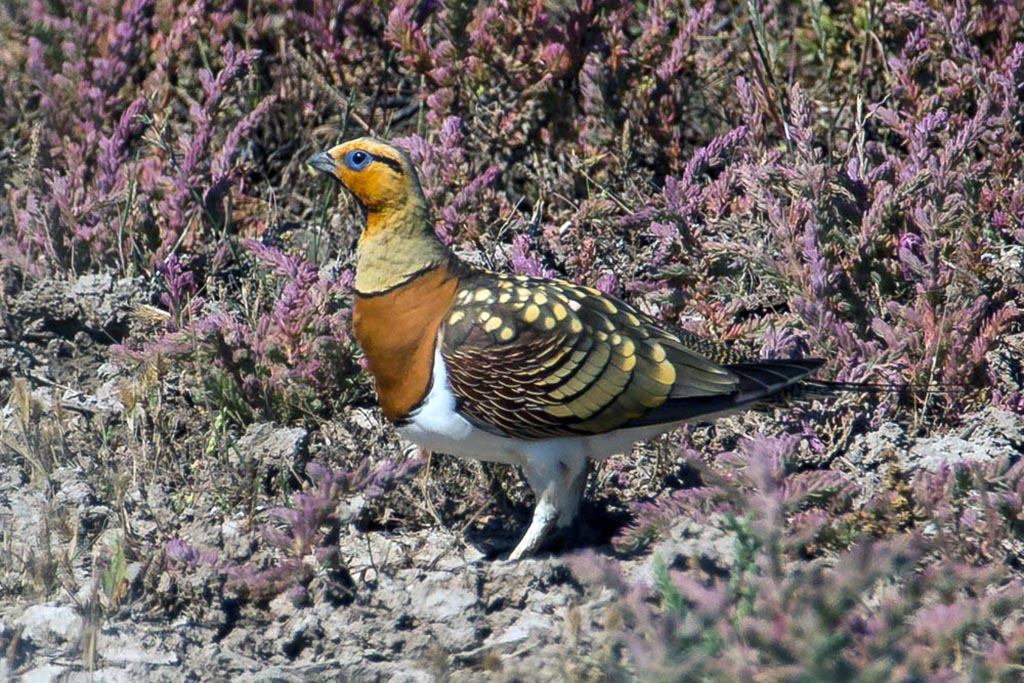
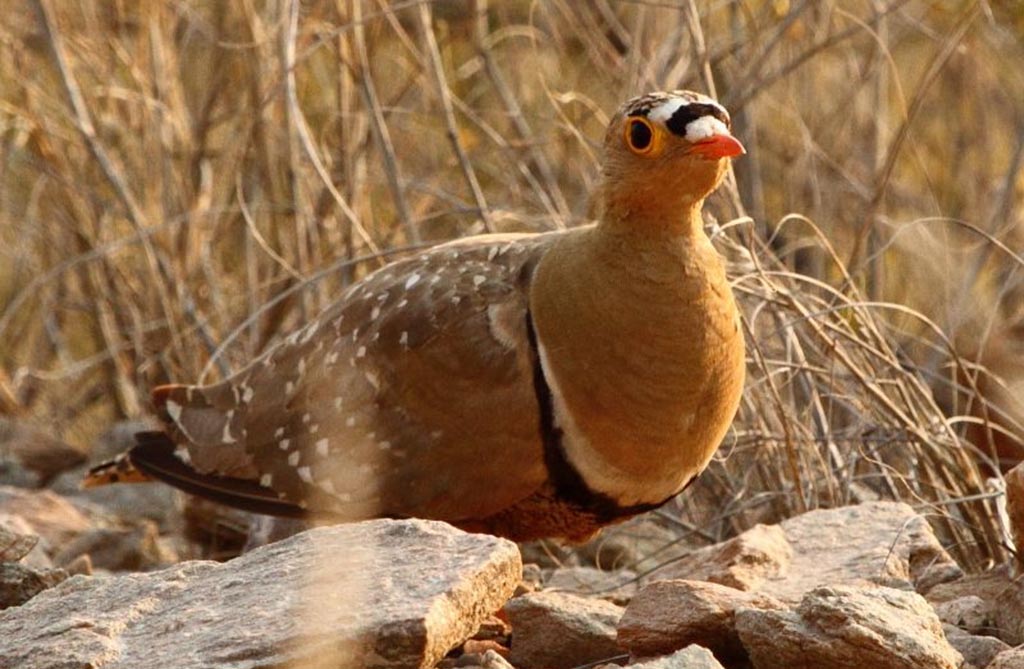
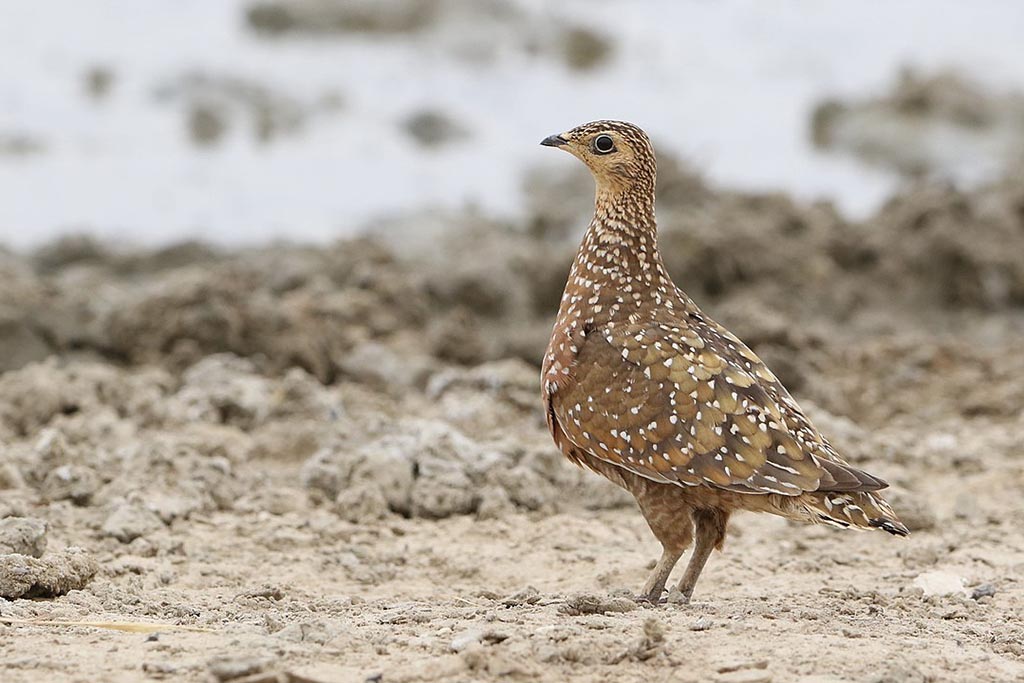
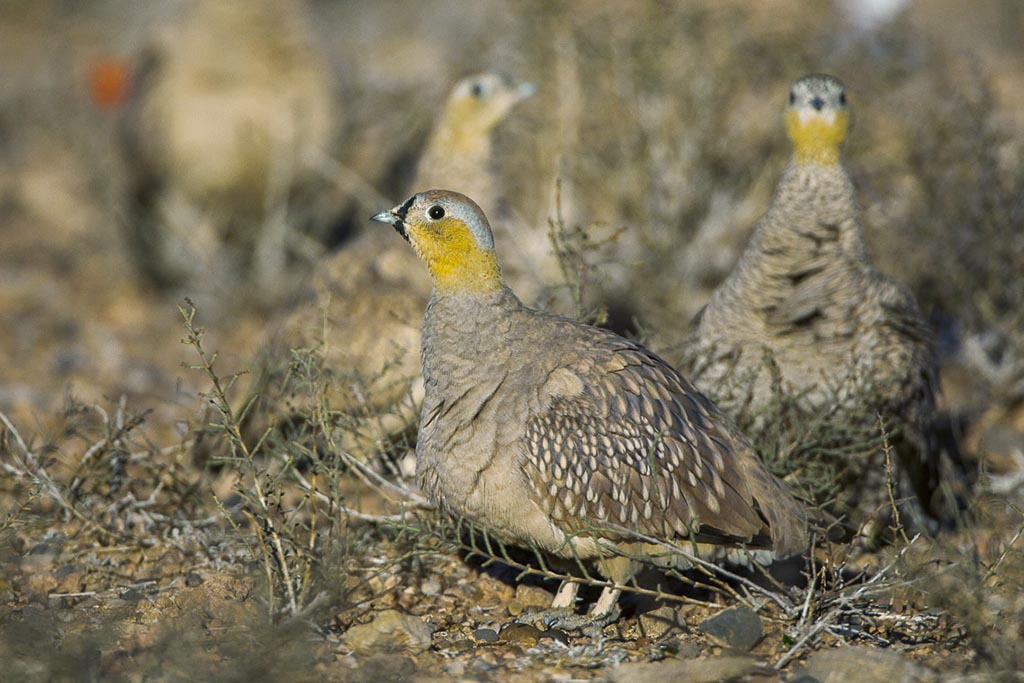
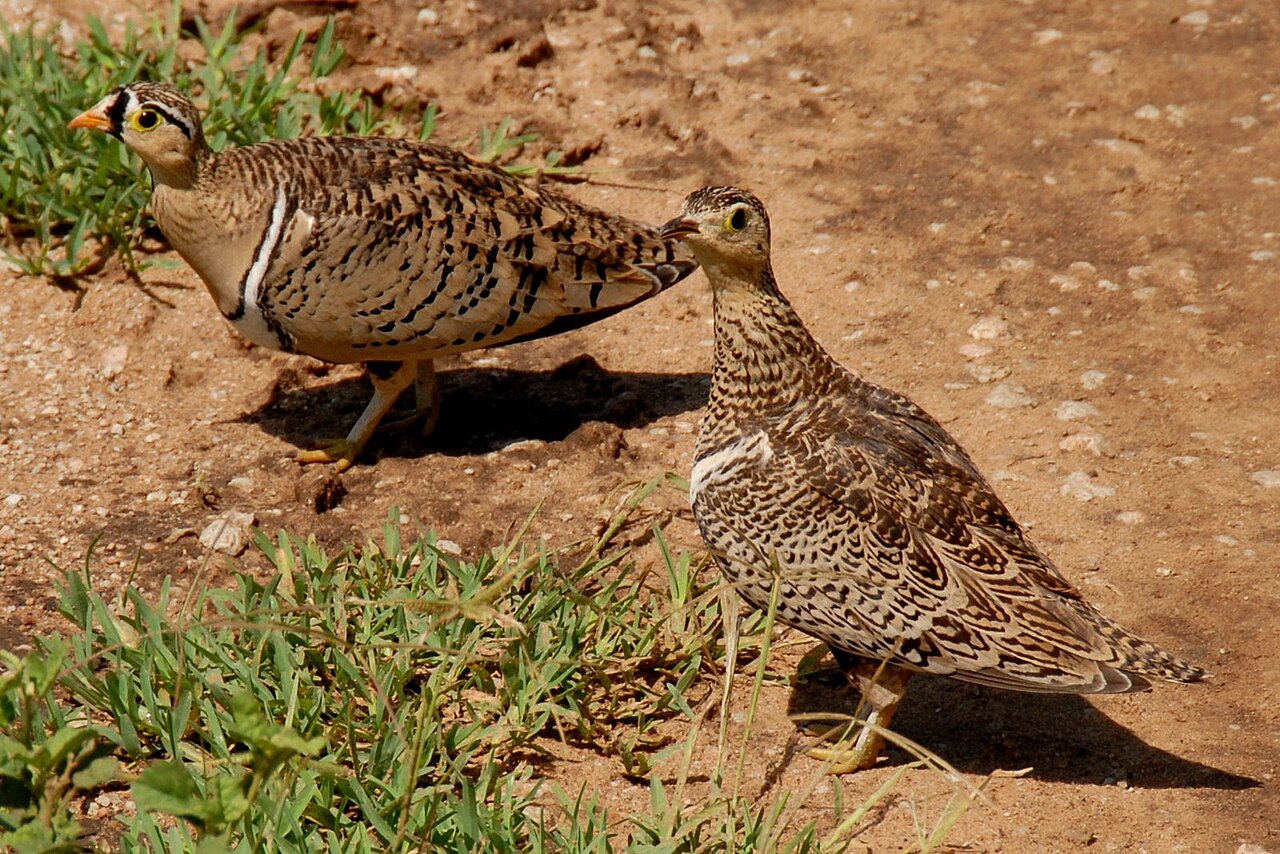
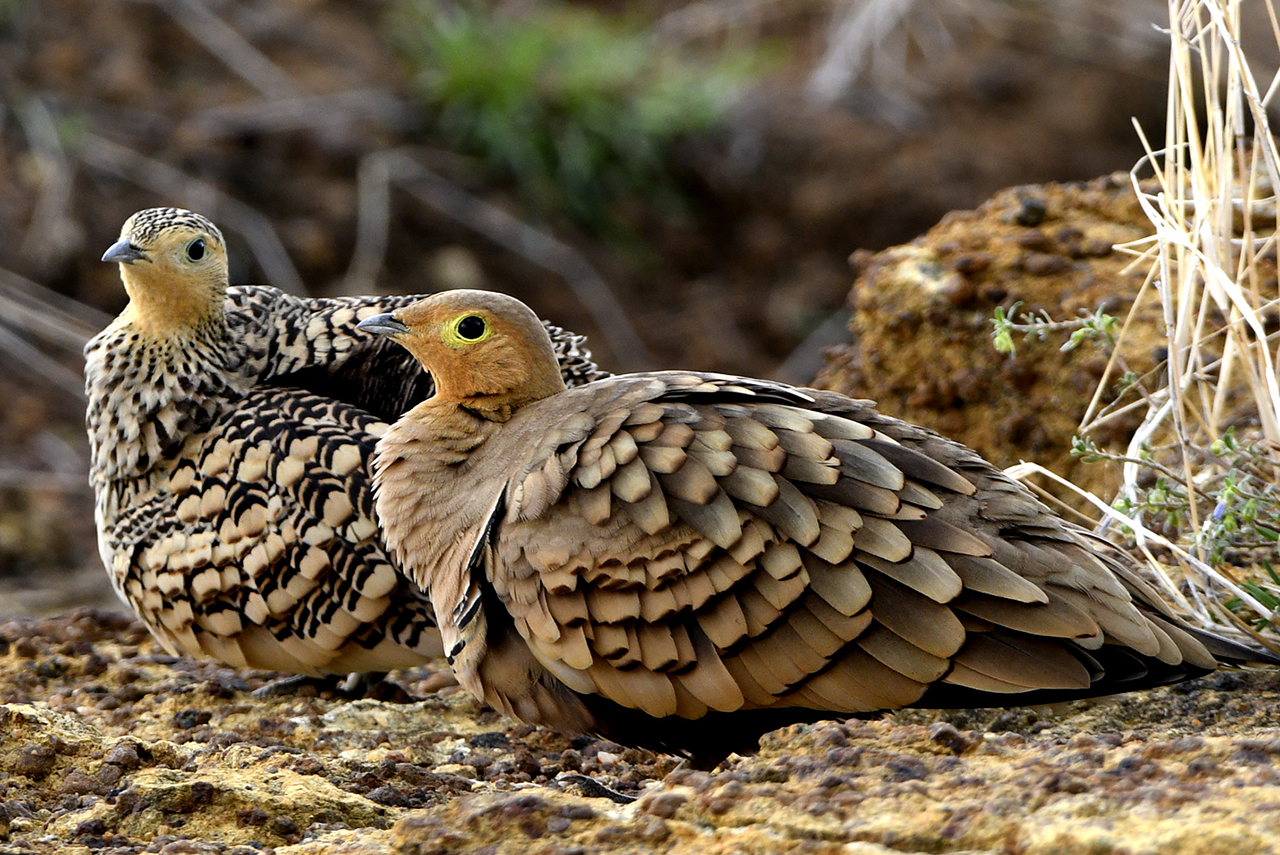
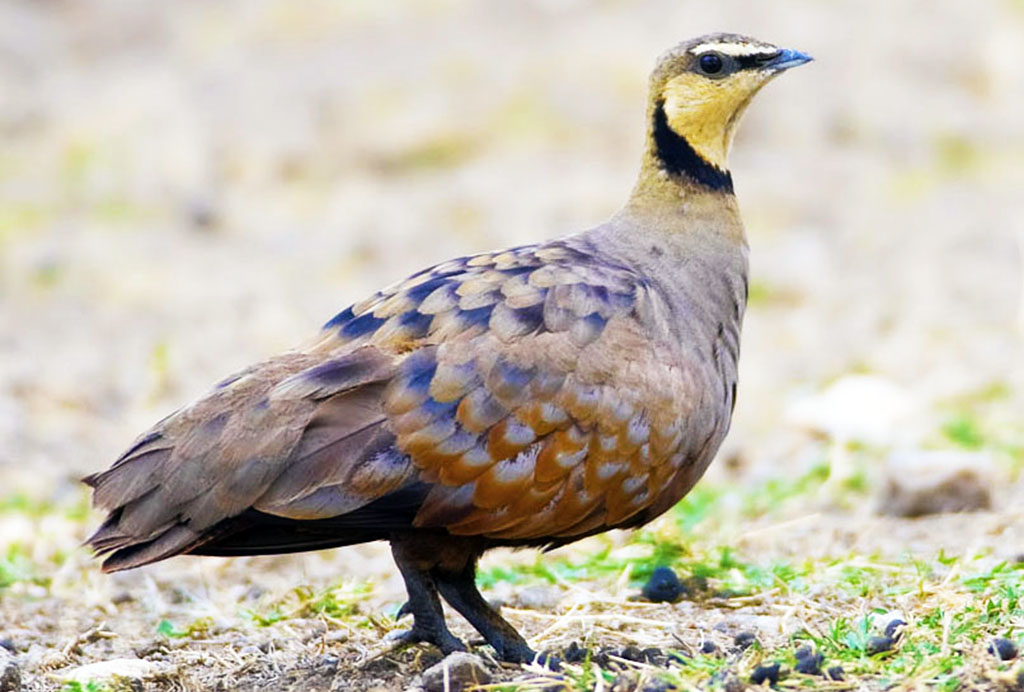
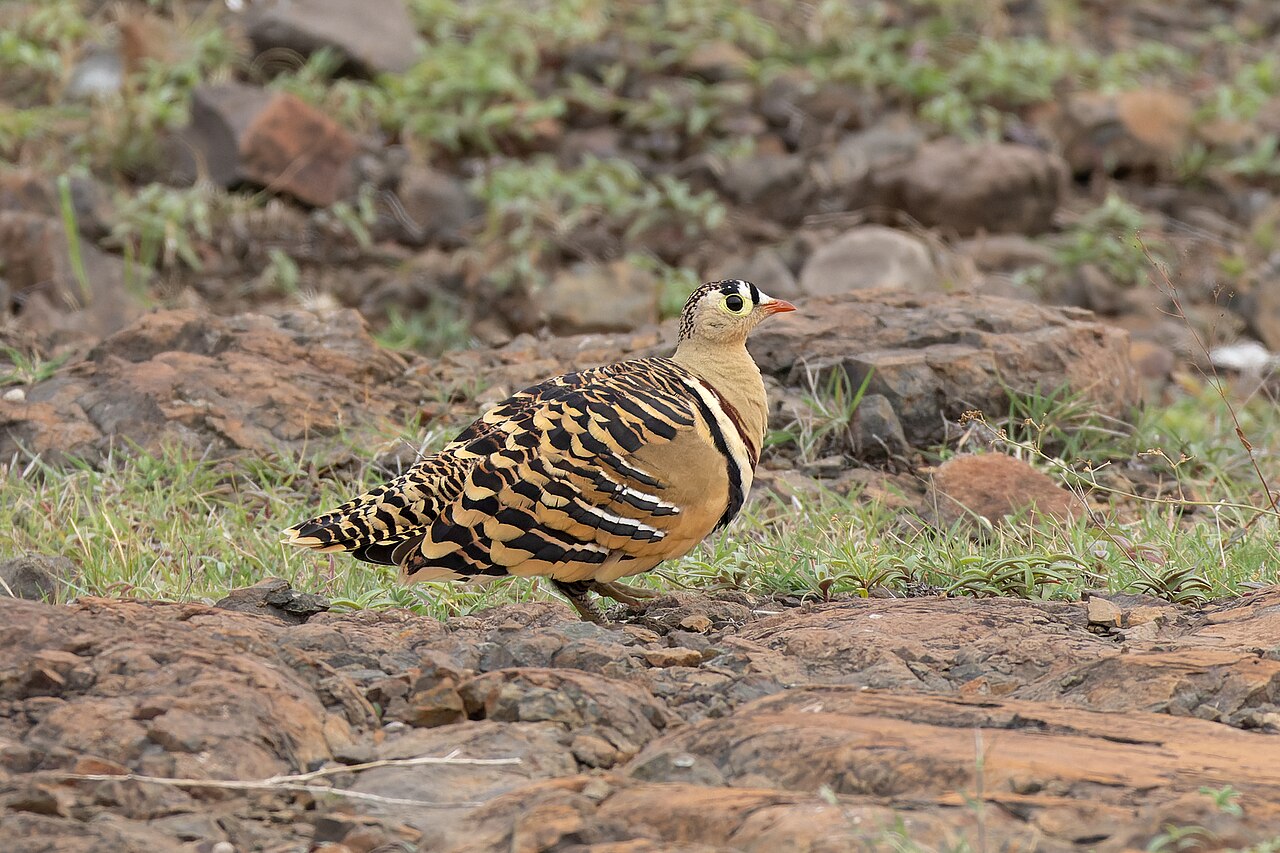
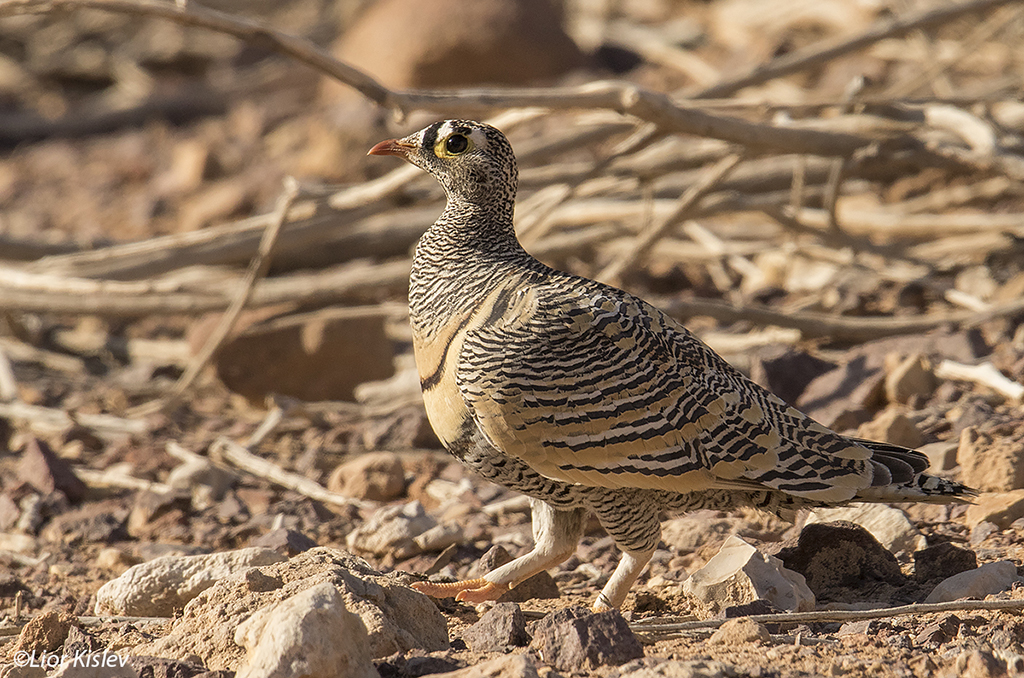
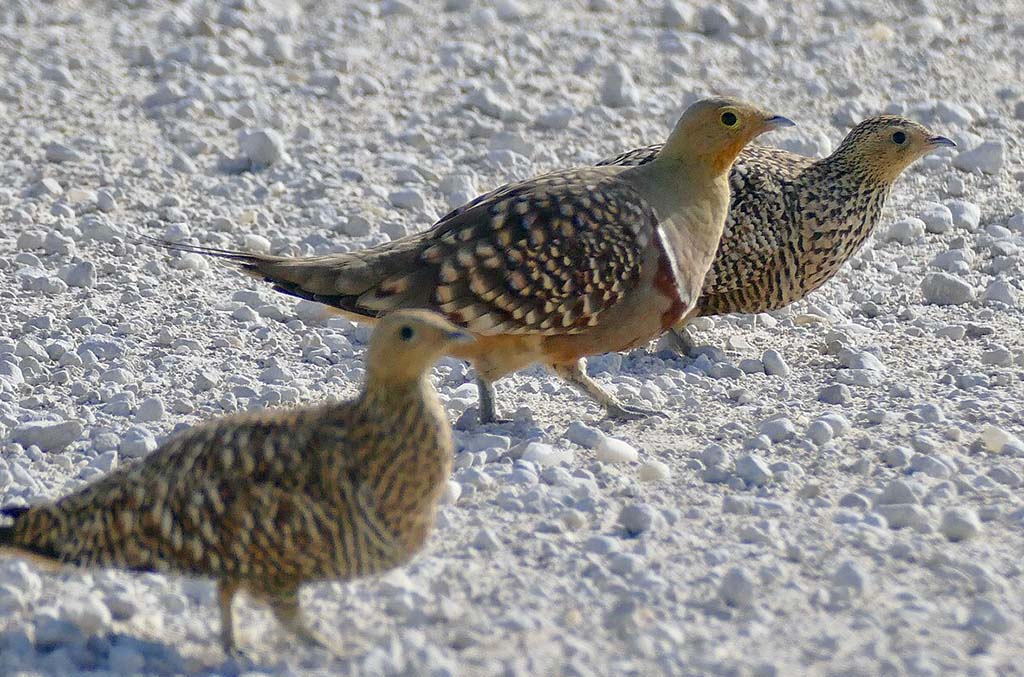
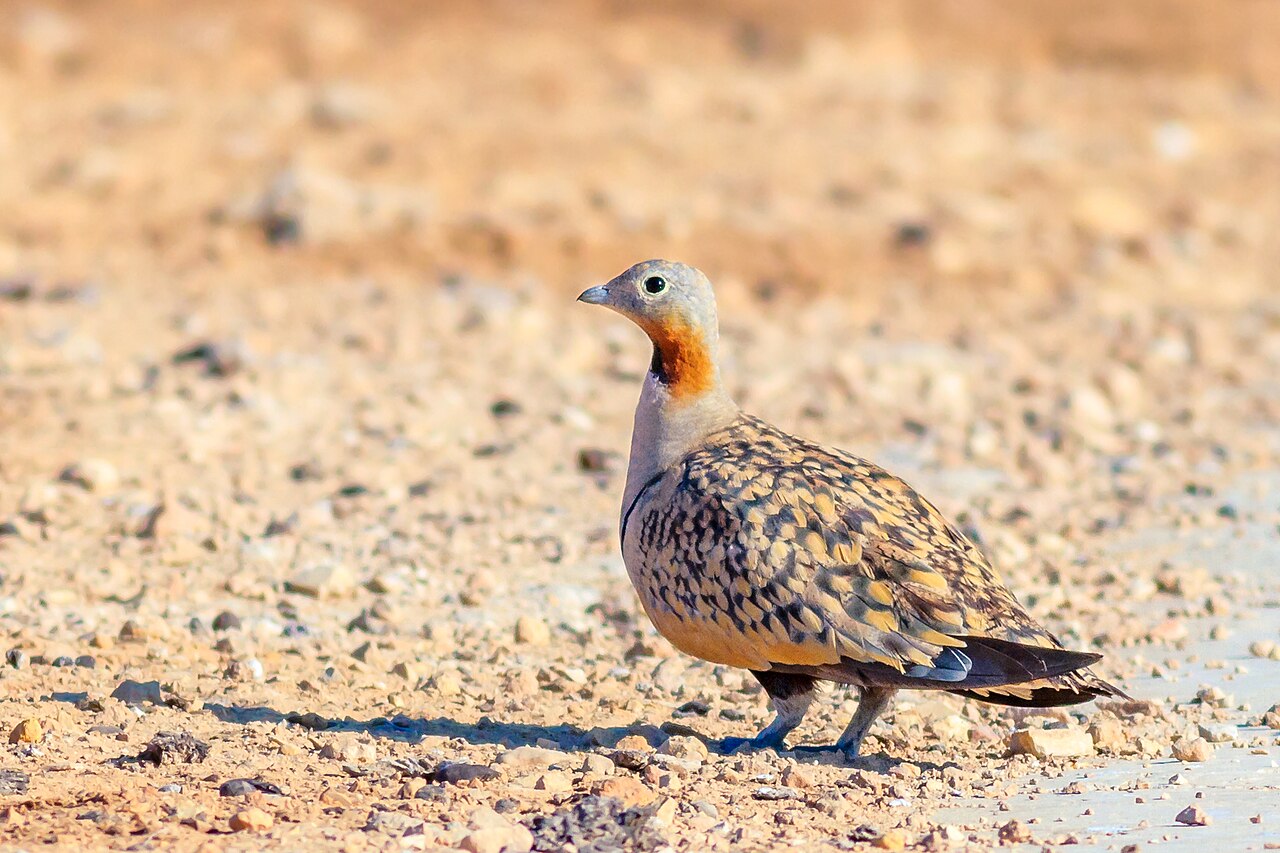
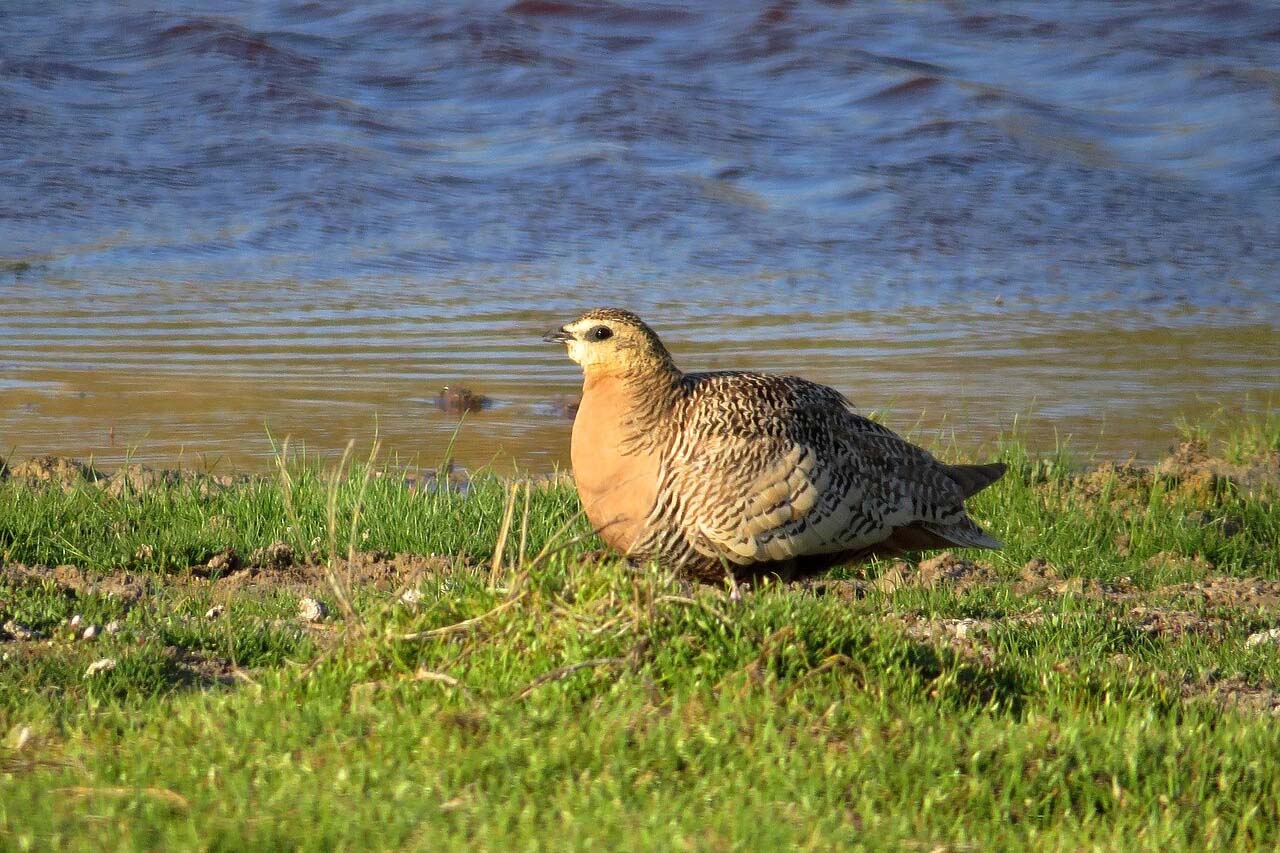
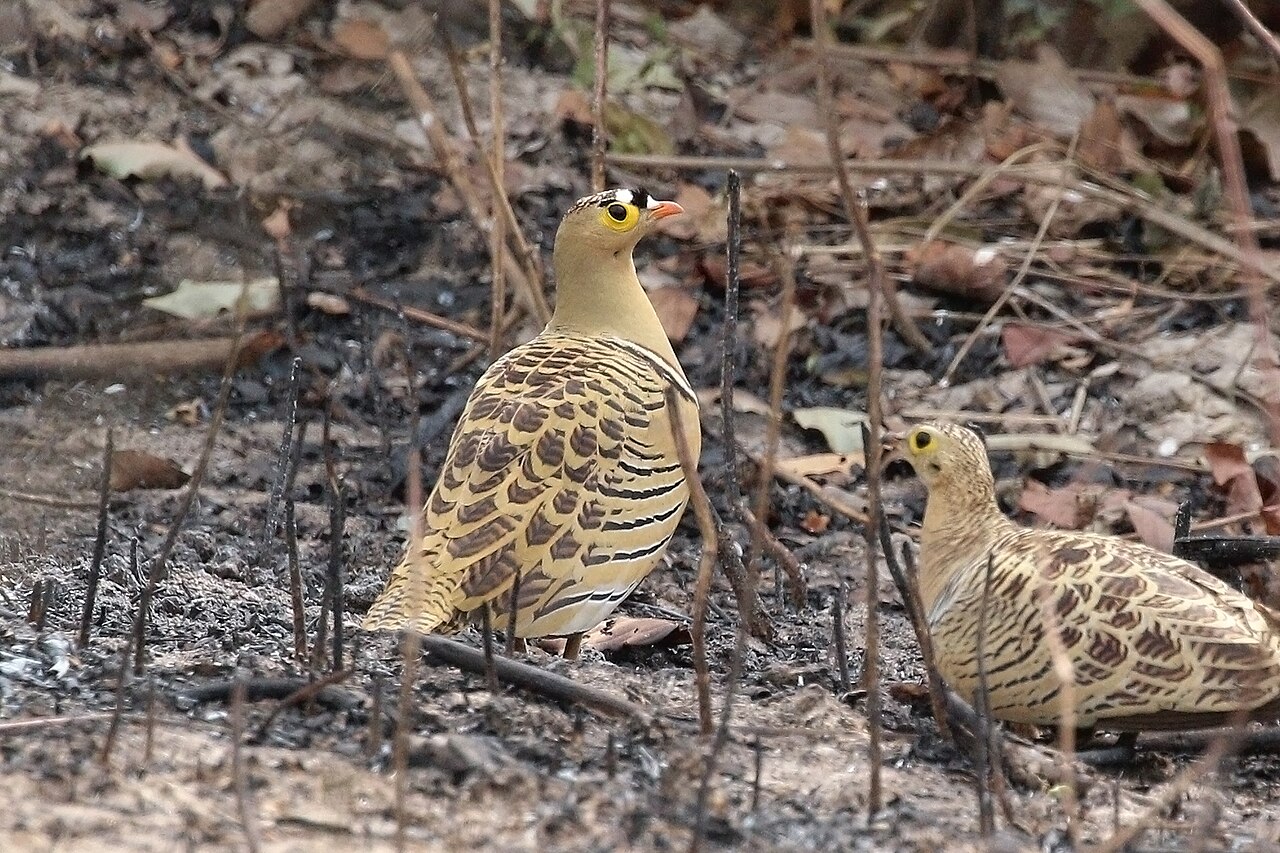
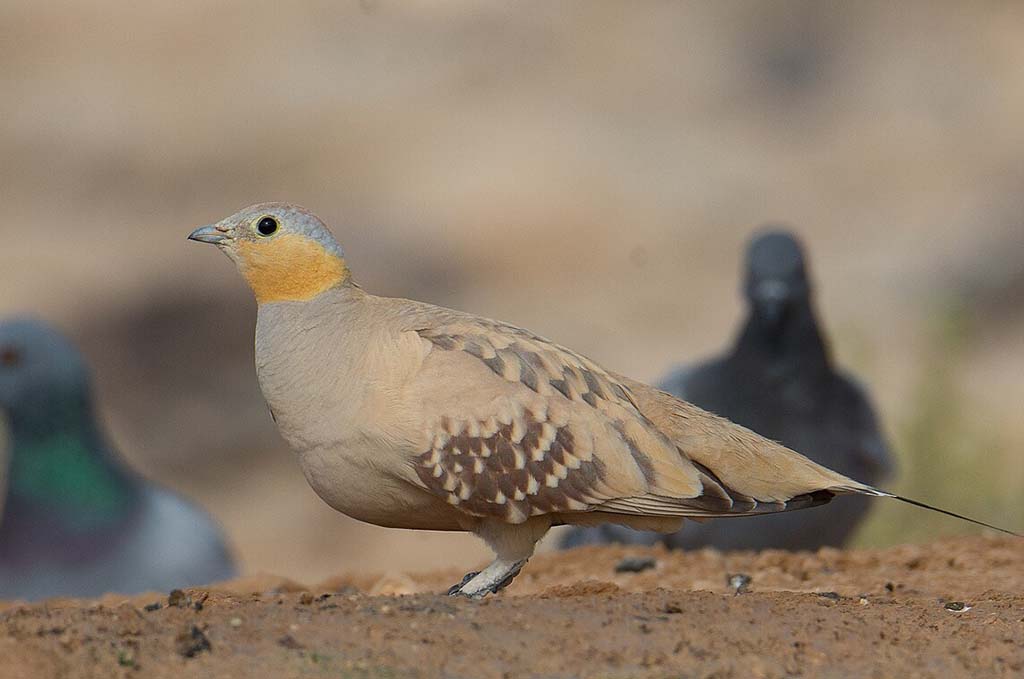
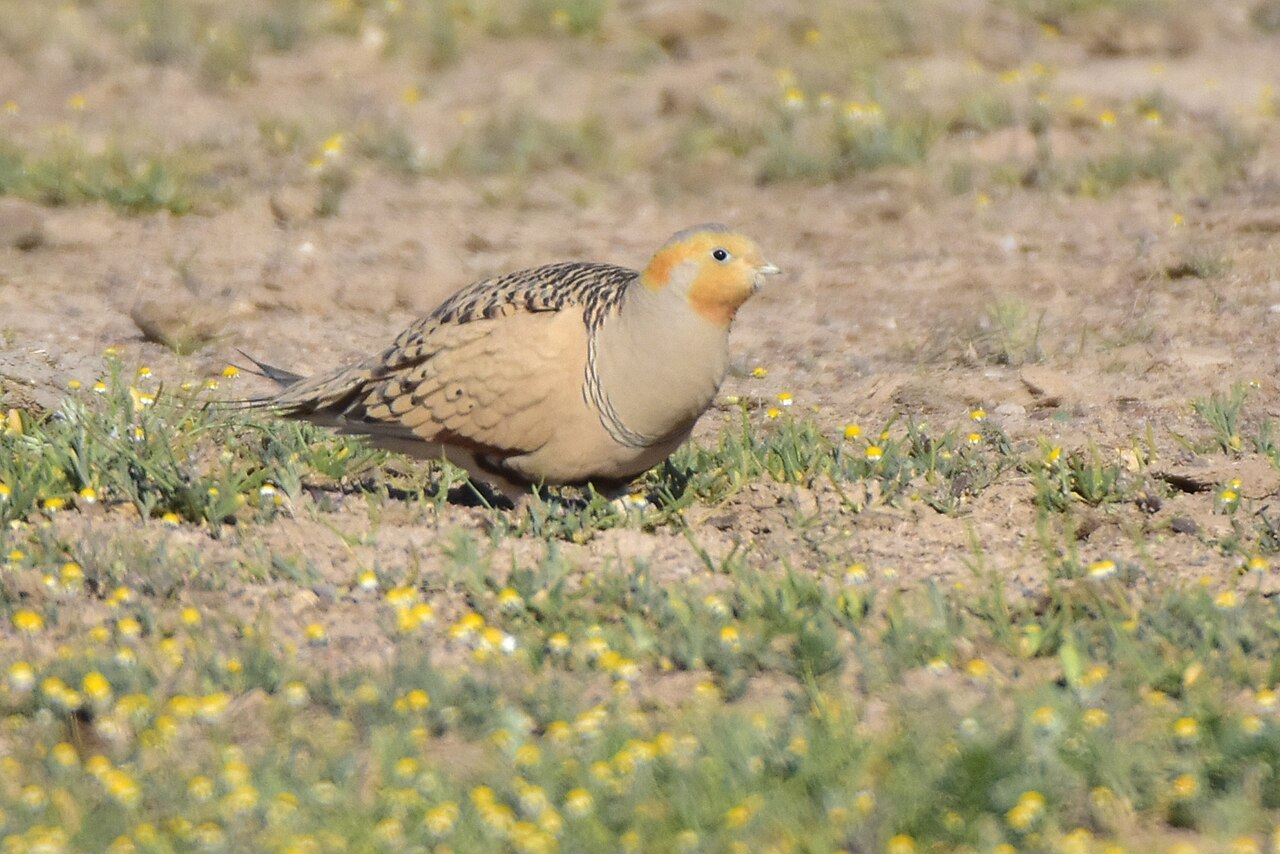
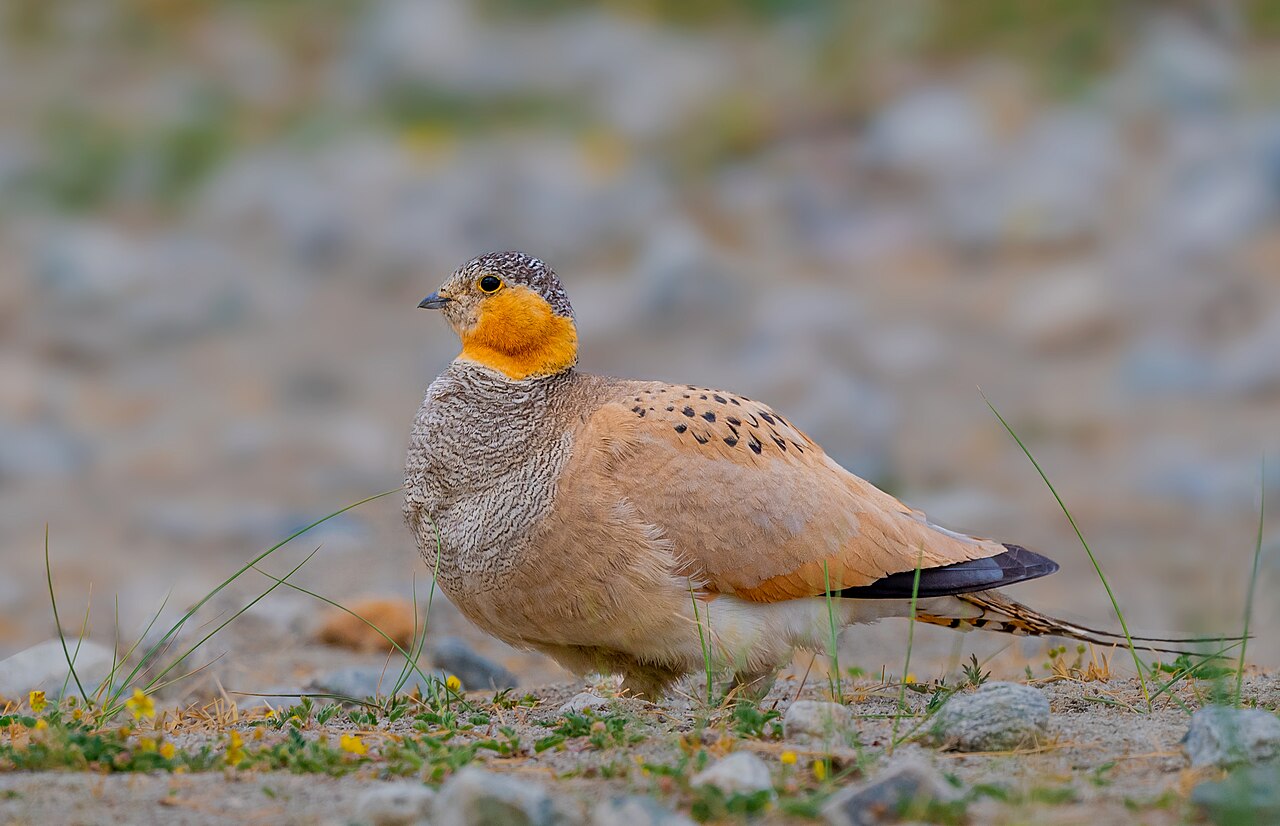
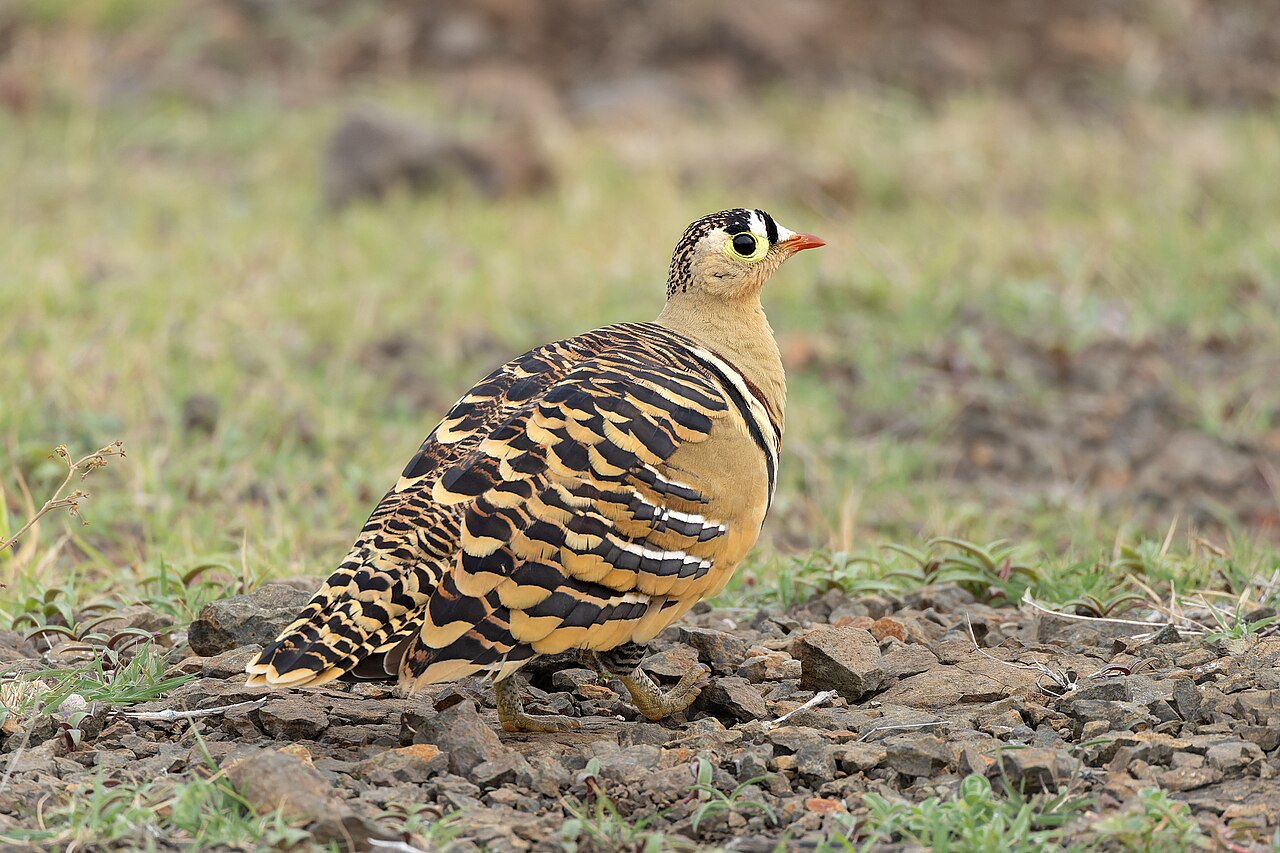
This family includes about 16 species of birds known as sandgrouse. These birds are specially adapted to live in hot, dry regions where water is scarce.
Sandgrouse are found across parts of Africa, the Middle East, southern Europe, and central and southern Asia. They are most common in hot, dry habitats.
They live in deserts, semi-deserts, dry grasslands, and scrublands. These environments have very little water and extreme temperatures, so sandgrouse are well adapted for survival there.
Sandgrouse are medium-small, pigeon-like birds with strong wings and compact bodies. They have short legs and well-camouflaged feathers that help them blend into deserts and dry grasslands.
Their coloring is usually sandy, brown, or gray, which helps them hide from predators. Males and females often look similar, although males may have slightly brighter patterns in some species.
In some species, males have special belly feathers that can absorb water. After visiting a watering hole, they carry this water back to their chicks, who drink directly from the feathers.
Sandgrouse are strong, fast fliers and often travel long distances each day between feeding areas and water sources. They usually live in flocks, sometimes gathering in large groups at watering holes. Their flight is quick and direct, which helps them move efficiently between food and water.
They mainly eat seeds, especially from dry plants. Some species also eat small leaves and insects when they are available. Their diet allows them to survive in places where food can be scarce.
Sandgrouse are usually monogamous during the breeding season, meaning one male pairs with one female. They nest on the ground in a simple scrape in the soil. The female typically lays 2–3 eggs, and both parents help incubate them. After hatching, the chicks are precocial and can move around and feed soon after birth.