

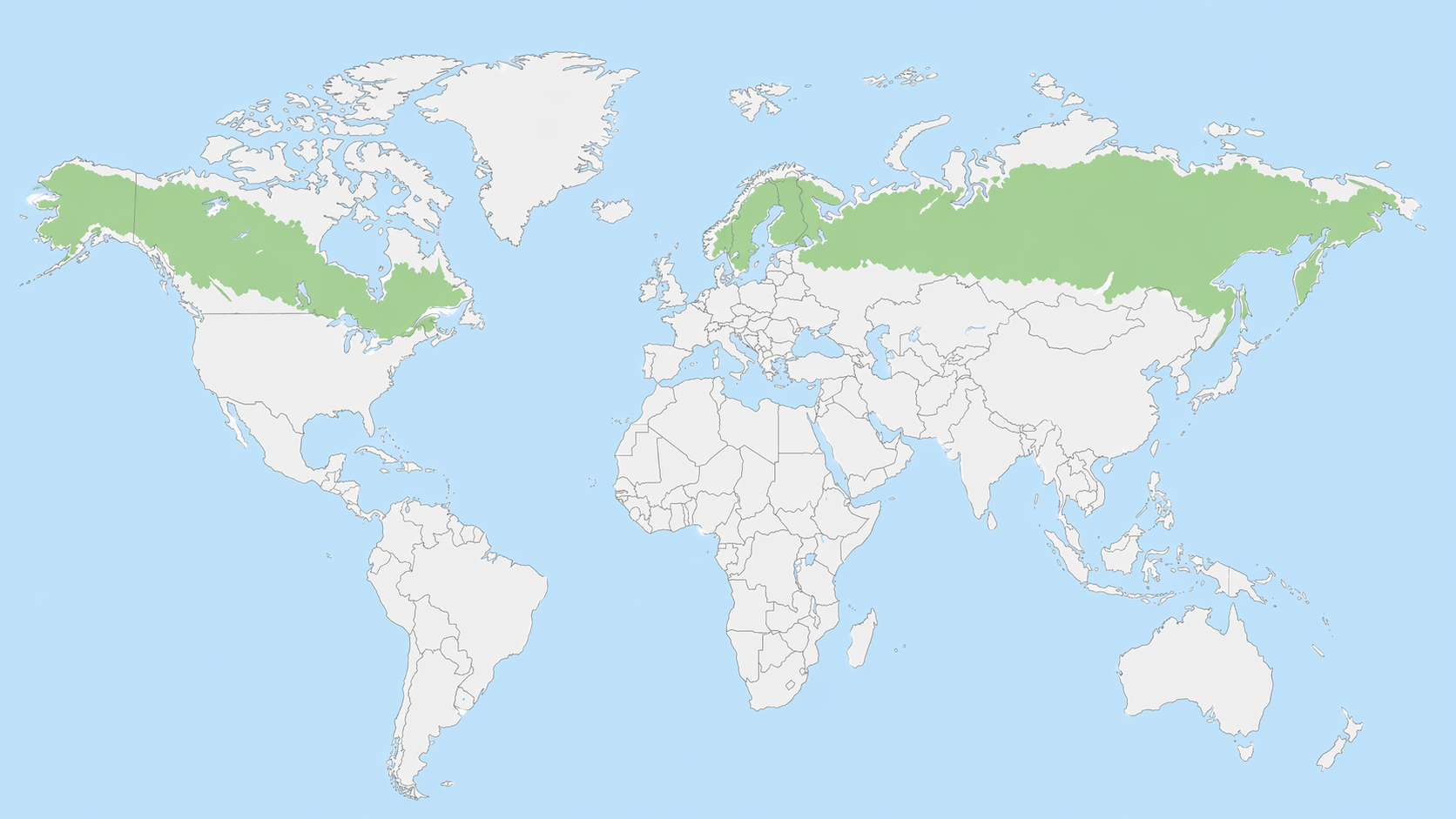
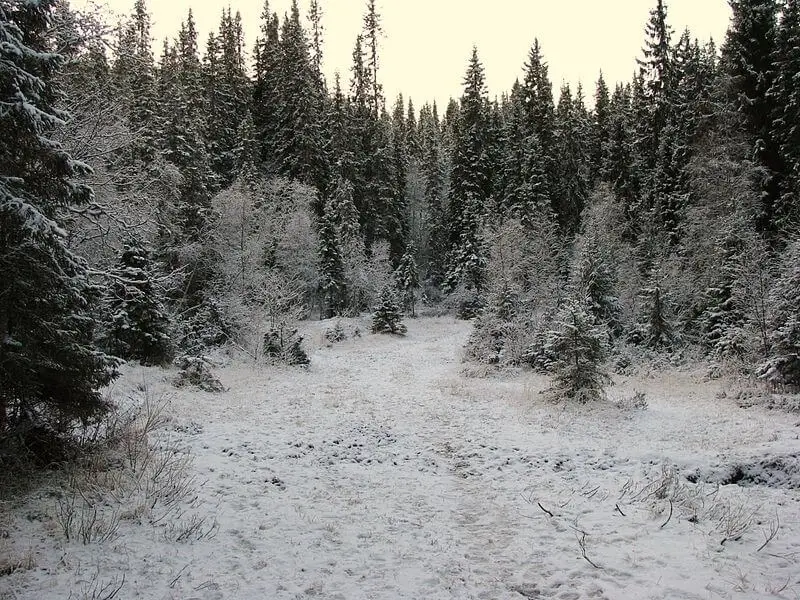
Coniferous trees like spruce, hemlock, pine and fir are commonly found in the taiga.
Coniferous trees such as spruce, hemlock, pine, and fir are commonly found in the taiga. Most are evergreen and specially adapted to survive cold temperatures and heavy snow. Their cone-shaped form helps snow slide off, preventing branches from breaking. Their needle-like leaves also lose less water than broad leaves, which helps them survive harsh conditions.
Some broad-leaved trees, such as birch, have adapted to the taiga. Birch trees are very flexible, allowing them to bend under the weight of ice and snow without breaking.
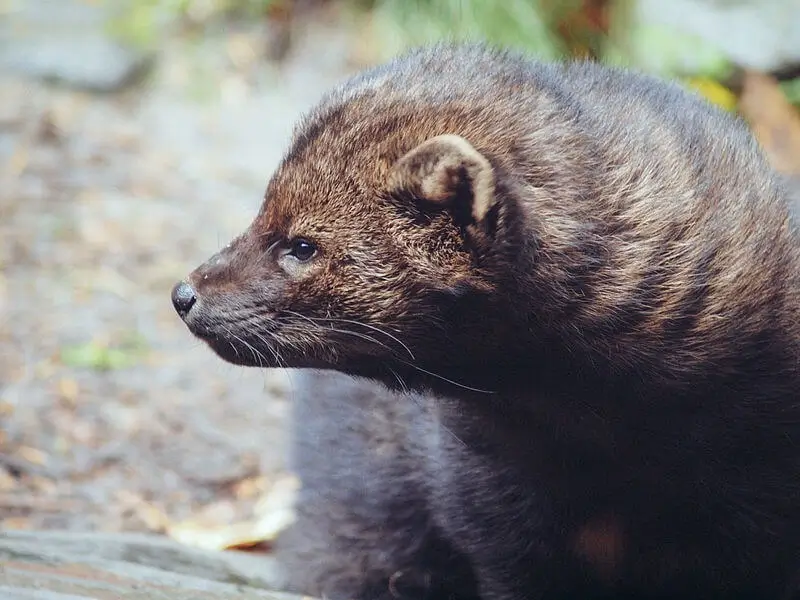
Mammals like pine marten, moose, bobcats, black bears, fishers, Canada lynx, and brown (grizzly) bears are found in the taiga.
Many animals make the taiga home. Many birds breed in the taiga in the spring and summer. As the snow melts in the spring, insects lay their eggs in the water. The insects attract a wide variety of bird species to the forest, like the spruce grouse and the pileated woodpecker. Mammals such as pine marten, moose, bobcats, black bears, fishers, Canada lynx, and brown bears are found in the taiga. These mammals all have thick coats that protect them from the cold.
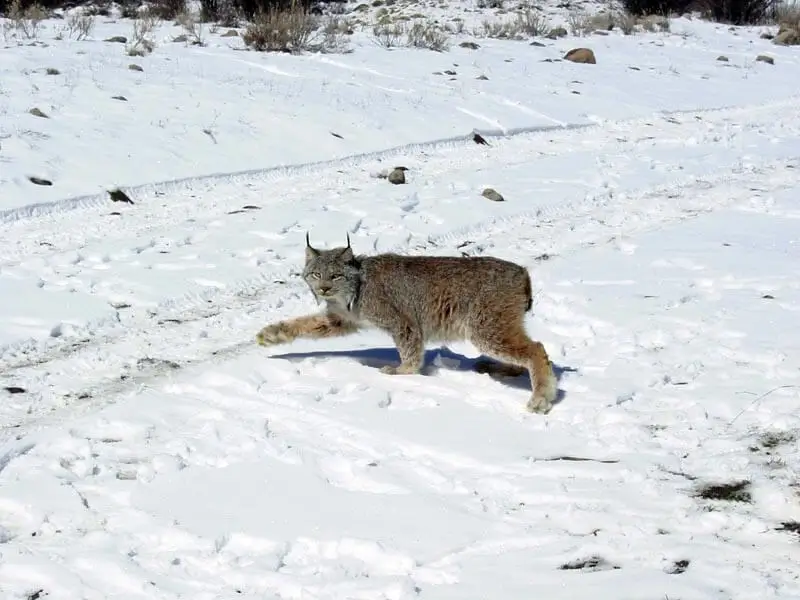
The Canada lynx's wide paws work like snowshoes.
Some animals have structural adaptations that help them survive in the taiga. The Canada lynx’s wide paws work like snowshoes. They distribute the lynx’s weight and help it move in the snow. Black bears avoid the coldest weather by going into their dens in the fall and hibernating until the early spring. They have a protective layer of fat that allows them to stay in their dens when the weather is cold.
