Bonaparte’s gull is a small gull. It is 11-15 inches (27.9-38.1 cm) in length with a wingspan of 30-31 inches (76.2-78.7 cm).
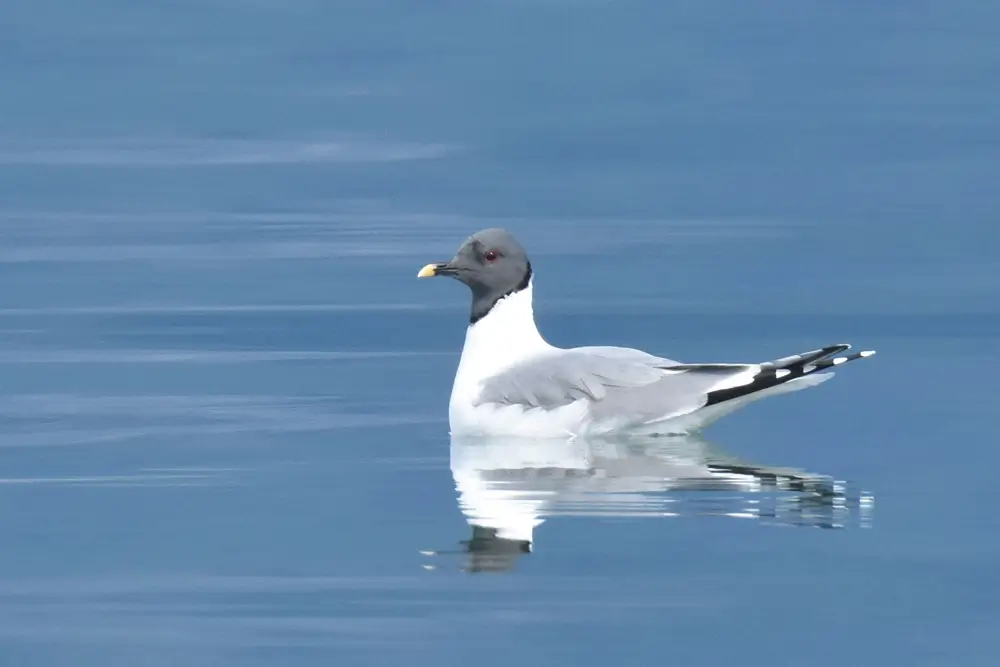
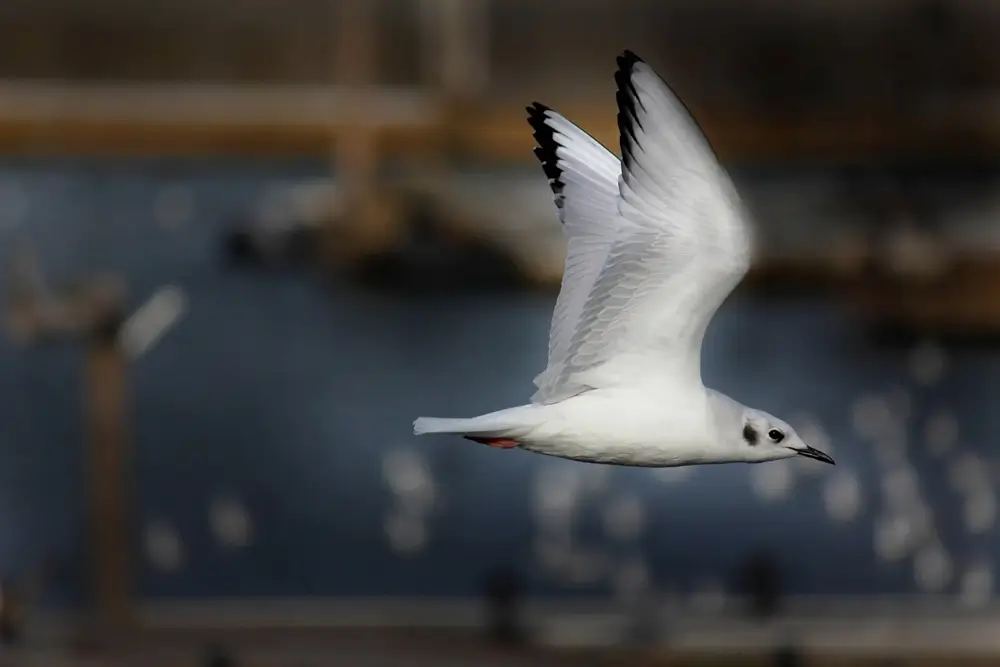
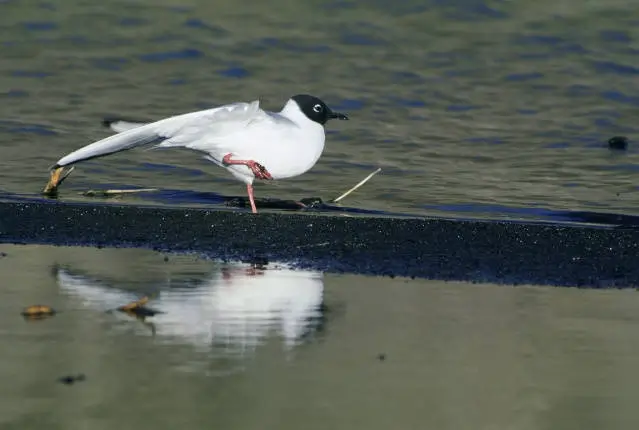
It has a white underside and breast, slate gray upper wings and back, and black tips on its wings. It has a black bill, reddish-orange legs and feet, and an orange lining on its mouth.
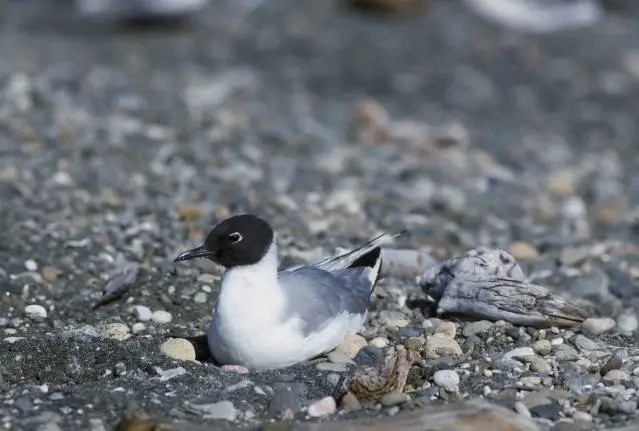
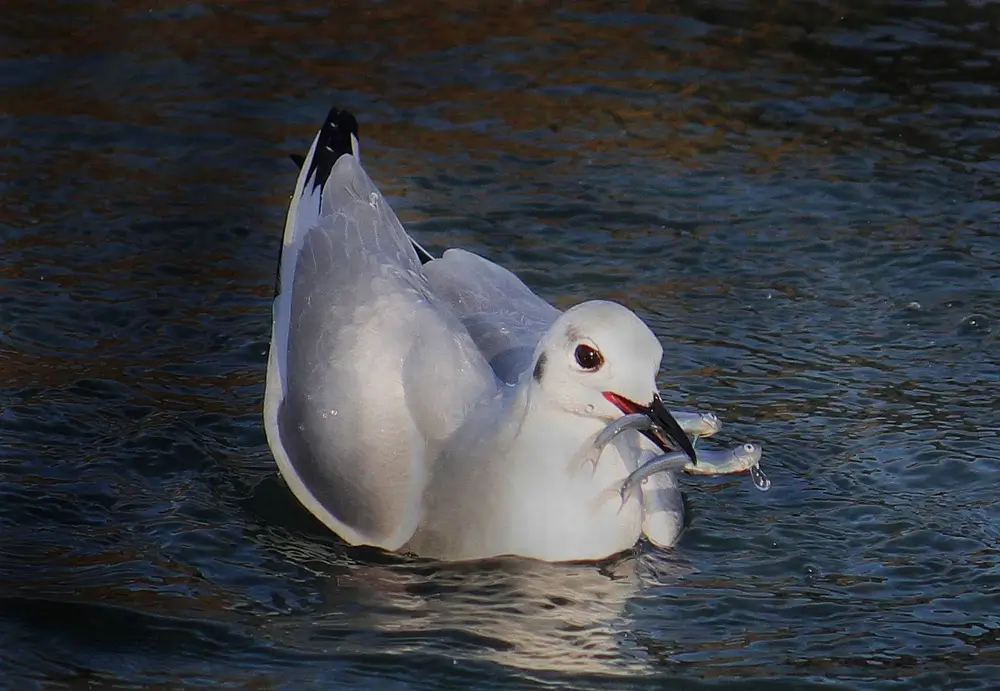
During the breeding season, it has a black face and head with white crescents above and below its eyes. In winter, its head and face are white.
In the winter, it is found along lakes, rivers, marshes, bays, estuaries, and shores.
Diet
Bonaparte’s gull feeds on small fish, crustaceans, snails, and marine worms. It typically picks food from the water’s surface but will also dive to catch prey below the water’s surface.
During the breeding season, it eats insects that it catches in the air or plucks from vegetation on the ground or from the water’s surface.
When feeding on insects, the Bonaparte’s gull performs aerial acrobatics, flying low over the water or through wooded areas to catch insects in flight.
For feeding on small fish and other aquatic prey, they may hover over the water, plunge-dive from the air, or swim and dive from the water’s surface.
Bonaparte’s gulls don’t scavenge for food or feed at garbage dumps like many other gull species.
Life Cycle
Bonaparte’s gull nests in small colonies on islands or lakeshores. The nest is cup-shaped and made with twigs, small branches, and bark. It is lined with lichen, grass, and moss and placed in a conifer tree. The nest is usually 4-15 feet (1.2-4.6 m) off the ground. Bonaparte’s gull may build their nest on the ground.
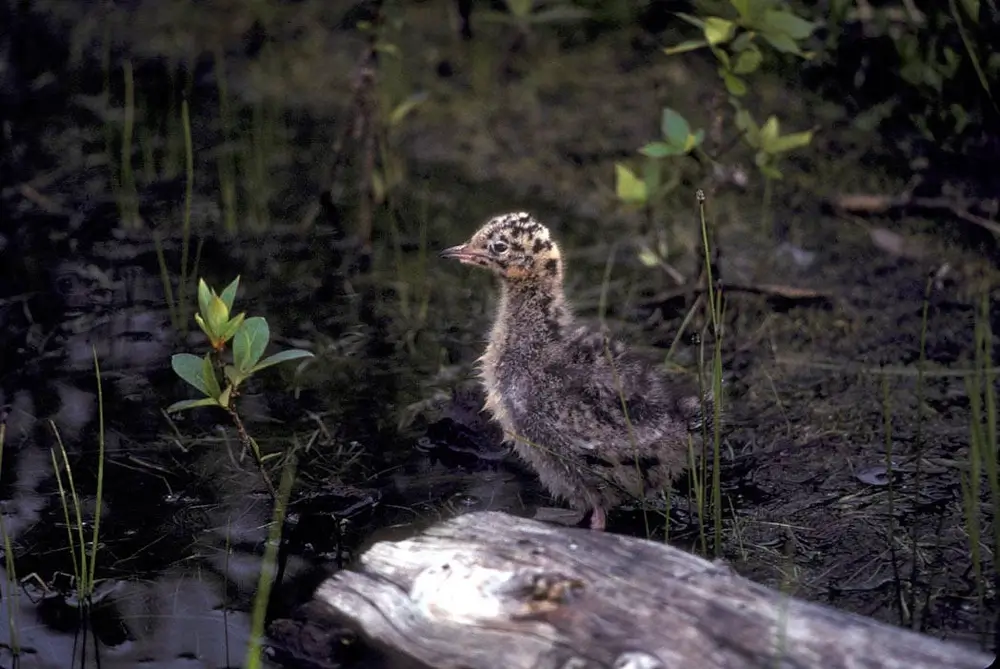
The female lays 1-4 spotted green eggs, and both the male and female incubate the eggs for about 24 days. Both parents care for and feed the chicks. Bonaparte’s gull mates at two years old.
Bonaparte’s gull has a lifespan of up to 18 years in the wild.
Behavior
Bonaparte’s gull is the only gull that nests in trees. They choose tall trees, like conifer (evergreen) trees, and build their nests on sturdy branches. This helps protect their eggs and chicks from predators.
Did You Know?
Bonaparte’s gull is named after the French emperor Napoleon Bonaparte’s nephew, Charles Lucien Bonaparte, a famous ornithologist (person who studies birds) in the 1800s.
Support for NatureWorks is provided by:
The Bonaparte's Gull in NH
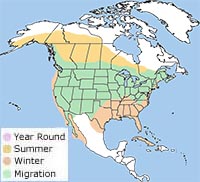
Bonaparte’s gull does not breed in New Hampshire, but it can be seen along the coast during its spring and fall migrations.
It can occasionally be found in the state in the winter.
It is the smallest gull species found in the state.