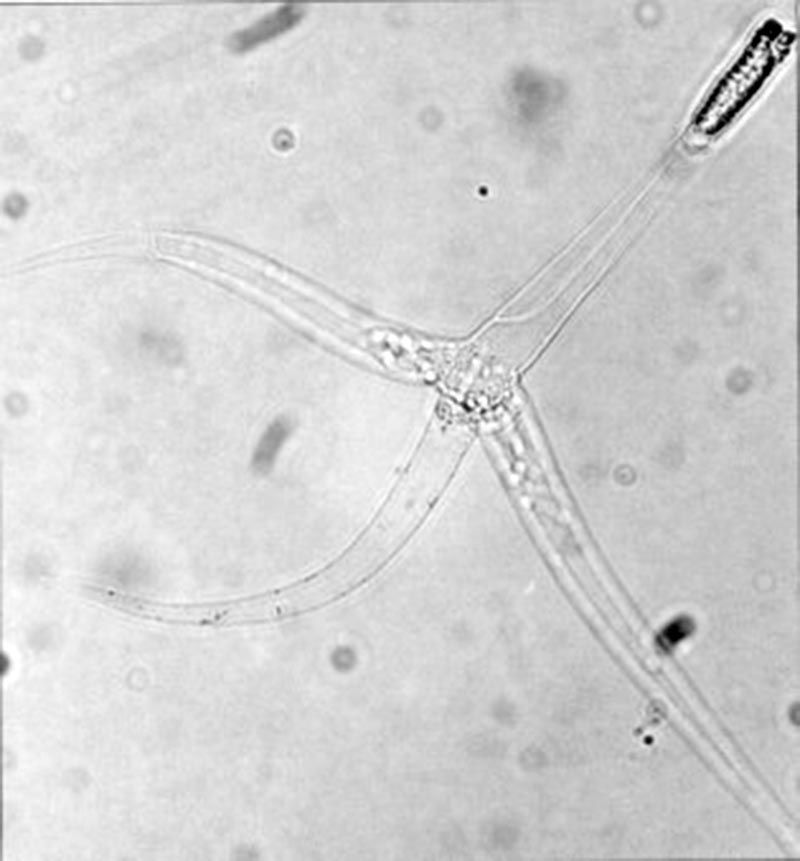
Endocnidozoans are a group of extremely small, simple animals related to jellyfish and corals. Unlike their free-living relatives, they live inside other animals as parasites, meaning they depend on a host to survive.
Scientists have identified over 2,000 species of endocnidozoans, and new ones are still being discovered.
They are found in both saltwater and freshwater environments because they live wherever their hosts live. These hosts include fish, worms, and other aquatic animals. Instead of floating freely in the water like jellyfish, endocnidozoans spend most or all of their lives inside their hosts.
Their bodies are very tiny, and many species can only be seen with a microscope. They are very simple in structure—some are made up of only a few cells. Unlike jellyfish, they do not have tentacles. Instead, they have specialized structures similar to stinging cells that help them attach to and infect their hosts.
Endocnidozoans do not hunt or eat food in the usual way. Instead, they absorb nutrients directly from their host’s body.
Because they live inside other animals, they have few natural predators. However, they can die if their host dies or if the host’s immune system attacks and destroys them.
Even though they are very simple today, scientists believe endocnidozoans evolved from more complex ancestors related to jellyfish and corals.
They often have complex life cycles that may involve more than one host. Some species can cause diseases in fish and impact natural ecosystems and fish farms.
Myxobolus cerebralis is a tiny parasite found in this group. It lives in freshwater and infects fish like trout and salmon.
When fish become infected, they can get a disease called whirling disease, which affects their body and nervous systems. Sick fish may swim in circles, have trouble staying balanced, and grow with deformed heads or spines.
Young fish are most at risk. Many infected juveniles do not survive, which can lower fish populations in rivers and streams. This can also affect people who depend on healthy fish populations for fishing and the ecosystem.