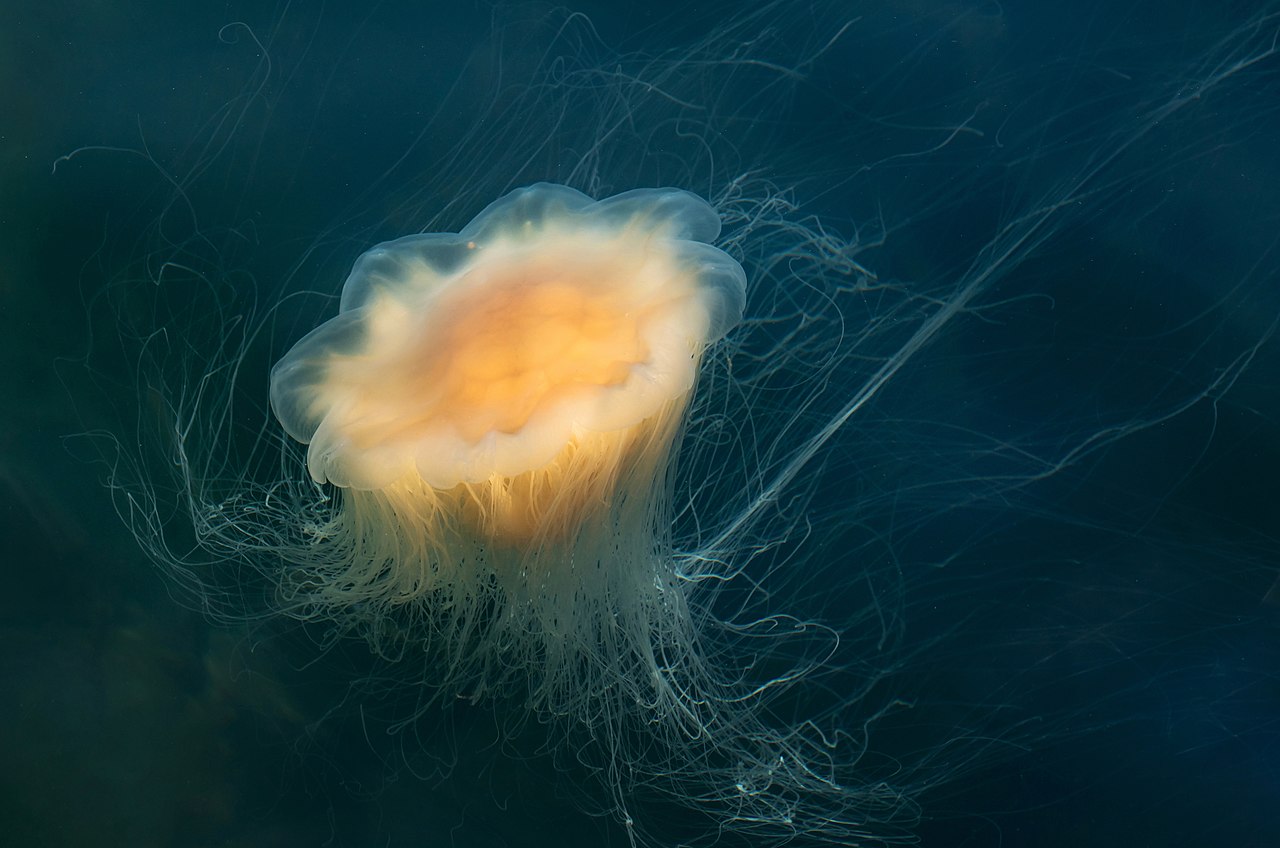
Scientists have identified about 4,000 species of jellyfish, though new ones are still being discovered. Jellyfish are related to corals and sea anemones, but unlike those animals, many jellyfish spend part of their lives drifting or swimming in the ocean. They have existed for more than 500 million years, long before dinosaurs lived on Earth.
Jellyfish are found in all the world’s oceans, from shallow coastal waters to the deep sea. A few species can even live in freshwater lakes and rivers.
A jellyfish has a soft, bell-shaped body with tentacles hanging down. These tentacles are covered in tiny stinging organelles called nematocysts, which help them catch food and protect themselves. Jellyfish have a simple mouth in the center of their body, but they do not have a brain, heart, or bones. Some jellyfish stings are harmless, while others can be very dangerous to humans.
Most jellyfish have a life cycle with two stages. In the polyp stage, they are attached to a surface. In the medusa stage, they become free-swimming and float through the water.
Jellyfish are carnivores, which means they eat other animals. Their diet includes small fish, plankton, and tiny crustaceans. They use their stinging tentacles to capture and paralyze their prey before eating it.
Even though jellyfish can sting, they are an important part of the ocean food web. They are eaten by animals such as sea turtles, fish, seabirds, and even other jellyfish.