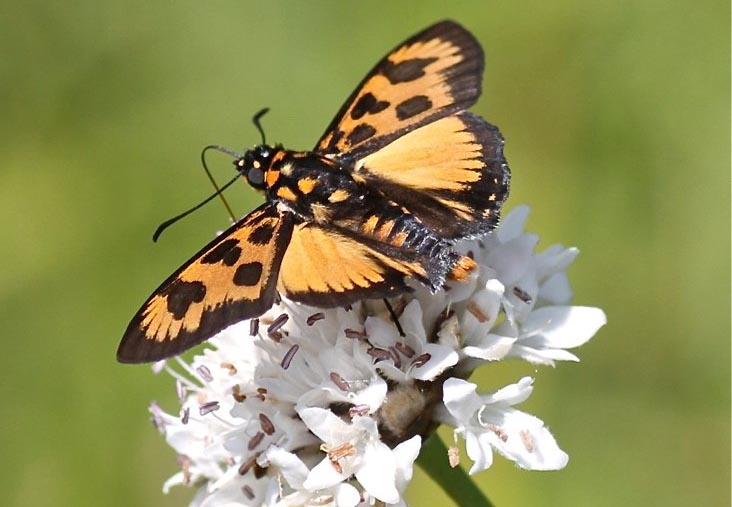
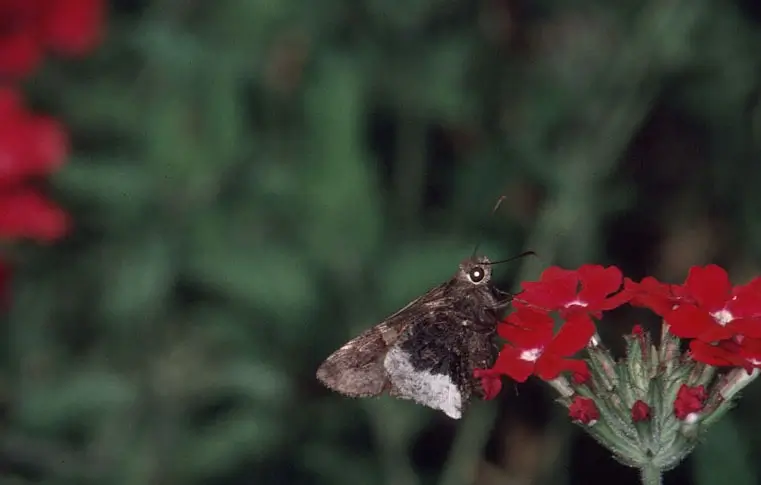
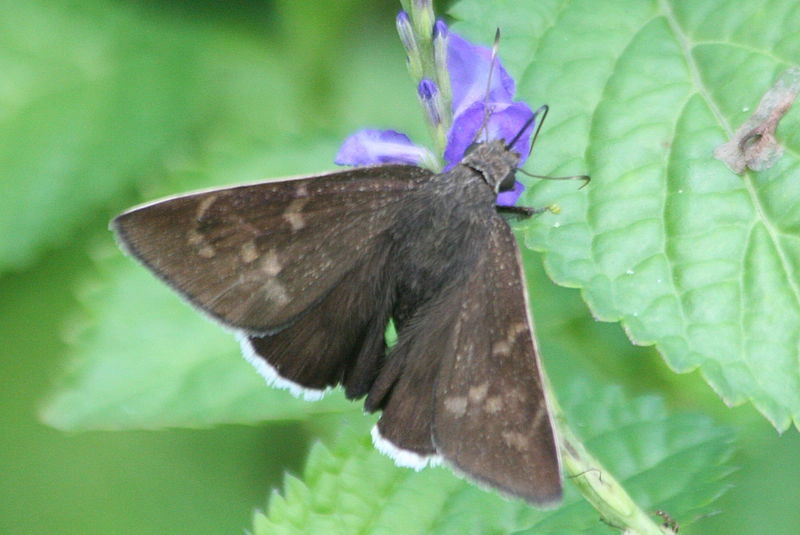
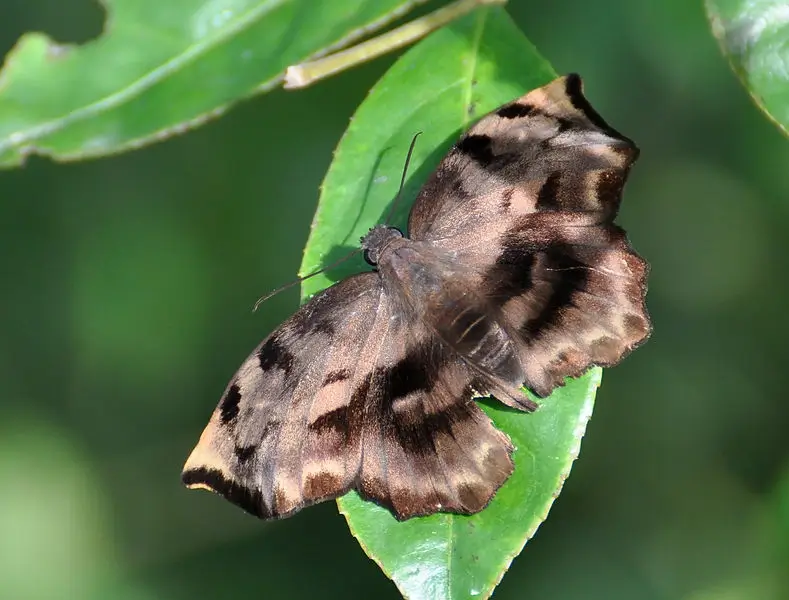
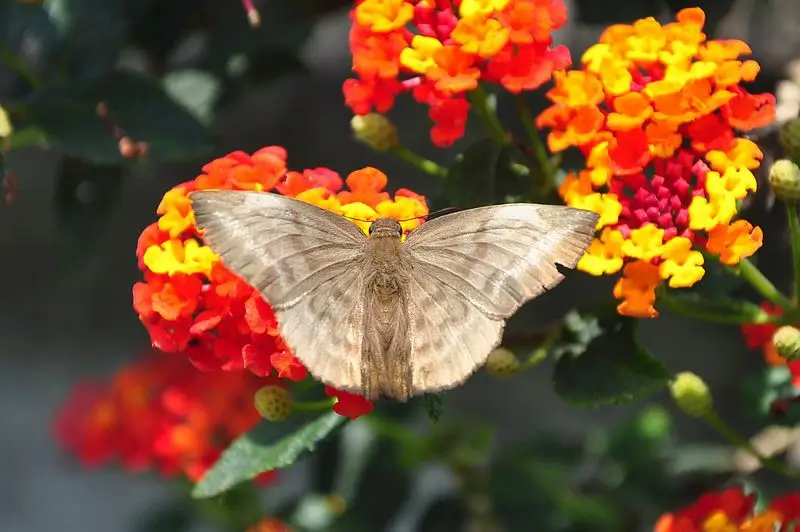
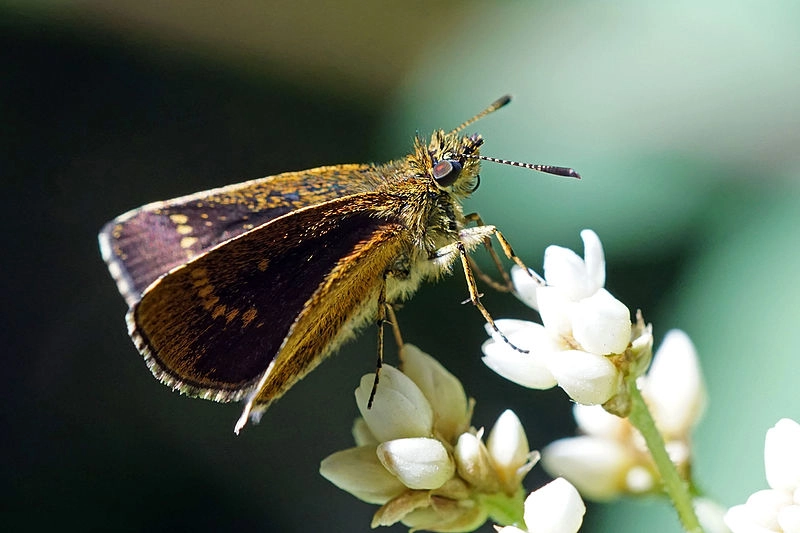
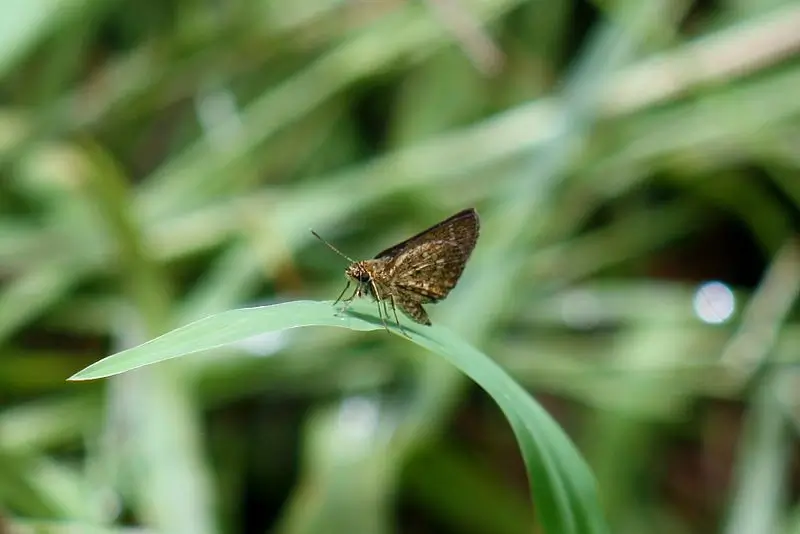
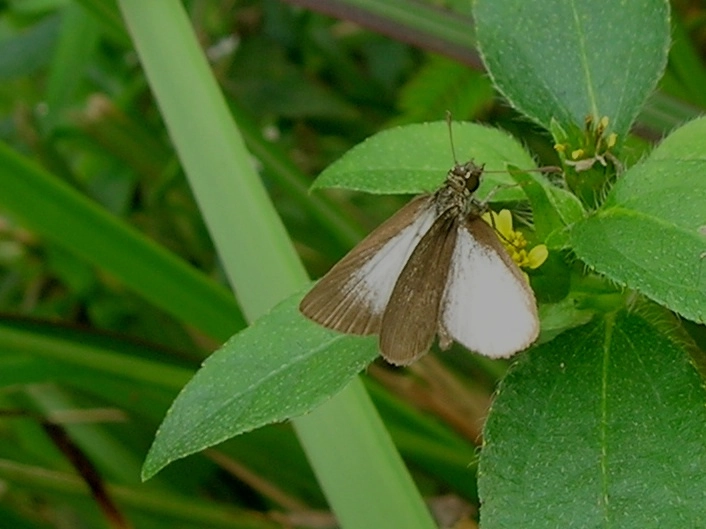
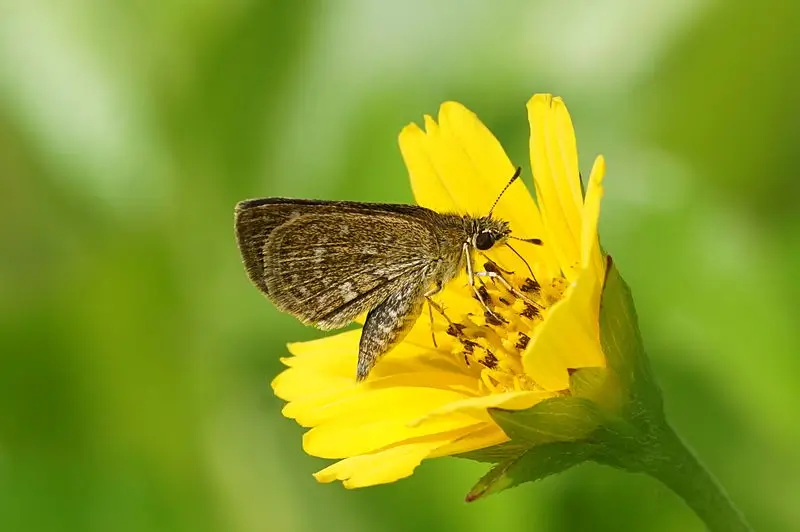
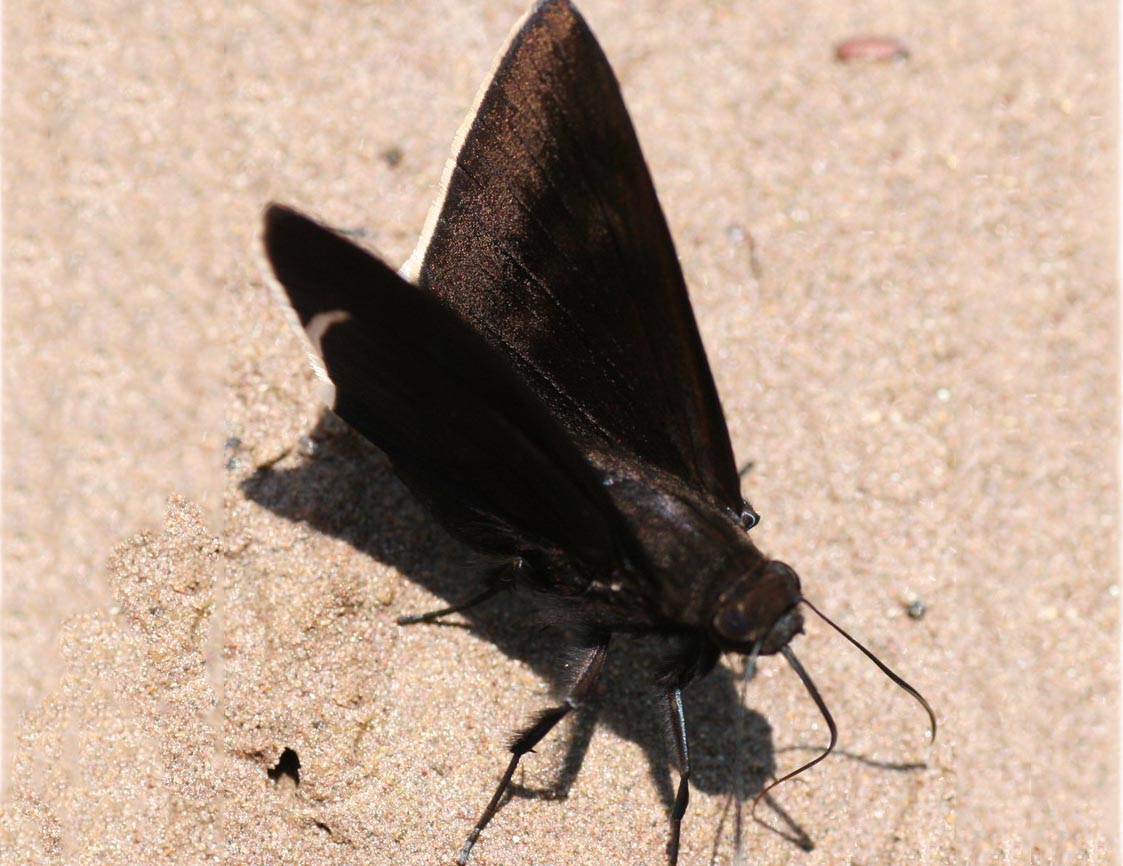
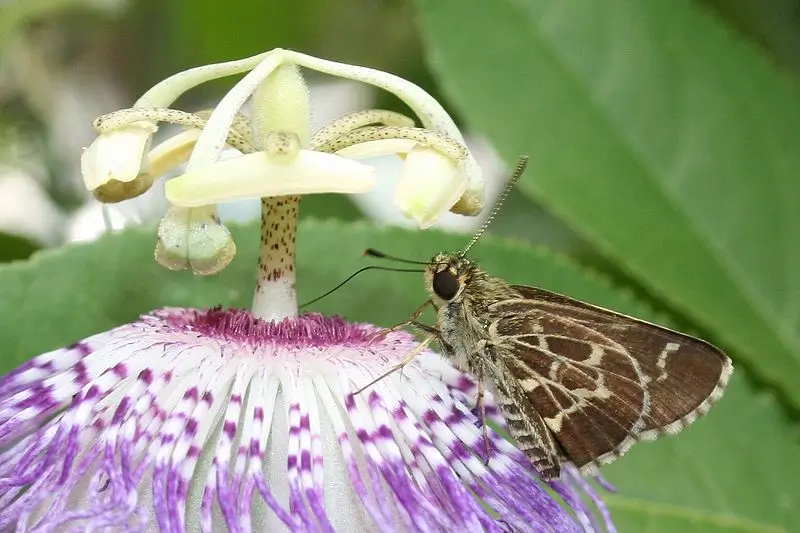
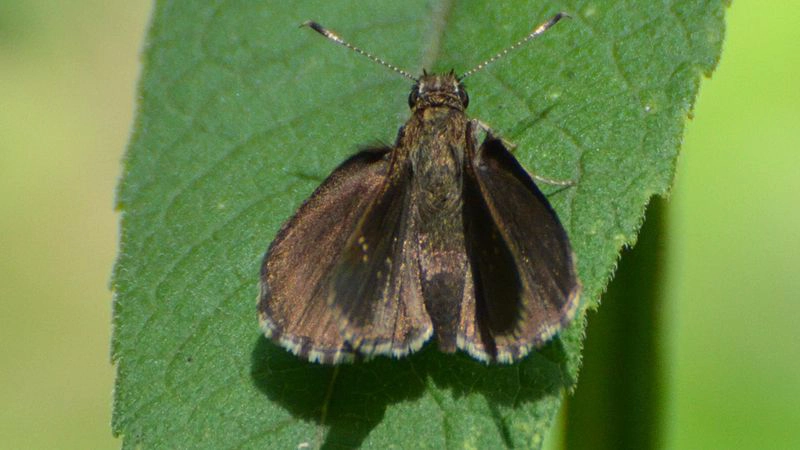
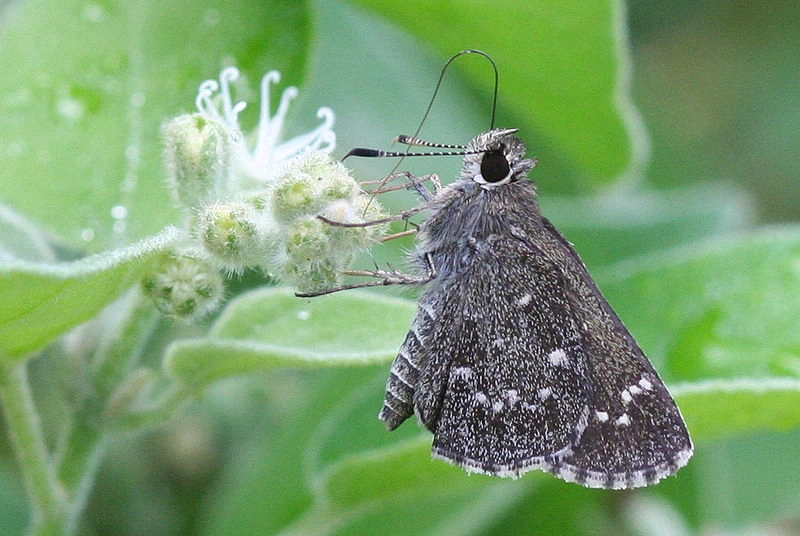
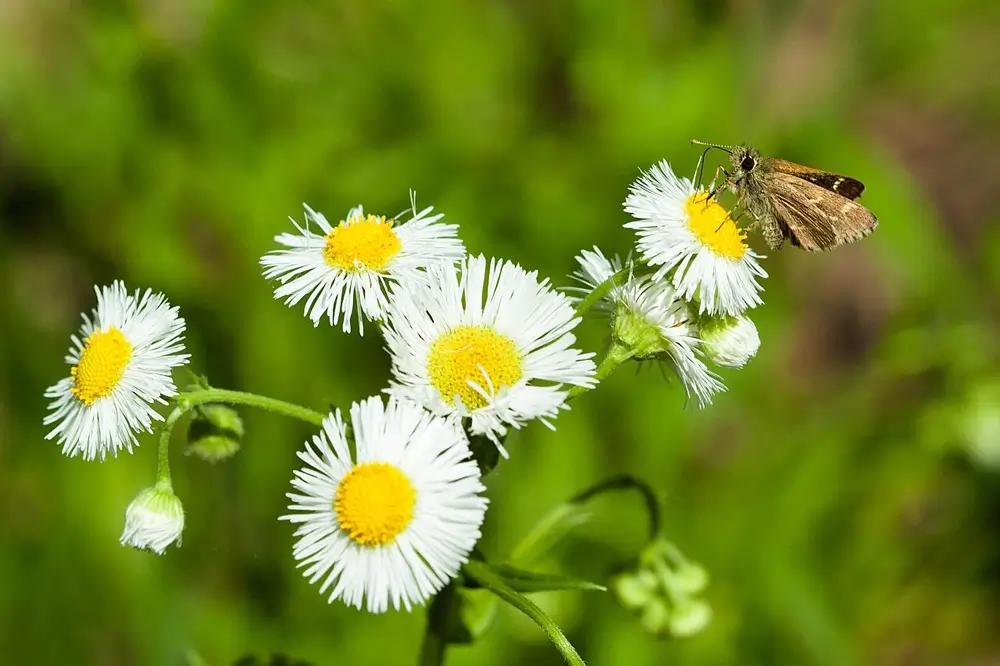
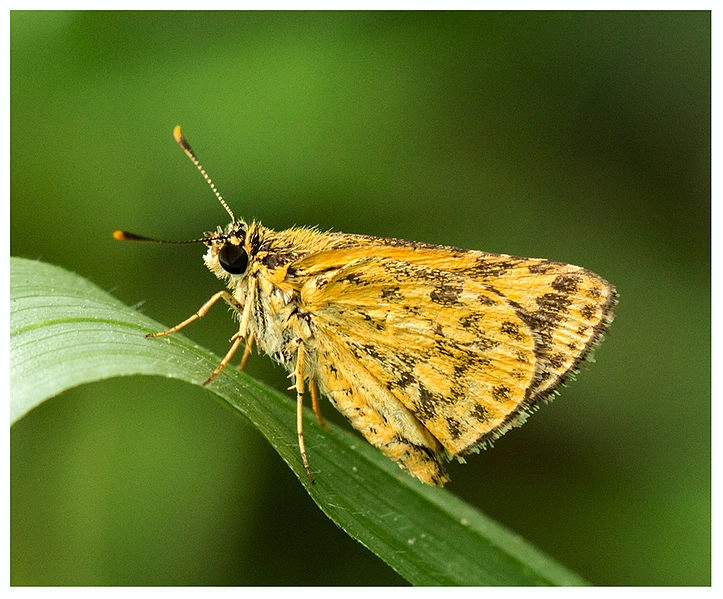
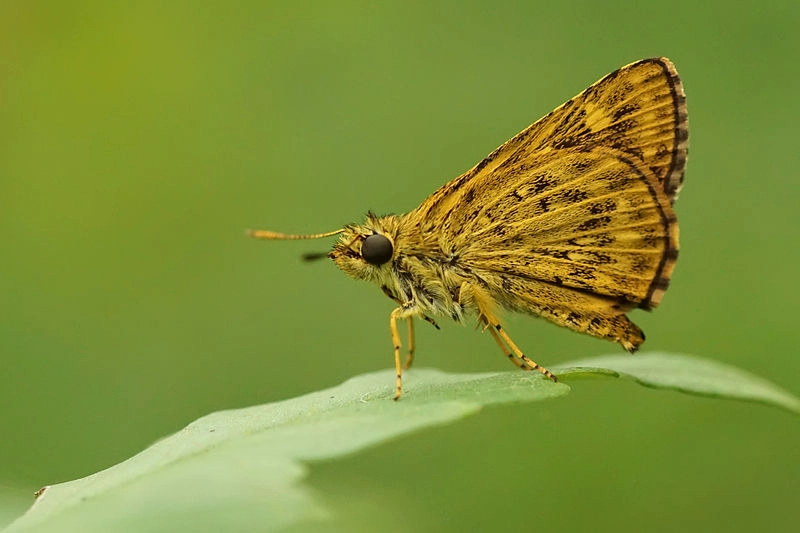
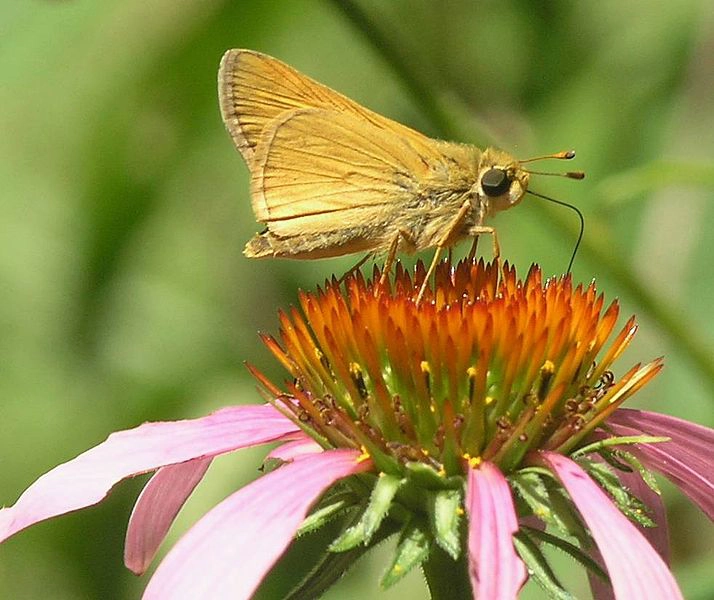
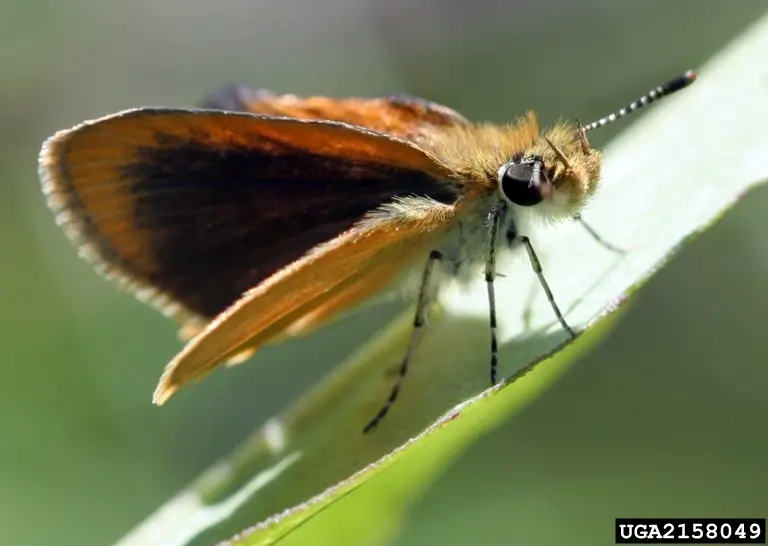
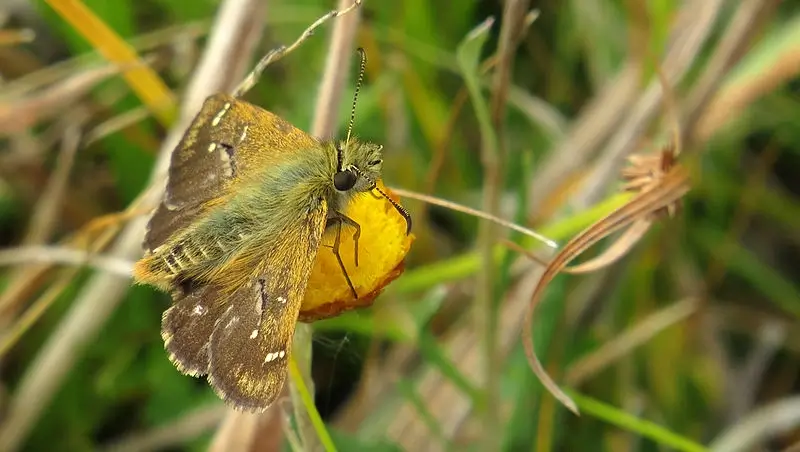
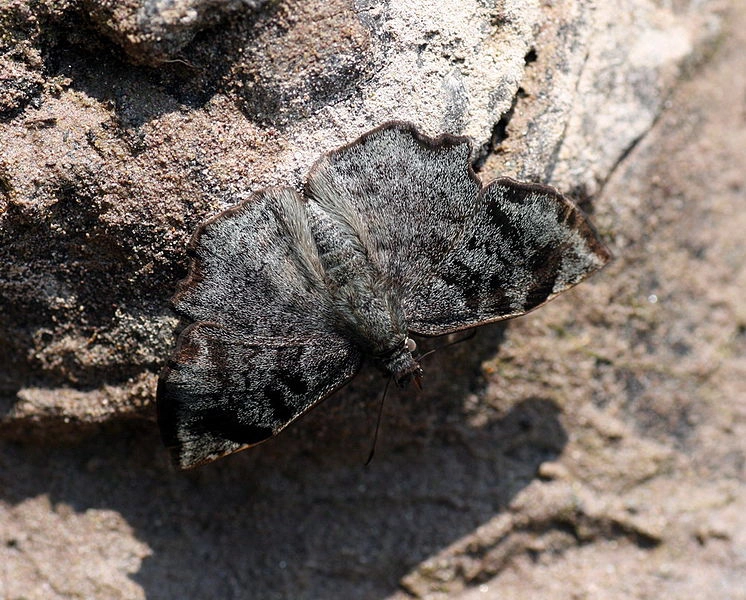
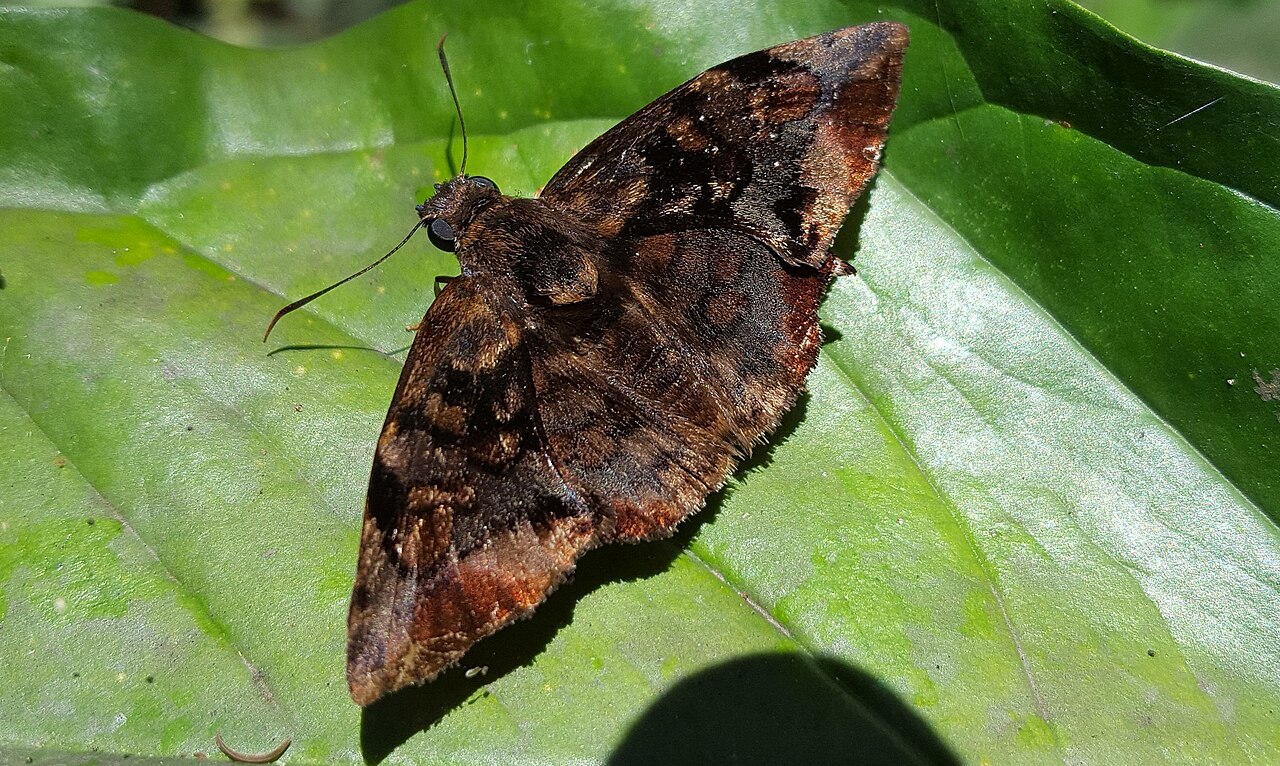
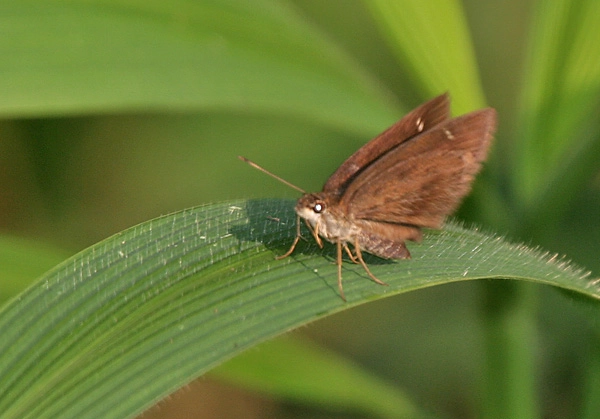
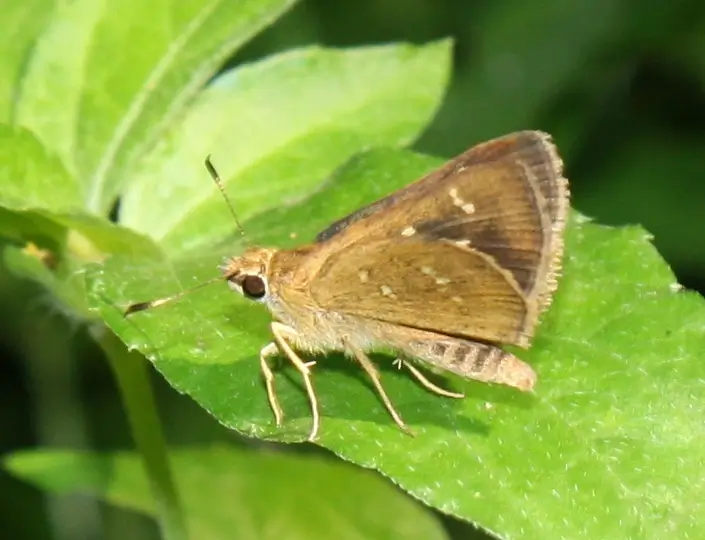
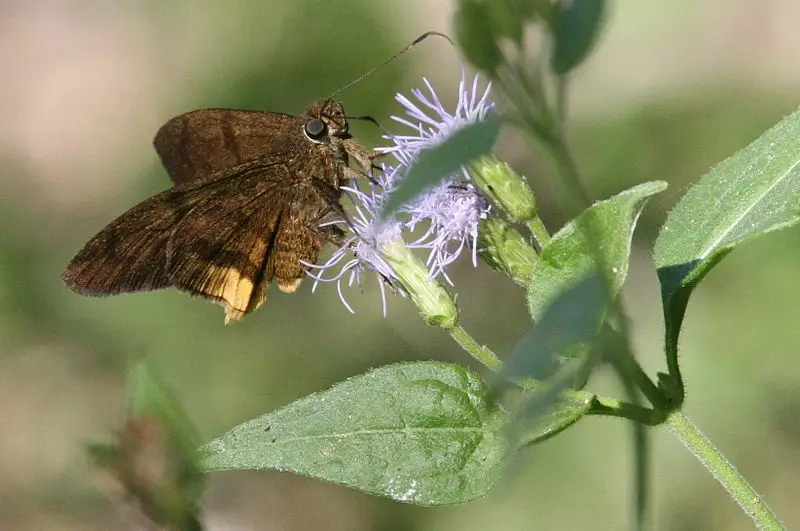
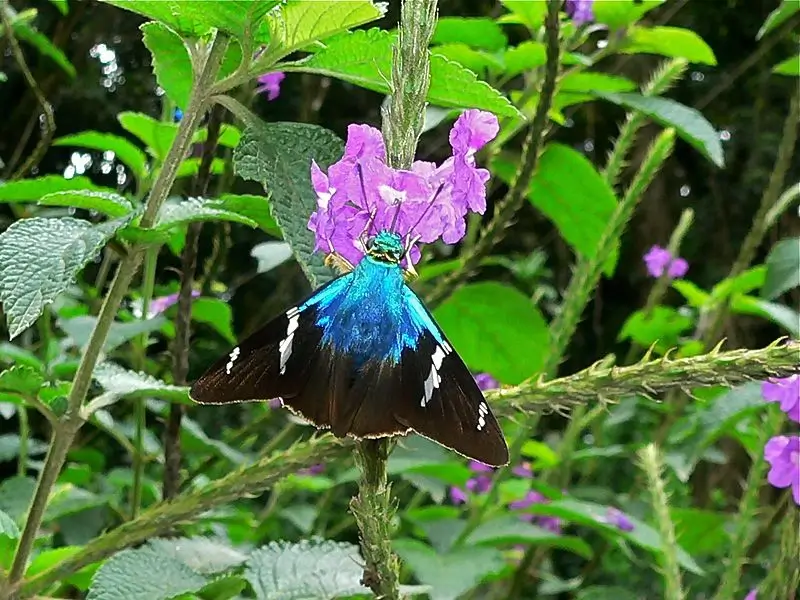
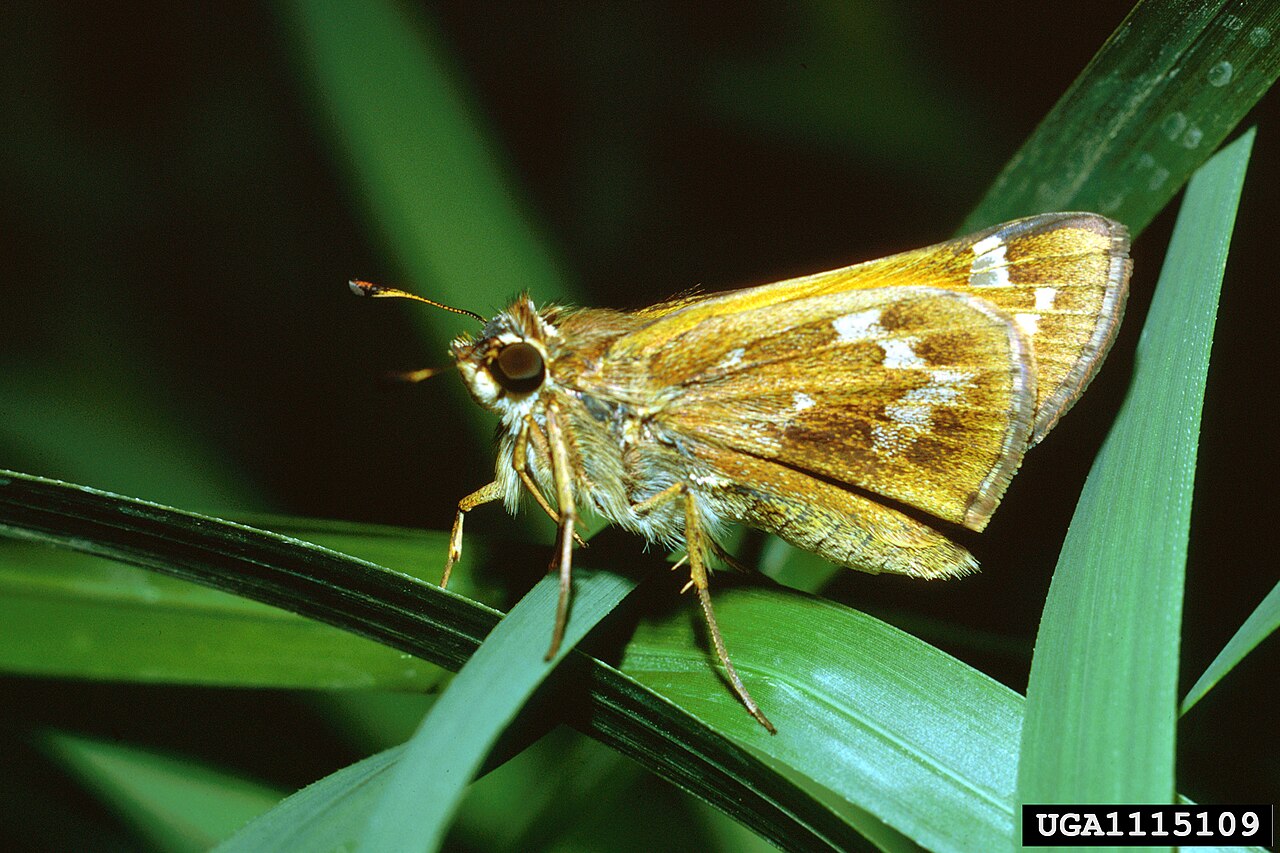
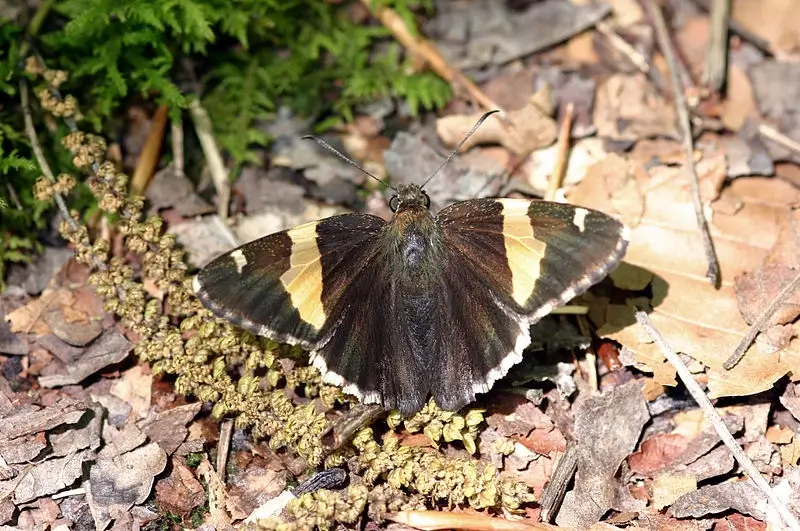
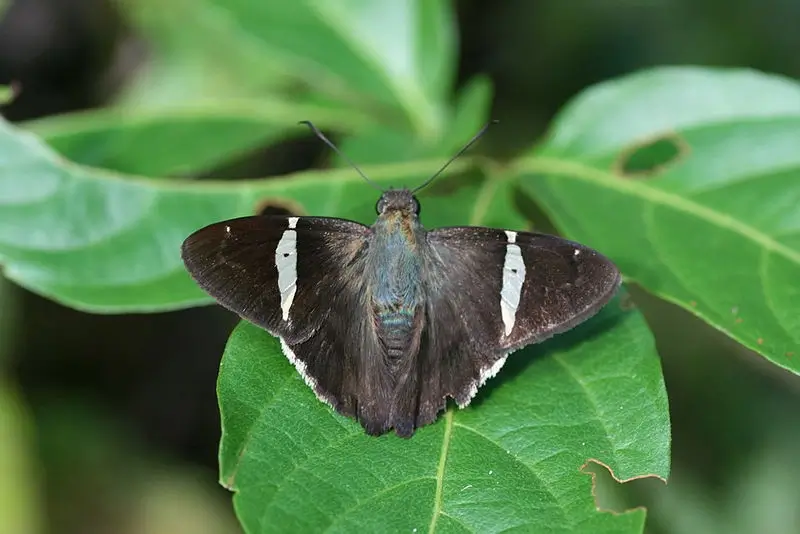
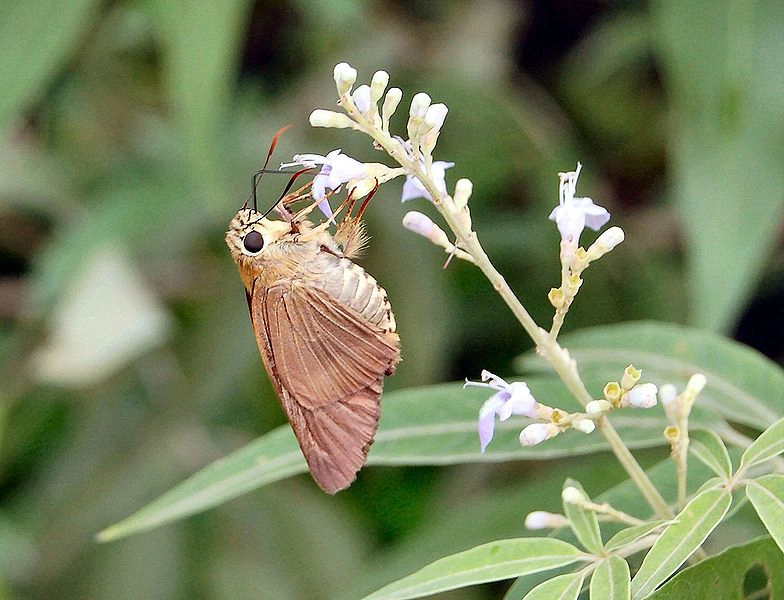
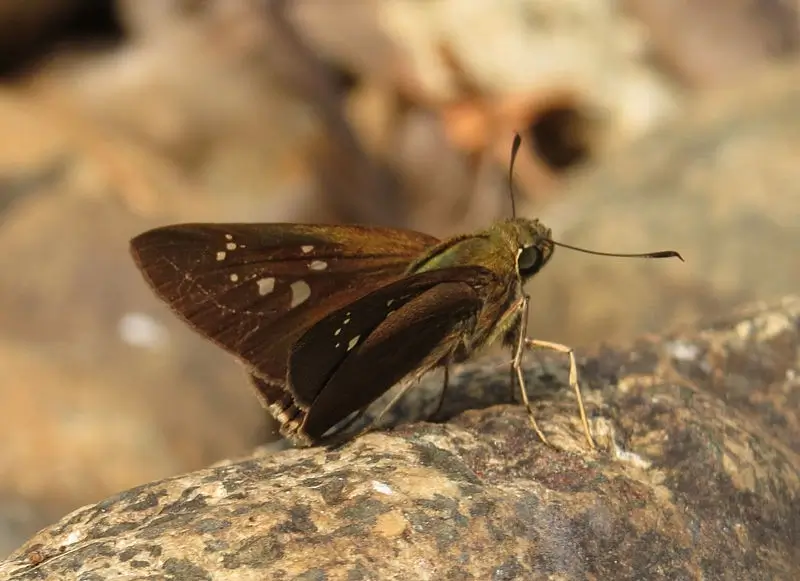
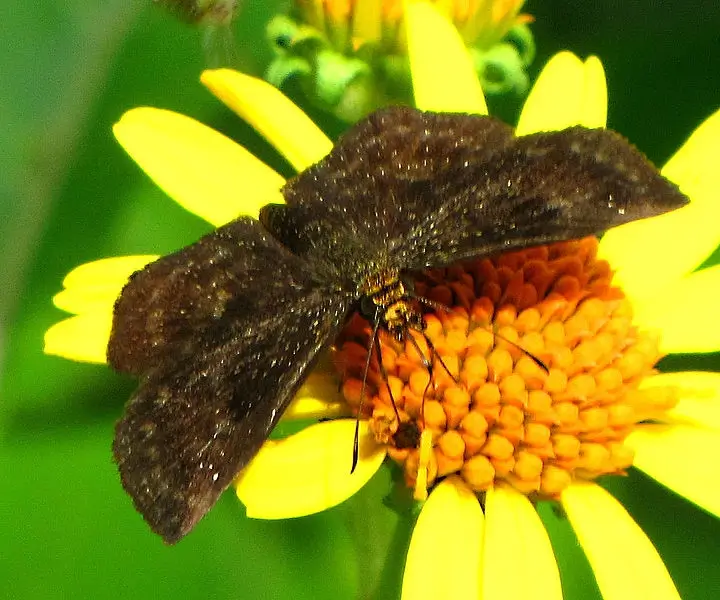
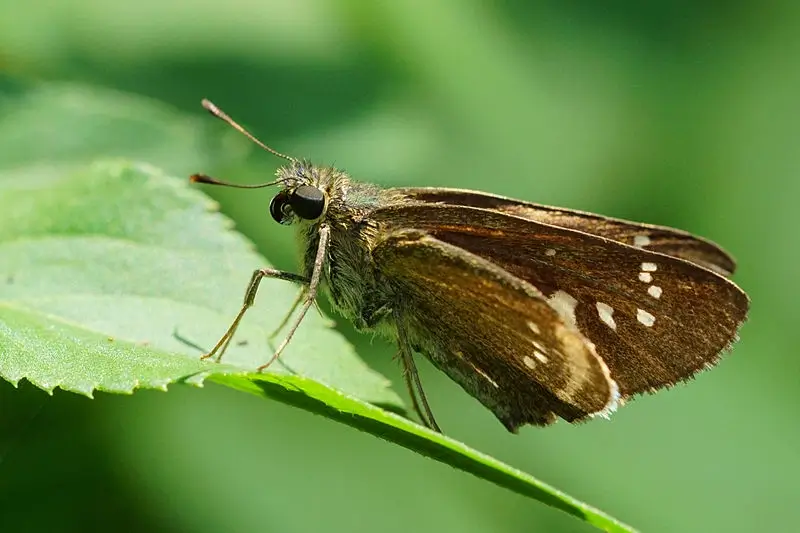
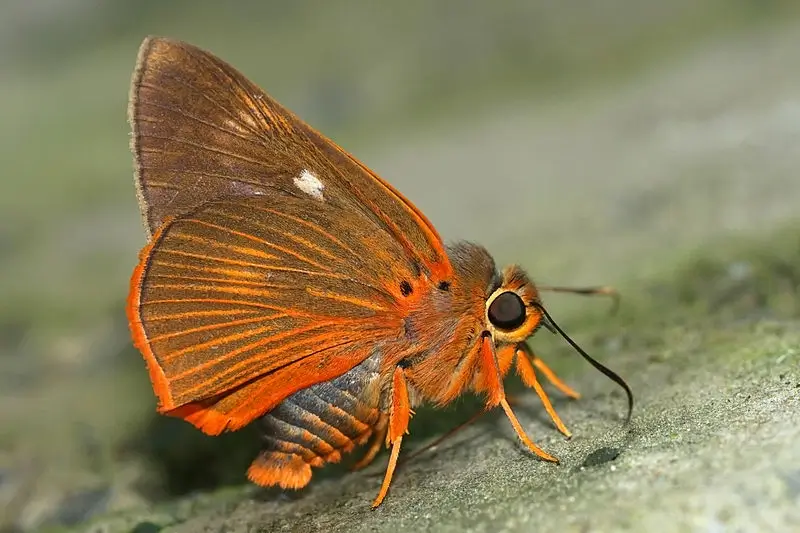
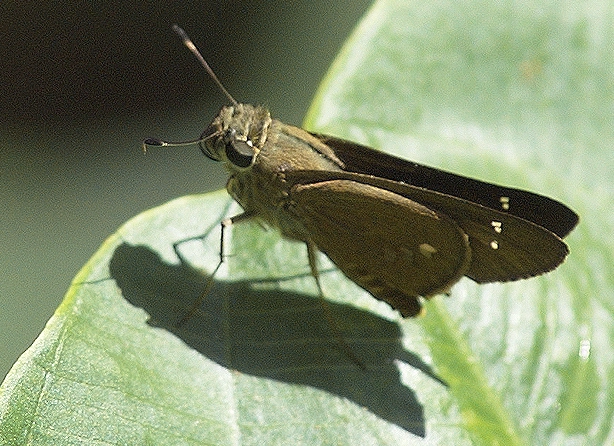
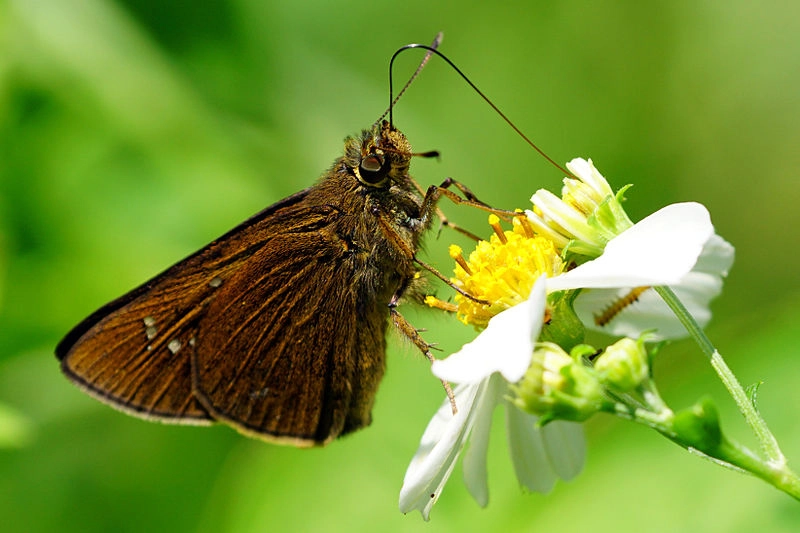
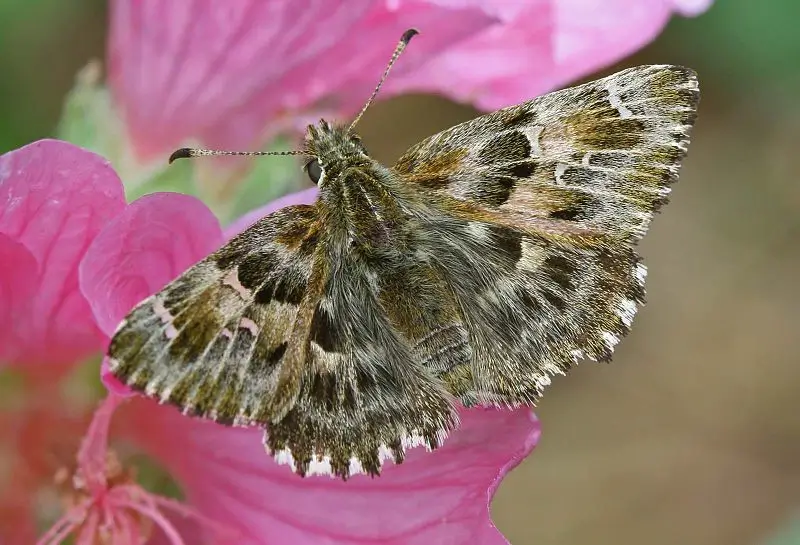
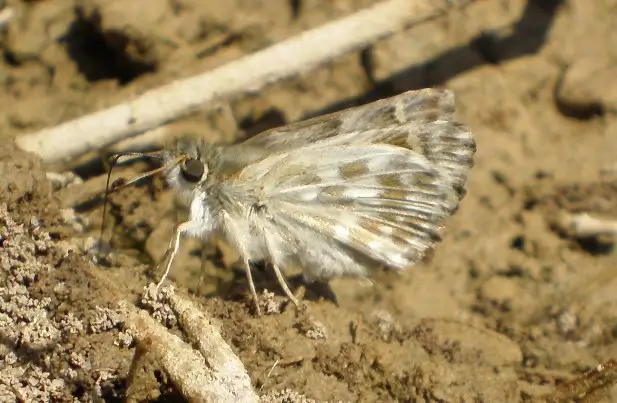
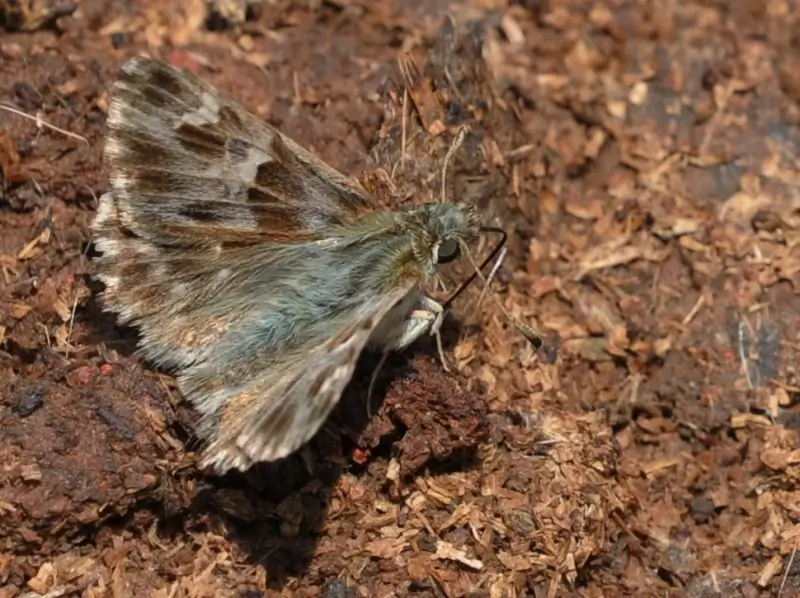
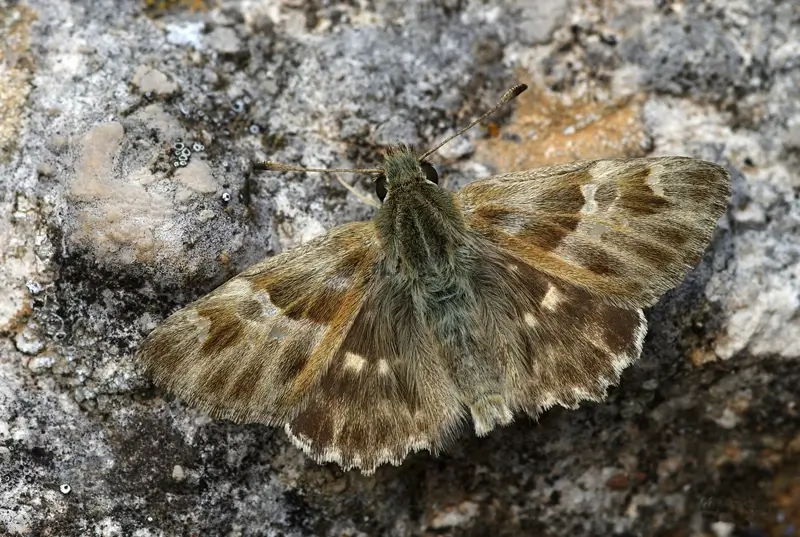
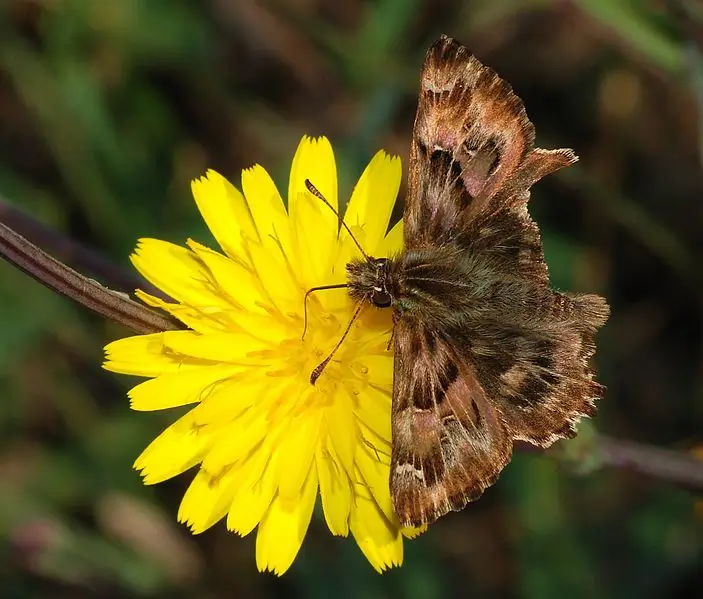
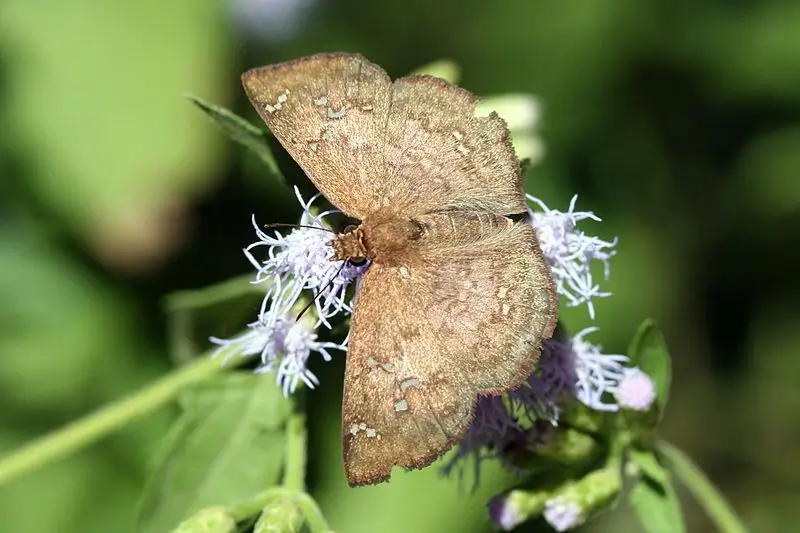
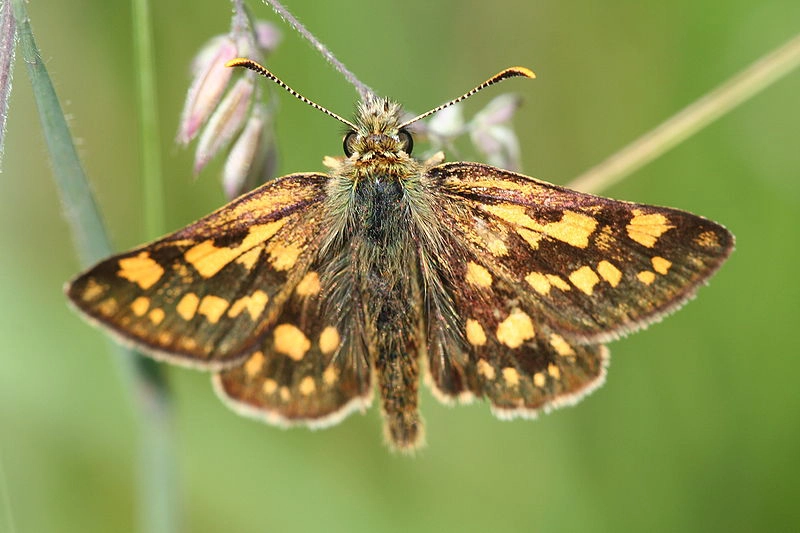
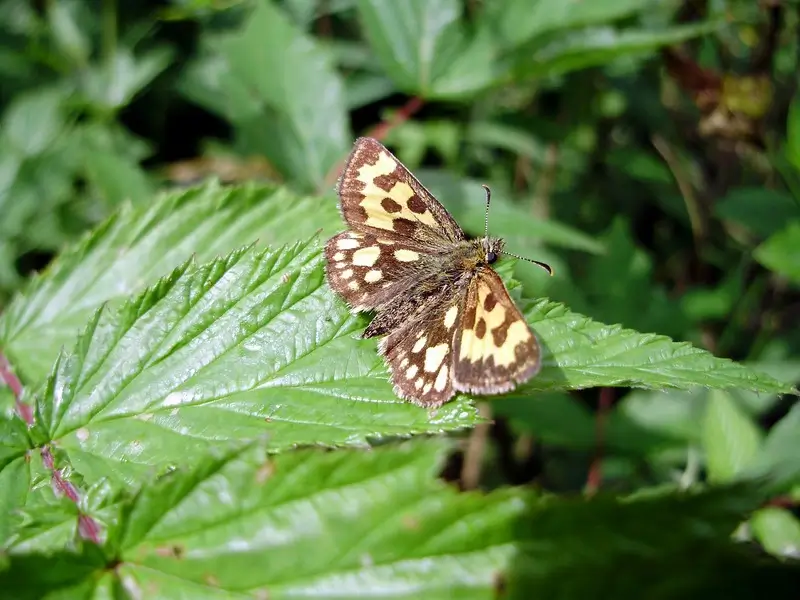
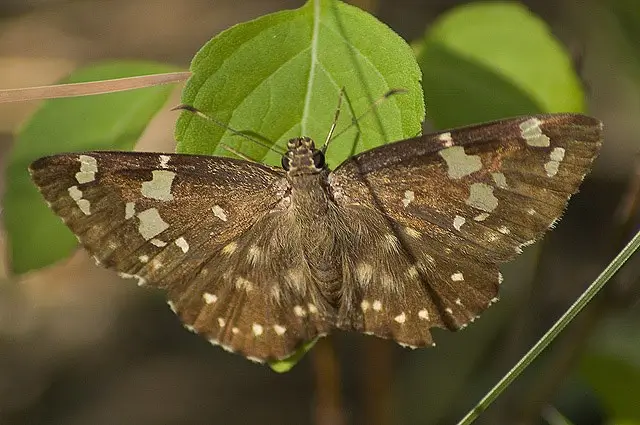
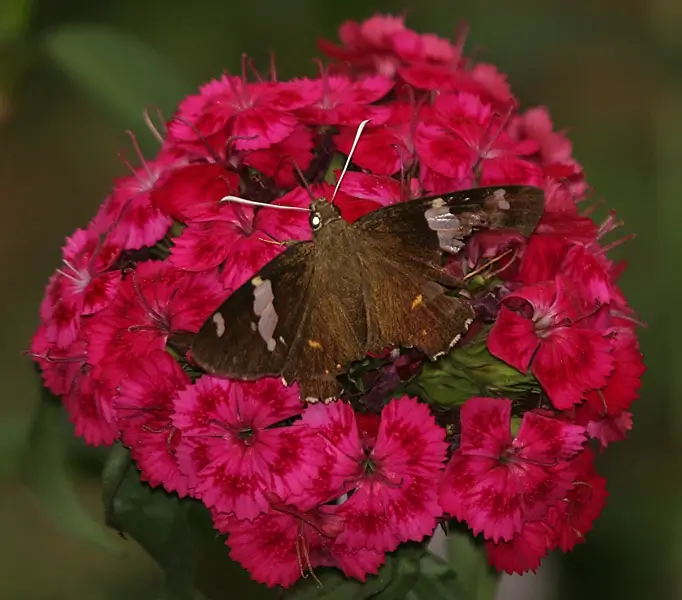
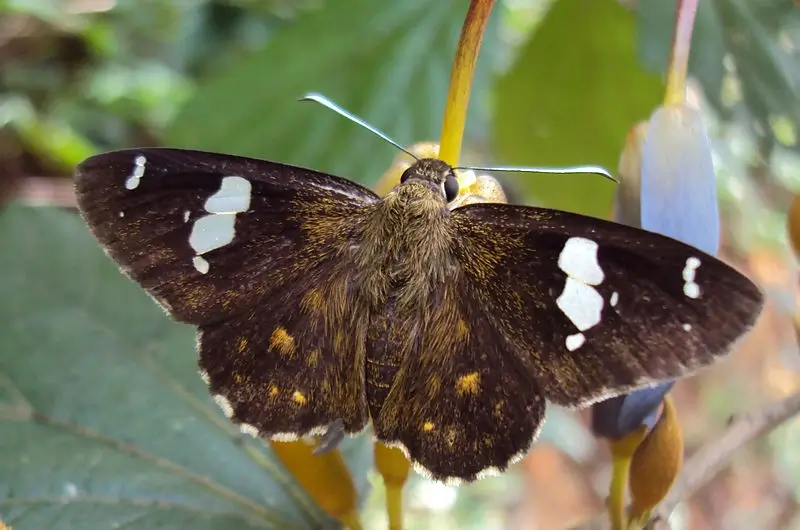
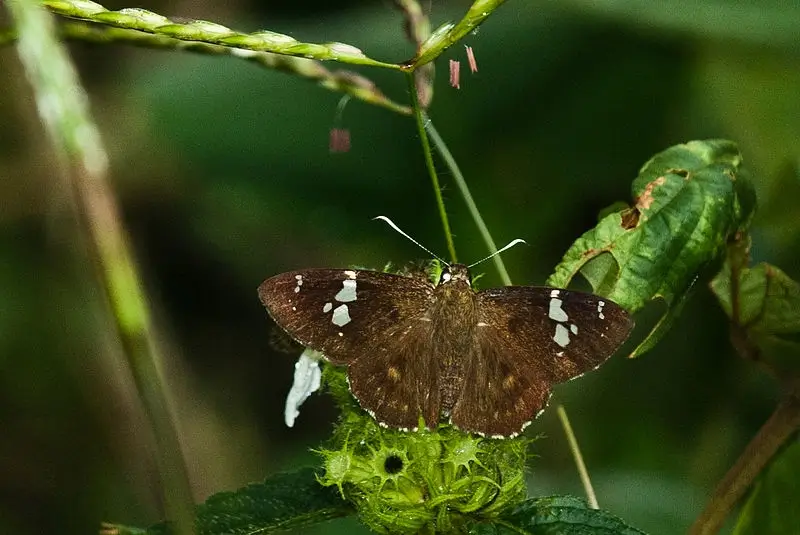
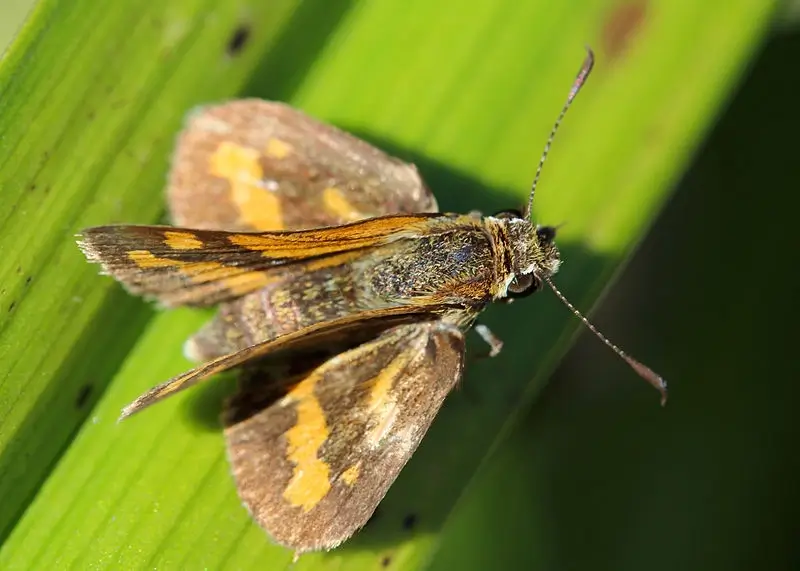
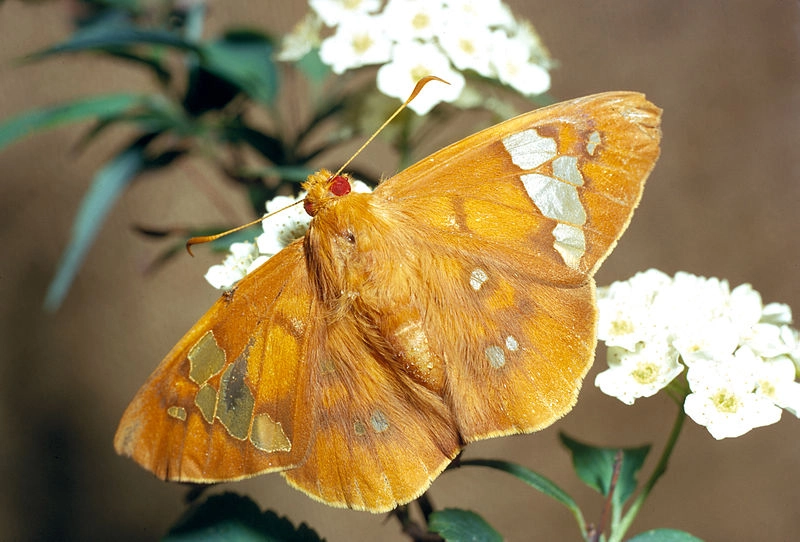
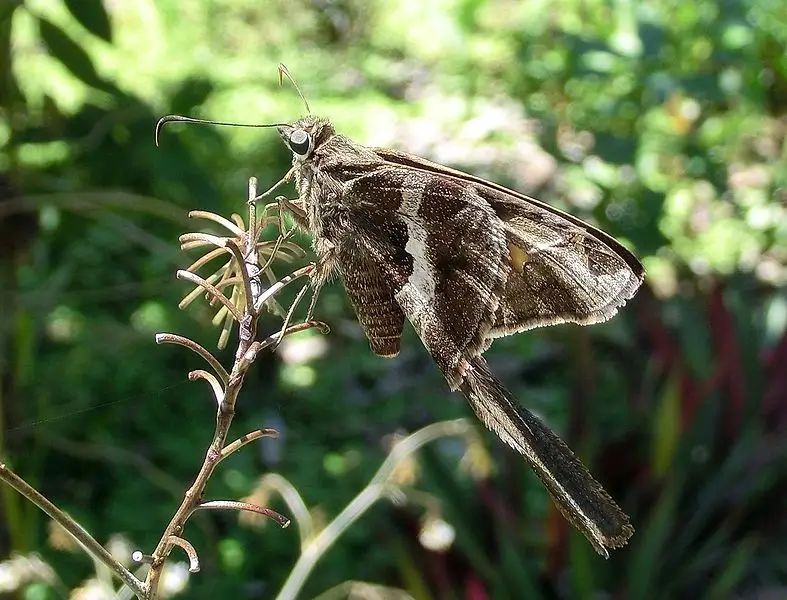
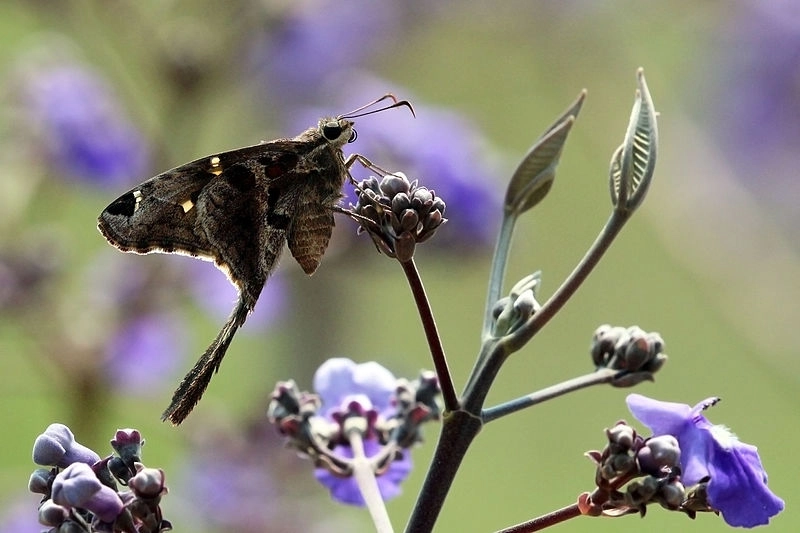
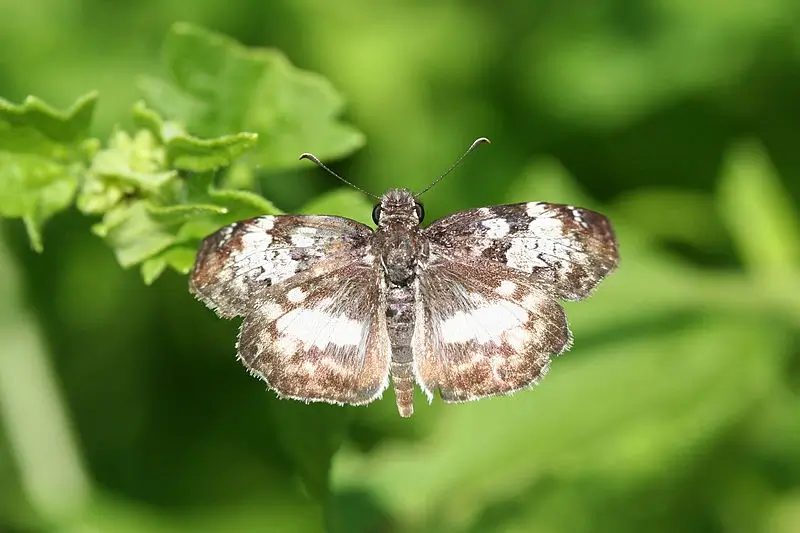
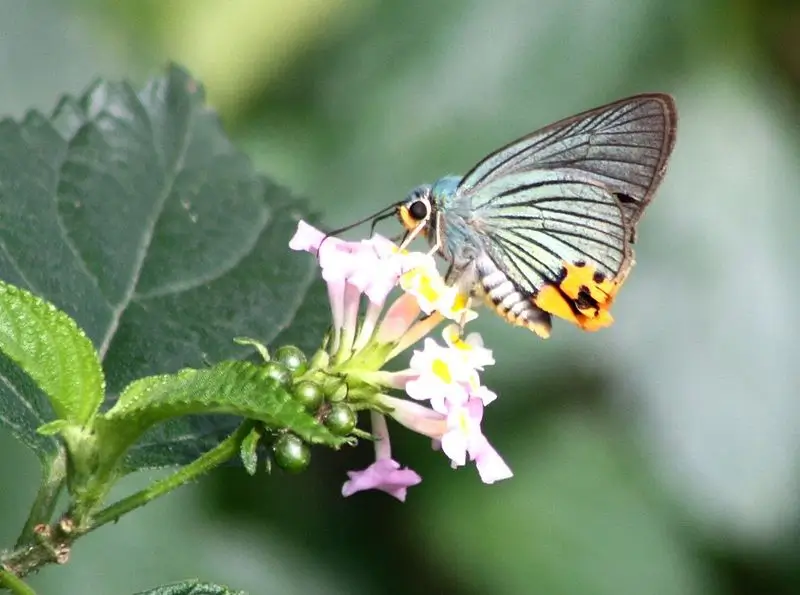
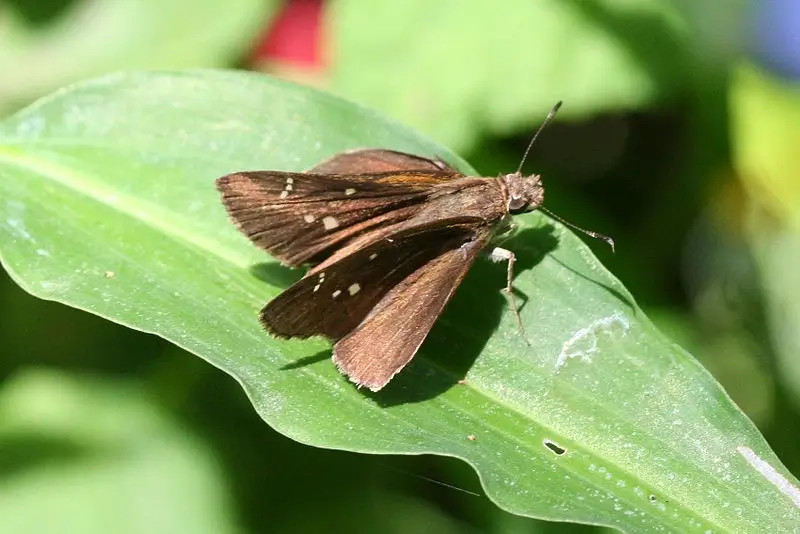
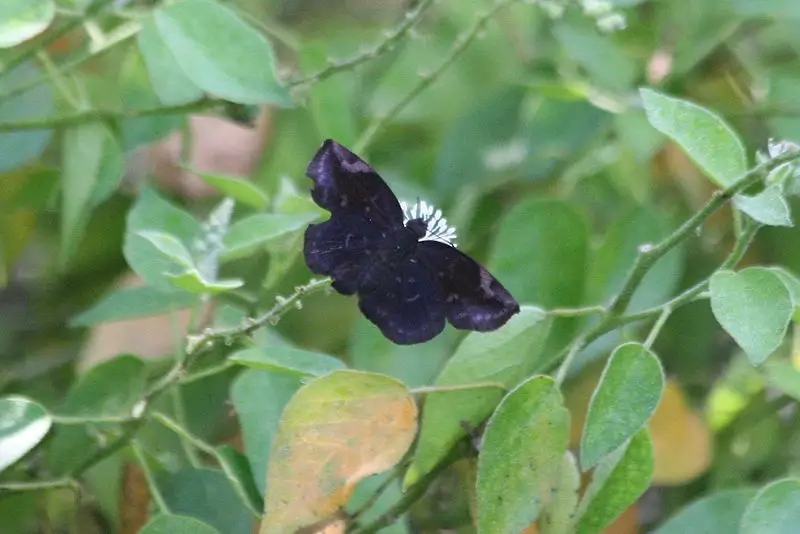
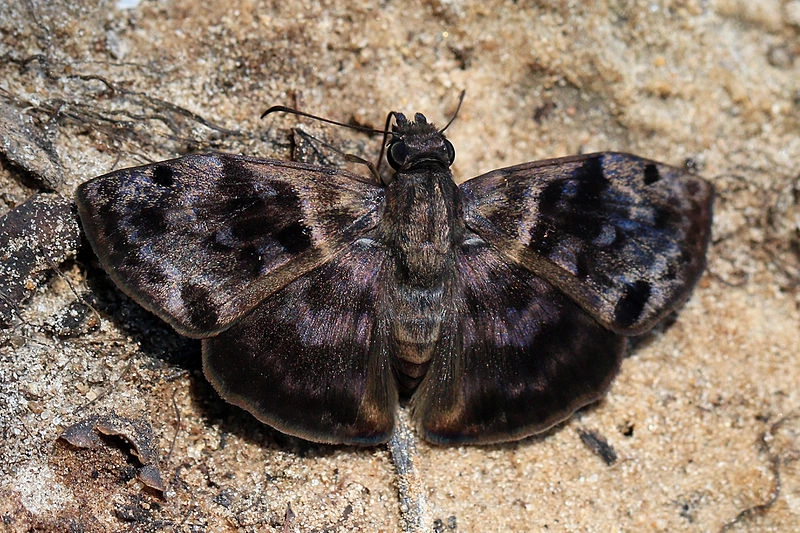
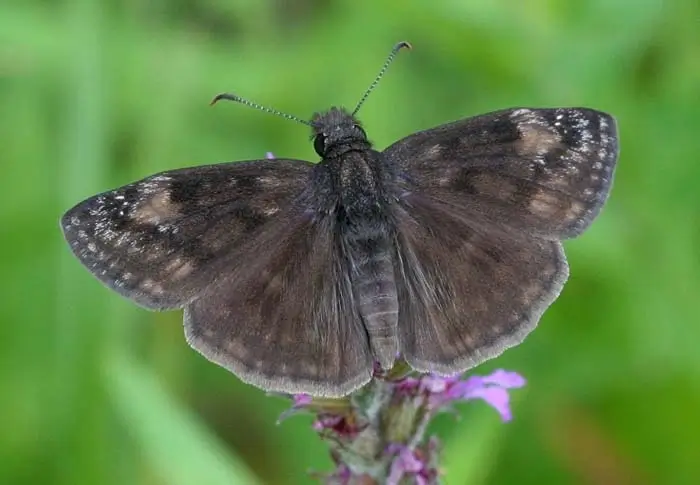
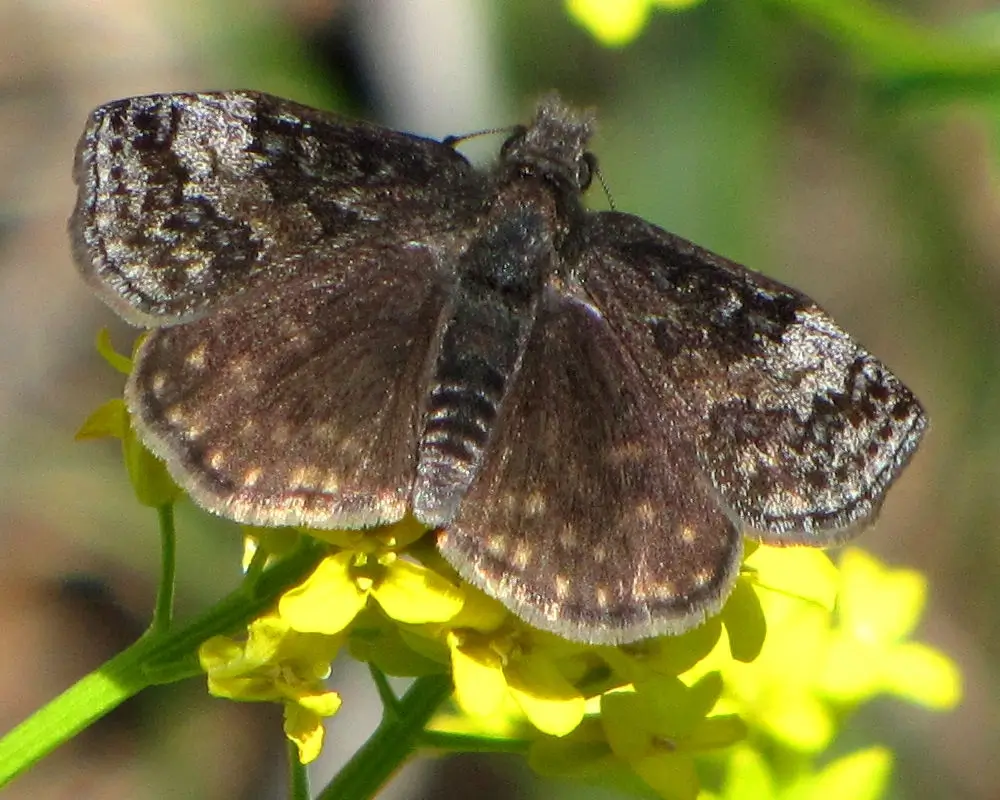
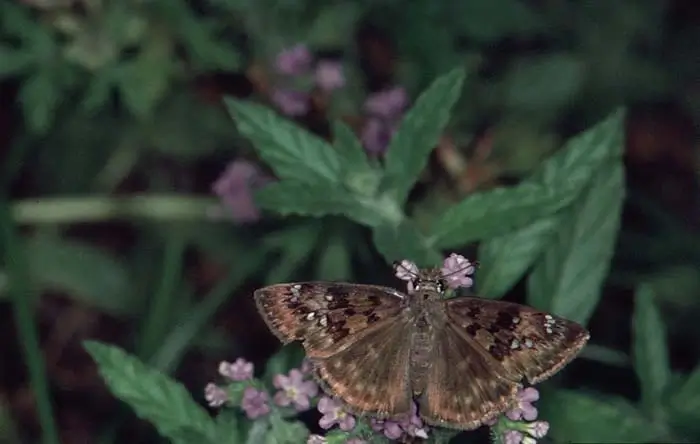
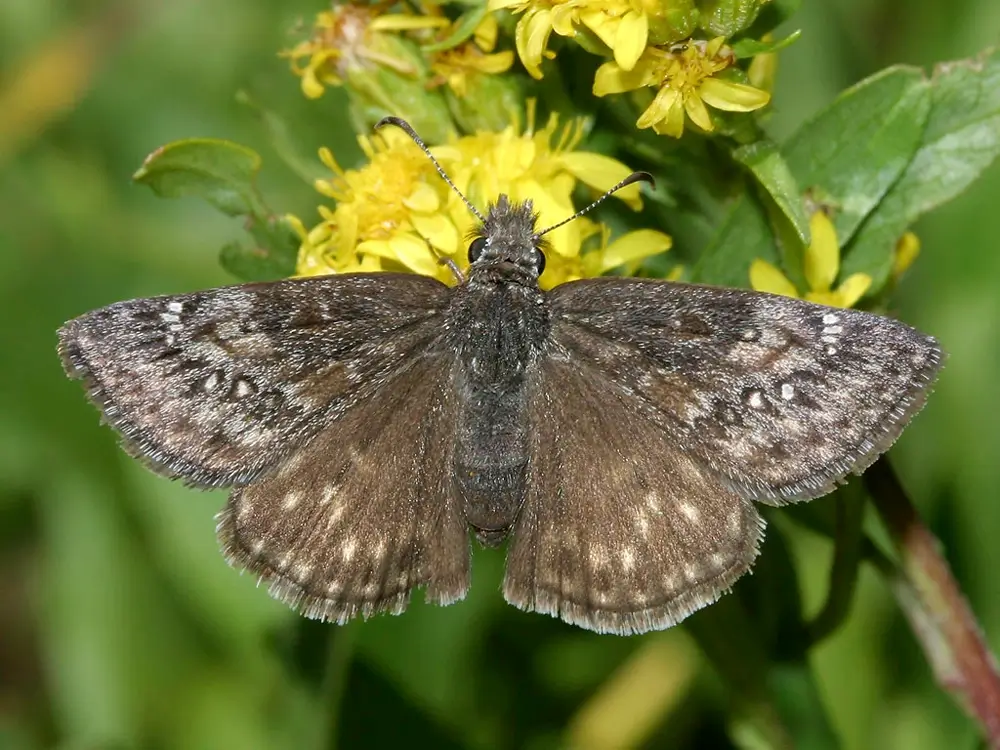
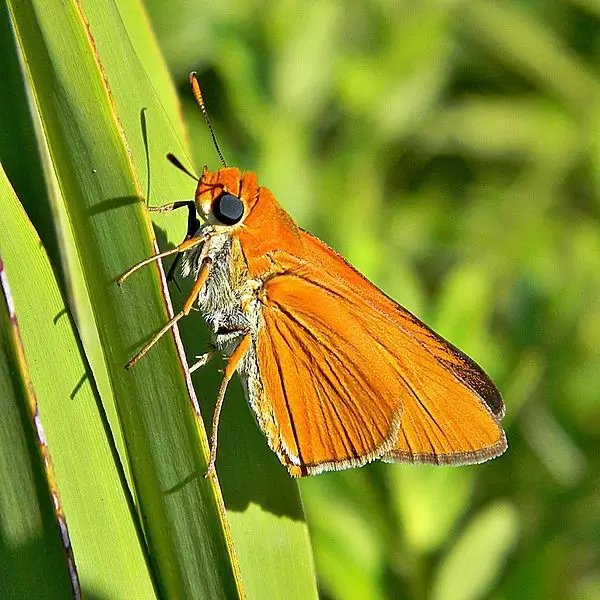
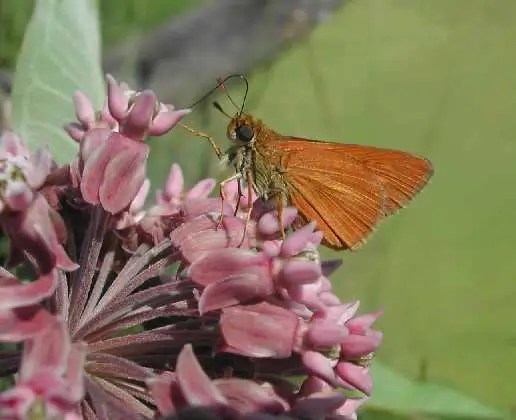
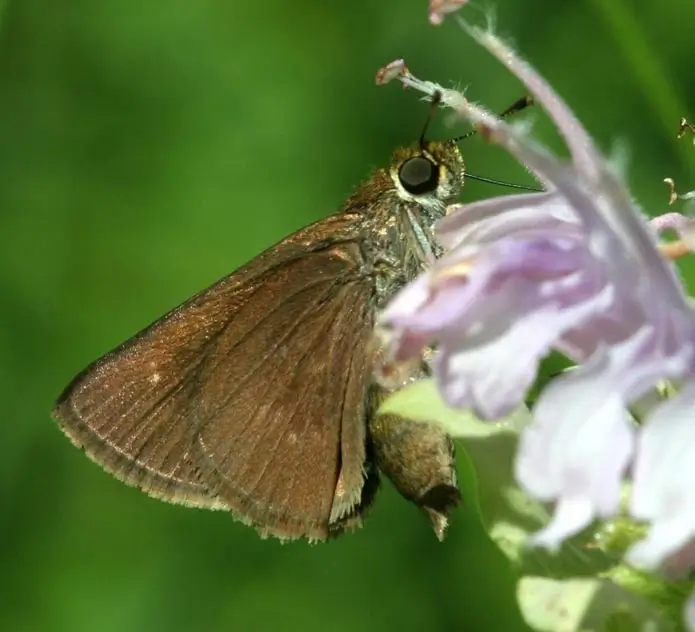
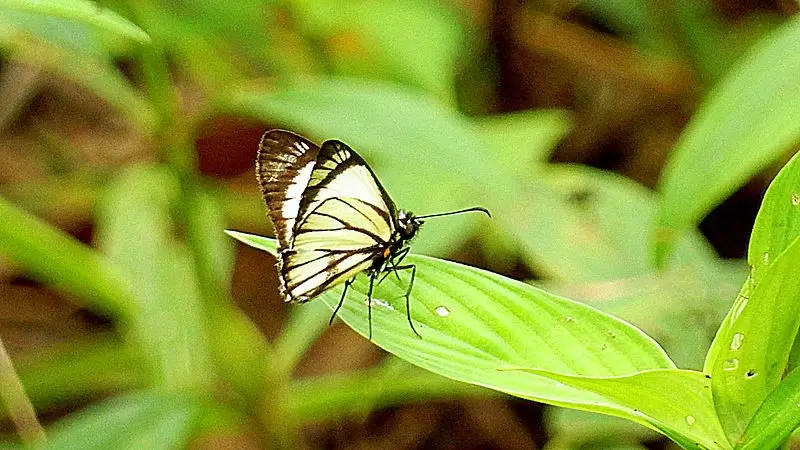
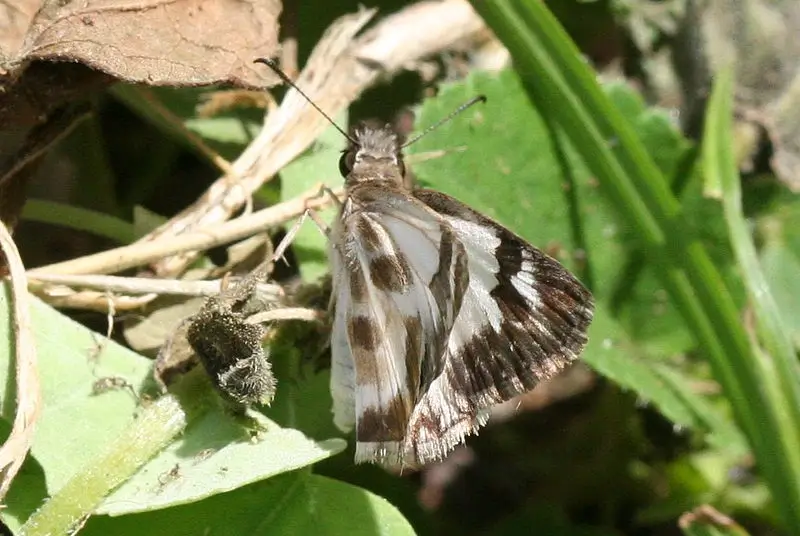
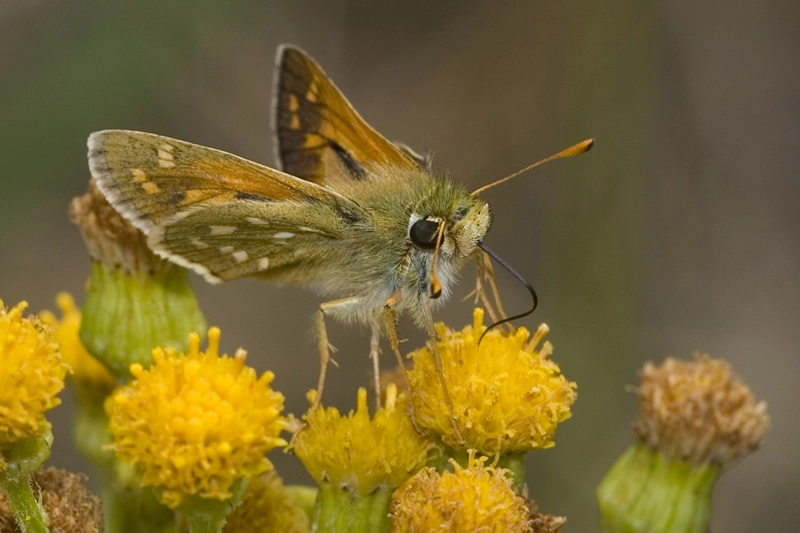
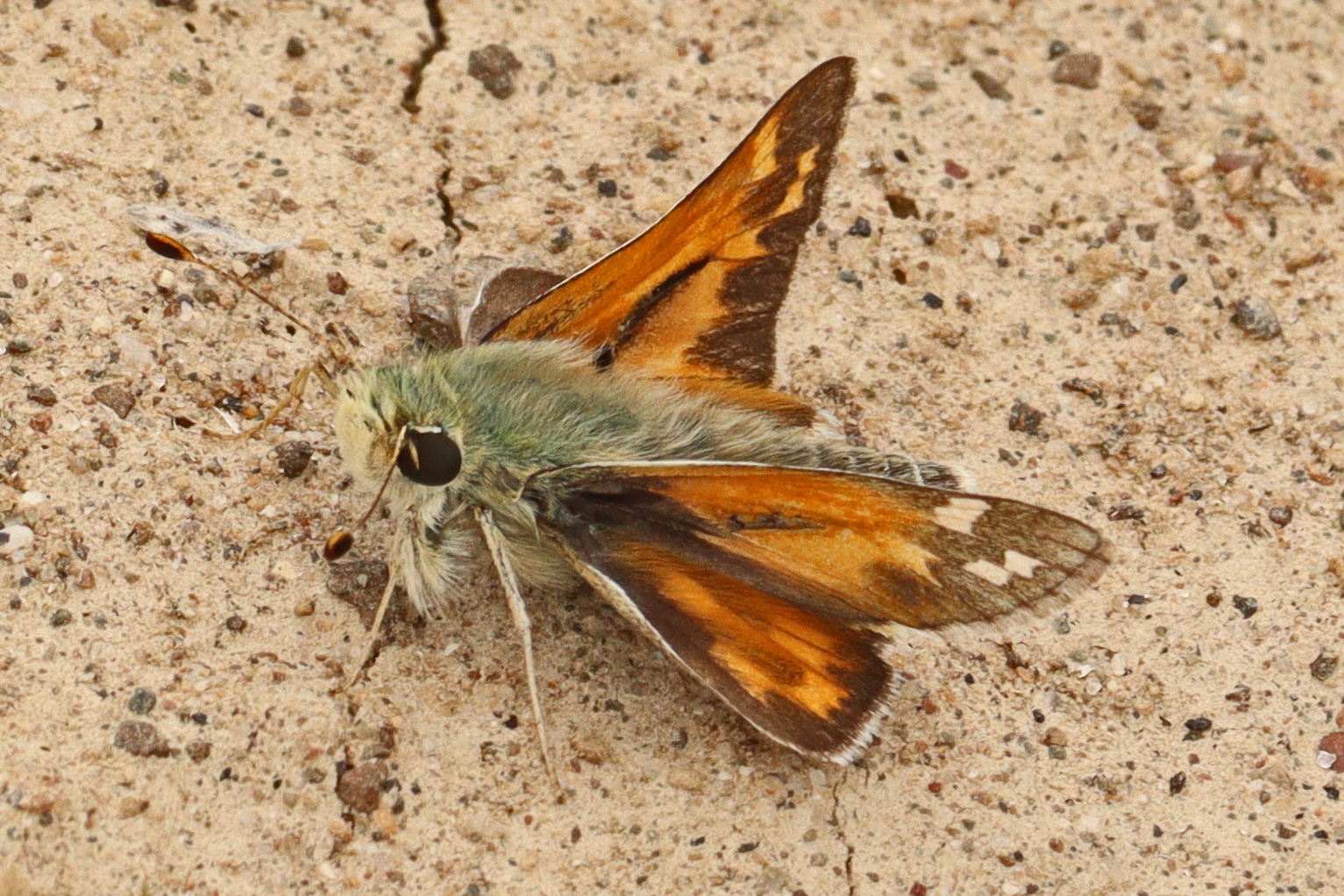
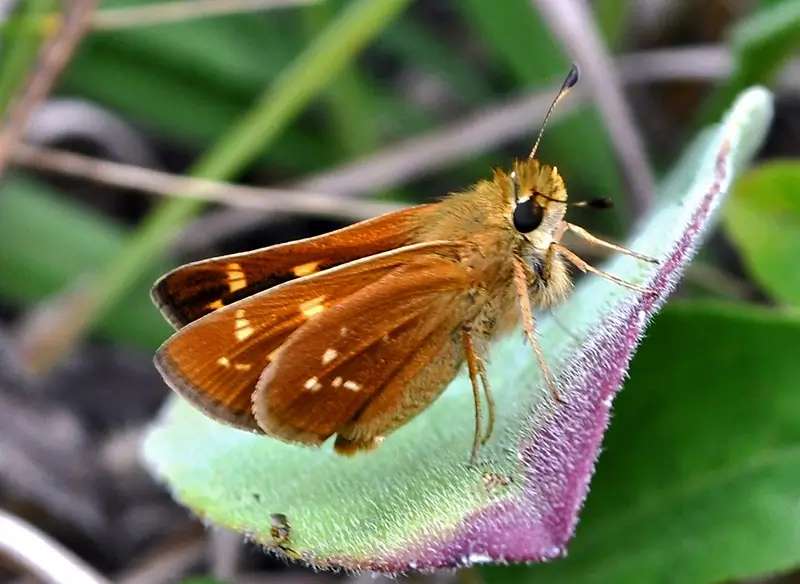
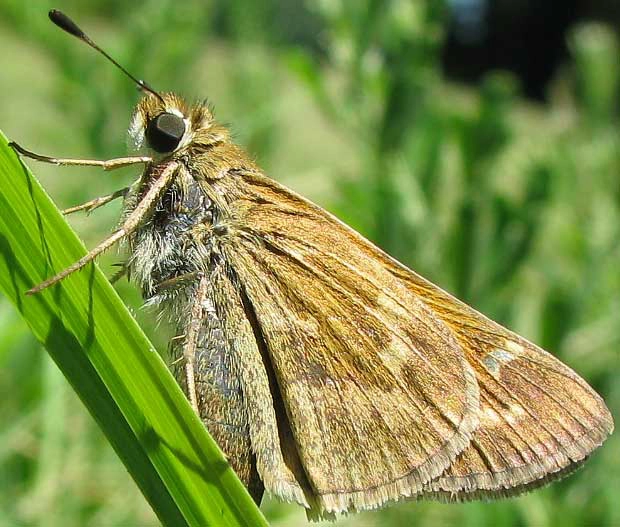
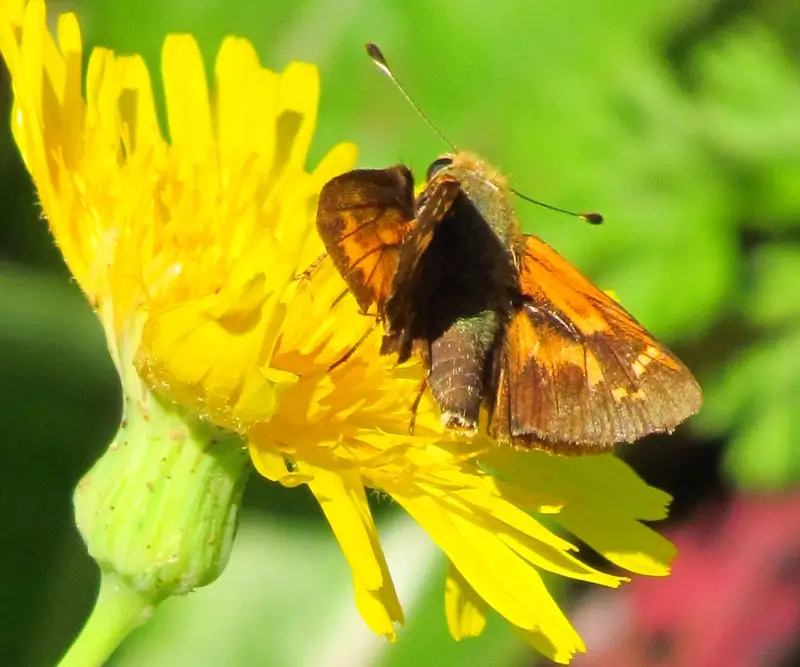
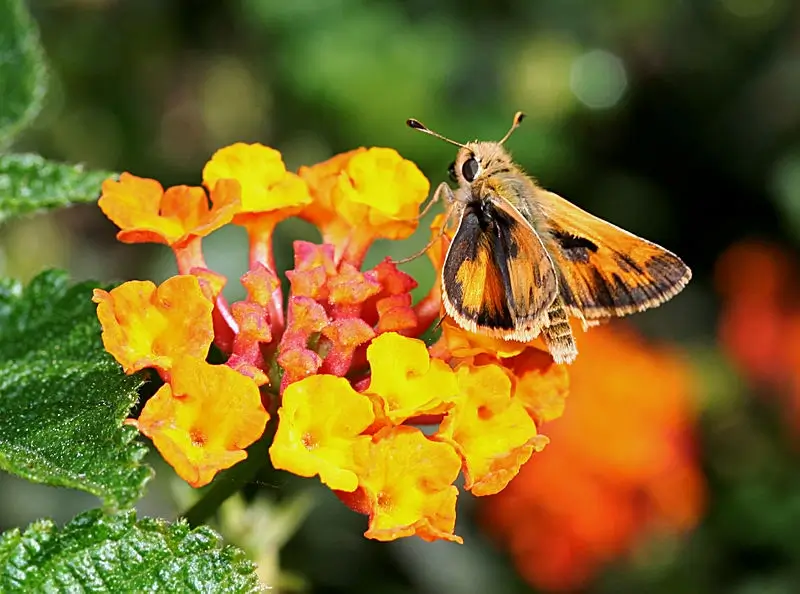
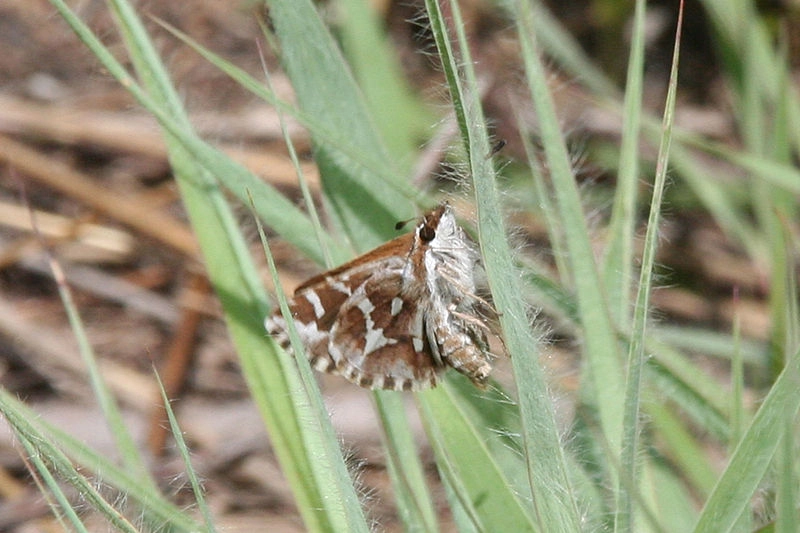
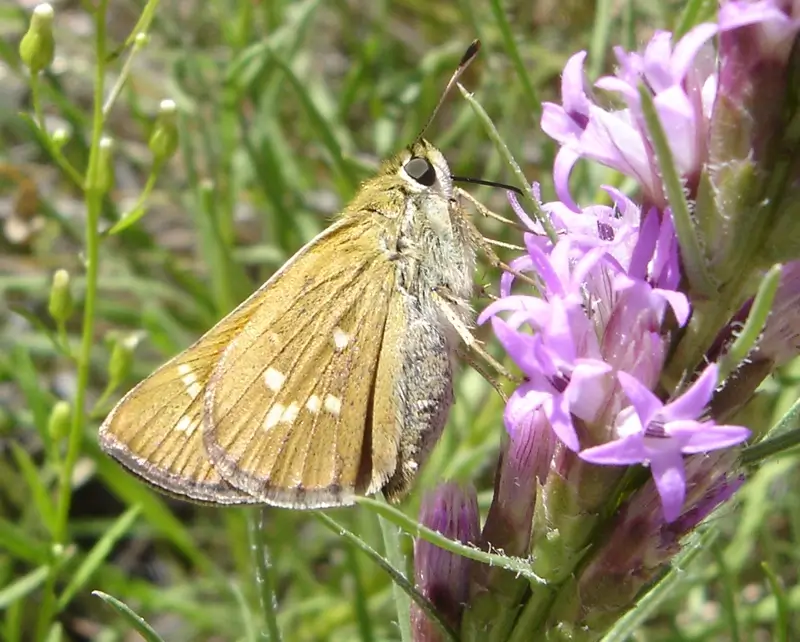
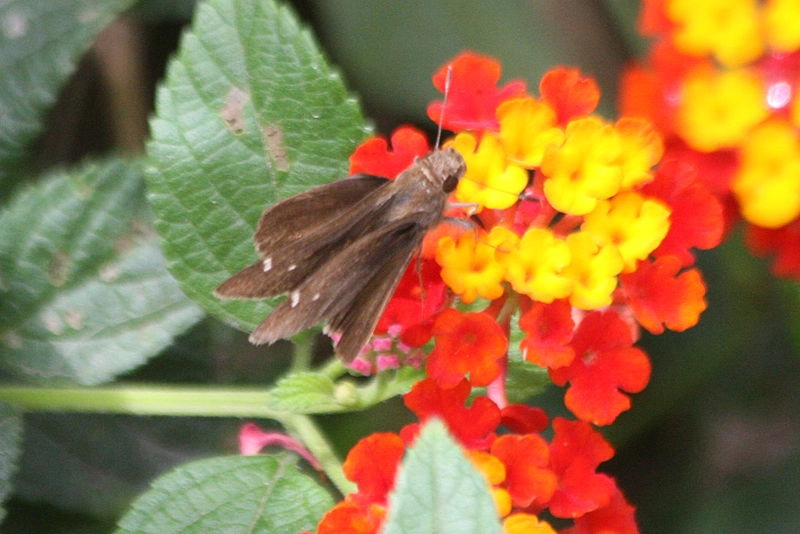
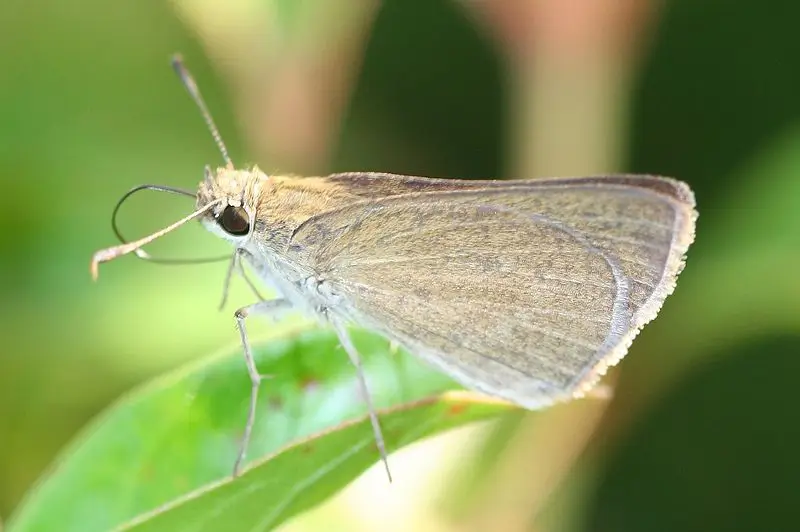
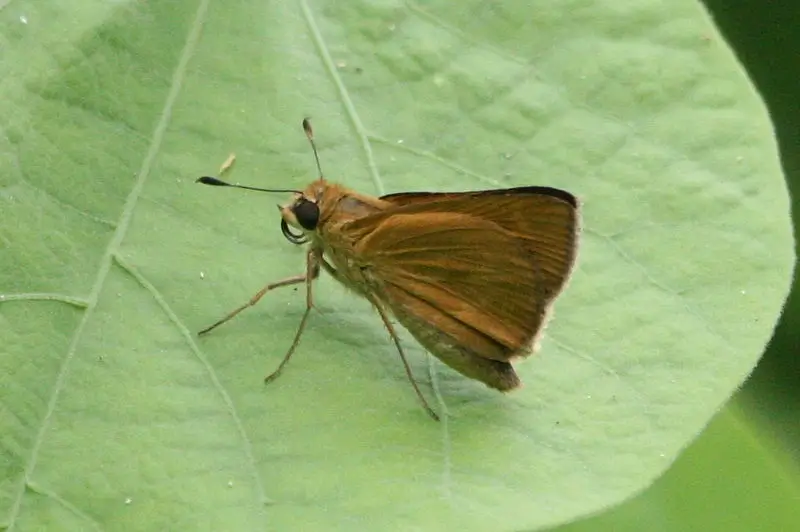
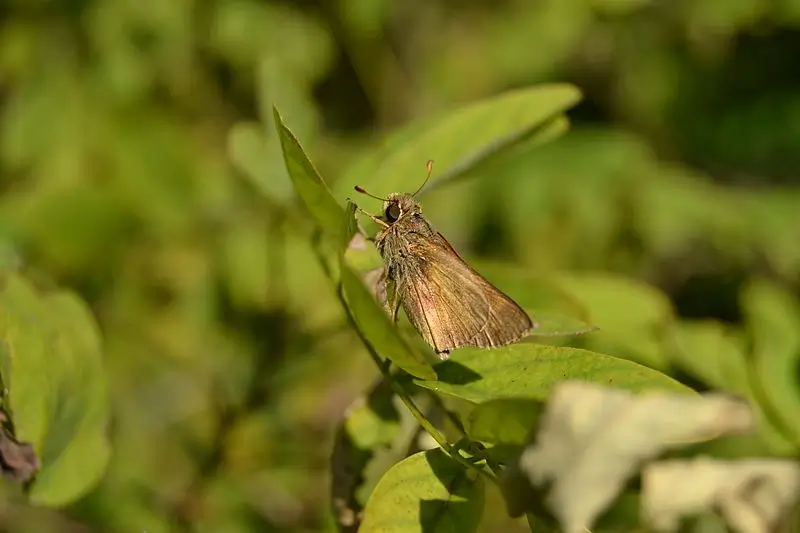
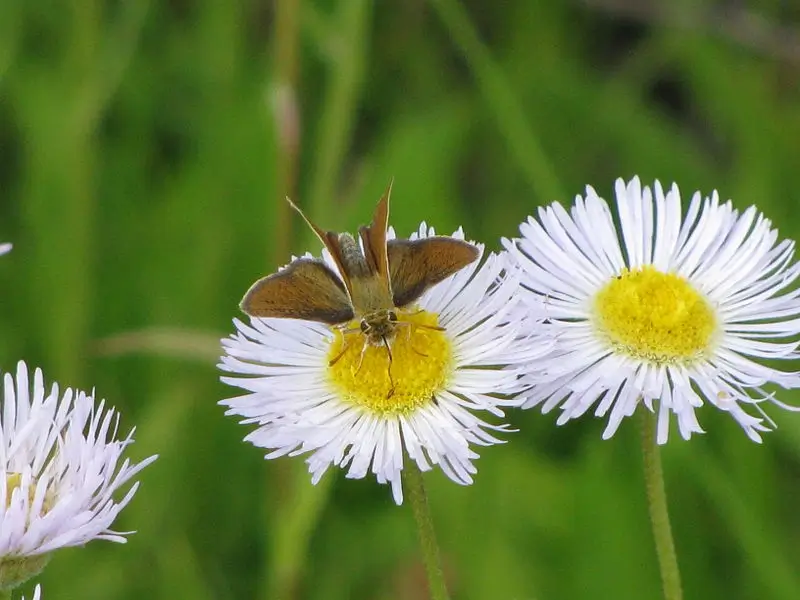
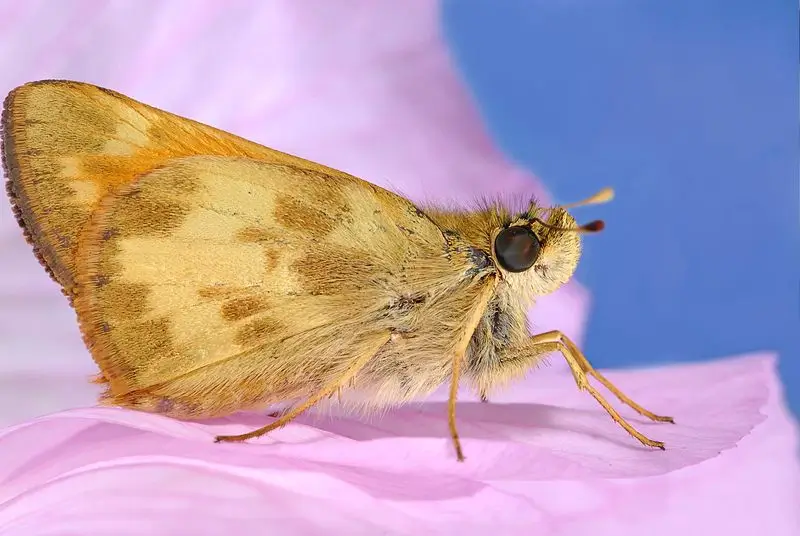
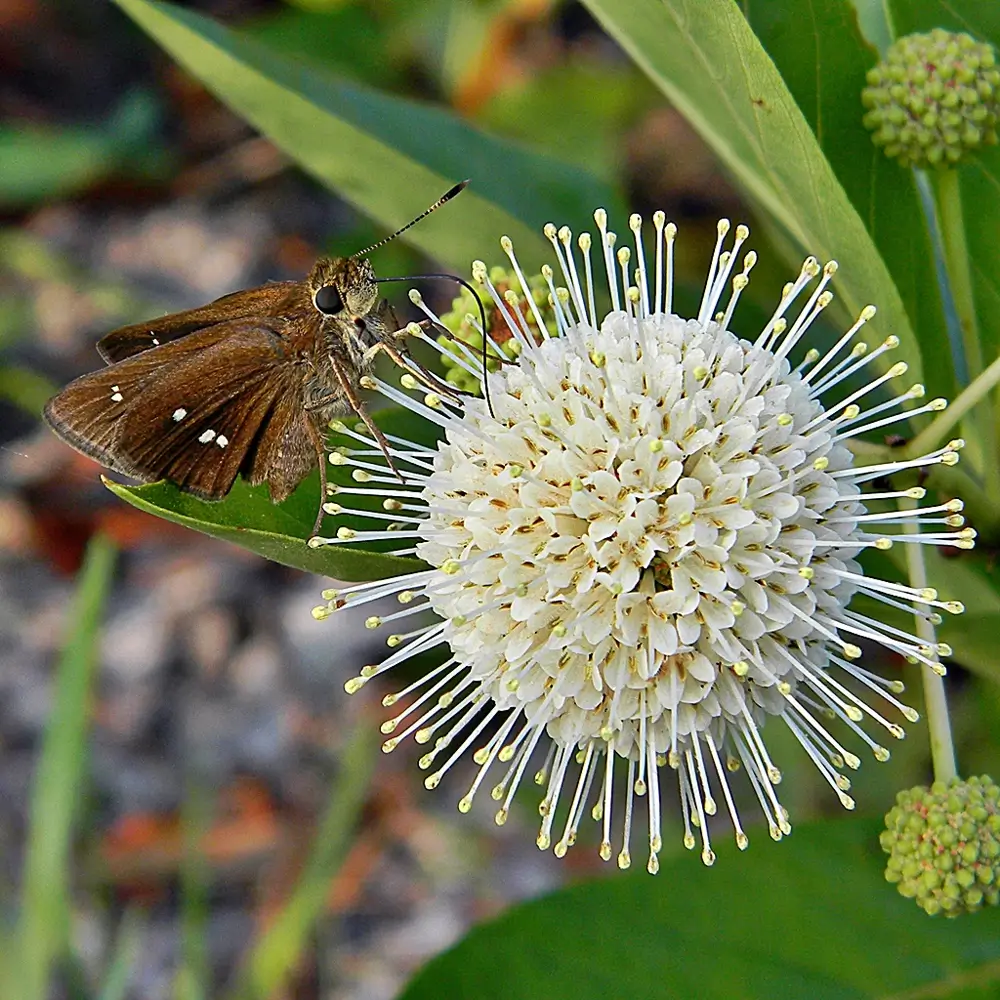
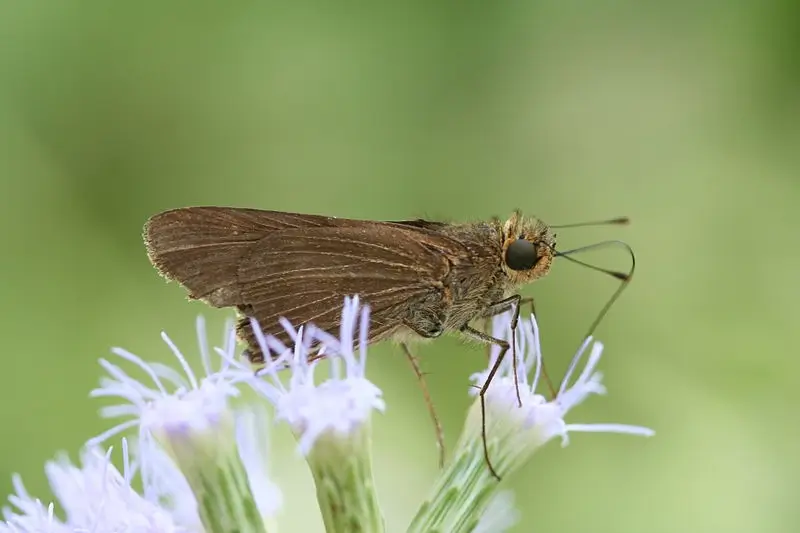
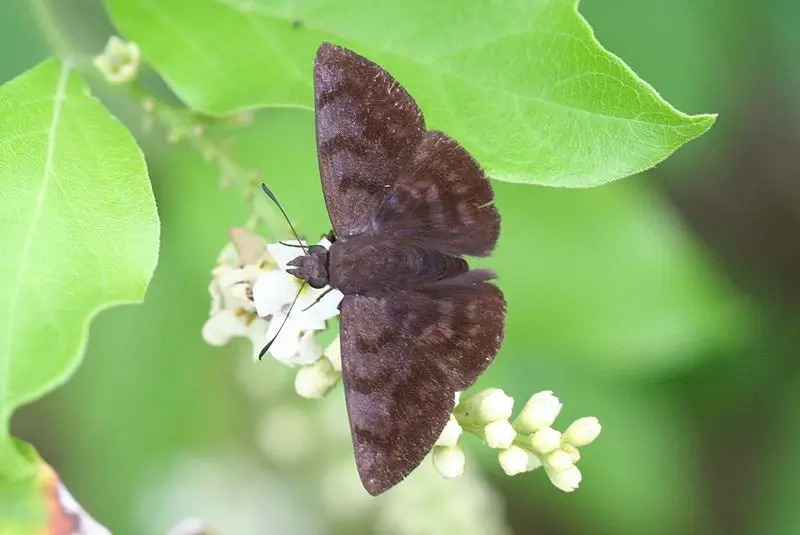
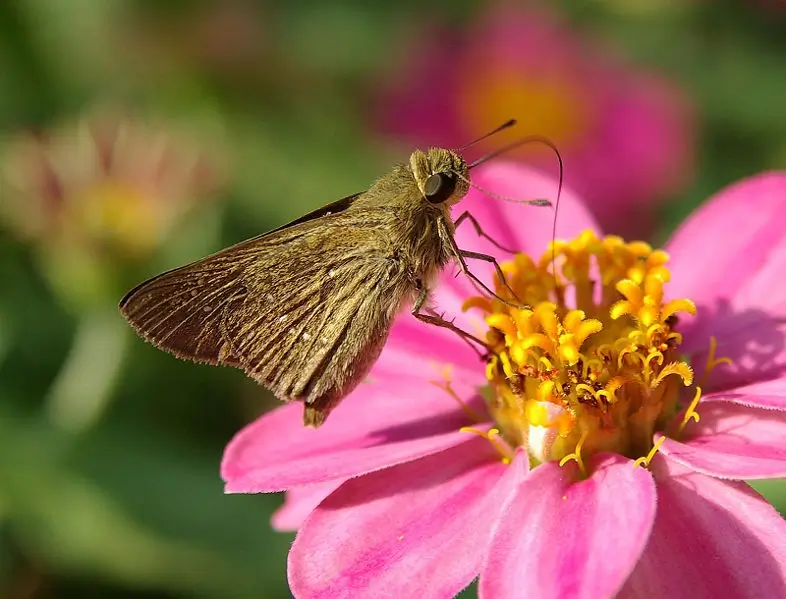
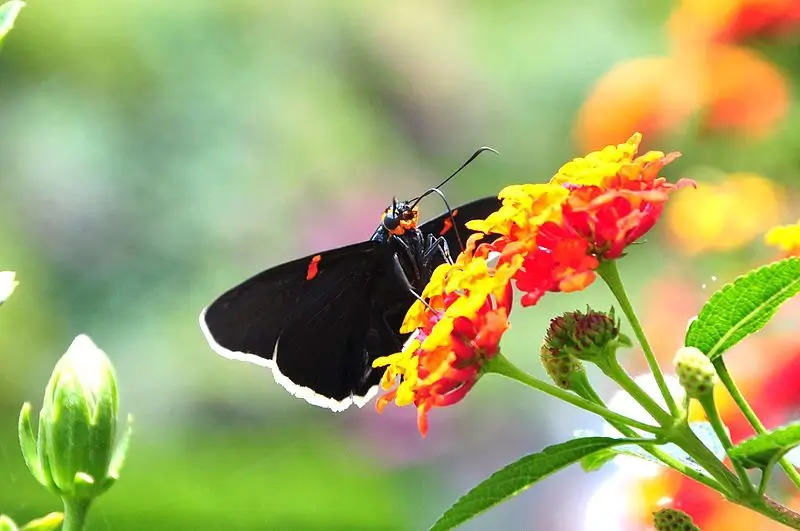
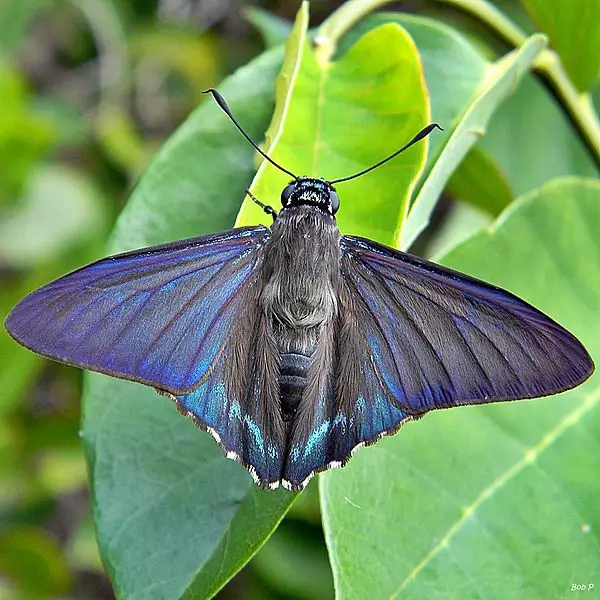
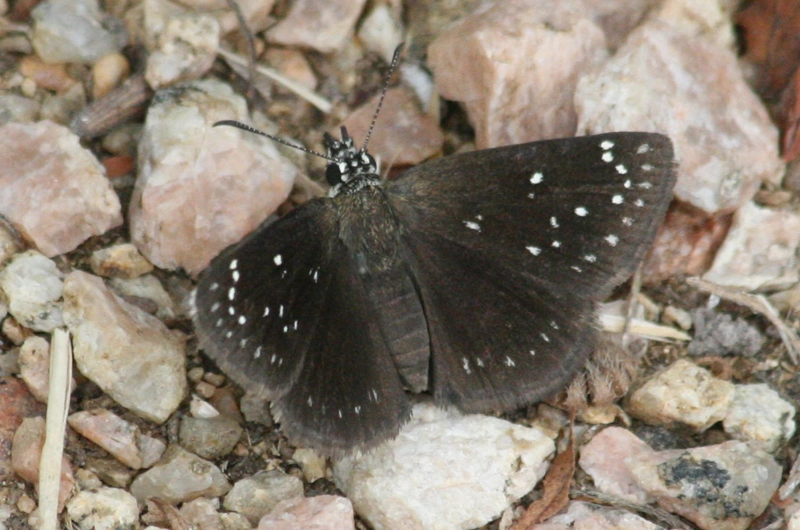
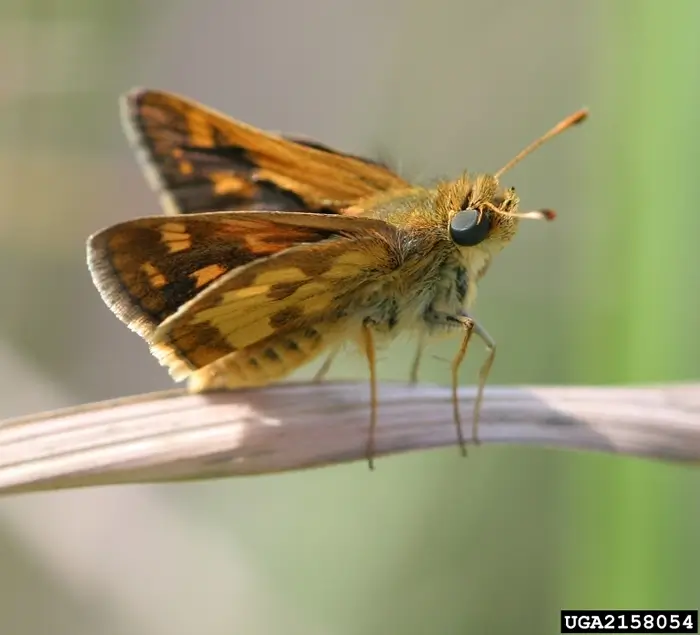
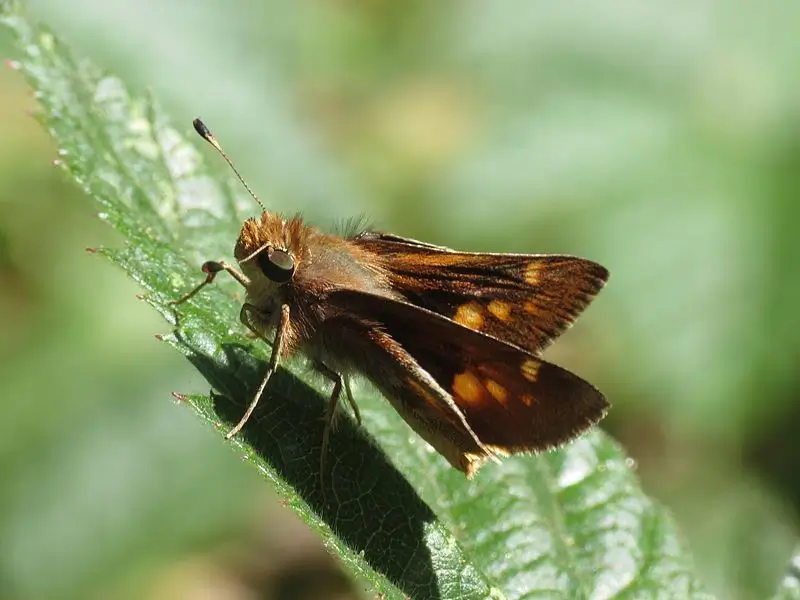
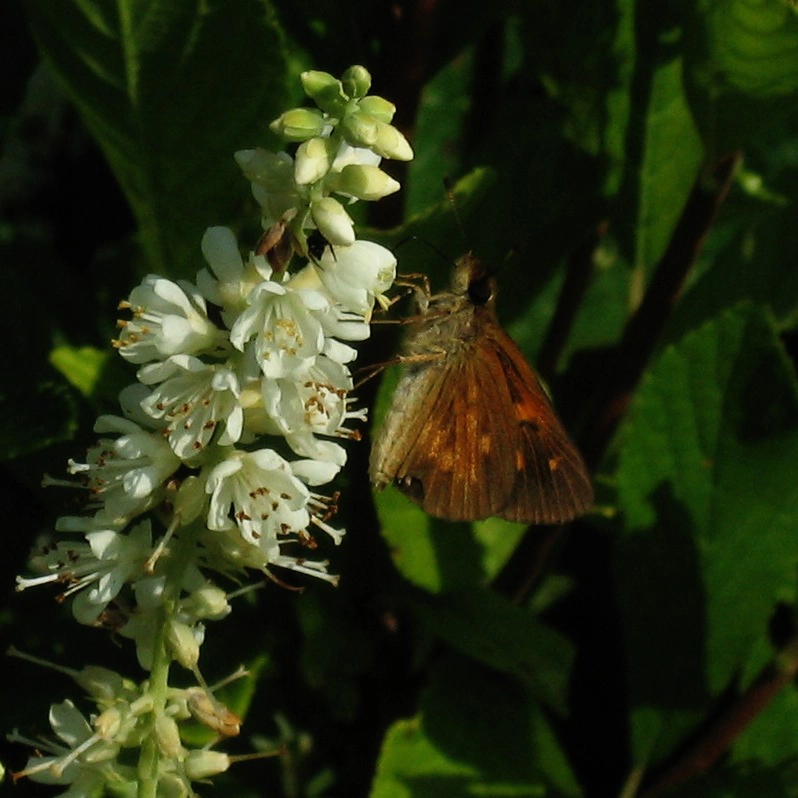
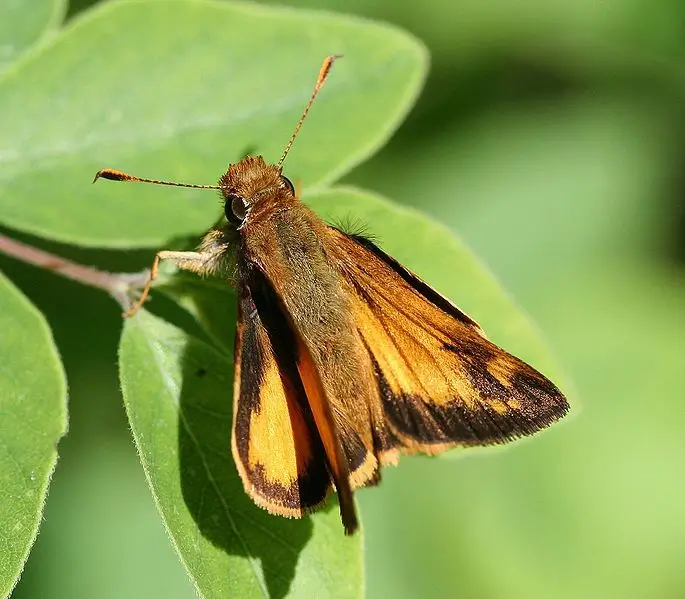
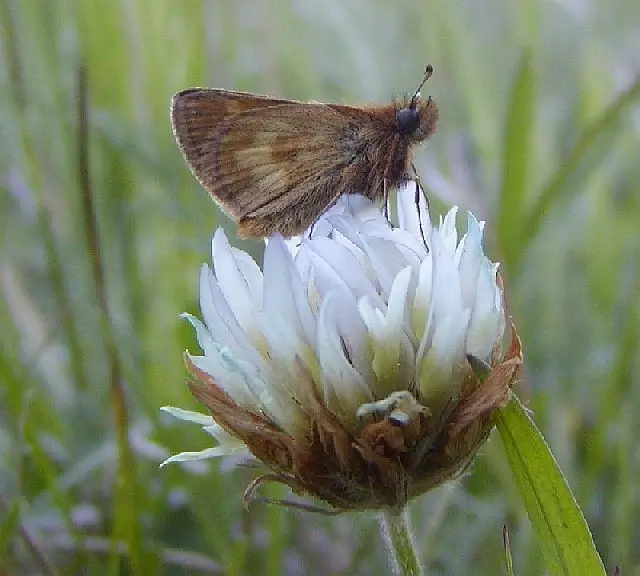
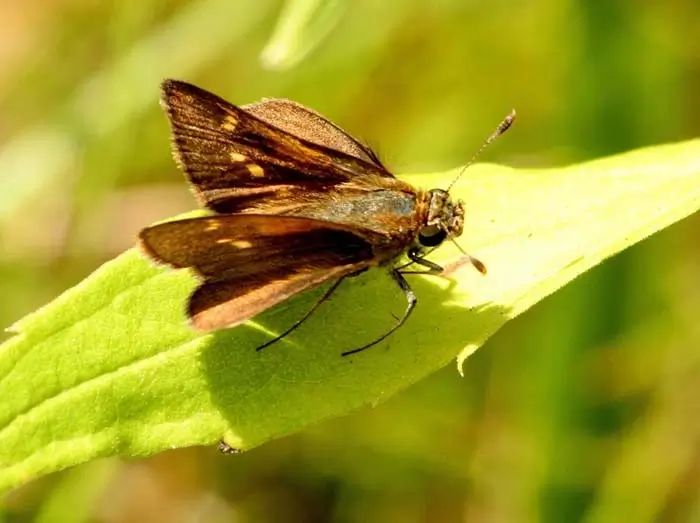
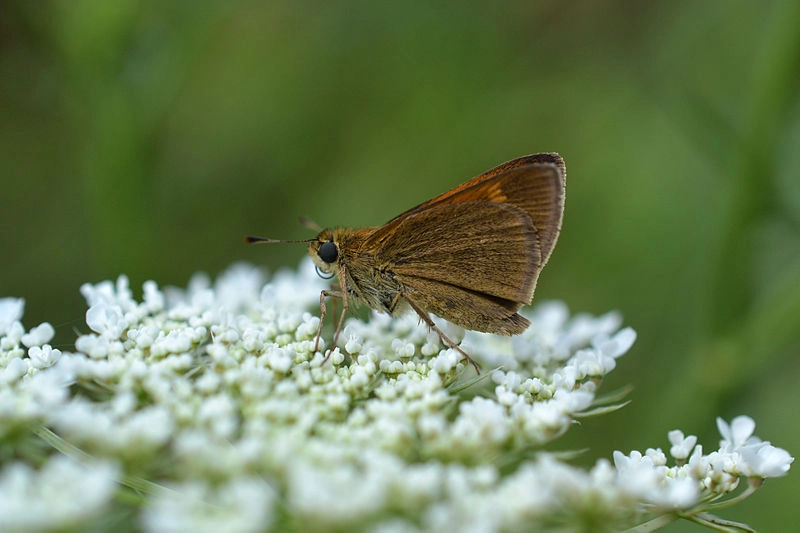
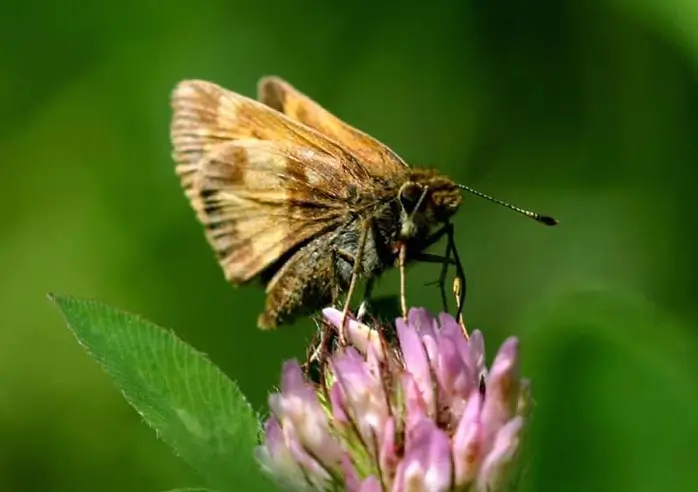
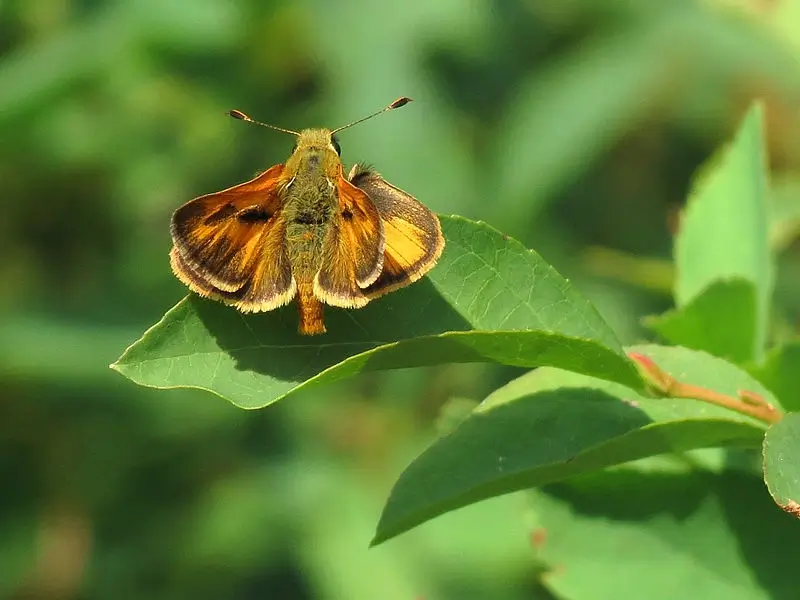
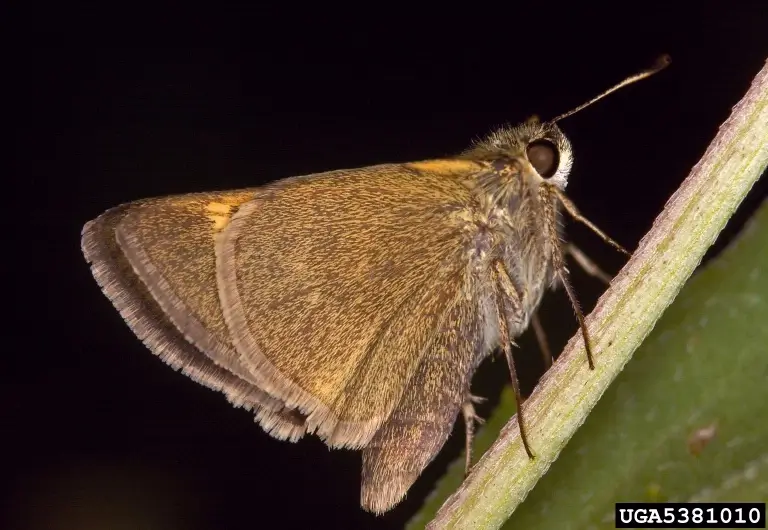
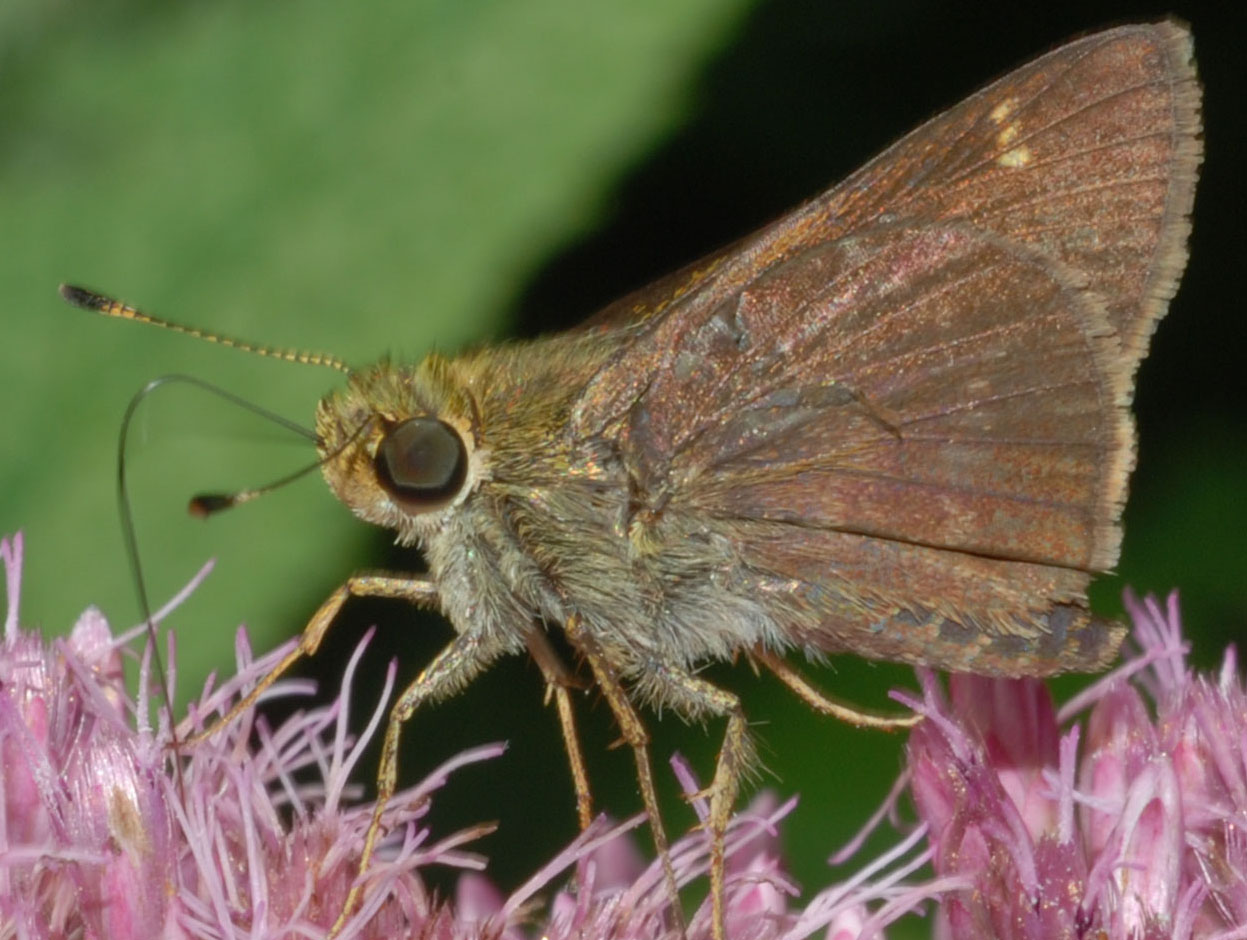
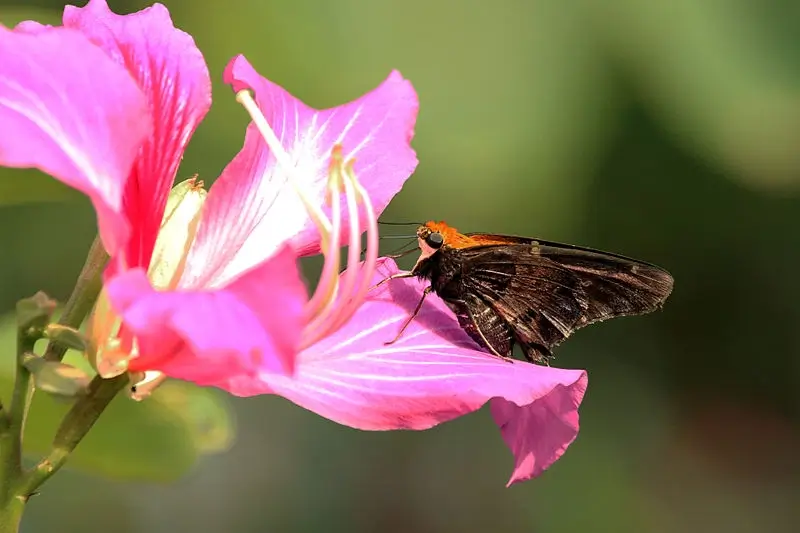
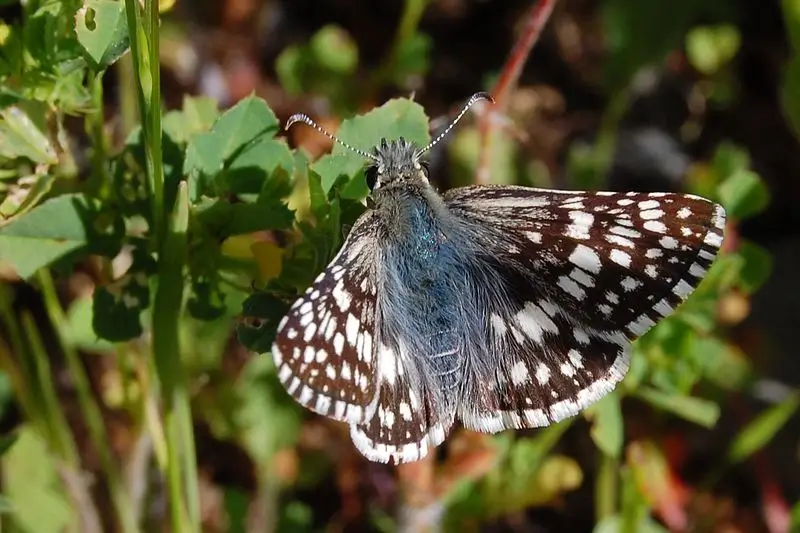
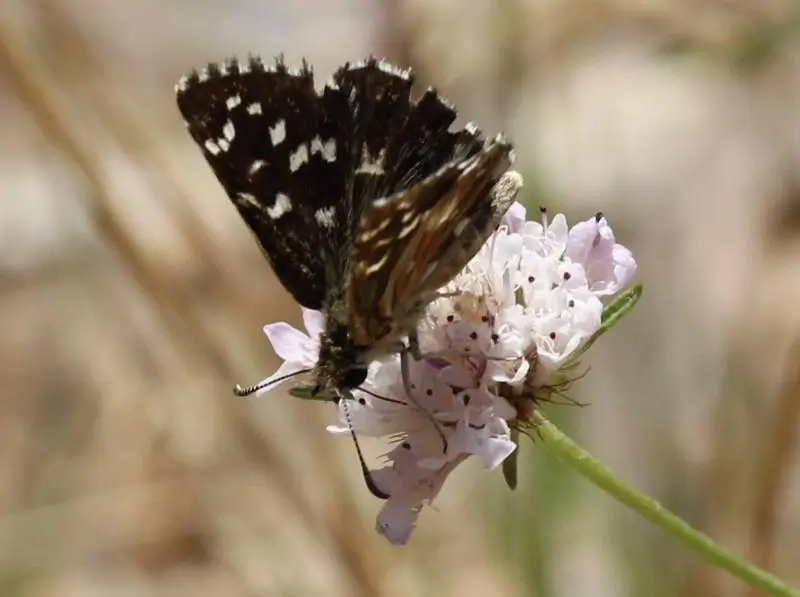
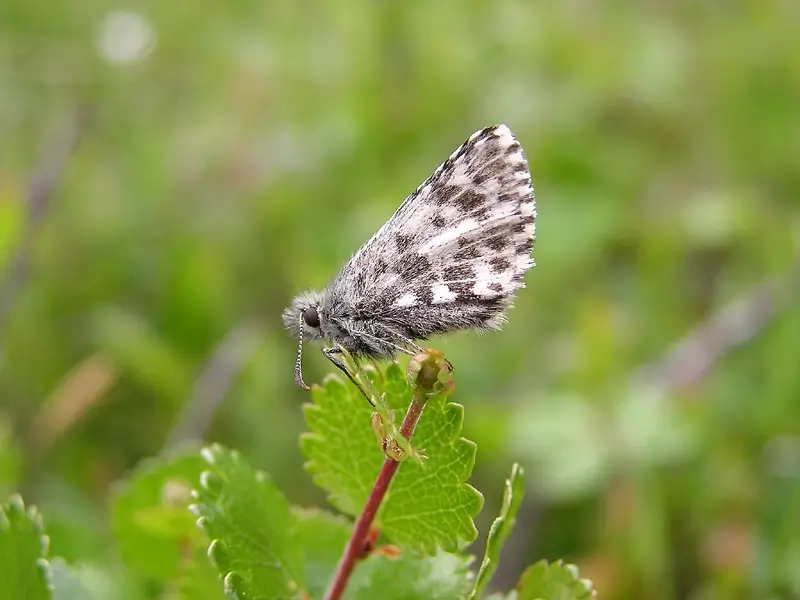
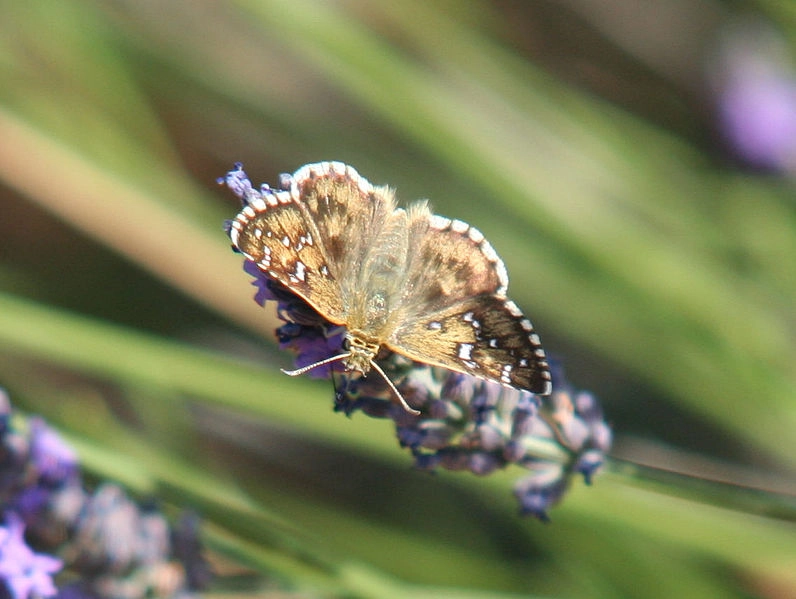
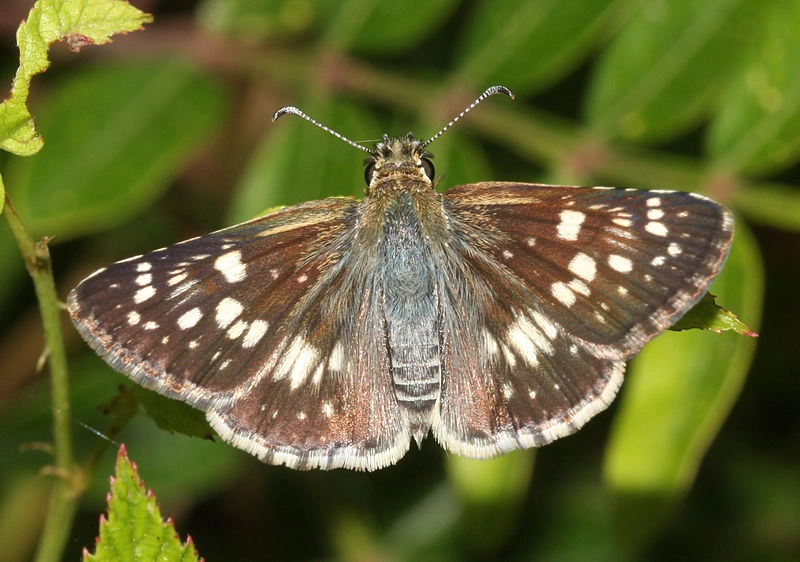
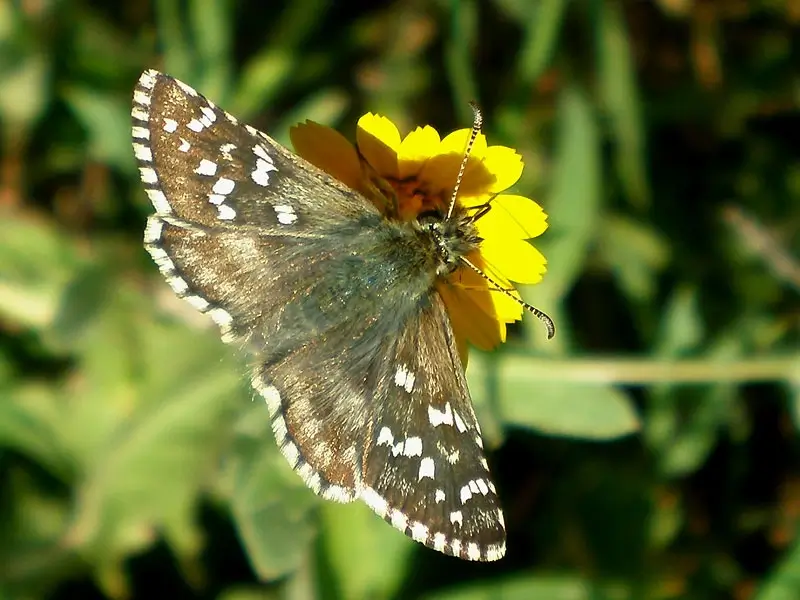
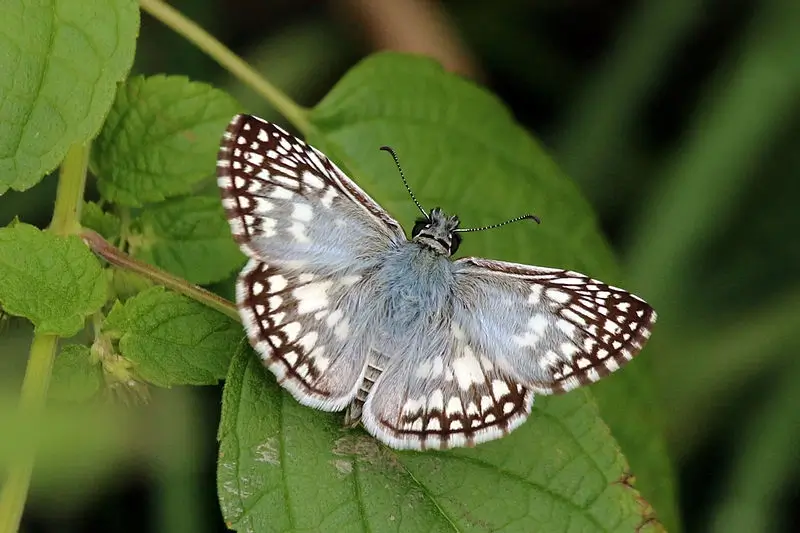
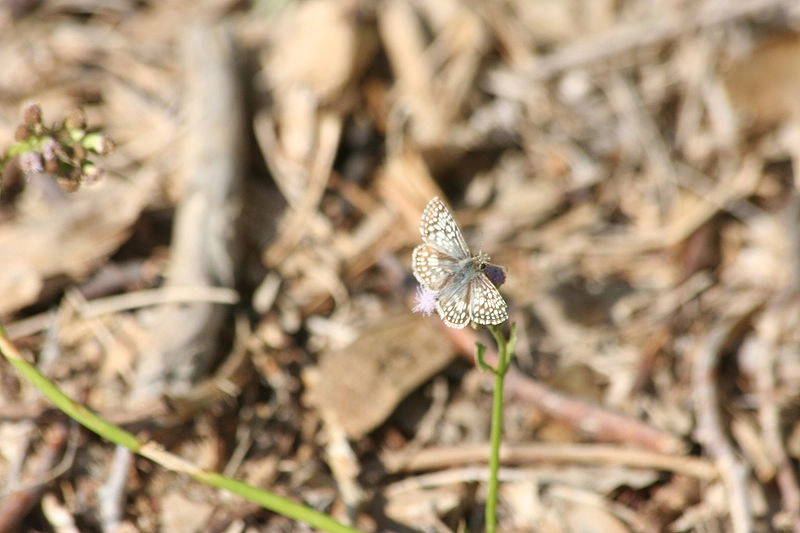
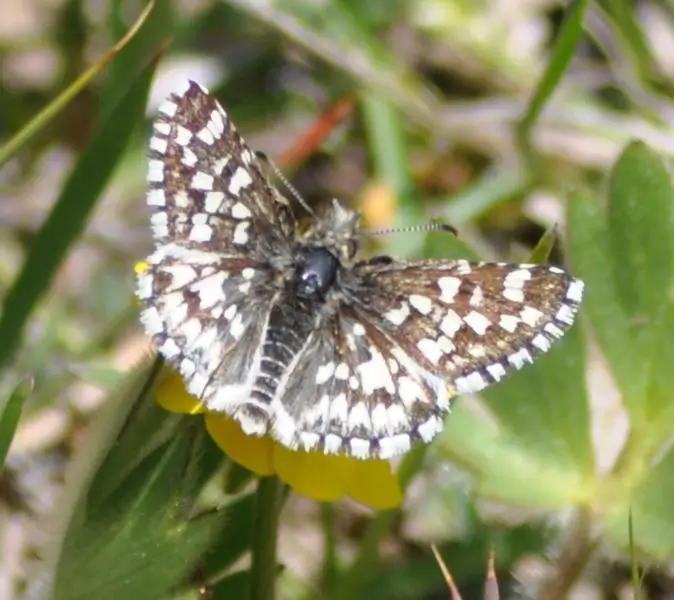
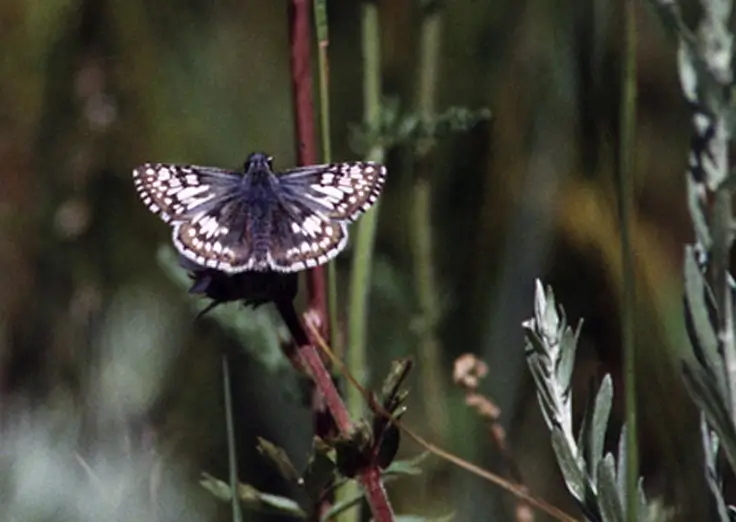
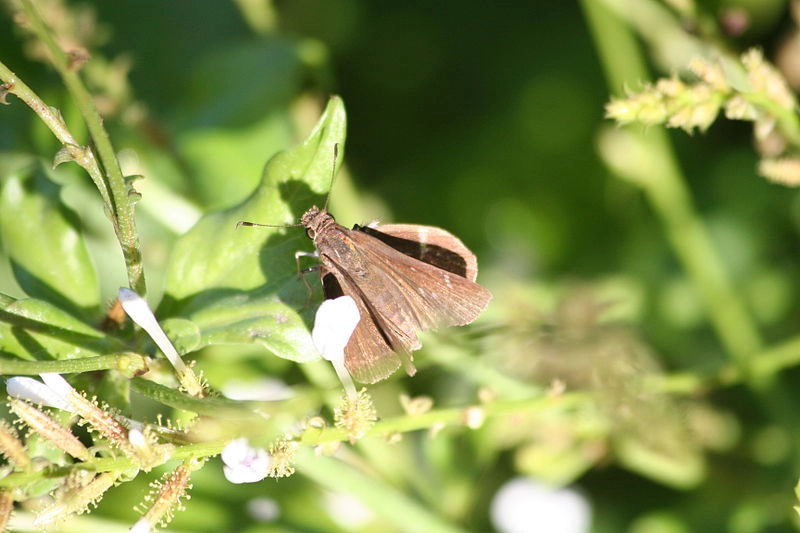
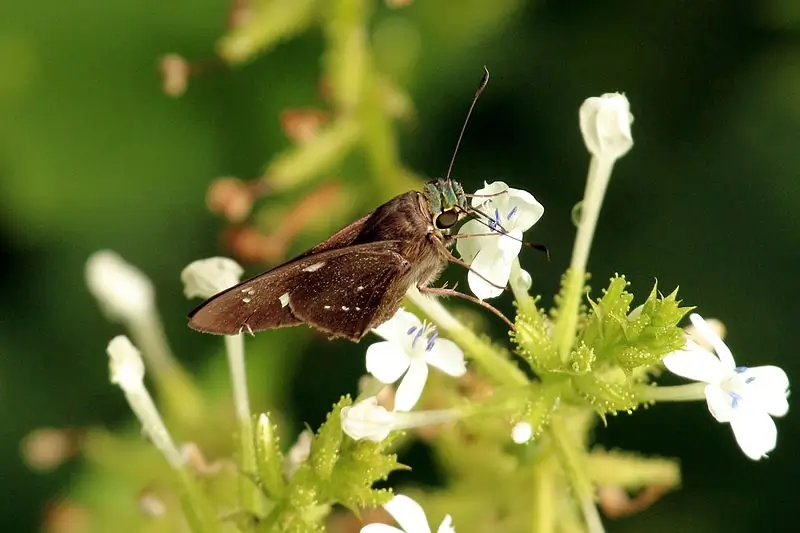
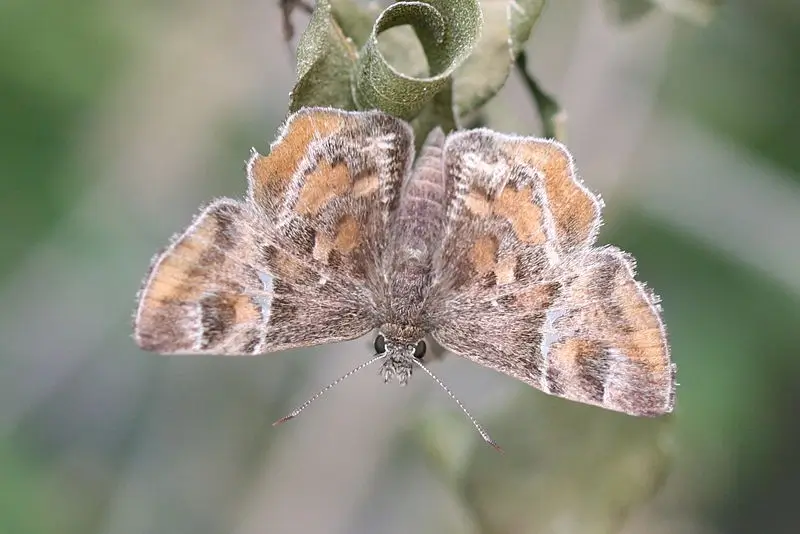
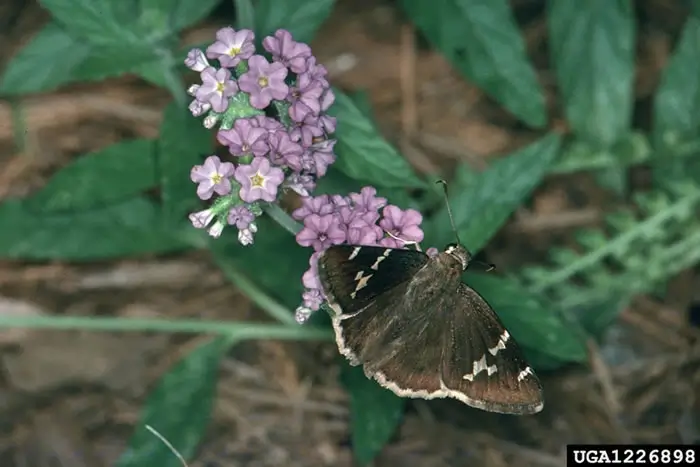
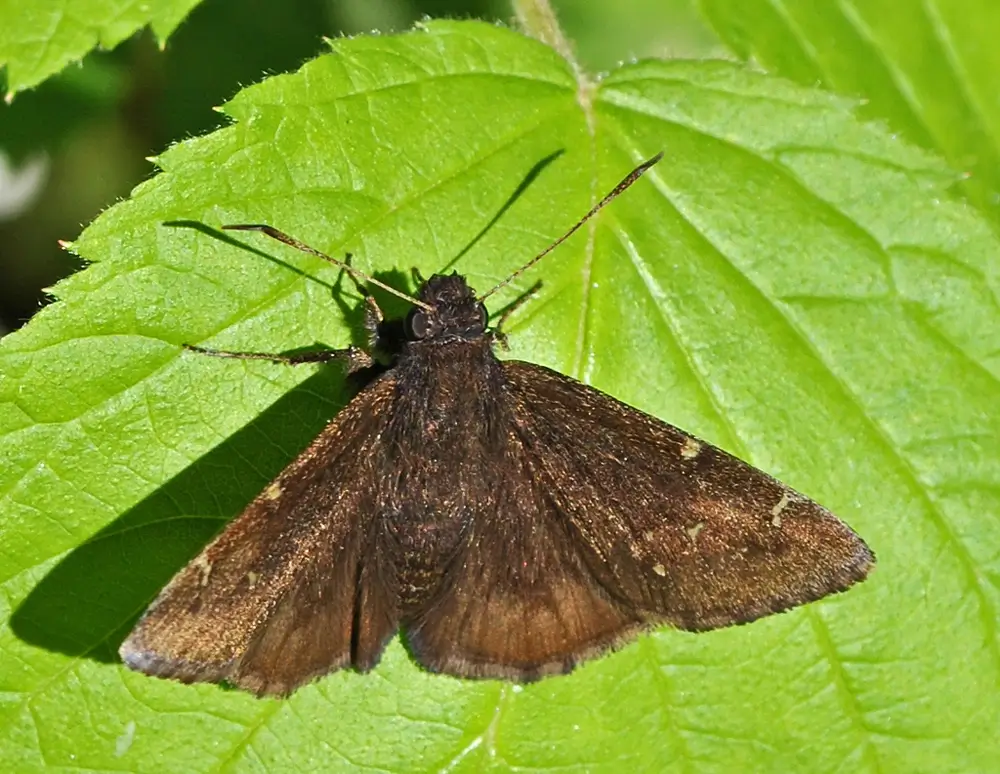
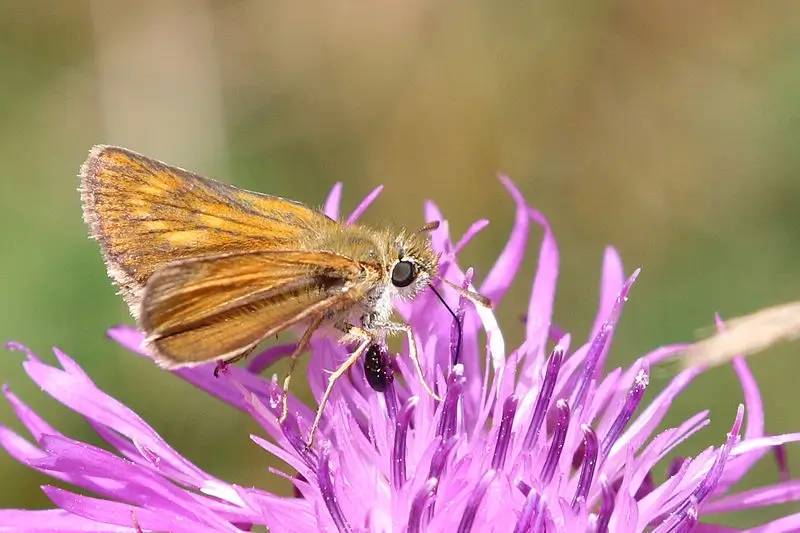
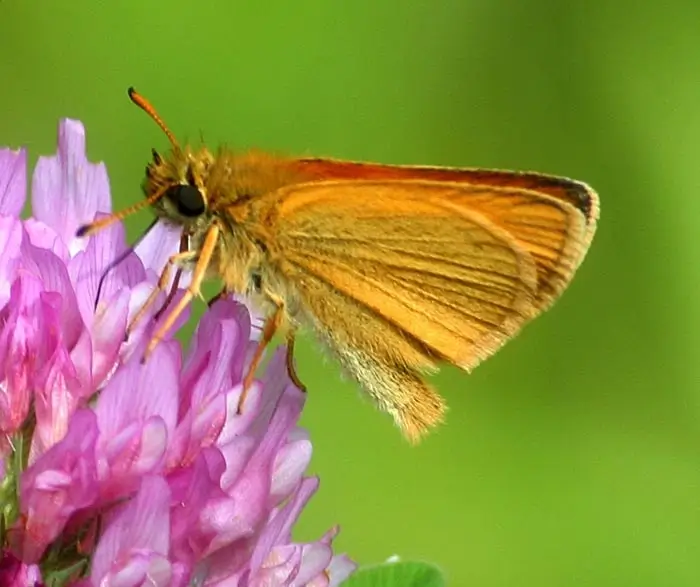
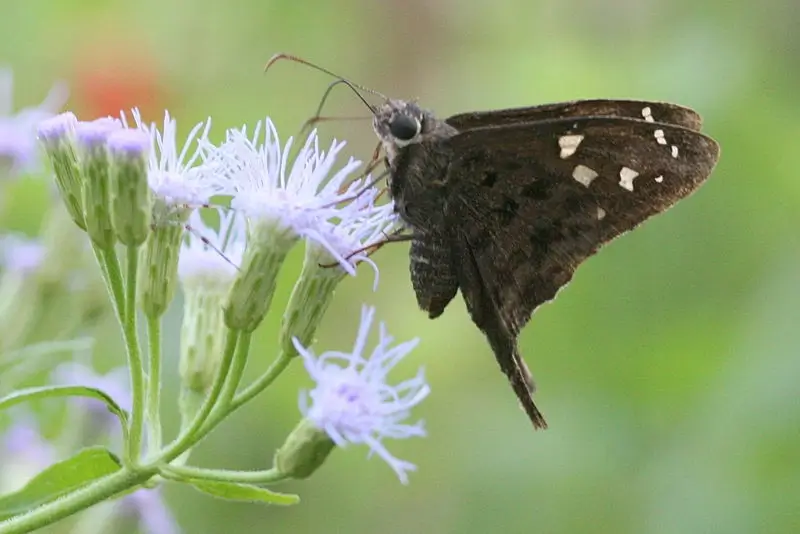
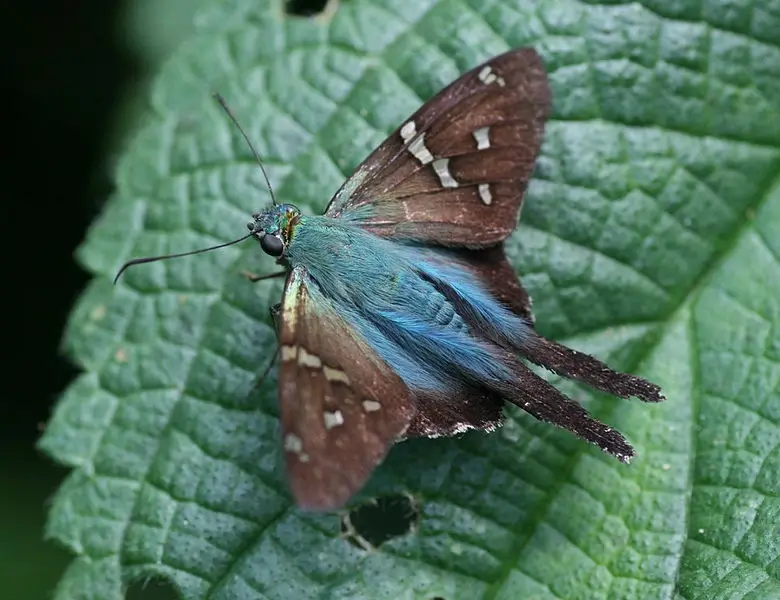
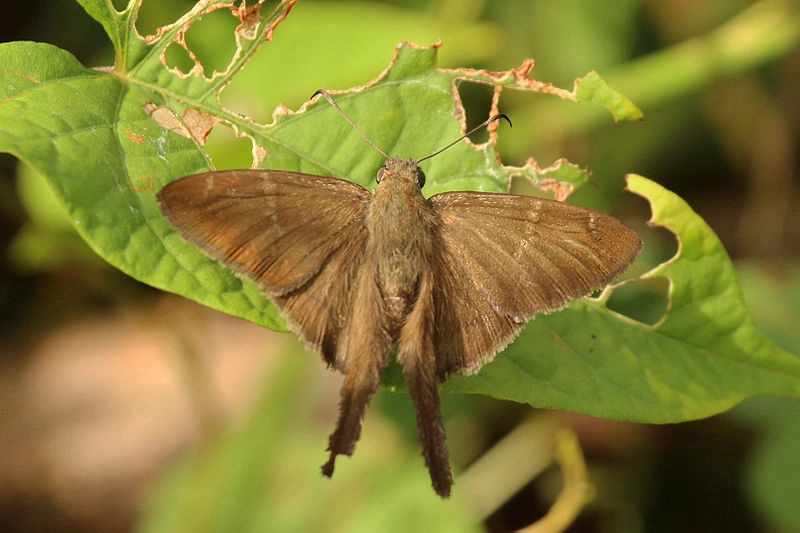
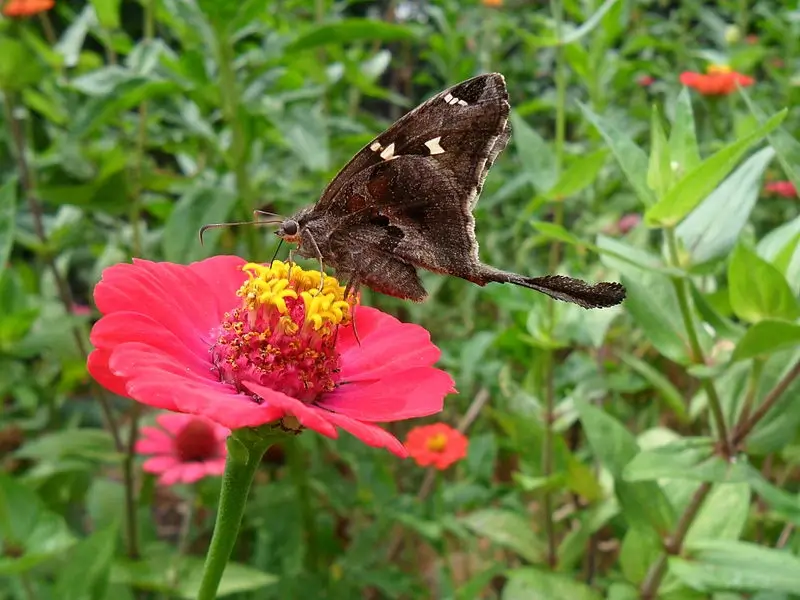
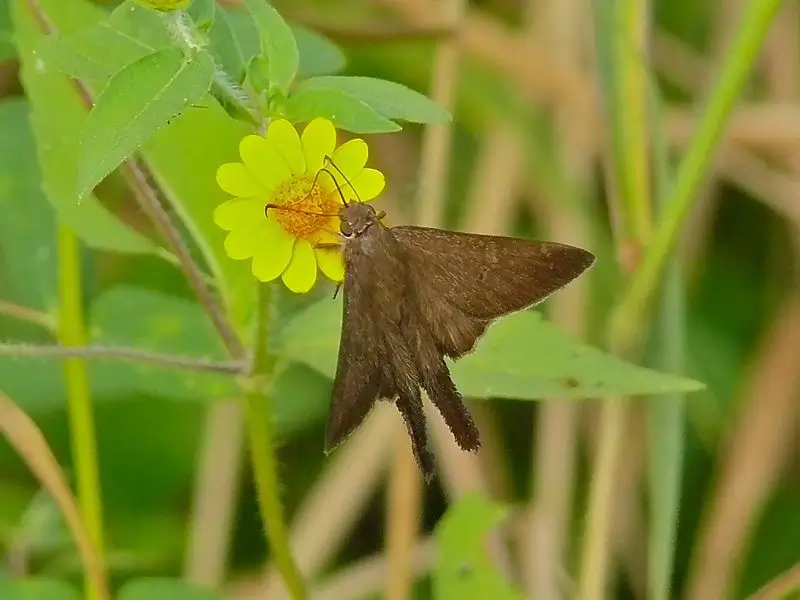
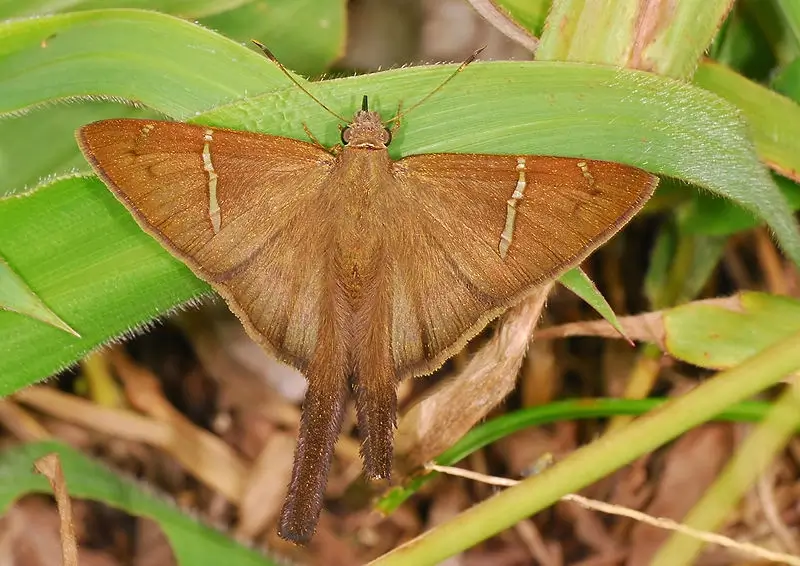
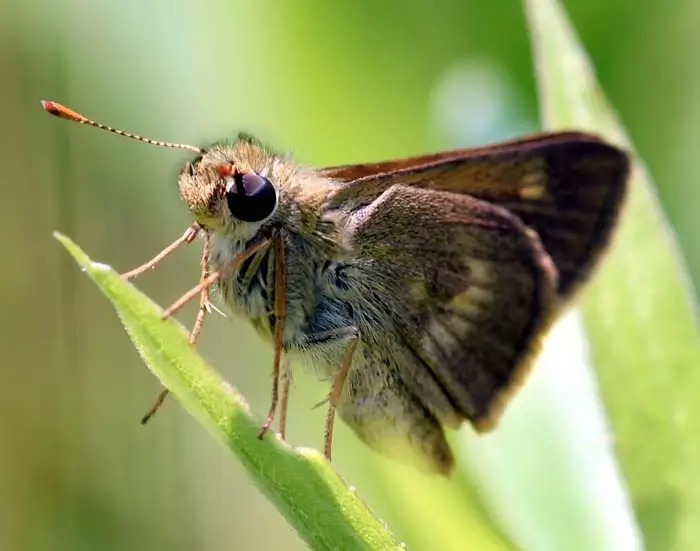
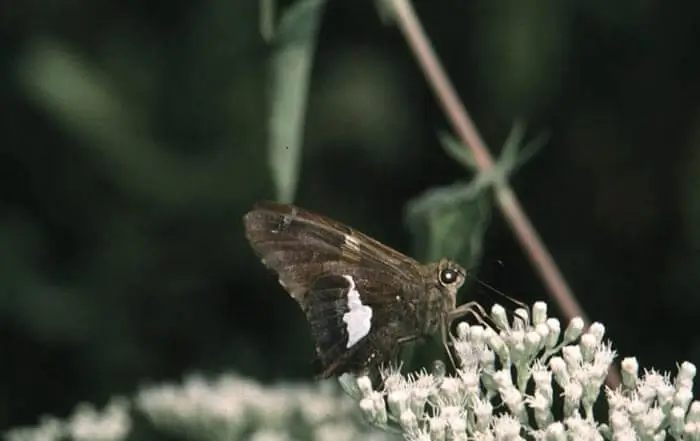
There are about 4,000 species of small to medium-sized butterflies in this family. There are over 300 species of skippers found in North America.
They get the name “skipper” from their flight pattern. They tend to skip from place to place with very fast wing movement.
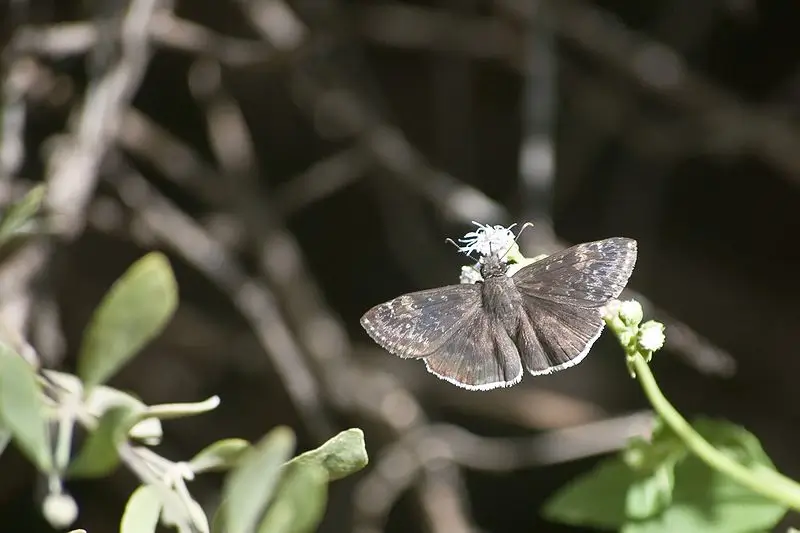
Skippers are usually duller in color than most other butterfly species. Most skippers are brown or gray and are often confused with moths. When they are at rest, the species in this family rest their wings on their backs like moths, not vertically like most species of butterflies.
Like other butterfly species, they have clubbed antennae, and they are active during the day.
The ends of their clubbed antennae hook backward. Most species have a large, thick thorax and small wings.
The larvae of skippers and darters usually feed at night. They eat a variety of grasses and leaves.
Bicolored Skipper (Abantis bicolor)
The bicolored skipper is found in South Africa. IUCN Redlist Status: Near Threatened
Hoary Edge (Achalarus lyciades)
The hoary edge is found from Minnesota east to New Hampshire and south to Texas and Florida. It has been recorded in Hillsborough and Grafton Counties.
Coyote Cloudywing (Achalarus toxeus)
The coyote cloudywing is found from Texas south to Panama.
Variegated Batwing (Achlyodes busirus)
The variegated batwing is found from Mexico to Bolivia.
Pale Siclewing (Achlyodes pallida)
The pale sicklewing is found from southern Texas to Bolivia.
Aeromachus bandaishanus (Aeromachus bandaishanus)
Aeromachus bandaishanus is found in Taiwan.
Johre Scrub Hopper (Aeromachus jhora)
The Johre scrub hopper is found in southeast Asia.
Aeromachus plumbeola (Aeromachus plumbeola)
The Aeromachus plumbeola is found in the Phillipines.
Pygmy Scrub-hopper (Aeromachus pygmaeus)
The pygmy scrub-hopper is found in Southeast Asia.
The lace-winged roadside skipper is found from Oklahoma east to Virginia and south to Texas and Florida.
Bell's Roadside-Skipper (Amblyscirtes belli)
Bell's roadside skipper is found in Kansas, Oklahoma, and central Texas east to Ohio, Kentucky, Tennessee, and South Carolina.
Celia's Roadside-Skipper (Amblyscirtes celia)
Celia's roadside skipper is found from Texas into Mexico.
Pepper and Salt Skipper (Amblyscirtes hegon)
is found in Canada and the eastern U.S. It is found in New Hampshire.
Common Bush Hopper (Ampittia dioscorides)
The common bush hopper is found in India and China south to Borneo, Sumatra, and Java.
Ampittia virgata (Ampittia virgata)
Ampittia virgata is found in China and Taiwan.
Delaware Skipper (Anatrytone logan)
The Delaware skipper is found from southern Canada south to Arizona, Texas, and Florida. It is also found in Mexico and Central America. The Delaware skipper has been recorded in across most of New Hampshire. It had not been recorded in Coos County. IUCN Redlist Status: Least Concern
Least Skipper (Ancyloxypha numitor)
The least skipper is found throughout the eastern United States and in parts of Arizona. It is also found in Canada. The least skipper is found across New Hampshire. IUCN Redlist Status: Least Concern
Two-brand Grass-skipper (Anisynta dominula)
The two-brand grass-skipper is found in the mountains of New South Wales, Tasmania and Victoria in Australia.
Common Spurwing (Antigonus erosus)
The common spurwing is found from Mexico to South America.
Large Spurwing (Antigonus nearchus)
The large spurwing is found from Mexico to Brazil and Peru.
Coorg Forest Hopper (Arnetta mercara)
The Coorg forest hopper is found in Asia.
Vindhyan Bob (Arnetta vindhiana)
The Vindhyan Bob is found in India.
Yellow-tipped Flasher (Astraptes anaphus)
The yellow-tipped flasher is found from Mexico to Argentina. Strays are sometimes found in Texas.
Two-barred Flasher (Astraptes fulgerator)
The two-barred flasher is found from the Rio Grande Valley in Texas south to Argentina.
Sachem Skipper (Atalopedes campestris)
The sachem skipper is found from Virginia west to California and south through Mexico and Central America to Brazil.
Golden Banded-Skipper (Autochton cellus)
The golden banded-skipper is found in the southwest from Arizona to Texas south to Mexico and from Oklahoma and Texas east to Maryland and South Carolina.
Spike Banded-Skipper (Autochton longipennis)
The spike banded-skipper is found from Mexico to Brazil.
Brown Awl (Badamia exclamationis)
The brown awl is found in Sri Lanka, India, Myanmar, Japan, China, Australia.
Paintbrush Swift (Baoris farri)
The paintbrush swift is found in India.
Golden-headed Sootywing (Bolla cupreiceps)
The golden-headed sootywing is found from Mexico to Bolivia.
Rice Swift (Borbo cinnara)
The rice swift is found in Sri Lanka, India, Burma, Vietnam and Australia.
Orange Awlet - (Burara jaina)
The orange awlet is found in India, Myanmar, Thailand, and Vietnam.
Brazilian Skipper (Calpodes ethlius)
The Brazilian skipper is found from Texas to Florida south to the West Indies and from Mexico through Central America into Argentina.
Colon Swift (Caltoris cahira)
The colon swift is found in south Asia.
Mallow Skipper (Carcharodus alceae)
The mallow skipper is found in southern and central Europe, northern Africa, and in central Asia.
Southern Marbled Skipper (Carcharodus baeticus)
The southern marbled skipper is found in France, Italy, Portugal, and Spain. IUCN Redlist: Vulnerable
Tufted Skipper (Carcharodus flocciferus)
The tufted skipper is found in southern and central Europe
Oriental Skipper (Carcharodus orientalis)
The oriental skipper is found in eastern Europe and parts of western Asia.
False Mallow Skipper (Carcharodus tripolinus)
The false mallow skipper is found in Algeria, Libya, Morocco, Portugal, Spain, and Tunisia. IUCN Redlist: Least Concern
Hoary Skipper (Carrhenes canescens)
The hoary skipper is found from Mexico to Argentina.
Arctic Skipper (Carterocephalus palaemon)
In North America, the Arctic skipper is found from central Alaska south to central California, in the Rocky Mountain region south to Wyoming, in the Great Lakes states, and in New York, New Jersey, Pennsylvania, and New England. It is found across most of New Hampshire, but it has not been recorded in Rockingham and Strafford Counties.
The northern checkered skipper is found in Northern Europe and North and East Asia.
Malabar Spotted Flat (Celaenorrhinus ambareesa)
The Malabar spotted flat is found in India.
Large Spotted Flat (Celaenorrhinus patula)
The large spotted flat is found in India, Nepal, China, Burma, Thailand, and Laos.
Restricted Spotted Flat (Celaenorrhinus putra)
The restricted spotted flat is found in Southeast Asia.
Tamil Spotted Flat (Celaenorrhinus ruficornis)
The Tamil spotted flat is found in India.
Orange Palm Dart (Cephrenes augiades)
The orange palm dart is found from Indonesia to Australia and the Solomon Islands.
Common Red-eye (Chaetocneme beata)
The common red-eye is found in Australia.
White-striped Longtail (Chioides albofasciatus)
The white-striped longtail is found from Texas to Argentina and the West Indies.
White-striped Longtail (Chioides catillus)
The white-striped longtail is found from Arizona and Texas south to Argentina and the West Indies.
White-patched Skipper (Chiomara georgina)
The white-patched skipper is found from Texas to Argentina and the West Indies.
Indian Awlking (Choaspes benjaminii)
The Indian awlking is found in Sri Lanka, India, Myanmar, Malaysia, Taiwan and Japan.
Double-dotted Skipper (Decinea percosius)
The double-dotted skipper is found from Mexico to Belize.
Northern Sicklewing (Eantis tamenund)
The northern sicklewing is found from Texas south to Argentina and the West Indies.
Common Bent-Skipper (Ebrietas anacreon)
The common bent-skipper is found in Costa Rica, Panama, Colombia, Venezuela, Guyana, Surinam, Brazil, Ecuador, Peru, and Bolivia.
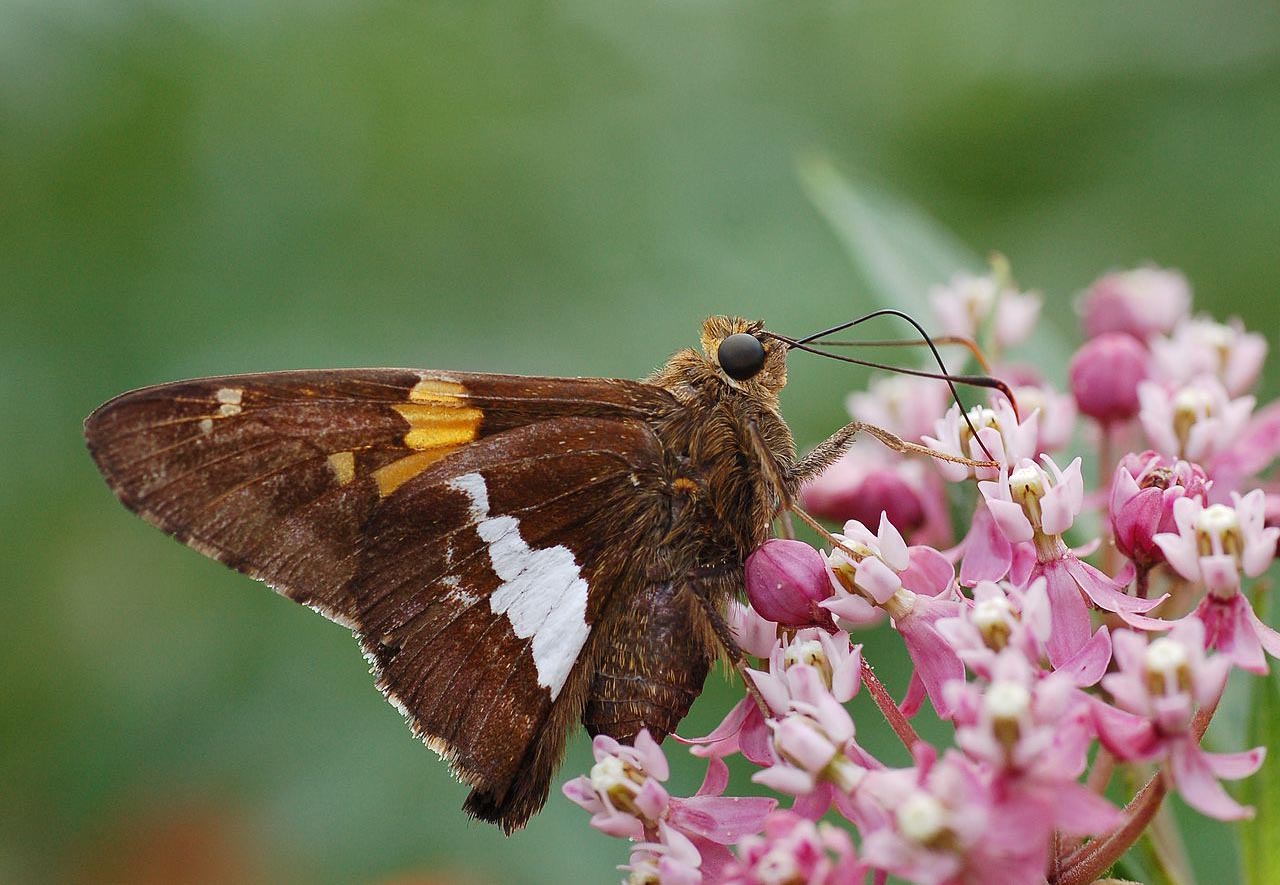
Silver-Spotted Skipper (Epargyreus clarus)
The silver-spotted skipper is found from British Columbia, Canada east to Quebec, Canada and south throughout most of the United States and into northern Mexico. The silver-spotted skipper is found throughout New Hampshire.
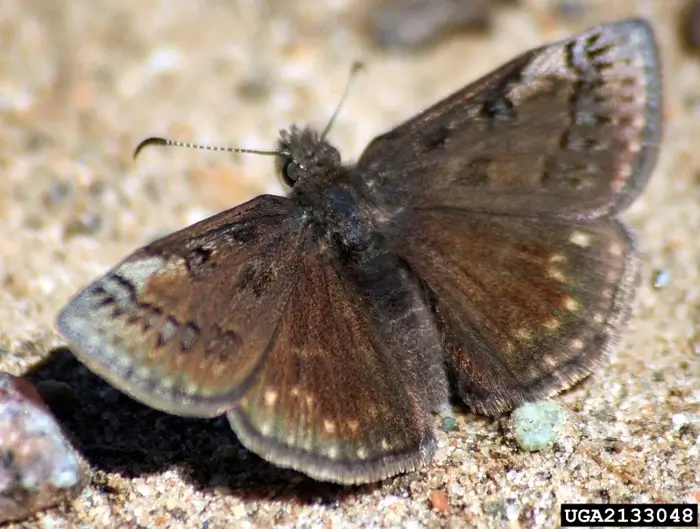
Wild Indigo Duskywing (Erynnis baptisiae)
The wild indigo duskywing is found in much of the eastern U.S. from New England south to northern Florida and South Dakota south to Texas. It has been recorded in Hillsborough county in New Hampshire.
Sleepy Duskywing (Erynnis brizo)
The sleepy duskywing is found in much of the eastern United States from Maine south to Florida and west to Minnesota and Texas. In the west it is found from California east to Colorado and south to New Mexico. It is also found in Canada and Mexico. The sleepy duskywing is found in New Hampshire.
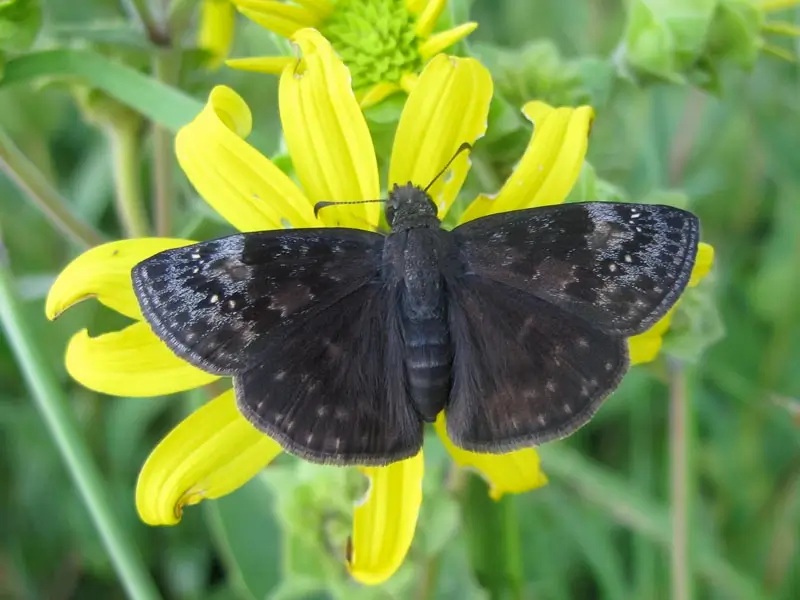
Funereal Duskywing (Erynnis funeralis)
The funereal duskywing is found from Southern California, Arizona, New Mexico, and Texas south to Argentina.
Horace's Duskywing (Erynnis horatius)
Horace's duskywing is found from South Dakota east to New England and south to Texas and Florida. It is also found in Utah, Colorado, New Mexico, and Arizona. It has been recorded in Hillsborough County in New Hampshire.
Dreamy Duskywing (Erynnis icelus)
The dreamy duskywing is found in woodland openings and edges. It is found throughout New Hampshire.
Juvenal's Duskywing (Erynnis juvenalis)
Juvenal's duskywing is found in the eastern U.S. and in parts of Texas, New Mexico, and Arizona. It is also found in southern Canada and Mexico. Juvenal's duskywing is found across most of New Hampshire.
Persius Duskywing Skipper (Erynnis persius)
In New Hampshire, the Persius duskywing was once found the pine barrens that ran along the southern portion of the Merrimack River and was reported in Merrimack, Milford, Hudson, and Concord. The last recorded sighting of the Persius duskywing was in Concord in 1990.
Palmetto Skipper (Euphyes arpa)
The palmetto skipper is found in Florida, Georgia, Alabama, and Mississippi.
Black Dash (Euphyes conspicua)
The black dash is found in the midwestern U.S. and along the Atlantic coast from Massachusetts to Virginia. It has been recorded in Grafton, Carrol, Rockingham, Strafford, Merrimack and Hillsborough counties.
Dion Skipper (Euphyes dion)
The Dion skipper is found from Massachusetts to Florida and west to Wisconsin, North Dakota, and Texas. It is also found in Quebec and Ontario Canada.
Dun Skipper (Euphyes vestris)
The dun skipper is found from Maine south to Florida and west to Washington and California. It is also found in southern Canada and northern Mexico.
Veined White-Skipper (Heliopetes arsalte)
The veined white-skipper is found from Mexico to Argentina. It is occasionally seen in Texas.
Turk's-cap White-Skipper (Heliopetes macaira)
The Turk's cap white-skipper is found from southern Texas to Paraguay.
Common Branded Skipper (Hesperia comma)
The common branded skipper, also known as the silver-spotted skipper, is a holarctic butterfly. It is found in all the continents of the Northern Hemisphere. In the U.S., it ranges from Alaska to Maine. It has been recorded in Coos and Grafton counties in New Hampshire. IUCN Redlist Status: Least Concern
Juba Skipper (Hesperia juba)
The Juba skipper is found from British Columbia south to southern California, east to Montana, Wyoming, Colorado, and northwest New Mexico.
Leonard's Skipper (Hesperia leonardus)
Leonard's skipper is found in open grassy areas like fields, barrens, and meadows. It is found in most of New Hampshire.
Cobweb Skipper (Hesperia metea)
The cobweb skipper is found from Wisconsin to Maine and south to Texas and Georgia. It has been recorded in Carroll, Strafford, Rockingham, Merrimack, and Hillsborough Counties.
Indian Skipper (Hesperia sassacus)
The Indian skipper is found in fields, pastures, and clearings. It has been recorded in all of New Hampshire, except for Rockingham, Belknap, and Sullivan counties.
Fiery Skipper (Hylephila phyleus)
The fiery skipper is found in the southern U.S. south to Argentina and the West Indies.
The Pawnee montane skipper is found from western Montana and southeastern Saskatchewan east to Minnesota, south to Central Colorado and Kansas. It is a threatened species in the U.S.
Clouded Skipper (Lerema accius)
The clouded skipper is found from Georgia and Florida west to Texas and south to Argentina.
Eufala Skipper (Lerodea eufala)
The Eufala skipper is found across the southern U.S. from Georgia to California and south to Argentina.
Julia's Skipper (Nastra julia)
Julia's skipper is found from south Texas to central Mexico.
Swarthy Skipper (Nastra lherminier)
The swarthy skipper is found in the eastern U.S. from southern New York west to Missouri and south to Florida, the Gulf states and eastern Texas.
Garita Skipperling (Oarisma garita)
The Garita skipperling is found from central Alberta east to southern Manitoba, south through the Rocky Mountains to northern Mexico.
Woodland Skipper (Ochlodes sylvanoides)
The woodland skipper is found from British Columbia south to southern California and east to Montana, Colorado, and Arizona.
Twin-spot Skipper (Oligoria maculata)
The twin-spot skipper is found from Coastal North Carolina south through Florida and west along the Gulf Coast to Texas. It sometimes strays from its range. It had been recorded in Strafford County in New Hampshire.
Ocola Skipper (Panoquina ocola)
The Ocola skipper is found from the southeastern U.S. to Texas and south to Paraguay
Glazed Pellicia (Pellicia arina)
he glazed pellicia is found from Mexico to Panama.
Lesser Millet Skipper (Pelopidas mathias)
The lesser millet skipper is found in southeast and east Asia and parts of Africa.
Guava Skipper (Phocides palemon)
The Guava skipper is found from Texas south to Argentina.
Mangrove Skipper (Phocides pigmalion)
The mangrove skipper is found from Florida and the through the West Indies and Mexico to Argentina.
Common Sootywing (Pholisora catullus)
The common sootywing is found in the central U.S. south into Mexico. It sometimes strays east. It has been recorded in every county in New Hampshire, except for Coos and Carroll counties.
Hobomok Skipper (Poanes hobomok)
In North America, the Hobomok skipper is found from Alberta, Canada east to Nova Scotia, Canada and south to Florida, Missouri, Oklahoma, and New Mexico. The Hobomok skipper is found across New Hampshire.
Umber Skipper (Poanes melane)
The umber skipper is found from California and Arizona south to Central America.
Broad-winged Skipper (Poanes viator)
The broad-winged skipper is found from the Dakotas east to southern Quebec and central New York. They are also found along the Atlantic coast from Massachusetts to Florida and along the Gulf Coast. It has been recorded in Rockingham county.
Zabulon Skipper (Poanes zabulon)
The Zabulon skipper is found from Massachusetts west to southern Michigan and central Kansas and south to central Florida, southern Louisiana, and northeast Texas. There is also a population found from central Mexico to Panama.
Mardon Skipper (Polites mardon)
The Mardon skipper is found in Washington, western Oregon, and northwestern California.
Long Dash (Polites mystic)
The long dash is found from southern British Columbia east to Nova Scotia in Canada and throughout the northern United States as well as in Colorado and New Mexico. The long dash is found throughout New Hampshire. IUCN Redlist Status: Least Concern
Crossline Skipper (Polites origenes)
The crossline skipper is found from North Dakota east to Maine and south to Texas and the Gulf Coast. It has been recorded in Cheshire county in New Hampshire.
Peck's Skipper (Polites peckius)
Peck's skipper is found across southern Canada from British Columbia east to Nova Scotia. In the United States, it is found from eastern Oregon and Washington east to Maine and south to New Mexico, Colorado, Missouri, and northern Georgia. Peck's skipper is found throughout New Hampshire. IUCN Redlist Status: Least Concern
Sandhill Skipper (Polites sabuleti)
The sandhill skipper is found from Southern British Columbia and eastern Washington south through California and northern Arizona to Baja California; east to southeastern Wyoming, central Colorado, and northeastern New Mexico.
Tawny-edged Skipper (Polites themistocles)
The tawny-edged skipper is found from southern Canada, south through much of the United States. The tawny-edged skipper is found in New Hampshire.
Little Glassywing (Pompeius verna)
In North America, the little glassywing is found from Minnesota east to southern Ontario, Canada and south to Texas and Florida. The little glassywing has been recorded in Rockingham, Hillsborough, and Belknap counties in New Hampshire.
Mercurial Skipper (Proteides mercurius)
The mercurial skipper is found from Mexico and the West Indies south to Argentina. It is occasionally seen in Florida, Louisiana, and Texas
White Checkered-Skipper (Pyrgus albescens)
The white checkered-skipper is found in southern California, southern Arizona, southern New Mexico, west and South Texas; Florida, and Mexico.
Foulquier’s Grizzled Skipper (Pyrgus bellieri)
The Foulquier's'grizzled skipper is found in France, Italy, and Spain.
Grizzled Skipper (Pyrgus centaureae)
The grizzled skipper is holarctic. In North America, it is found from Alaska south and east to central Ontario and northern Michigan.
Cinquefoil Skipper (Pyrgus cirsii)
The cinquefoil skipper is found in Andorra, France, Germany, Italy, Portugal, Spain, and Switzerland. IUCN Redlist Status: Least Concern
Common Checkered-Skipper (Pyrgus communis)
The common checkered-skipper is found across most of the temperate United States south to Gulf coast, Texas, Arizona, southern California, and mountains of northern Mexico. It is found in southern New England.
Southern Grizzled Skipper (Pyrgus malvoides)
The southern grizzled skipper is found in Andorra, Austria, France, Germany, Italy, Liechtenstein, Portugal, Slovenia, Spain, and Switzerland. IUCN Redlist Status: Near Threatened
Tropical Checkered-Skipper (Pyrgus oileus)
The tropical checkered-skipper is found in Florida and along the the Gulf Coast south to the West Indies, Mexico, and Central America to Argentina.
Desert Checkered-Skipper (Pyrgus philetas)
The desert checkered-skipper is found from southern Arizona and Texas south to Mexico.
Laguna Mountains Skipper (Pyrgus ruralis lagunae)
The Laguna Mountains skipper is only found in San Diego County in Southern California. It is an endangered species in the U.S.
Two-banded Checkered-Skipper (Pyrgus ruralis)
The two-banded checkered-skipper is found in the mountains from British Columbia and Alberta to southern California, Arizona, and New Mexico.
Common Mellana (Quasimellana eulogius)
The common mellana is found from Texas south to Paraguay.
Osca Skipper (Rhinthon osca)
The Osca skipper is found from Mexico and the West Indies south to Ecuador.
Texas Powdered Skipper (Systasea pulverulenta)
The Texas powdered skipper is found from Texas south to Guatemala.
Southern Cloudywing (Thorybes bathyllus)
The southern cloudywing is found across much of the eastern United States from Minnesota east to New England and south to Texas and Florida. The southern cloudywing has been recorded in Merrimack County in New Hampshire.
Northern Cloudywing (Thorybes pylades)
The northern cloudywing is found in boreal woodlands and forest edges. It is found across New Hampshire.
Lulworth Skipper (Thymelicus action)
The Lulworth skipper is found in central Europe, Asia and Africa.
European Skipper (Thymelicus lineola)
In North America, there are two populations of European skippers. The eastern population is found from Newfoundland, Canada west to eastern North Dakota and south to Missouri, Kentucky, and the Carolinas. The western population is found in parts of Idaho, Montana, Colorado, Wyoming, and Saskatchewan, Alberta, and British Columbia, Canada. The European skipper is also found in Europe and Asia. The European skipper is found across New Hampshire. IUCN Redlist Status: Least Concern
Dorantes Longtail (Urbanus dorantes)
The Dorantes longtail is found from Texas and Florida south to the West Indies and Argentina.
Esmeralda Longtail (Urbanus esmeraldus)
The Esmeralda longtail is found from Mexico south to Brazil and Paraguay.
Brown Longtail (Urbanus procne)
The brown longtail is found from Texas south to Argentina.
Long-tailed Skipper (Urbanus proteus)
The long-tailed skipper is found from Texas and Florida south to the West Indies and Argentina.
Plain Longtail (Urbanus simplicius)
The plain longtail is found from Mexico to Argentina.
Teleus Longtail (Urbanus teleus)
The Teleus longtail is found from Texas south to Argentina.
Northern Broken-Dash (Wallengrenia egeremet)
In North America, the northern broken-dash is found from Ontario, Canada east to Quebec, Canada and south to Texas and Florida. The northern broken-dash is found across New Hampshire.