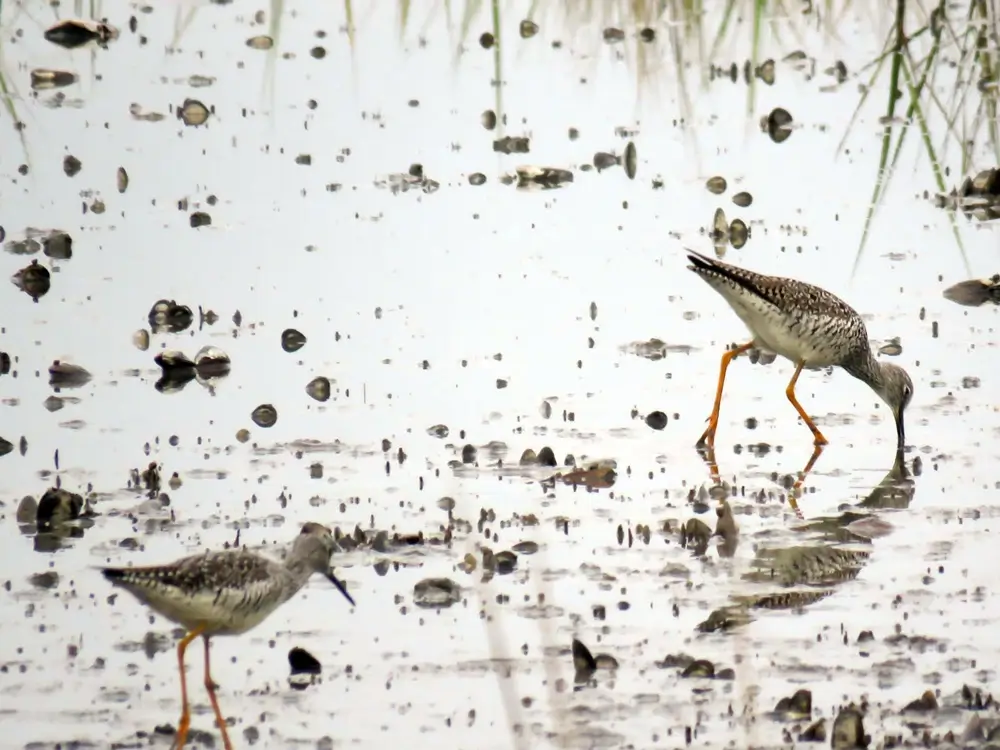
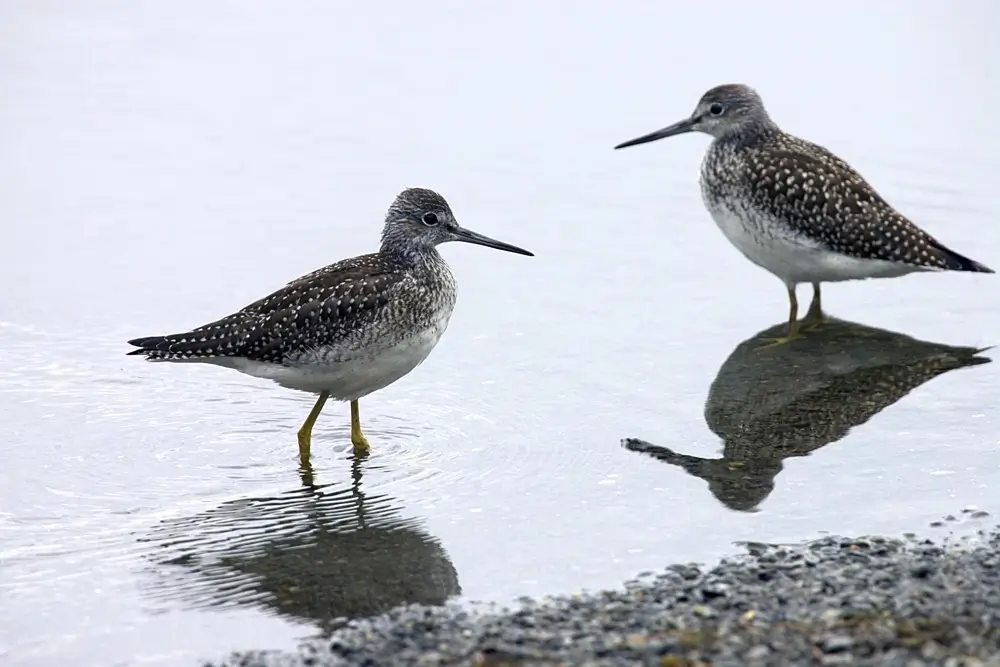
The lesser yellowlegs is a medium-sized shorebird that is 9.1-10.6 inches (23-27 cm) in length with a wingspan of 23.2–25.2 inches (59–64 cm).
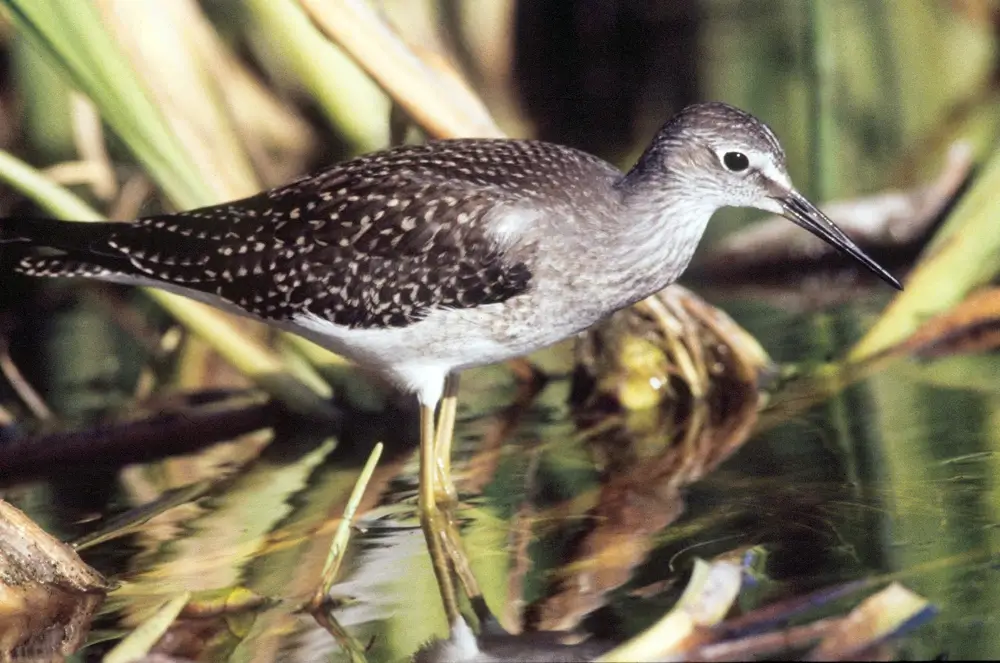
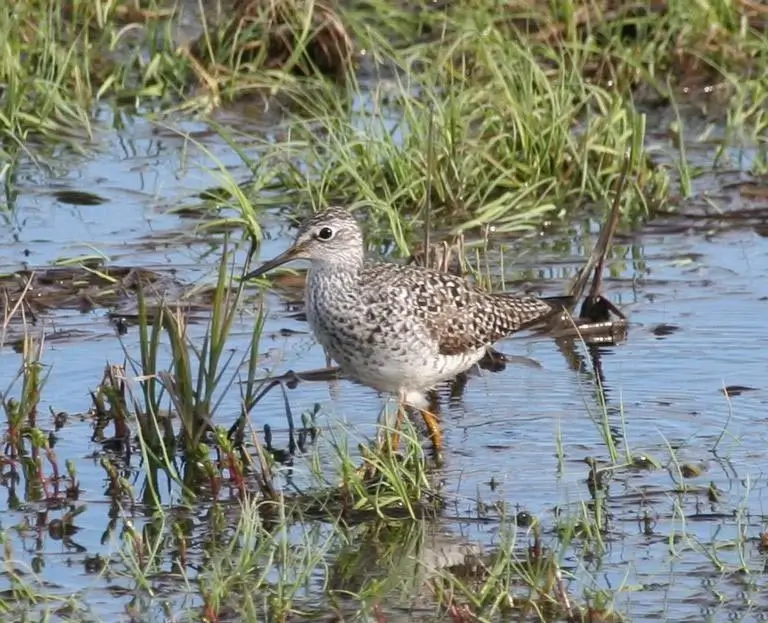
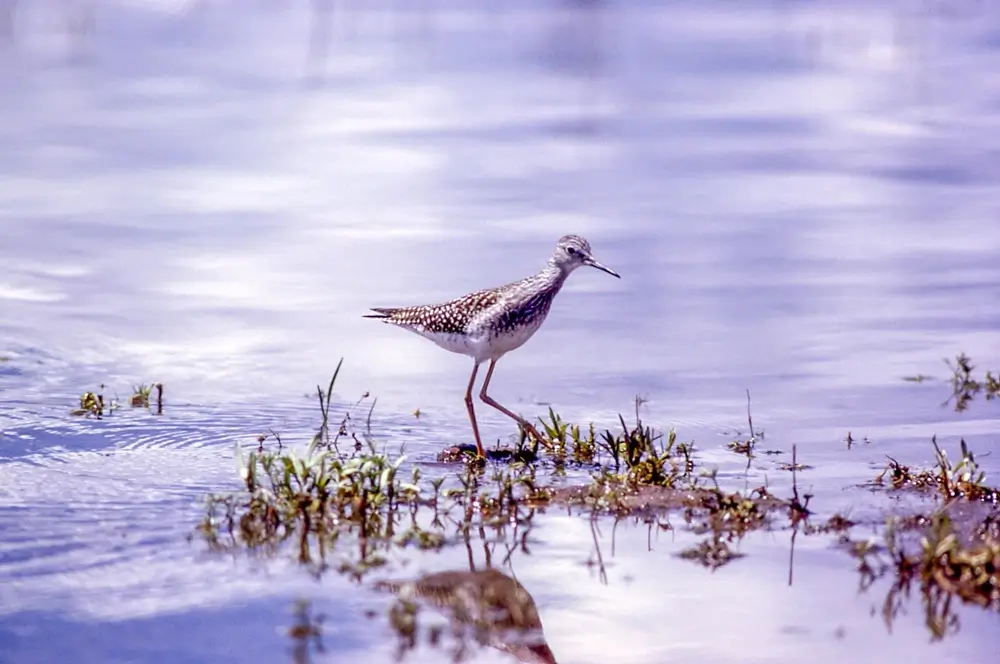
It has a long, straight bill; a long neck; and a speckled brown body with a white belly and a gray rump. It gets its name from its very long, bright yellow legs. Males and females look alike.
Habitat
The lesser yellowlegs spends the breeding season in grassy meadows, bogs, burned-out forest areas, and other open areas or natural clearings.
During migration and the winter, it is found along the shores of lakes and rivers, in marshy ponds and in coastal marshes, and mudflats.
Diet
The lesser yellowlegs forages for food by pecking and grabbing up prey from shallow water. It also chases prey on land.
The female usually lays 4 eggs in a depression in the ground at the base of a tree stump, under a small bush, or in a brush pile. Nests are made in an open area near water and are lined with bits of leaves and grass.
The female may nest alone or in a small colony. The chicks hatch in 22-23 days and fledge when they are 18-20 days old.
The chicks are precocial and can catch their own prey within hours of hatching. They are cared for by both parents and leave the nest shortly after hatching.
The female sometimes leaves the chicks before they can fly, leaving the male to care for them until they fledge (develop feathers for flight).
The lesser yellowlegs has a lifespan of around 4 years.
Behavior
The lesser yellowlegs is a relatively tame bird and will allow intruders to approach at close distances. It was once a popular game bird for hunters, but it is now protected.
Did You Know?
Support for NatureWorks is provided by:
The Lesser Yellowlegs in NH
The lesser yellowlegs does not breed in New Hampshire, but is can be spotted in the state during its migration.
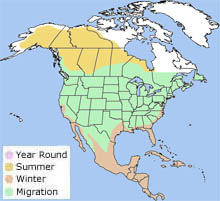
The lesser yellowlegs breeds across Alaska and northern Canada eastward to western Quebec.
It winters in the southern United States southward to southern South America and northward along the coasts to southern central California and New Jersey.