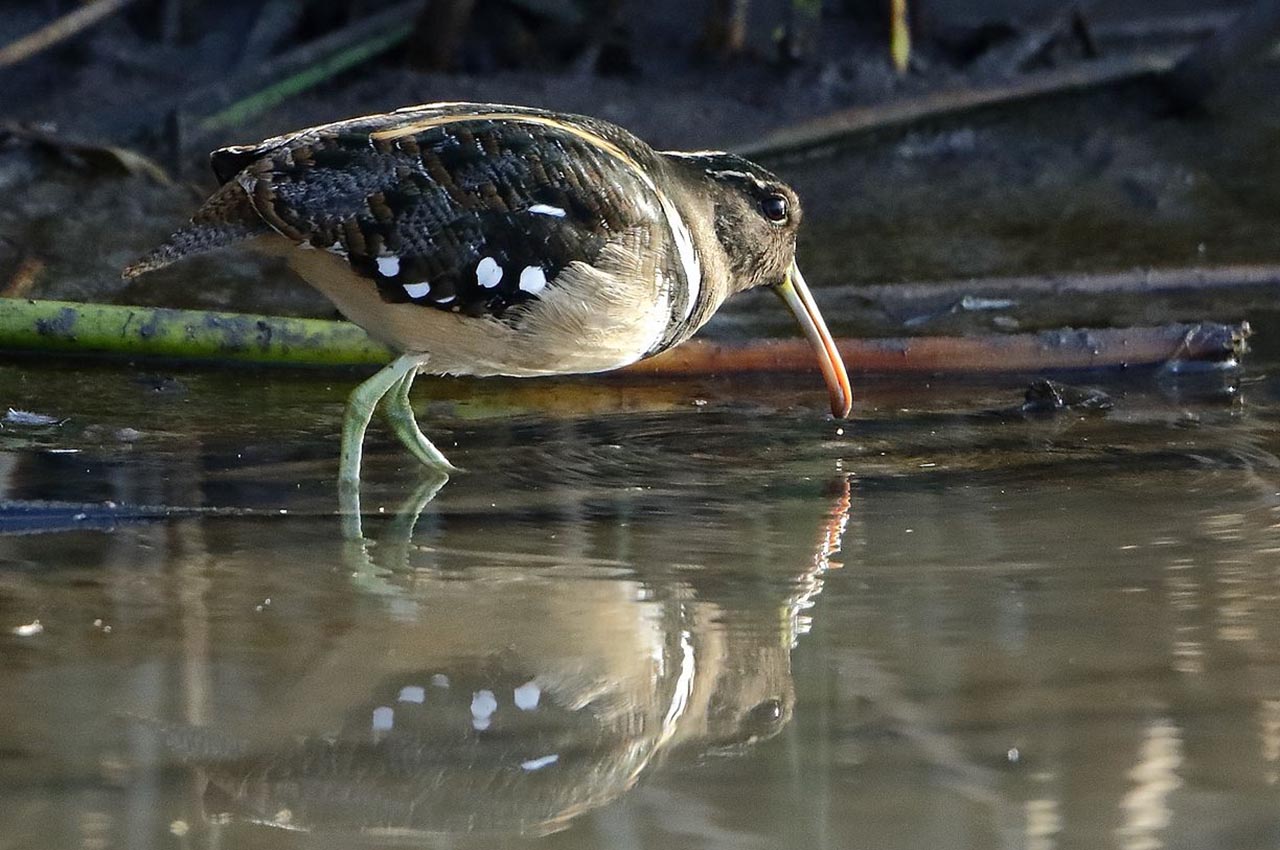
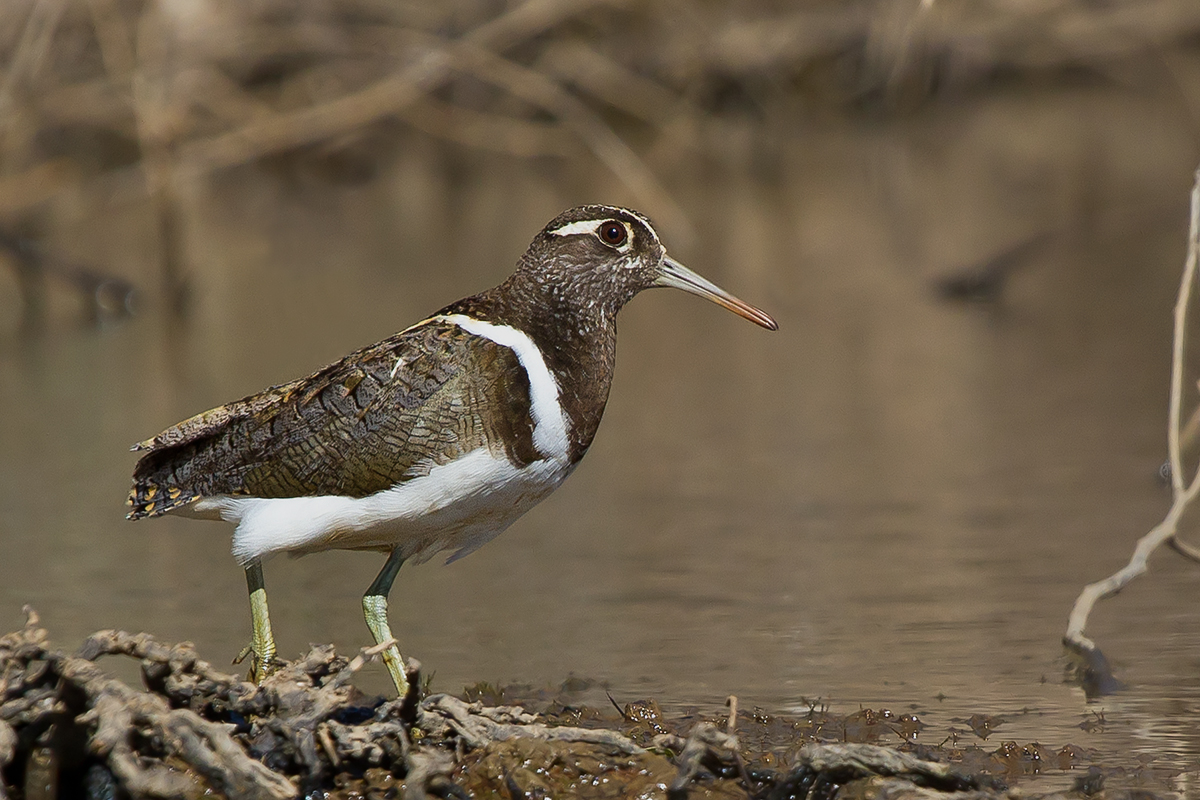
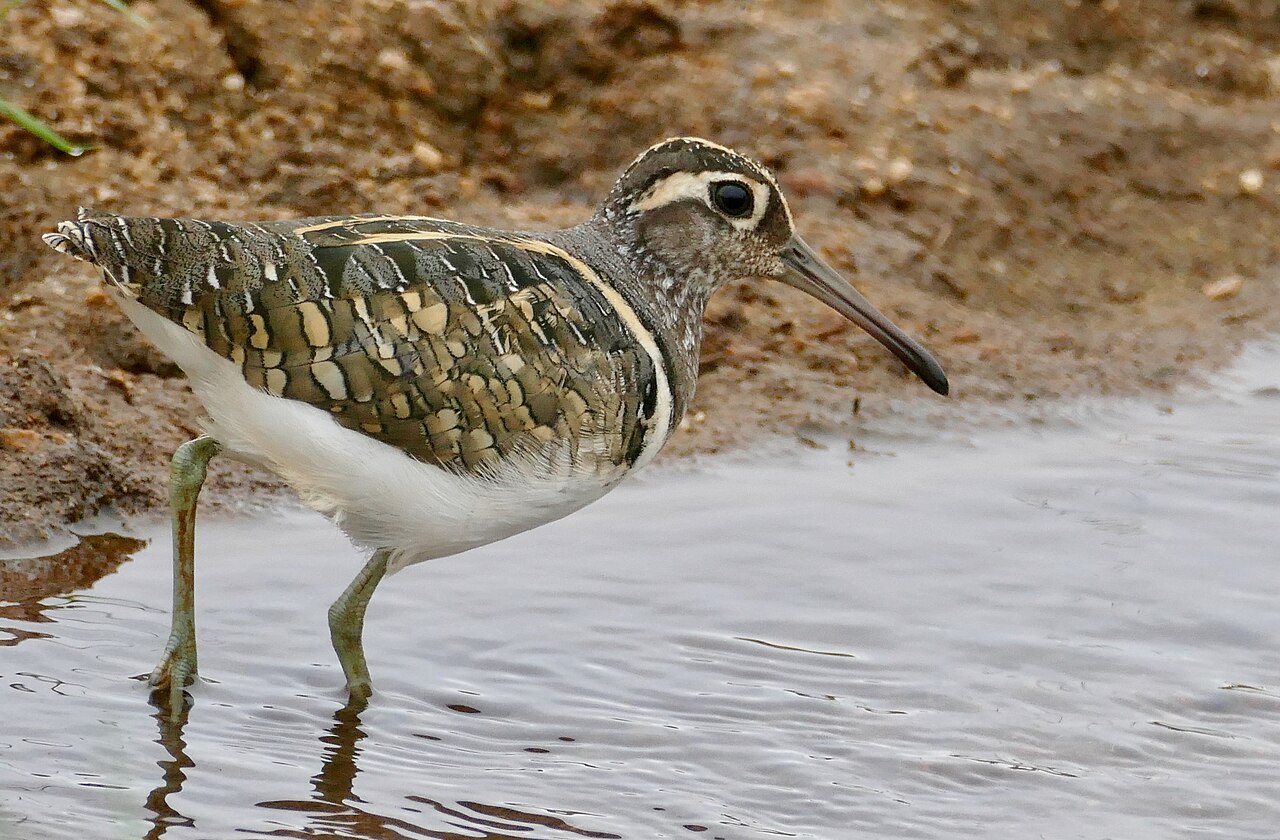
The Rostratulidae family includes three living species of birds knownas painted-snipes. Even though their name includes “snipe,” they are not true snipes.
Painted snipes live in wetlands in parts of Africa, Asia, Australia, and South America, depending on the species.
They are medium-sized birds with long legs, short tails, rounded wings, and long, slightly curved bills. They use their bills to probe mud and soft soil for food. They also have large eyes that help them see in low light. Their feathers are patterned in browns, blacks, whites, and buff colors, which helps them blend into their wetland habitats. In this group, females are larger and more brightly colored than males, which is unusual for birds.
Painted-snipes live in freshwater wetlands such as marshes, flooded grasslands, rice fields, ponds, and lake or river edges. They prefer shallow water with thick plants for cover.
They eat insects, insect larvae, worms, snails, small crustaceans, and other tiny water animals. They may also eat some seeds and plants. They find food by slowly walking in shallow water and probing the mud.
These birds are shy and are most active at dawn, dusk, or at night. If danger is near, they often freeze or hide instead of flying. When they do fly, it is usually short and low.
Painted-snipes have unusual breeding behavior. Females compete for males, and one female may mate with more than one male. The male incubates the eggs (usually 2–4) and cares for the chicks after they hatch. The chicks leave the nest quickly and follow the male as he feeds them.