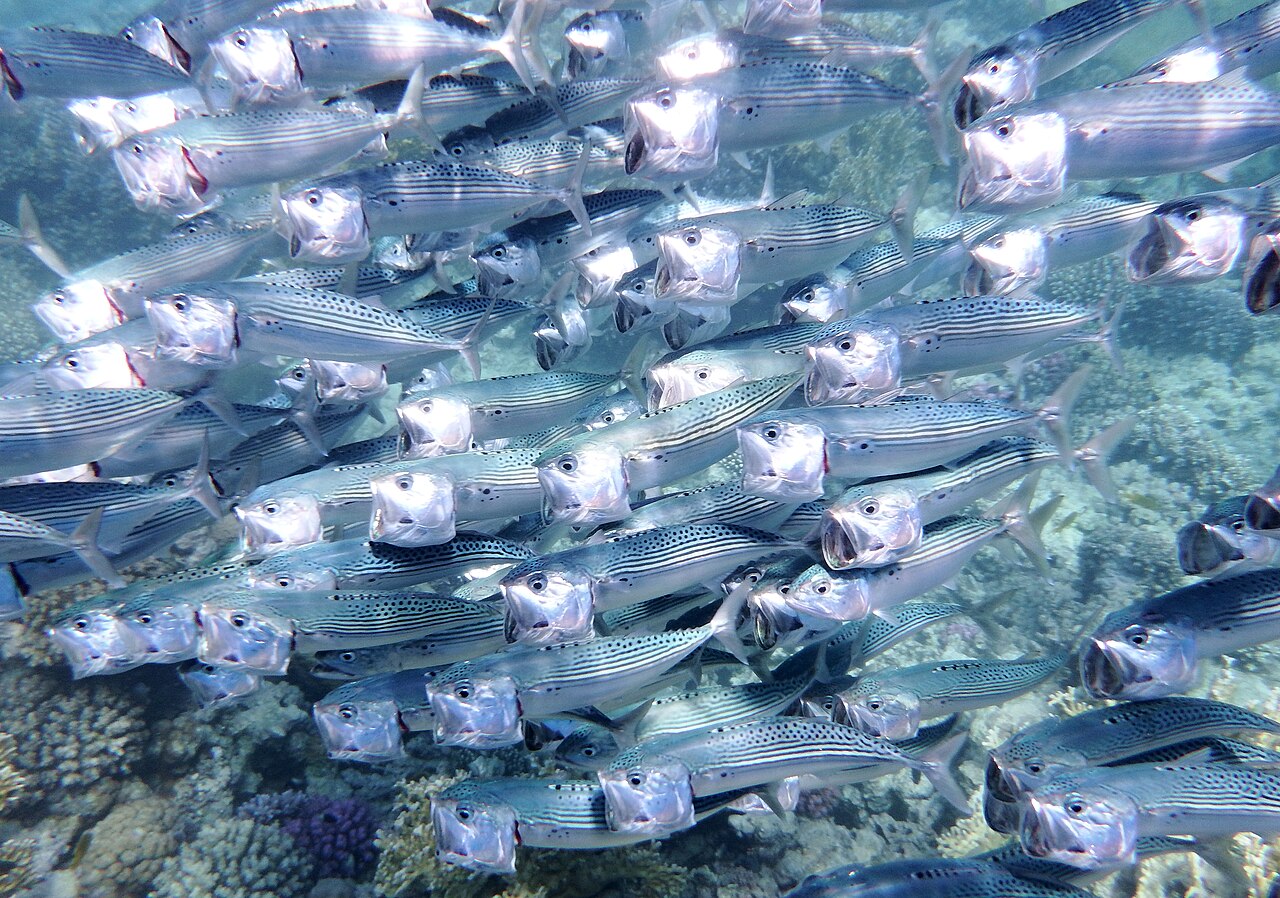
There are about 12-15 families in this order, with several hundred species in total.
Most species in this order are fast-swimming, ocean-dwelling ray-finned fish and include well-known groups such as mackerels and tunas. These fish are found in oceans around the world, especially in warm and temperate seas, although some species also live in cooler waters.
Scombriform fishes are built for speed. They have streamlined, torpedo-shaped bodies and powerful muscles that help them swim quickly through open water. Many species are active predators that feed on smaller fish like sardines and anchovies, squid, and crustaceans. Some of the largest members, such as tunas, are top predators in marine food webs.
Many Scombriformes species are long-distance migrants. Tunas can travel thousands of miles or kilometers across oceans to find food or reach their spawning (breeding) grounds. Many species also swim in schools, which helps protect them from predators and improves their ability to hunt.
Some, especially tunas, have special adaptations that help them keep parts of their bodies warmer than the surrounding water. This allows them to swim faster and stay active even in cooler, deeper waters.