

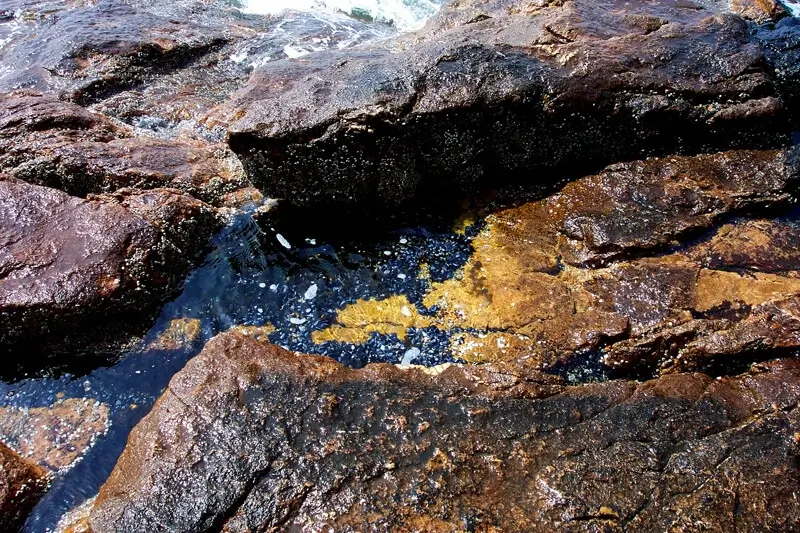
The intertidal zone or littoral zone is the area of shoreline between the high tide and low tide marks.
The intertidal zone, or littoral zone, is the area of shoreline between the high and low tide marks.
During high tide, it is covered in water. When the tide is low, it is dry or partially dry.
In addition to changes in water levels, the intertidal zone can have great changes in humidity, temperature, and wave pressure during the day.
The intertidal zone is rich with nutrients. As the tide comes in, it carries plankton, dead plants, and animals. Animals like crabs, barnacles, starfish, anemones, shorebirds, and small fish feed on the food the waves bring in.
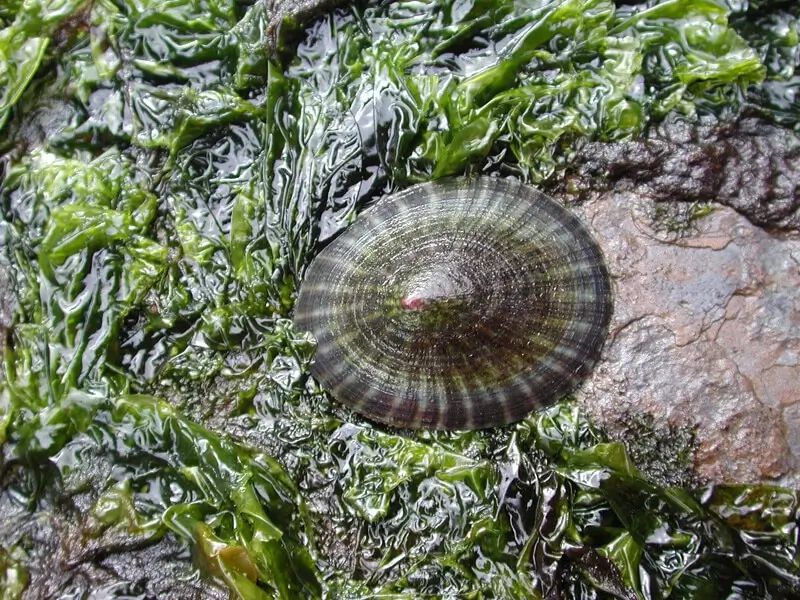
All of the organisms that make the intertidal zone home have adaptations that help them survive in this constantly changing environment.
Life’s not easy in the intertidal zone. Organisms must be adapted to life in a place that is constantly changing! All of the organisms that make the intertidal zone home have adaptations that help them survive in this constantly changing environment.
Arthropods and mollusks have shells that protect them from drying out and from being smashed on the rocks by waves. Organisms like limpets, starfish, and seaweed attach themselves to rocks so they don’t wash out with the tides. Crabs, mollusks, sea urchins, and even bacteria often burrow under the sand when the tide is low.
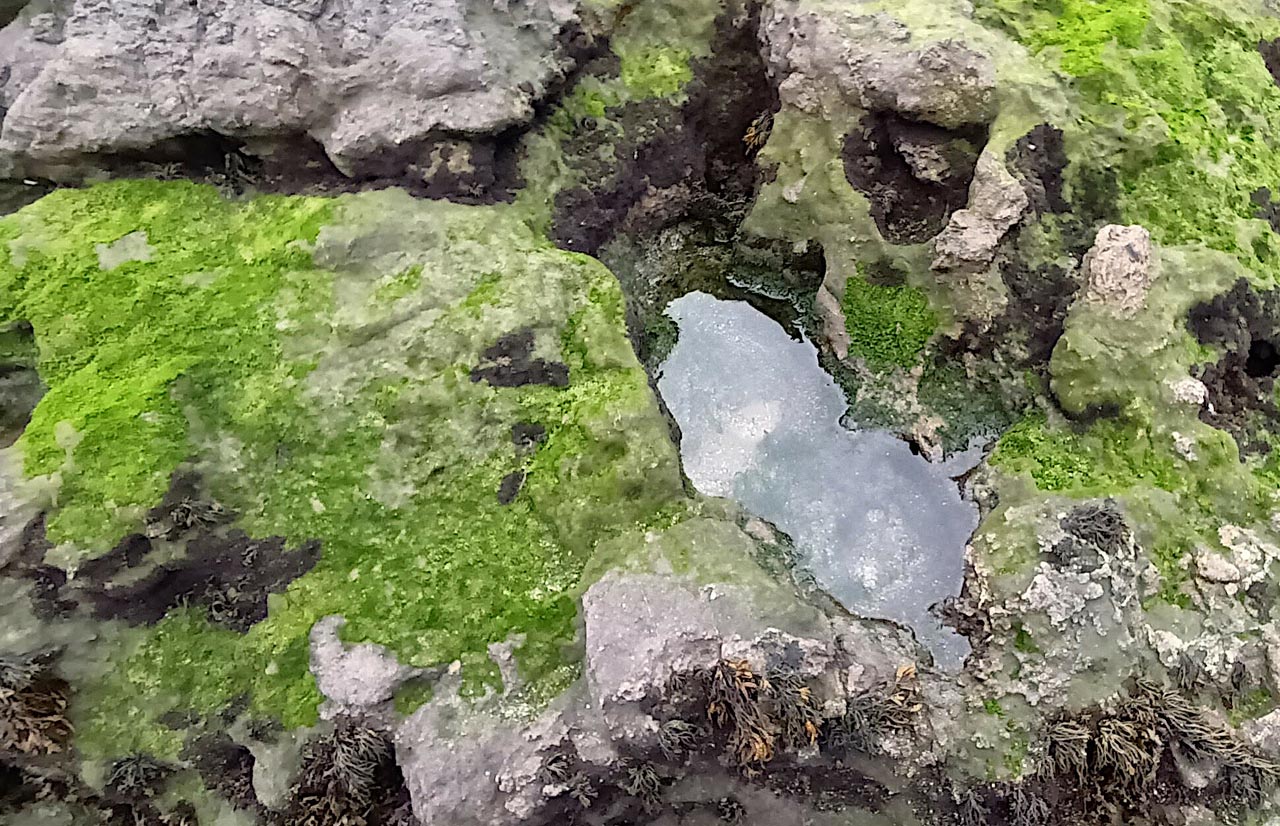
Intertidal Vegetation
The intertidal zone isn’t uniform—it’s divided into four regions, each with distinct conditions and challenges for living things.
Spray zone (supralittoral fringe): Farthest from the ocean and driest, this area is reached mostly by sea spray, like a desert. Barnacles, limpets, whelks, periwinkles, and algae cling to the rocks here, while crabs and sea stars are less common due to limited water.
High-tide zone (upper midlittoral): Covered by water only during high tide, often by crashing waves. Organisms must tolerate both wet and dry conditions and strong surf. Barnacles, mussels, limpets, and whelks anchor tightly to rocks. Tidepools form here, where organisms must cope with rapid changes in temperature, oxygen, and salinity.
Mid-tide zone (lower midlittoral): Submerged and exposed twice daily. Organisms must survive both air and water. Mussels and anemones retain moisture by closing up, while seaweeds can hold water until the tide returns.
Low-tide zone (infralittoral fringe): Usually underwater and exposed only during very low tides—more like a rainforest. With more stable conditions, it supports the greatest diversity, including seaweeds, crabs, sea urchins, starfish, anemones, and small fish.
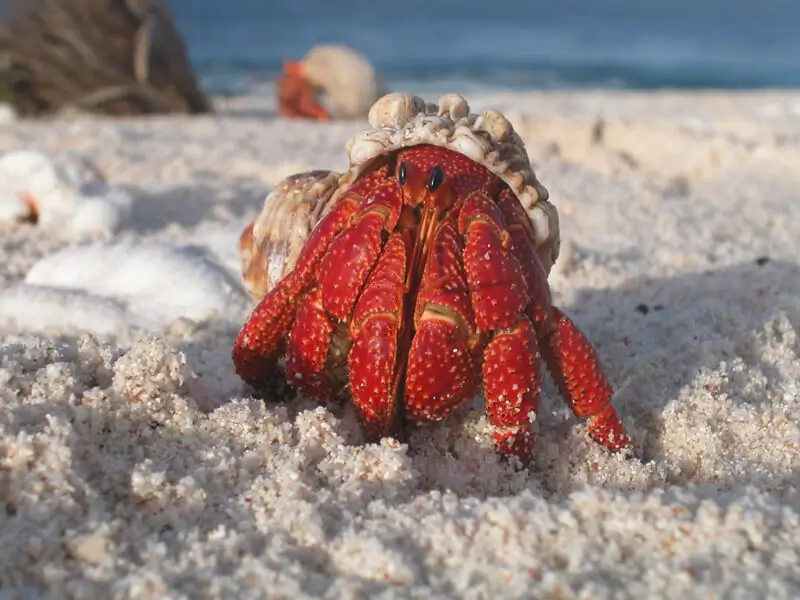
Lots of the animals that burrow under the sand when the tide is low come out to hunt for food when the tide returns.
Many animals that live buried in the sand stay hidden when the tide is low to avoid drying out and to stay safe from predators. But when the tide comes back in, the intertidal zone becomes full of moving water—and food! That’s when these animals become active and start to feed.
Crustaceans like the hermit crab scurry along the shore, using their claws and antennae to search for bits of food such as algae, dead plants, or tiny animals.
Sea worms poke their heads out of the sand or build small tubes. They catch food particles floating in the water or grab passing prey.
Mollusks like clams and mussels stay mostly buried or attached to rocks. They extend special feeding tubes called siphons to pull in water. As the water flows through their bodies, they filter out tiny food particles like plankton.
This feeding activity is timed perfectly with the return of the tide, turning the once-quiet sandy shore into a busy, underwater feeding ground.
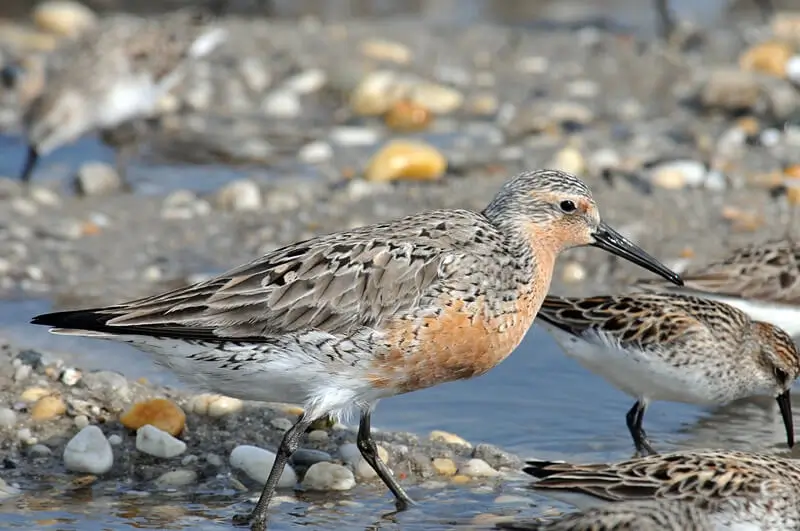
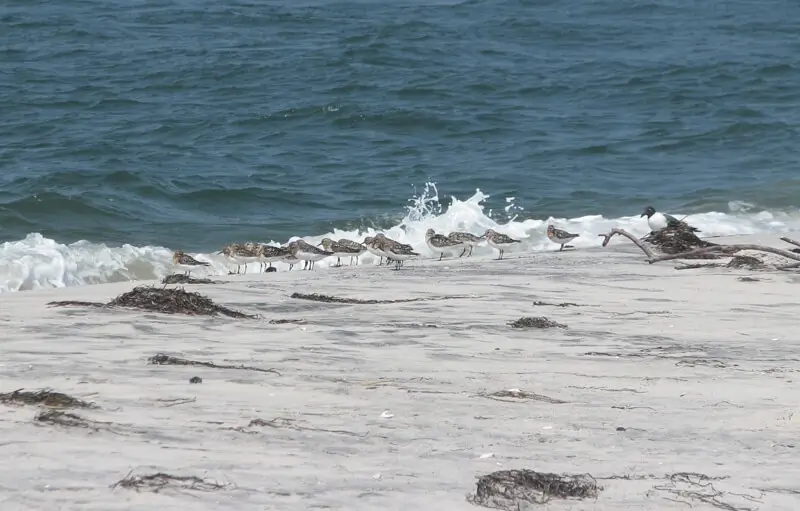
When the tide is out, the sea birds hit the beach looking for food.
When the tide is out, the shore birds hit the beach looking for food. Semipalmated sandpipers and red knots use their sharp bills to poke in the sand for worms and other invertebrates. Ring-billed gulls scour the beach searching for crabs and small fish.
